Friday, August 22, 2014

What picture books taught me about writing for middle-graders by Kell Andrews

I am a middle-grade writer first, but not only.

I read so many picture books when my children were young that I wanted to write one. Finally an idea hit me, and the story flowed out in a sitting. But that was the beginning -- that story required many, many more sittings, drafts, and subsequent stories that improved on my first effort. As simple as a picture book manuscript looks, it's hard to write one.

Switching gears between middle grade and picture books creates challenges, but it has its lessons. Here's what I've taken into my middle-grade fiction from my efforts to write for younger readers.

Let story guide progress. 
One of my inspirations, a few years ago...

When I was beginning to take writing seriously, I believed that a writer ought to write a thousand words a day. But if you're writing picture books -- where the average published book is 500 words -- if you write a thousand words, you're probably doing it wrong.

That's not to say that high word counts are wrong for all writers, but it's not how I measure progress now. I try to use scenes as markers -- I'm telling a story, not stringing together words by the thousand. Word count is a simple metric to use when it works, but it can lead your story astray if you race after numbers.

Every word matters. 

When you revise a picture book, you look at every word. Every one is a decision -- is it the most precise one? Will it be understood by the reader? Is it colorful enough, fun enough? Can the sentence be said in a more concise way? Can the whole sentence go?

When writing and revising a novel, most of us won't take that kind of care on every word unless we don't care if we never have time to write another. But every word still matters. If not, it shouldn't be
there.

Let go of what doesn't work. 

I can't speak for other picture book writers, but it takes me a lot of ideas to find one that I can execute well enough to put in front of my agent. And then it takes a good number  of manuscripts before my agent finds one she feels is commercial enough to put in front of editors. I'm not sure how many stories it takes to find one editors will buy, but fingers crossed that my time will come.

That winnowing process has taught me to let go of ideas and stories that haven't found a home, even if I love them. That's harder to do for a novel, which is a bigger commitment of time and craft.  But sometimes you do have to let go and move on -- which can mean leaving a favorite scene on the cutting room floor, shelving a problematic manuscript unfinished, or trunking a book that didn't find a publisher. Hard, but not every story will find a readership, even with the possibility of self-publishing.

Leave room in the text. 

For a middle-grade writer writing picture books, one of the biggest adjustments is leaving room for the illustrator. That means not describing what can shown in a picture and not trying to control the illustrator with too many notes.

For a novel, it means not overdescribing what the imagination can fill in. Don't underestimate your reader. Young children understand more than they are often credited with. So do older readers -- write up to them, not down.

Let go of control.

Picture book writers do not usually get to choose the illustrator, nor do they have veto power over the illustrations. Sometimes that can yield unexpected results in the wrong way, but in the best collaborations, the illustrator will bring more to the book than the writer ever imagine.

The same is true for novels. Once the story has been published, the writer does not own the story any more. It belongs to the reader. Sometimes readers misunderstand authorial intent. Sometimes they hate the story with burning intensity.  Sometimes they love it. But love it or hate it, once they've read it, it's part of their understanding of the world. That's the gift the writer gives, and the gift the reader gives back.

Do you write other genres or for other ages? How does it affect your work for middle-grade readers? 


Wednesday, August 20, 2014

How Do You Learn? – a post by Chris Eboch

What's the best way to learn?

It depends on each individual's optimal learning style. Some of us do well with printed material – books, magazines, blog posts. (There is even debate about learning from printed books versus electronic formats.) Others do better listening to an instructor. Some need visuals, or must be physically involved in an activity.

Do an Internet search on "learning styles" to find out more. You can also try a quick online survey to find your learning style here. (FYI, I came out at 92% linguistic and also scored highly in intrapersonal and interpersonal, but low in musical and visual-spatial. So I guess I should talk to people.)

If you’re a writer, understanding your learning style may help you improve your craft. Should you be taking live classes or is an online correspondence school a better fit? Can you really learn everything you need to know just from reading books on the craft?

There's also a relatively new technology gaining steam: webinars.

 At the recent SCBWI Summer Conference in Los Angeles, the subject of webinars came up during the regional advisor meeting. Small regions were especially interested, as they may not have the money and attendance numbers to pay for bringing in speakers. Webinars are also good for spread-out regions, or even large, active regions that want to make classes more accessible to those who live outside the main urban areas. And webinars can work well for people who simply have a hard time leaving home, for whatever reason – needing to care for children or aging parents, health problems, difficulty driving at night.

Last Tuesday, I presented a webinar on Writing for Children's Magazines for the combined SCBWI Texas regions. They are holding webinars every other month, and people outside of Texas can also sign up. (SCBWI members pay $10, others pay $35.) I have a three-hour webinar set up in September for the Caribbean regions. Since the Caribbean has members spread out over multiple islands, it would be nearly impossible to bring everyone together for an event. And a live event would be too expensive, because of the travel costs, for both speakers and attendees.

I've also done webinars through a company called Delve Writing. We are experimenting with what works best as a business model, whether it's a class that meets once a week for several weeks, or a single class. I expect to have a couple of workshop options set up this fall.

By the time this posts, I'll be in Connecticut, at the International Women's Writing Guild retreat. There I'll be teaching a workshop on plotting that meets for four days in a row, leading critique groups, and participating in a Q&A panel on traditional and indie publishing. I'm looking forward to hanging out with other writers in person. I enjoy being able to see my students. It's nice to walk among them while they do exercises, so I can offer extra help to those who need it. Given the choice, I’d present live.

But living in the center of New Mexico, travel is an expense and hassle. Being able to offer lower-cost workshops online is a great option, for me and students.

If you would like to be added to my mailing list for writing workshops, sign up by sending an e-mail to me through my website contact page.)

Monday, August 18, 2014

Revision 101: Quotes and Links to Help You On Your Way

Revision requires an author to see her work with new eyes. Here are some quotes and links I used in my revision class last spring. I hope they point you in the right direction with your own work:


Quotes from Novel Metamorphosis:

Revision: What is the most dramatic way to tell this story?

“Revisions are the messy route toward powerful stories. ...I never tell someone how to revise their story. Instead, I ask you to look at your story in different ways, apply various strategies of revisions, and tell your story, your way. You are in control and will make all the decisions yourself.”

“Competence is a hard-won prize that only comes with lots of study and practice.”

Quotes from Second Sight:

“When you’re writing that first draft, don’t worry about following the rules. Instead, tell yourself the story you’ve always wanted to hear, the story you’ve never read anywhere else, the one that scares you with the pleasure of writing it. Treasure the joy of the work, because it is hard work, but when you can find that just-right word, that perfect plot twist -- there are fewer greater pleasures.”

“Editors work forward from the manuscript to make its truth all it can be...paying attention to details that add up to an overall result.”

“Good prose repeats words in close proximity to each other only by strategy or design, not by accident or sloppiness.”

“I test every sentence against the question ‘What purpose doest this serve?’”

“An editor’s greatest joy is a writer who can recognize his own weaknesses and respond with an intelligent revision.”

“For a writer, an artist, making a choice gives you something to work with. You make a choice, get the words on the page, see if it feels right. If it doesn’t, you edit it or go back and make a different decision. The hardest thing is getting past the fear of making a choice at all.”

Saul Bellow: “The main reason for rewriting is not to achieve a smooth surface, but to discover the inner truth of your characters.”

“As you’re sitting down to write, you need to ask yourself: Am I writing a specific story that could only happen to this character in this world, in this time? What am I trying to say with this story? What do I want my readers to think when they put my book down?”

“What questions or mysteries does your first line raise?”

“Just because you put it first doesn’t mean that your current opening section is the real beginning.”

“Be a curator, not a camera...Believe it or not, most beginning writers will transcribe, as if they were a video camera...Another big mistake is focusing on transition scenes because you think you need to show how a character gets from one place to another.”

Links:

Novelists: You Are Gifted and Talented :: Darcy Pattison
WFMAD The Bones of the Writing Process, Parts 1 and 2 :: Laurie Halse Anderson
23 Essential Quotes from Ernest Hemingway About Writing :: The Write Practice
WFMAD (Write Fifteen Minutes a Day) Revision Roadmap #18 :: Laurie Halse Anderson
WFMAD Temper Tantrums and Do Overs :: Laurie Halse Anderson
I don’t want an honest critique :: Darcy Pattison
WFMAD Getting Feedback on Your Story :: Laurie Halse Anderson
WFMAD Belonging to a Critique Group Without Murdering Anyone :: Laurie Halse Anderson
Balancing Thoughts, Description, Dialogue, and Action :: Between the Lines: Edits and Everything Else
Novel Revision Charts: 2 Tools for Smart Re-Thinking of Your Story :: Darcy Pattison

What quotes, techniques, or tips have you found helpful when it comes to revision?

Friday, August 15, 2014

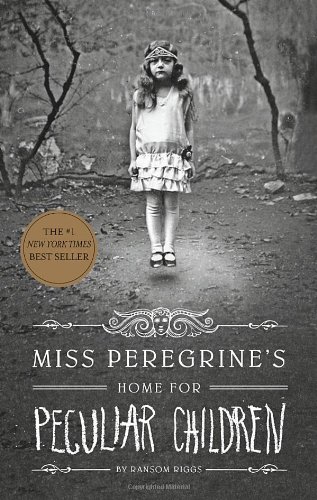
Miss Peregrine’s Home for Peculiar Children


I have to admit that I am a pretty picky reader when it comes to fiction. Mostly, I read realistic fiction but when survival and remote locations are involved I can be coaxed into giving a wider-range of stories a try.

So, when a friend’s sixteen year-old daughter recommended Miss Peregrine’s Home for Peculiar Children by Ransom Riggs, I gave it try.

From the back cover:

A mysterious island. An abandoned orphanage. And a strange collection of very curious photographs. It all waits to be discovered in Miss Peregrine’s Home for Peculiar Children, an unforgettable novel that mixes fiction and photography in a thrilling reading experience. As our story opens, a horrific family tragedy sets sixteen-year-old Jacob journeying to a remote island off the coast of Wales, where he discovers the crumbling ruins of Miss Peregrine’s Home for Peculiar Children. As Jacob explores its abandoned bedrooms and hallways, it becomes clear that the children who once lived here—one of whom was his own grandfather—were more than just peculiar. They may have been dangerous. They may have been quarantined on a desolate island for good reason. And somehow—impossible though it seems—they may still be alive.

In short, this book really operates outside of the box, using authentic, vintage photographs that the author has collected at flea markets to help drive and shape the story and the characters.

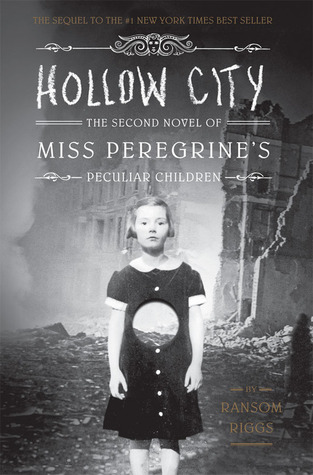
I liked the book so much that now I’m almost finished reading the sequel, Hollow City, and it is just as good as the first book.


Please note that these books are not classified as middle grade novels. Really, in my opinion, they defy classification in a good way. The plot is twisty and page-turning, and the photos included match the well-developed, unique characters the author has created. In terms of choosing these books for a middle grade audience, I would say upper middle grade would be as young as I would go, and then it would depend on how individual readers react to potentially scary stories. I’m curious what others think who have read one or both of these books in terms of recommending them for specific age groups, something I’m not an expert at. If you have thoughts, please leave them below.

I totally recommend these books both for a great read and for a fresh look at story-telling technique.

To top it off, the movie of the first book is due out in 2015.

Thanks for stopping by.

Wednesday, August 13, 2014

PICTURES AND THE STORIES THEY TELL by Eden Unger Bowditch


Words on the page give the reader a map. Pictures leave an impression- and artist’s impression- that become part of the book experience. Fabulous artwork can bring great things to a story. Art can have a life of its own in a book. Those two things can sometimes have very different effects on the reader.

Mary Grace Corpus and Jason Wiliford were the artists who did the illustrations in The Young Inventors Guild books. (Jason Wiliford did the chapter head sketches for The Atomic Weight of Secrets… and Mary Grace did the chapter head illustrations, as well as the blueprints for the inventions, in The Ravens of Solemano...) Each sketch has so much power, hinting at what will come in the pages ahead. The blueprints are crafted beautifully and offer a living schematic, something that only adds to whatever images are already dancing in the heads of readers.

Sometimes, though, the art breaks the spell and interferes. Sometimes, the artwork and the story are out of sync. We’ve all read books that are vastly different from whatever the illustrator (who clearly did not read the book manuscript) provided.

In Egypt, the artwork for locally produced kids’ books is due for an overhaul. Retro is one thing. Out-of-date design is another. Some of the art used in children’s books hasn’t changed for decades and was never attended to seriously. It feels like there may be only one or two working illustrators in the country and they learned their craft in the 50s.  Many modern booksellers are in pursuit of some fresh and fabulous local art- of which there is plenty!

We Project Mayhem authors are lucky to have really wonderful artwork in our books. It’s a great thing to have a publisher who pays attention to art and offers us some control when it co