Showing posts with label Middle grade fiction. Show all posts

Thursday, March 31, 2016

New Middle Grade: Avenging the Owl by Melissa Hart (post by Paul Greci)


Being an owl enthusiast, avid outdoors-person, and a writer of middle grade wilderness adventure stories, I jumped at the opportunity for an Advance Reading Copy of Melissa Hart’s new book, Avenging the Owl

Melissa Hart

 Melissa has published multiple articles and essays and two nonfiction books:


Avenging the Owl is her first middle grade novel!!

Covercopy for Avenging the Owl:

Thirteen-year old Solo Hahn boasts a big-screen TV, a room full of surfing trophies, and a beach house in Southern California. Then his father, worn down by a Hollywood career, attempts suicide, and his mother moves the family to a trailer in Oregon where a Great-horned owl attacks the only thing that matters to him. When Solo tries to shoot the bird and injures a neighbor boy with Down syndrome, he’s forced to do community service at a raptor rescue center with his newly-sworn enemies . . . owls.

Without giving anything away, i.e. no spoilers, I enjoyed the complex relationships Solo has with his parents, his neighbors, and the people he works with at the raptor rescue center. When you combine this character-driven story with a setting that shines, you get a page-turning tale. 

One aspect of the main character, Solo, that I loved was that he is a budding screen-writer and would use his scene-writing to process things going on around him. The scene-writing in script form also provided variety in the narrative and kept the story moving forward at the same time.

Avenging the Owl, published by Sky Pony Press,hits the shelves in Hardcover on April 5th.

Congrats, Melissa!!

Thursday, March 24, 2016

Irish novel THE APPLE TART OF HOPE (Review by Mary E. Cronin)


The middle-grade years are a braid of contrasts: burgeoning independence and adventure combined with the complications of friendships, family troubles, and a growing shadowy awareness of “out there.”

A character in the middle-grade novel THE APPLE TART OF HOPE by Sarah Moore Fitzgerald (Holiday House) expresses this contrast beautifully:

"There's this one moment as you're growing up when the world suddenly feels more or less pointless--when the terrible reality lands on you, like something falling from the sky...And when that happens, there's no going back to the time when it hadn't landed on you."  

Set in Ireland, THE APPLE TART OF HOPE is told in alternating voices of main characters and best friends Oscar and Meg (both age 14); it is a story of a missing boy, and so much more. But don’t let me mislead you into thinking this is a dark, dreary story; it is leavened with humor, magic, and tenderness. Oscar, who loves making the world’s most perfect apple tarts for anyone in crisis, goes missing—and is presumed dead. Meg refuses to believe it, and she teams up with Oscar’s brother to get to the truth. In reality, Oscar has gone into hiding. He’s bereft and hopeless due to a toxic mix of bullying, family trouble and feeling forsaken by Meg. A perceptive fellow, Oscar articulates these contradictions in this passage:

“As the days passed, I learned that there’s not much difference between pretending to be dead and really being dead. As far as I can see, both seem to amount to the same thing. 
   I learned that if someone you know disappears you shouldn’t automatically jump to conclusions. You should ask questions, and look, and search until you know for sure…Keep hope in your heart.”


Elements of dark and light are perfectly balanced in THE APPLE TART OF HOPE, which makes it a potent yet perfect choice for middle-grade readers. As I read it, I heard echoes of Maurice Sendak and his 1964 Caldecott speech (meaningful for middle grade writers!):

“…from their earliest years children live on familiar terms with disrupting emotions, that fear and anxiety are an intrinsic part of their everyday lives, that they can continually cope with frustration as best they can. And it is through fantasy that children achieve catharsis. It is the best means they have for taming Wild Things.”

Despite his fears and shadows, Oscar is a kind-hearted sensitive soul whose apple tarts have an almost magical effect on others, an effect in which he has ultimate faith:
“It’s not an ordinary apple tart. It’s magic. It’s the apple tart of hope. After you’ve taken a bite, the whole world will look almost completely different. Things will start to change and by the time you’ve had a whole slice you’ll realize that everything is going to be o.k.”


There are so many things I love about this novel. Its depiction of contemporary Ireland, small town life, and engaging dialog is balm to the soul of anyone who is weary of a recent media overloads of green beer and leprechauns. Fitzgerald expertly balances dark and light—feelings of hopelessness are not skimmed over, but hope and the importance of friendship prevails. The skillfulness of the dual points of view highlights the missed signals and misunderstood motivations that are characteristic of so many middle grade friendships. And Fitzgerald’s language, her way with words? Beautiful, lyrical, fresh—but in a manner that serves and does not distract from the rich story.

In an interview in the Irish Times, Fitzgerald stated, “Most of all though, The Apple Tart of Hope is a love story and in it, I’ve tried to show how love can weather all manner of storms and struggles, and how kindness can make us strong and resilient in this unpredictable world.”


Reading this novel left me feeling as secure and grounded as when I am sitting in the kitchen of my family in County Cork, Ireland, polishing off a slice of apple tart (a less-overstuffed version of American apple pie, with components of crust and filling in perfect balance). It fed me, it satisfied my soul, and it left me with more than a crumb of hope.


ADDENDUM: Two bonus interview questions with author Sarah Moore Fitzgerald:

Sarah, how did you deliver such a balance of dark and light in THE APPLE TART OF HOPE? There's no denying the weightiness of these realizations that middle-grade characters (and kids) are wrestling with, yet the book delivers such a message of hope. How did you approach braiding this dark and light together so well?

I know that the books I loved as a young adult were those that didn't try to sugar coat the challenges of life and the difficult, dark times that every human being has to face, -- but you're so right, you can't survive if you only see the darkness, if you cannot laugh and love and if you don't have hope in your heart. And I guess it is those reflections that made me want to strike the right balance in THE APPLE TART OF HOPE. I'm so glad to see that readers have picked up on that.  

And second, how have your young readers responded to this balance of dark and light?

I have had such lovely reactions from readers since the book was published, and almost all of those reactions talk about some personal experiences with grief or bullying or both. Some of my readers wish that Paloma (the novel's villain) had experienced more retribution at the end, or at least got her comeuppance - but others recognise that she has her own story of sadness and loss too, which might explain some of her darkness. 


Thank you, Sarah Moore Fitzgerald, for giving us added insight into your writing process! 

Follow Sarah on Twitter at @SMooreFitz
Sarah Moore Fitzgerald


Thursday, February 4, 2016

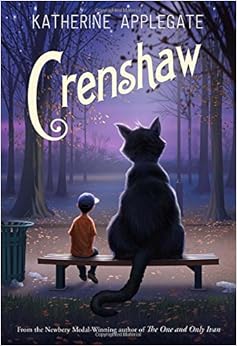
Some thoughts on Crenshaw by Katherine Applegate (by Paul Greci)


I was intrigued by one of the themes in Crenshaw, families who fall on hard times and find themselves homeless. As someone who has been in the field of education for 25 years I’ve seen this scenario many times.

Two of the many things I loved about Crenshaw were the emotional realism of the main character, and the way we are allowed into his world through his quirky, contagious, voice. Even if homelessness isn’t high your list of topics to read about like it is on mine, you’ll want to read Crenshaw for the voice.

Jackson is still a kid even though he has to deal with things that might make a kid grow up faster than what is ideal, and that comes through in his voice. 

The excerpt below is from the beginning of Chapter Two:

“Here’s the thing: I am not an imaginary friend kind of guy.
Seriously. This fall I go into fifth grade. At my age, it’s not good to have a reputation for being crazy.
I like facts. Always have. True stuff. Two-plus-two-equals-four facts. Brussels-sprouts-taste-like-dirty-gym-socks facts.
Okay, maybe that second one’s just an opinion. And anyway, I’ve never eaten a dirty gym sock so I could be wrong.”

From the Jacket Flap:

Jackson and his family have fallen on hard times. There's no more money for rent. And not much for food, either. His parents, his little sister, and their dog may have to live in their minivan. Again.

Crenshaw is a cat. He's large, he's outspoken, and he's imaginary. He has come back into Jackson's life to help him. But is an imaginary friend enough to save this family from losing everything?

Beloved author Katherine Applegate proves in unexpected ways that friends matter, whether real or imaginary.
 
Thanks for stopping by.

Tuesday, December 16, 2014

Christmas Stocking Must for Young MG Readers by Shannon O'Donnell

 
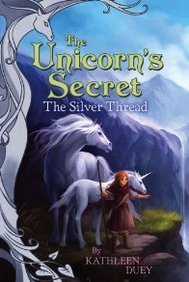
The Unicorns Secret Series
by Kathleen Duey


Moonsilver (Ready-For-Chapters) Moonsilver


Blurb:
Heart Trilby has no family. She lives a hard and lonely life in the dusty village of Ash Grove -- until she finds a scarred, skinny mare in the forest. Against the wishes of her guardian, mean-spirited Simon Pratt, Heart adopts the mare and names her Avamir. Heart is thrilled when she realizes Avamir is in foal. But when the colt is born weak and disfigured, Simon decides to sell Heart's beloved horses to be slaughtered by the town's soapmaker. Can Heart find a way to protect them -- and the only love she has ever known?

I have shared this series with each of my three children, and each of them loved it. Even though it is probably more girl than boy book, there is a strong boy character that my sons loved. The first time I read these books was when my almost-18-year-old was only six. We bought the first three at a school book fair and read them aloud together. 

While it is marketed as a "Ready-for-Chapters" title, the vocabulary is often more challenging than that, and I recommend it as a wonderful series through at least 7th grade, especially for horse or unicorn loving readers.

There are eight titles in this series, and each of them is a true delight to read. They have even been given updated, redesigned covers, which are beautiful and more appealing to today's kids. If you have any young MG readers to buy for, I HIGHLY recommend this title!


764851

The Mountains of the Moon (The Unicorn's Secret, #4)The Sunset Gates


Thursday, November 13, 2014

How MG Books Make Miracles Happen by Shannon O'Donnell


 A Teacher's Dream . . .

As a teacher, I have learned that some topics will, without fail, be met with loud and heartfelt groans when the kids discover it's THAT time in the curriculum. One of those topics is poetry.  Any fan of middle grade literature is familiar with Sharon Creech--author extraordinaire--and more than likely familiar with LOVE THAT DOG. This little book is a miracle worker! 

Whenever I start a poetry unit (following the customary moaning and groaning), I begin with the poems found in the back of LOVE THAT DOG. The kids are unimpressed. Then, I read the book and something magical happens. Suddenly, poetry isn't so bad. Suddenly, those poems are all awesome! Minds are opened for every poem that follows, and the unit even becomes fun for most of them. Oh, and did I mention . . . I teach HIGH SCHOOL students.  **MAGIC** 
 
Because of the overwhelming teacher and kid feedback to LOVE THAT DOG, Sharon responded by writing a companion title, HATE THAT CAT. Many of my students even prefer it. Both books are phenomenal.


Of course, these are not the first or only books to work miracles with students in the classroom. That is the beauty of literature. 
  • Patricia Polacco's PINK & SAY is a powerhouse for helping students feel empathy and gain insight to the Civil War and  AUNT CHIP AND THE GREAT TRIPLE CREEK DAM AFFAIR is wonderful for media literacy. 
  • I love to use THE BULLY by Paul Langan with my freshman. It opens eyes to the realities and emotional consequences of bullying more successfully than anything I've ever seen.   
  • MONKEY ISLAND by Paula Fox is powerful and sad, but it says so much about the human spirit and hope and second chances. It also opens our eyes to a societal issue that is too often overlooked.  
  • And then there is the long, long list of titles that have helped non-readers discover a love for reading. 
Books open doors to learning that my students would otherwise resist. To me, that is magic.

"Books are a uniquely portable magic."
~ Stephen King


What are some books that you would consider "magical" for young readers? I'd love to hear your thoughts or experiences.