To celebrate
the release of my new book, You Can Write for Children: How to Write Great Stories, Articles, and
Books for Kids and Teenagers, I’m sharing an excerpt from a chapter on dialogue
and thoughts:
A good scene typically has a mix of
action and dialogue, with some thoughts and enough description to help the
reader picture the setting. Some scenes are going to be mainly action. Others
are going to be mainly dialogue. If that’s appropriate to reality, that’s fine.
For example, people don’t usually stop in the middle of battle to have
conversations. Or you might have a character who is alone for a stretch of
time, with no one to talk to. But in general, a story will be more entertaining
and flow better if it has plenty of action and dialogue. Watch out for scenes
that are all description, with no action, or all action, with no dialogue.
Thoughts
as Dialogue
You can also use thoughts in place of
dialogue. This helps keep the action from seeming like just a lot of stuff
happening with no emotional reaction. Here’s a scene from my middle grade
Egyptian mystery, The Eyes of Pharaoh,
where there’s no dialogue. The main character, Seshta, has just dropped down
from the roof after spying on people. I’ll italicize the things that come
across as her thoughts, to make them obvious. However, they were not italicized
in the actual book. Also notice that I don’t need to say “she thought.” Because
we are in her viewpoint, it’s clear this is what she is thinking.

She
paused under a willow tree to calm and arrange herself. She moaned as she
smoothed her dress. Dust and little tears marred the fine linen, with one big
rip in the hem. How would she
explain the ruined dress to the priestess? She tried to cover herself
with the shawl.
Most
of the party guests still lingered at the far end of the garden. Musicians on
lutes, reeds, and drums had joined the harpist. Seshta trudged past the
pond. What should she do next? She
wanted to hear what Prince Penno said to Meryey, but they would be on their
guard to make sure Miw’s father didn’t spy on them.
Why was Miw’s father there? What did
the prince mean about “the other girl?” They hadn’t said anything yet about
Reya; she had to focus on him, whatever other strange things happened.
Notice how thought is woven in with
action to show her reaction. In a battle scene, you might have fewer thoughts,
but there could still be some, even if they’re brief:
Richard
is in trouble. Got to get to him.
That
came close.
Duck!
Don’t
Forget The Reaction
In real life, we don’t always know why
things happen. In fiction, we should. We expect story events to follow a
logical pattern, where cause leads to a reasonable effect. If you show a cause
without an effect or an effect without a cause, you confuse your readers.
This goes beyond the cause and effect of
major plot action. It includes a character’s internal reaction to the external
action. Yet I often see manuscripts where action is followed by action with no
internal reaction, so we don’t understand the character’s motives. No matter
how great the action, the reader is confused and skeptical.
 |
| This has ghosts for sure! |
Within each scene, you need to show not
only what your main character does, but also why. Don’t assume people can read
between the lines. In one manuscript I critiqued, the main character heard
voices. Ghosts? The narrator never identified them as such. Did the boy think
the voices had another source? Had he not yet decided? Maybe they weren’t
supposed to be ghosts after all. The writer may have assumed that readers would
interpret this properly, but by not putting the narrator’s interpretation on
the page, she left this reader confused.
In Manuscript
Makeover, Elizabeth Lyon suggests using this pattern: stimulus –
reaction/emotion – thoughts – action. In other words, something happens to your
main character (the stimulus); you show his emotional reaction, perhaps through
dialogue, an exclamation, gesture, expression, or physical sensation; he thinks
about the situation and makes a decision on what to do next; and finally he
acts on that decision. This lets us see clearly how and why a character is
reacting. The sequence may take one sentence or several pages, so long as we
see the character’s emotional and intellectual reaction, leading to a decision.
You can vary the pattern, but make sure you include emotions and thoughts so
your character’s behavior is clear.
An
Example from The Eighth Day
Dianne K. Salerni’s shares an example
from her middle grade fantasy adventure, The
Eighth Day. First, here’s the excerpt with action, dialogue, and
description, but no thoughts:

“Oh,
crap!” Jax yelled, braking.
It
took three tries for Jax to break through the glass doors of the Walmart with a
concrete parking block. He filled up a shopping cart with supplies he’d seen
people grab before snowstorms or hurricanes and during zombie movies.
Without including thoughts, Jax’s action
doesn’t make sense. Some readers might be able to guess why he’s doing what
he’s doing, but others might be baffled, or they might guess wrong. Here’s the
actual scene (slightly edited for brevity), with thoughts:
Jax
rode his bike into the center of town. The streets were empty. The traffic
lights were on, but frozen green, red, or yellow. (Stimulus: what he sees)
He
thought about zombies.
He
thought about alien abduction.
He
thought about the old movie where Will Smith and his dog were the last
creatures on earth. (Thoughts)
“Oh,
crap!” Jax yelled, braking. (Reaction/Emotion)
Will
Smith and his dog had not been alone in that movie. There’d been other
creatures that lurked in dark places and came out at night to kill. (Thoughts)
It
took three tries for Jax to break through the glass doors of the Walmart with a
concrete parking block. He filled up a shopping cart with supplies he’d seen
people grab before snowstorms or hurricanes and during zombie movies. (Action)
Now the reader knows what Jax is
thinking, how he’s interpreting the situation, so his actions make sense. The
scene is also more dramatic, with more emotion.
 |
| What's he thinking? |
Writers often forget to include the
character’s emotional reaction and decision-making. We are so familiar with our
characters that it’s obvious to us how they would feel and why they would do
what they do next. You just have to remember to put what you know on the page.
My first draft of a scene often focuses on the action and dialogue. I read back
through it intentionally focusing on the reaction, the character’s emotional
response, using both physical sensations and thoughts.
Make sure you’re using action, dialogue,
description, and reaction, possibly in the form of thoughts. Then you’ll have
vivid, believable scenes building a dramatic story.
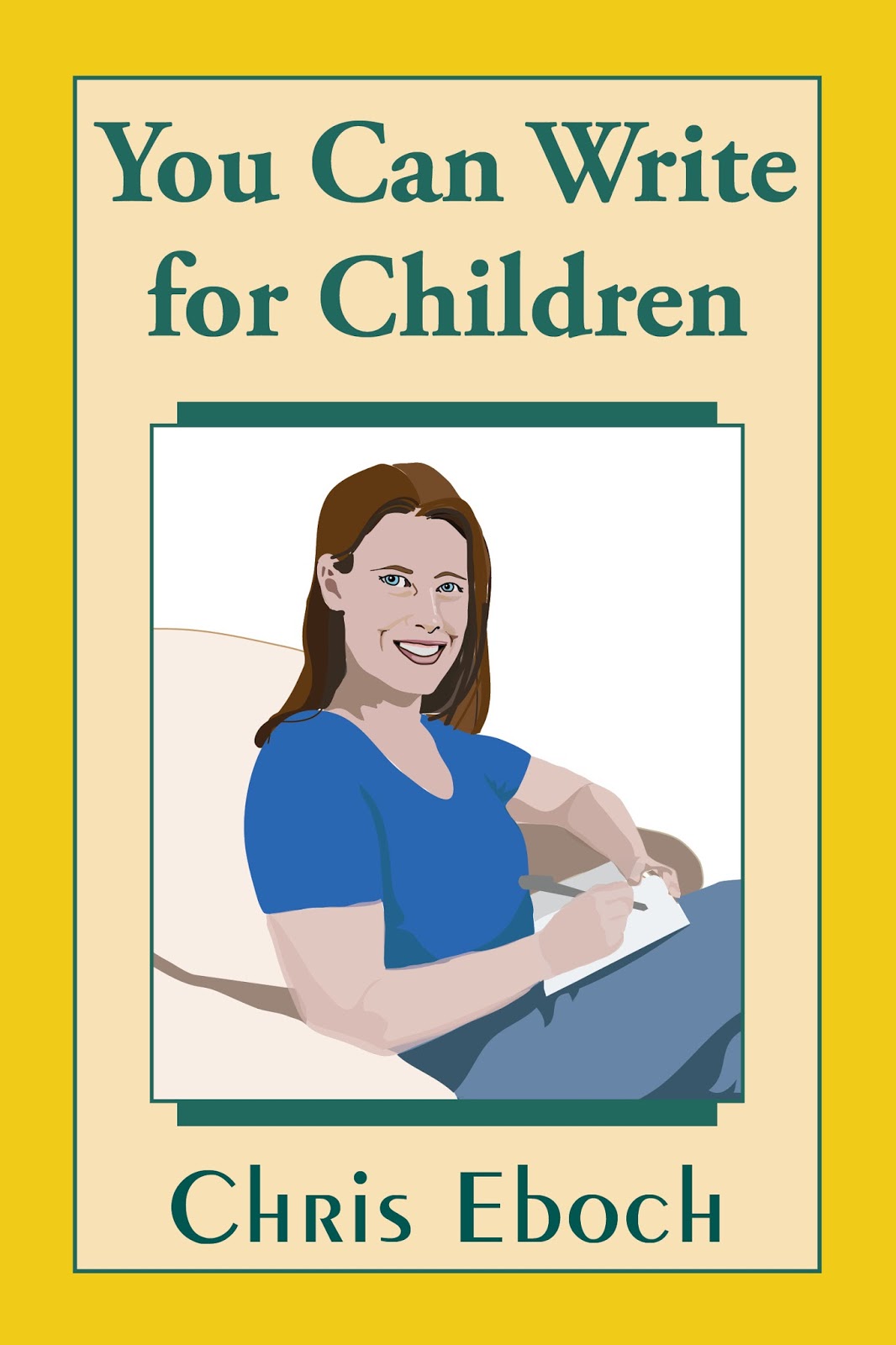
Find much more
advice on story development in You Can Write for Children: How to Write Great Stories, Articles, and
Books for Kids and Teenagers, which is
available for the Kindle, in paperback,
or in Large
Print paperback.
Chris Eboch’s
novels for children include The Genie’s Gift, a middle eastern
fantasy; The Eyes of Pharaoh, a mystery in
ancient Egypt; The Well of Sacrifice, a Mayan
adventure; and Bandits
Peak, a survival story. Her writing craft books include You
Can Write for Children and Advanced Plotting.
Learn more at www.chriseboch.com or her Amazon page, or
check out her writing tips at her Write
Like a Pro! blog. Sign up for her workshop
newsletter for classes and critique offers.