Showing posts with label middle grade classics. Show all posts
Wednesday, October 29, 2014
Celebrating a Classic: E.L. Konigsburg's FROM THE MIXED-UP FILES OF MRS. BASIL E. FRANKWEILER (post by Michael G-G)
Last week, I got all excited about BRIDGE TO TERABITHIA, and asked the Mayhem Universe for recommendations about other classics people loved. E.L. Konigsburg's FROM THE MIXED-UP FILES OF MRS. BASIL E. FRANKWEILER got a lot of love, so I decided to do yet another celebration and repost a review I did last year on my own blog, Middle Grade Mafioso. Now I've just got to read me some more Konigsburg to be considered a well-read Mafioso!
The Story (from Goodreads): When suburban Claudia Kincaid decides to run away, she knows she doesn’t just want to run from somewhere, she wants to run to somewhere — to a place that is comfortable, beautiful, and, preferably, elegant. She chooses the Metropolitan Museum of Art in New York City. Knowing her younger brother Jamie has money and thus can help her with a serious cash-flow problem, she invites him along.
Once settled into the museum, Claudia and Jamie find themselves caught up in the mystery of an angel statue that the museum purchased at auction for a bargain price of $225. The statue is possibly an early work of the Renaissance master, Michelangelo, and therefore worth millions. Is it? Or isn’t it?
Claudia is determined to find out. Her quest leads her to Mrs. Basil E. Frankweiler, the remarkable old woman who sold the statue, and to some equally remarkable discoveries about herself.
Why I Liked It: Okay, so this one's a classic, a Newbery winner, and over 40 years old. Yet I hadn't read it until my son and a couple of his friends filmed their version of the novel for the 90-second Newbery. I decided to read it too, to see if it stood the test of time.
I have to say it did. The characters are intriguingly quirky, there's a lot of wry humor, and it's a total kid fantasy--I mean, who among us kids hasn't dreamed of escaping from having to live with those pesky grown-ups and their constant demands! Claudia and Jamie's intrepid spirits win us over (even while the grown-up me was worrying about why nobody had recognized the runaways. But that's a modern mindset, in these days of ubiquitous media.)
It's a quick read, so if you've been putting it off it won't take you long to speed through it!
Finally, I had to laugh at the letter published in the appendix of my 35th anniversary edition of the novel. It's from editor Jean Karl and starts "Since you came in with FROM THE MIXED-UP FILES OF MRS. BASIL E.FRANKWEILER, I have found myself chuckling over it more than once. I have read it only once... I do really want this book. I will be sending you a contract very shortly..."
No mention of agents, editorial boards, sales reps not liking it--and all the other stories one hears about in modern publishing. It seems like you could just walk in to a publishing house with your novel and drop it on the editor's desk! (Nowadays, if you tried that, you'd be chased out by security and then made fun of on Twitter.)
As for more classics, I've now got MANIAC MAGEE in my sights. Happy reading, everyone!
Wednesday, August 27, 2014
My Time in the Secret Garden
This week, I read The Secret Garden by Frances Hodgson Burnett for about the twentieth time. I first read The Secret Garden when I was nine and borrowed it off my best friend’s bookshelf. We often played in one of the local gardens together, so she thought I’d love the book since it was “full of flowers.” She was right—and over the next couple of months I must have borrowed her copy two or three times before I finally saved up enough money to buy my own. I still have it, still read it, and it has been much worn and much loved over the many years since then.
There were many things I found magical about The Secret
Garden as a child. Who wouldn’t want a beautiful garden all their own, locked
away from the rest of the world, overrun with roses and lilies and daffodils
and all sorts of beautiful growing things? I loved the old-fashioned setting
where people relied on ships and trains and carriages to reach their far-flung
destinations instead of cars and airplanes. I loved the colorful cast of
characters, many of whom spoke in a charming Yorkshire accent that I couldn’t
quite reproduce out loud no matter how hard I tried. I loved Dickon’s way with
animals and wished I was talented enough to entice fox cubs, squirrels, and
birds to sit on my shoulder and follow my every step. And because I lived in
such a warm, sunny climate, I was entranced by the idea of romantic, rainy
moors where the wind “wurthered” throughout the night.
I think even back then, I appreciated the book’s themes of
regeneration—of a garden, an outlook on life, a family. I loved the idea of the
transformative powers of nature. Of course, I couldn’t articulate these
thoughts as a nine-year-old, but I knew these themes were there and loved them
all the same. As an adult, I’m probably even more appreciative of quite power
that comes off the pages when I read the book, of hope, redemption, regrowth,
and rebirth.
When I finished The Secret Garden last week, it was the
first time I’d read it in a couple of years, and it was a lovely reminder that
I need to revisit some of the classic books of my childhood a little more
often. If there is one book forever linked to my childhood love of reading,
it’s definitely The Secret Garden. Sometimes, I get so caught up in new
releases about magic and monsters and aliens and secret societies, I forget the
quiet beauty of some of the classical works of children’s literature. Don’t get
me wrong, I LOVE the exciting new books that make their way onto bookstore
shelves as much as the next person. (Maybe even MORE than the next person.) But
I’m trying harder these days not to forget some of the amazing stories that have
been entrancing readers since long before I was a child reader myself. After
all, they’re classics for a reason.
photo credit: ukgardenphotos via photopin cc
Friday, June 6, 2014
The Luck of Reading The Luck Uglies: Review of an Adventurous Debut Novel by Paul Durham
There are books we
all hope to find that do more than simply tell a story. These books take us
with them. They take us with them on the adventure and we feel like we know the
world around us when we go. And these are rare treasures we keep and pass
along. Author Paul Durham’s first MG/YA novel, The Luck Uglies, is one of those rare books.
An adventure and an
introduction to Village Drowning and all its inhabitants, The Luck Uglies has a timeless feel, as if it might just as
believably come from the hidden library in a castle as from the work of a
modern writer. It is both clever, never
underestimating the intelligence of the young reader, and exciting, never
forgetting that everyone loves a good adventure.
We were able to
catch Paul Durham in the midst of all the excitement of The Luck Uglies. While there are heaps of questions I could list, like Rye O'Chanter, we will have to be content with a few at a time:
1.
Who are a few of your favorite authors and/or books (few people have just one!)
that might have inspired some of your writing?
There
are so many great middle grade authors and books it is indeed difficult to
narrow it down, but I always find myself coming back to the same examples.
The Chronicles
of Prydain series by Lloyd Alexander has stayed with me ever since I was a
child. I’ve reread the series twice as an adult and it still holds up as
compelling reading. Its five books tell a story that is timeless and epic in
scope, and yet the storytelling remains intimate and accessible.
A more contemporary
favorite is The Graveyard Book by Neil Gaiman. This was one of those
books that just knocked me over when I read it because it was so good. It's
hard to call it a children's book because, really, it's for everybody. It is
exactly the type of book that inspires me to be a better writer.
•
2.
You mention that you started telling the story to your kids. Who were your
first characters?
Rye
O'Chanter was the very first character to make it onto the page. This seems so
fitting because she was heavily inspired by my own daughter, who prompted my to
write The Luck Uglies in the first
place. Of course, Rye needed cohorts, so her little sister Lottie and her best
friends, Folly and Quinn, weren't far behind.
•
3.
There is such a rich Village Drowning history the reader can sense. Can you
give us a few things about the place that aren't in the book?
That's
such a great question--I often think of Village Drowning as its own
"character." Like any character, there are things about it that even
I haven't discovered yet, but here are two tidbits I can share. Beneath the
streets of the village, there is a place even older than the Spoke that the
link rats call home. Also, in addition to the bogs and river, Drowning is
bordered by a brackish body of water called the Great Eel Pond. Enormous
culverts drain water from the pond under, rather than over, the village.
Needless to say, Drowning remains damp even under the best of
circumstances.
•
4.
Is this the beginning of a journey for Rye? Are there more Luck Ugly book
coming?
Yes, I'm happy to
report that this is just the start of Rye's journey. The Luck Uglies is a trilogy, with more books to come in spring
2015 and 2016. I'm finishing Book 2 right now.
Durham weaves a
tale that truly brings you into Rye O’Chanter’s strange and mysterious world.
The story makes you wish the book would not end so you can uncover more secrets
that promise to be hidden there.
- eden unger bowditch
Friday, August 10, 2012
The Wind Is Not a River
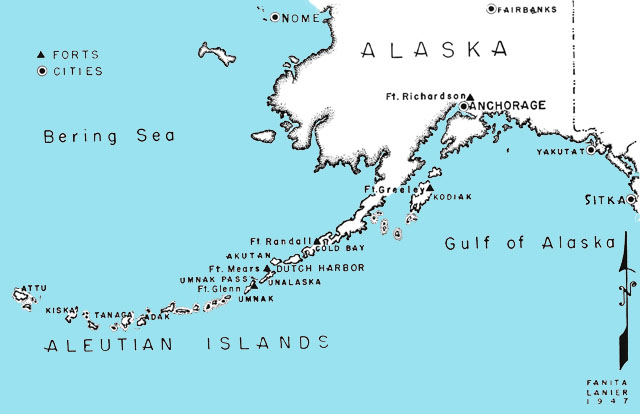
The Wind Is Not a River by Arnold A. Griese is an amazing piece of historical fiction set in a
place that is often overlooked in World War II studies— on Attu Island at the edge of the Aleutian Chain.
From the back
cover:
A quiet Sunday
morning, June 8, 1942, on the lsland of Attu, off the Alaskan coast. Sasan and
her younger brother, Sidak are on their way to church when they realize that
their village will soon be taken over by the Japanese army. Escaping the
invaders, they helplessly watch the capture of the village. Now, hiding out in
the hills, they must take their food and shelter from the land the same way
their Aleut ancestors did. And when they discover a wounded Japanese soldier on
the beach, their belief in the old ways, which Grandmother taught, is put to a
crucial test.
Ages: 7-10
Pages: 128
List Price: $9.95
Cover: Paperback
Published: 11/1/1995 (originally published in 1978)
ISBN: 1-56397-564-5
ISBN-13: 978-1-56397-564-6
I first devoured this book several years ago and hope to
work it into my classroom this year. If you’re looking for an exciting story
with well-developed characters that will provide you with a window into a
unique time and place, then I’d recommend The Wind Is Not a River.
I’ve also read and enjoyed another of Griese’s middle grade
novels, At the Mouth of the Luckiest River where “a physically impaired
Athabaskan boy defies the odds and becomes a great medicine man in this true
story set in nineteenth-century Alaska.” Library Journal gave it a starred
review.
These are both classic Alaskan middle grade novels with
really cool illustrations by Glo Coalson.
If you have one, share your favorite MG historical fiction, or one you really enjoyed, in the comments!! I'd love some more titles.
And my little piece of news, my young adult novel, Sacrifice
Area, which is set in the future in Alaska, was awarded second prize in the
Pacific Northwest Writers Association’s 2012 contest in the young adult/middle grade category.
Thanks for stopping by.
Monday, March 26, 2012
What was your First Middle Grade Novel?
Merry Monday morning, Mayhemers! I know, it's hard to be chipper on a Monday, but I'm here at work, at 6 AM, so I've got little choice. Well, I suppose I could be grumpy, but it's hard enough to make it through the day as is.
Anyway, today I want to talk about what the first book we fell in love with around the age of MG readers (or in my case, a little before, but that's okay). Now, I know, this is a bit of a stretch. There was no such thing as MG or YA when Tolkien wrote The Hobbit, and it's hard to argue it's a Middle Grade novel when the main character is 50 years old in the book (if I remember correctly). But, I think the argument can be made that were The Hobbit written today, someone in one of the Big 6's marketing departments would sell it as a Middle Grade Fantasy.
Now, I could easily be wrong, but I'll try to make an argument for why it might work. For one thing, even though Bilbo is 50 something, he's a Hobbit, and Hobbits, while hale and hardy, and somehow far more resistant to the power of magic rings than men, aren't actually considered adults until they're 33. So a fifty-year-old Hobbit is still somewhat young. And besides, even full grown Hobbits are just cute. They're always sort of roly-poly, optimistic, and clever. They're the perfect characters for young readers to enjoy, even if they do smoke and drink a lot.
Another thing that I think makes this book one that would fit in well as MG is the plot, and the level of adult content it includes. Which is to say: very little. There is some violence, but it is almost always resolved comically or with a pleasant escape, and there is never any death, unless you count the dragon at the end. Bilbo and his Dwarves escape the trolls when the sun comes up and turns them to stone. They escape the Goblins when the Eagles pluck them from the trees. They escape the Wood Elves by riding barrels down the river. These are all clever ways to get out of danger without including something that would frighten young children. Heck, I read this book in like third grade, and I absolutely fell in love with it. I had the read along graphic novel version that came with a vinyl record you could listen to.
So I could probably go on about this book, and Tolkien, forever, but the point here is that this was the first full length novel I read as a boy, and it engendered my love of reading ever since. It wasn't technically a MG novel at the time, but I think it would fit in on that shelf today, and I have certainly let my kids read it, as young as they wanted to. I can't wait until my nephew is 8 or so, and I can turn him on to Middle Earth as well. Are any of you as excited for the film adaptation as I am?
What do you guys think? Have you read The Hobbit? Think it would sell as MG if published today? What MG books first influenced your love of reading?
Subscribe to:
Comments (Atom)