Showing posts with label first drafts. Show all posts

Thursday, September 29, 2016

Writing a First Draft by Paul Greci

Tomato Seedlings


Right now I’m about three quarters of the way through a first draft. I’ve been writing most mornings before I go to work, usually putting about 750 to 1000 words on the page. (I've also been harvesting our garden, but more on that later.)

For every manuscript I’ve written the drafting process has been somewhat different, but I do try to keep a few things in mind when I’m working on a first draft.

----Stay uninhibited, i.e., don’t let my brain get in the way of my heart.

----If I have an outline I use it as a guide—not a detailed map. Give the story room to grow.

----If I know the ending I’m writing toward, and hopefully I do, I want to stay open to different ways of getting there.

-----I give myself permission to do “some” research as I see needed to get information to move the story forward. I don’t want to get bogged down, but if I need to know something that’s going to influence the direction of the story, then I usually stop and do the research instead of just making a note.

-----I reread the chapter I’ve written the previous day and make changes that jump out at me before writing the next chapter.

Like the photo of our baby tomato plants above, writing a first draft is like tending seedlings. There will be plenty of time for weeding, thinning and pruning (and hopefully harvesting) later, but right now it just needs water, sunlight, soil, and room to grow.

Part of our tomato harvest.

 What are some of the things you do when writing a first draft?

Paul Greci is the author of Surviving Bear Island, a 2015 Junior Library Guild Selection and a 2016 Scholastic Reading Club Selection. 

Tuesday, February 11, 2014

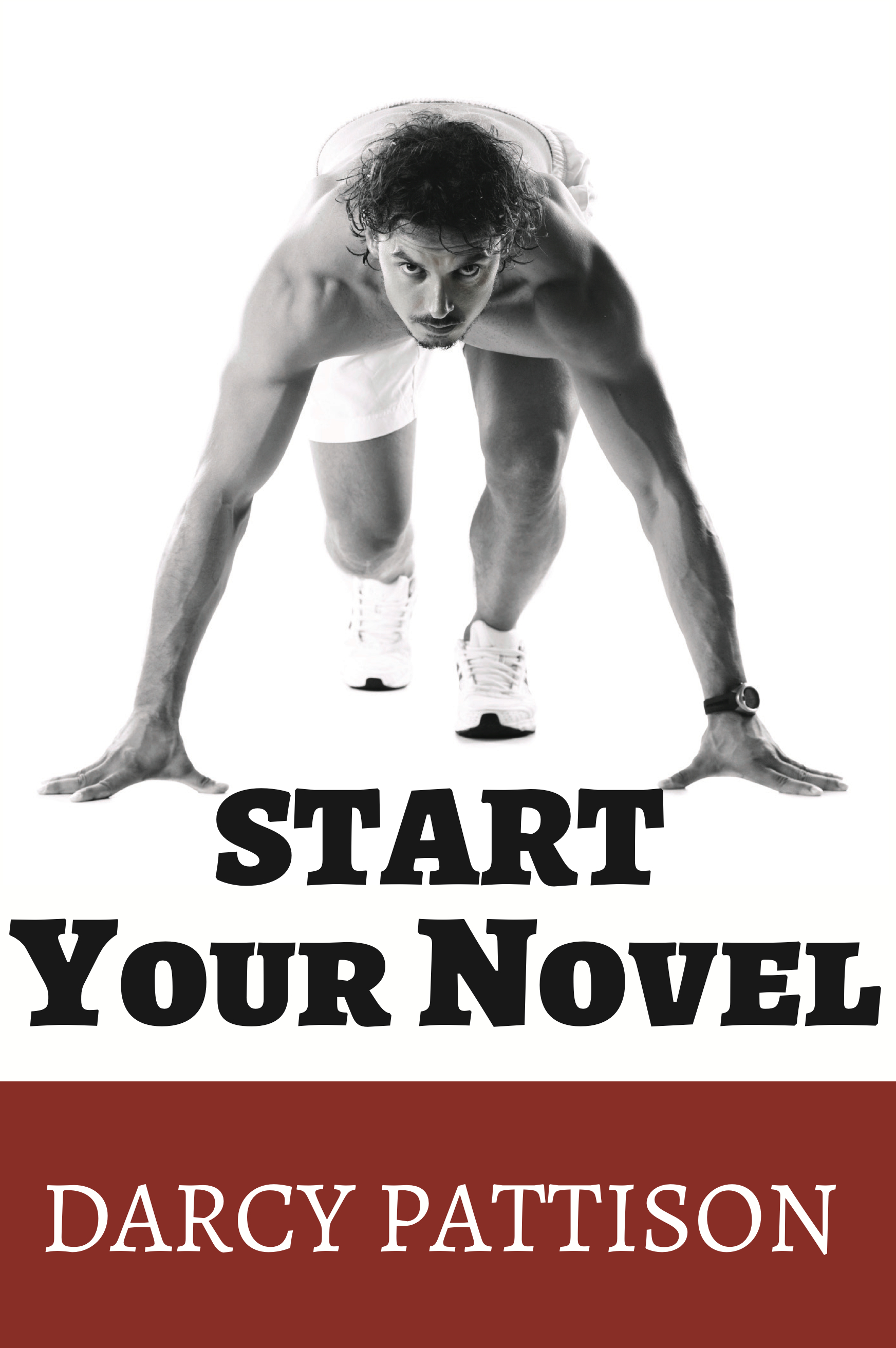
START YOUR NOVEL: SIX WINNING STEPS TOWARD A COMPELLING OPENING LINE, SCENE, AND CHAPTER by Darcy Pattison

The one thing I can count on when starting a new manuscript is the feeling I’ve never written a book before. Because each of my stories has to find its own way, and I can always use a refresher course on this thing called writing, I decided to use writing guru Darcy Pattison’s latest book, START YOUR NOVEL, as my guide when drafting a new book during National Novel Writing Month last November.

Darcy opens her book by stating everything a first chapter must accomplish:

  • grab your reader’s attention
  • ground your reader in the setting
  • intrigue the reader with a character
  • give the reader a puzzle to solve
  • set the pace

The first chapter sets the stage for the rest of the book. The first sentence builds on the first page builds on the first chapter. And to grab an editor’s attention, all three must shine.

I consider myself a “plotser” (or “planster”, as Darcy would say) -- someone who doesn’t fully plot a story but also doesn’t fly by the seat of her pants. Darcy says her approach might feel overly rigid to pantsters or too loosey-goosey to plotters. For me, her system feels like the perfect fit.

So you have an idea for a story? Now’s the time to brainstorm possible scenes. Next Darcy suggests studying the “29 Plot Templates” to decide which structure might best tell your story. Will your book be a quest? A story of escape? One about an underdog or forbidden love? “Each plot pattern would require a different set of scenes, emotions, motivations.” The approach you take will affect how you let your possible scenes play out.

Darcy then briefly discusses exploring your protagonist with one key element in mind: your character’s pain. “What is the character most afraid of; what could make the character hurt the most? Of course, you must make your character face this very thing.”

Now you’ve got some possible scenes and a structure for these scenes to unfold. With your character’s pain pinpointed (and the things you know she must face to bring about change), you have the beginnings of your character’s arc.

scene ideas + plot pattern + character arc = the beginnings of your book

Because you’ve not yet committed hours and hours to writing at this point, there is plenty of freedom to play with your ideas: adding scenes, deleting them, changing a character’s motivation or the type of story you’d like to tell. As someone who’s written a few books and many more “trunk manuscripts,” I appreciated this experimental phase. It’s something I need to do more of before my drafting begins.

“The function of a first draft is to find your story. The function of the next few drafts is to find the best way to tell that story.”

To that end, Darcy spends much of her book showing authors how to experiment with different approaches. For example, what type of sentence structure might you use to start your book? Darcy identifies twelve types of opening sentences*, gives examples of each, and then tries each type for her own novel-in-progress. In pushing herself to study her opening from different angles, she’s able to find the best way to tell the story.

As I planned and then drafted my NaNo novel, this book was an invaluable guide. And once I've given it a few months to breathe, I’ll pull Darcy’s revision book, NOVEL METAMORPHOSIS, off my shelf.

What books do you recommend for starting a new piece of writing?

*Here are a few to consider:
  • It was... It is... This is...
  • viewpoint on life
  • mid-action
  • dialogue
  • landscape
  • misleading lines

Monday, November 11, 2013

An Incurable Pantster Plots with Her Characters

With the galleys of THE EIGHTH DAY mailed back to the publisher and revisions of Book 2 sent to my editor, the time came to face Book 3. So I called on my characters for help ...

Dianne: Hello, team! Glad to have you all back for Book 3 in this series – and to the new characters, welcome. I assume you’ve seen the proposed outline for the next book, and ...well ... you know I’m not very good with outlines. But after two books, we’re used to working together, so I figure you guys will know where I’m going astray.

MG Protagonist: Well, there’s something majorly wrong with the climax. In the first book, we saved the world. I mean, the Villain was this close to succeeding. (holds up his fingers a millimeter apart) And in the second book, you backed off from that. There was plenty of exciting stuff, all right – my identity was at stake, and my two YA friends’ lives were in danger … But it was all very personal.

YA Character 1: Yeah, he’s right. Personal stakes were okay for Book 2, but in Book 3, we’ve got to get back to saving the world.

Dianne: But the New Villain has an evil plan … That's End of the World stuff right there.

YA Character 2: And you have us stopping him while he’s still three or four steps away from succeeding. Not very scary.

Dianne: I see your point.

New MG Character: If you let the New Villain get a little closer to success, he’s going to have to involve me. I’m going to have to make up my mind which side I’m on. Won’t that solve the problem you’re having with my character arc?

Dianne: You’re right. It will! Good idea!

New Villain: I object to my cartoonish nature. You did everything but give me a cape to swoop and a mustache to twirl. Can’t you provide me with some depth?

Dianne: Not in the outline, buster. You’re going to have to develop your personality on the page, just like everybody else here.

YA Character 1: Yeah. You should have seen how she had me planned in her outline for Book 1. But I set her straight by the end of the first draft.

Secondary MG Character: Hey, how come I don’t show up until the middle of the book? I was beginning to think I didn’t have a part!

Dianne: We couldn’t have a story without you! Readers simultaneously love you and want to strangle you. But you aren't needed until this part.

Secondary MG Character: But after you bring me in, I’ve got nothing to do. I don’t even see my name mentioned in the climax!

Dianne: I didn’t know how I was going to use you in the climax of Book 1 either, but I brought you along for the ride – and when the time came, I discovered what you needed to do. Trust me. You’re my wild card. When it’s time to use you, I’ll know.

Secondary YA Character: Now it’s my turn to complain. What’s this about me possibly dying?!

Dianne: It’s the third book. There should be casualties. We can’t just kill off bad guys and lose none of our own. What do you think this is, the Twilight series?

Secondary YA Character: But why me? Do you know how many times I’ve saved his life or bailed him out of trouble? (points at YA Character 1)

Dianne: That’s kind of why you have to go. That and your unrequited feelings for him.

YA Character 1: (holds his hands up) Hey, don’t kill her off for the sake of my character arc. I don’t want to take the rap for that!

MG Protagonist: I don’t think it’s fair for you to kill her as a cheap emotional trick.

Secondary YA Character: I refuse to be the All is Lost Moment! (starts cleaning her weapons in a threatening manner)

Dianne: I wouldn’t waste you like that. If you go, it will be a Turning Point – a Courageous Sacrifice for your friends. Otherwise, I won’t do it. Deal?

Secondary YA Character: (puts away her weapons) Deal. I’m never going to win his heart away from her anyway. (shoots a dirty glance at YA Character 2) I might as well go out in a Blaze of Glory.

YA Character 2: (under her breath) Please do.

MG Protagonist: Hey, the ending scene is all right by the way.  Good job there.  All that mushy stuff between the YA characters is over and it’s back to me. Me and  my MG friends and How I’ve Grown Up Since Book 1. But there’s still room for more, know what I mean? I’m only in eighth grade after all.

Dianne: That’s what we’re working toward, then. That ending. Okay, folks. Let me mull over the World Stakes Climax and New MG Character's arc, and we’ll meet back here for Chapter 1 in a couple days. We can do this. Right?


Right? Cross your fingers for me, PM readers. I hope I can do this!

Wednesday, February 20, 2013

The Fun of World-Building

I'm just starting out on a new writing project and remembering how delightful it is to dream up an otherworld.  Fantasy authors get the added fun of making everything up.  Food?  Animals?  Setting?  Economy?  All of it must be created and pieced together in a somewhat logical puzzle.  This is tricky, because there's always so much more than will ever make it to the book.  I've spent many writing hours on badly done sketches and maps that will never see the light of day, but I don't think of any of them as wasted.  As any book-loving author knows, the deepest way to enter a story is to write one.

I've been living, writing, and revising in the Land of Story for the past five years, and I love that world, I really do.  But this new world?  Can I just tell you how much I love it, too?  I'm at the stage now where there are an overload of ideas, and I'm struggling with how to sort everything into some semblance of order.  For now, this is my process:

Stage 1: I start with the scribbled spiral notebook pages that testify I grew up in the '80s when even if you had a PC you didn't use it except for your computer "homework".  (Yes, indeed, that was my one and only venture into programming).


Stage 2: These notes translate to scattered post-its categorized by "Plot", "Setting", and "Character".  Mostly, these are vague ideas: dormitories are in a tree, or something like that.

Stage 3: The final stage takes a better shape, where things are color-coded (hooray for an excuse to linger in the office-supply aisles!), each character has specific goals, plot points are solidified, and setting is developed.  This is the closest I ever get to an outline, and typically all these pieces make it into the story, even if they're rearranged quite a bit by the end.

Right now, I'm at Stage 2, where things are taking shape but still are a bit of a mess.  The nice thing is, that this hangs on my bedroom wall, so in those groggy waking-up moments when inspiration hits, I can dash out a sticky note before it's too late.

What about you?  How do you organize your world-building?  Do you have any tips on capturing inspiration?  Or possibly you have a fabulous office supply you just can't live without?  Do share!