Showing posts with label outlining. Show all posts

Tuesday, January 16, 2018

I'm Stuck...In A Fight...In My Own Head! By Hilary Wagner


Yes, I'm talking about the old fight scene!

The pure mechanics of fight scenes mess with my head. I don't want to be over descriptive, taking away from the action. I don't want to be under descriptive, making it unclear what is actually happening in the fight. I don't want it to be bland, as in "Paul hit Peter in the face," (yeah, that's riveting literature) and I certainly don't want it to be too colorful, as in "Blood spurted from the cavernous wound like an angry volcano of gory wrath!" I am writing for children after all...though that's never really stopped me before. I digress....  


Long story short, if there is one place in a manuscript where I'm going to get stuck, it's a fight scene. I'm not an outliner, so I map every move out in my head as I go...which is probably the slowest way to write a fight scene. I'm a huge fan of boxing, so that's helpful, but even still, all the moves involved in a fight...at least a non-boring one can be pretty complicated. 

How do you handle your typical fight scene? 

For those of you who have a certain joy writing them or are the quintessential note takers before actually writing a fight scene, I'd love to hear your take. What's your process? How do you keep it interesting without going overboard? 


Give us your super ninja street cat fight gang warfare bad guy/good guy cage fight to the death action packed "king kong got nothing on me" wisdom!

(For kids books, of course, so maybe not quite to the death...well, maybe, depends on the book and sometimes our mood.)

Thanks! Hilary

Thursday, June 15, 2017

Chris Eboch Asks: Does Plotting Take Away the Fun?

We talk a lot about writing process on this blog. (You’re welcome.) It’s always interesting to see how other authors work. In general terms, we are often broken into two groups – plotters who plan things out in advance, and pantsers who make things up as they go (writing “by the seat of the pants”).

One statement I’ve regularly heard from pantsers is that plotting would “take the fun out of writing.” Today I got wondering… Is this something people know from experience, or is it an assumption? Possibly a false one?

Let me give you an example from my current work in progress. This is a mystery novel for adults, but the process would apply to middle grade as well.

I started by developing a main character, some family members, and a mystery premise. I knew “whodunit” but not much else. At a recent small writing retreat, we sat around talking about our WIPs (works in progress) and people tossed out reactions and feedback. This gave me some great new ideas. I brainstormed additional ideas and wrote down everything on scraps of paper. (I hadn’t brought index cards, which I would normally use for this kind of thing.)

Then I shuffled the ideas around until I had a plot I thought worked well, alternating quieter investigation moments, such as interviewing people, with more dramatic action scenes, and weaving in subplots. Finally, I wrote this up as an outline.

Now that I know “everything” that happens, did I remove all chance for spontaneity and surprises in the writing?

No way!

Let’s look at my upcoming scene. First, some background: Kate is a conflict journalist who has returned to her childhood home to recover after a serious injury. Her mother is in an Alzheimer’s care unit, and the director there – an old acquaintance of Kate’s – asks Kate to quietly look into some suspicious deaths at the Home. Besides the two deaths, one woman had a mysterious illness but recovered. Here is the description of the scene I’m about to write, from my outline:

Visit woman who got sick while [the woman’s] family is there. Discuss the symptoms of her illness. A family member makes the comment that it would be better if she had died.

Does this look like there are no opportunities for creativity or surprises in the scene? Here are some of the things I don’t yet know:
  •         Where should the scene take place? In the patient’s room, or a common room? What is the room like? How can I describe it vividly with a few specific details?
  •         What is the elderly patient like? What’s her appearance? How does she behave? She’s in an Alzheimer’s care unit, so I may want to watch some videos of Alzheimer’s patients.
  •         What are the family members like? How many are there? What is their relationship to the patient? How do they behave?
  •         How does the scene play out? How does Kate asked questions without revealing that she’s investigating?
  •         Kate has a strained relationship with her sister, who is also present but doesn’t know about Kate’s investigation. How does the sister react to what’s happening? Can I create more conflict between the two of them?
  •         Kate’s father has recently learned what she’s doing and wants to help her. What can he do in this scene? What about Kate’s mother and other secondary characters?

As you can see, having an outline doesn’t mean you don’t have flexibility, creativity, or surprises. Besides the questions above, I may come up with a new twist or a way to drop in a clue that I hadn’t anticipated.

What Works for You?

I fully believe that when it comes to writing technique, there’s no one right answer for everyone. If you have a process that’s working for you, congratulations! Keep at it! If you feel there’s room for improvement, you might want to try some different things.

And if you’ve always assumed that brainstorming and outlining would ruin the creativity and fun, please don’t knock it until you’ve tried it.

Here are some posts on plotting and process from other Project Mayhem authors:


Plus a few more plotting resources:


Also, my book Advanced Plotting offers a tool for outlining and analyzing your plot, along with articles on fast starts, developing middles, plot points, cliffhangers, and more advice on making your work stronger. Get the paperback or e-book on Amazon.

Get The Plot Arc Exercise as a free Word download you can edit at my website.

Chris Eboch is the author of over 40 books for young people, including The Eyes of Pharaoh, a mystery in ancient Egypt; The Well of Sacrifice, a Mayan adventure; and the Haunted series, which starts with The Ghost on the Stairs. Her writing craft books include You Can Write for Children: How to Write Great Stories, Articles, and Books for Kids and Teenagers, and Advanced Plotting.

Learn more at www.chriseboch.com or her Amazon page, or check out her writing tips at her Write Like a Pro! blog.

As Kris Bock, Chris writes novels of suspense and romance involving outdoor adventures and Southwestern landscapes. The Mad Monk’s Treasure (FREE at all ebook retailers!) follows the hunt for a long-lost treasure in the New Mexico desert. Whispers in the Dark features archaeology and intrigue among ancient Southwest ruins. What We Found is a mystery with strong romantic elements about a young woman who finds a murder victim in the woods. In Counterfeits, stolen Rembrandt paintings bring danger to a small New Mexico town.

Read excerpts at www.krisbock.com or visit her Amazon page. Sign up for the Kris Bock newsletter for announcements of new books, sales, and more.

Monday, August 3, 2015

Evolution of a Writing Process by Donna Galanti


My writing resource bookshelf
I wrote my first book organically five years ago (which remains hidden in a shoebox). I got up Monday through Friday and free-wrote from 4:30am to 6:30am and in seven months I had that first novel.

My second book: written organically in the wee early morning hours but with a basic story idea.
My third book: written with a detailed outline, character worksheets, professionally edited.
My fourth book: written with a detailed outline, character worksheets, story bible, and went through several editing, agent, and beta reader passes.
My fifth (and last book): written under a contract with a 10-page outline, extensive character worksheets, story bible, character arc/series arc outline, went through in-depth revision process with developmental and copy editors. 


Pheww…that all sounds exhausting when I read it.
My notes from one book
I dreamed of flinging away the processes and getting back to writing organically with my sixth book like I had when I wrote my first book. I romantically imagined myself in the dark morning hours all alone facing white pages. Tubs of coffee. Notepads and slippers and unbridled words. I would wander and discover. I would let my muse drive me (in the tradition of Shakespeare in Love). I would escape into the fiction dream and live on words alone!

And it was glorious. I rose like a Phoenix in the golden sky. I gave new life to old wings.

Then I crashed and burned. 

My story fell apart. Wonderful and fantastical events and creatures came to life….that had nothing to do with the story of the main character’s transformation. Too much was happening. Too many people had secrets. Too many characters had no purpose. Too many events had no meaning.

Wait a minute…what was this story about?? 

I had lost it. And I realized why.

Because I had evolved and I couldn’t go back. Like first kisses. First dates. A firstborn child. You can never go back and experience it the same way ever again. You know what happens and how it works. You can’t un-know it. And with this, came the knowledge that I am not a write-by-the-seat-of-my-pants gal. I need structure and organization and a path to THE END.

At first I was sad but then I realized if I hadn’t evolved my writing wouldn’t have either. I wouldn’t have strengthened my craft and knowledge about how to write a good story. 

I couldn’t de-evolve. So I decided to embrace my evolution.

Yeah. It's like that. All at once.
I looked back at my last novel and realized something. When I submitted that novel to my publisher within a six month time frame, I knew it was the tightest and most polished draft I had ever written. I’d brought all that I had learned over the past few years in one massive punch. I’d fully accessed my writer’s toolbox – a box now full to the brim with knowledge I’ve gained from editors, deconstructing books, classes, conferences, and my own application. And I suddenly knew that I had not written this book alone – many people contributed to my success of it.

And along this evolutionary path I discovered the writing process that works for me in this order:

1. Create a detailed story outline that is solid and ties in the main character arc across the plot points.

2. Write a pitch paragraph that includes the premise of the story. What is this story about?

3. Create character worksheets and journal in each character’s voice.

4. Do what world building I can (the rest will be found along the way). Draw a map. Create a story bible of setting, creatures, magical elements, history, etc.

5. At the beginning of each chapter create a guide to keep me on track which includes this information:
*Main character’s goals of each chapter/scene
*What main character’s discovers in each scene and how it propels him forward
*What we can learn about other characters in each scene
*What we can learn through dialogue about other characters
*World building goals in each scene
*Outer turning point: in each scene which things change that everyone can understand
*Inner turning point: in each scene which the scene’s point of view character also changes as a result.

6. At the end of each chapter write a one-line sentence about it so when the book is complete I will have a strong synopsis (and that’s good for back cover copy too).

7. Create a revision guide and add in specific things to check for when the first draft is done related to:
*Narrative flow
*Backstory (where and when to have)
*Repetition (with words and scenes)
*Setting consistency
*Pacing and tension
*Plot holes
*Timeline of events
*Character development relating to consistency with speech.
*Character reactions. Ask: How would each character react in each moment?

8. In writing, allow for discovery but check that it ties into the MC’s character arc and story premise.

This process may not be organic but it did allow for organic discovery within the parameters of the story. With my most recent book I wrote on a tight deadline, I had new characters show up and old characters leave. I combined characters. I changed how information was found. But all the magic that burst on the page was aligned with the plot points and connected to the growth of the main character. 

And I learned that what I so longed for again no longer worked for me. And the myth of the angst-filled, free-flowing, genius writer hanging his hat alone in his cave is just that – a myth. We can write alone but we can’t get published alone. And I’m glad.

Sometimes you get what you need, not want you want. And that’s a good thing.

I wonder what kind of writer I will evolve into next?

How have you evolved in your writing process? 

Pens up. **Chink**

Thursday, March 5, 2015

Connecting the Dots by Dianne K. Salerni


I used to call myself a pantster and claim that I was unable to outline a book I’d want to write. (I can outline a book that stinks … no problem there.) But I’m not really a pantster in the sense that I take off writing with no idea where I’m headed. I generally have several plot points in mind: a beginning, a conflict, a few key events, and an ending.

These plot points are the dots in a mysterious picture that will become my first draft. Connecting the dots is the challenge, and I never see the big picture, including themes, until I’ve connected the last dot and realize, Aha! Now I know what story I was trying to tell. That’s why I always roll right into my second draft without a break. It’s kind of like the real first draft, with the first one being an exploratory venture.

E.L. Doctorow says, “Writing is like driving at night in the fog. You can only see as far as your headlights, but you can make the whole trip that way.” I think he must be referring to my style of writing – dot-to-dot. Writing a first draft takes me months and months, often with a hiatus in the middle because I’ve lost my way. Revising a completed draft, by contrast, takes me only two or three weeks.

Unfortunately, when writing books under contract, I don’t always have months and months to fumble my way through the first draft like I’m playing Blindman’s Bluff. (Especially since I would never hand in a first draft to an editor. I’d prefer not to hand in a second draft either.) I get very frustrated and angry with myself when I can’t figure out how to reach the next dot – or if I realize the whole thing is lacking a set of dots I wasn’t counting on. (Sub-plot? What sub-plot?!)

In recent weeks, I’ve been trying to do what I said in the first paragraph of this post that I can’t do: outline. I need to write a synopsis as a proposal for an option book, and I’ve been trying to figure it out as a sort of “draft zero.” I sincerely hope Doctorow is right. I’ve got my headlights on. I’m creeping forward one dot at a time. The saving grace may be that I only need to figure out enough for a synopsis to sell the book. IF the option gets picked up …


… the real first draft will probably be another adventure in connecting the dots.

Monday, January 5, 2015

Headlight Goals by Kell Andrews

With the Headlight Method, you only need to see what's coming next -- works for me for both writing and other goals.
I'm working on a new novel, one that I have outlined in a synopsis but no further. I have a clear creative vision, but not a clear outline. I have novels that have been waylaid in the process of outlining, where I couldn't solve a plot point and then the whole thing fell apart. As much as outlines have helped me in the past, this time I'm using the Headlight Method, which I first learned of in James Scott Bell's indispensable reference, Plot & Structure.

E.L. Doctorow is credited with the saying, "Writing is like driving a car at night. You can only see as far as the headlights, but you make the whole trip that way."

Neither pantser nor plotter am I, but something between. I need to see the next step, but if I have to have every detail done, I will never be done.

In the Headlight Method, you only need see as far as what's in your headlights -- you write scene by scene. When you get to the end of each, ask what next? What is the character's emotional state? What is the next action the character needs to take?

I have a synopsis; I know where I'm going. I use the Headlight Method for what's next.

This is going to be my approach to plotting but also writing goals, and other goals for 2015 too. When I have think about how long it will take me to write 100,000 words, I'm daunted. But I can think about 10K words, I can see my way to what's next. Similarly, if I have to think about how to achieve a long-term health goal or a large financial goal, I'm overwhelmed. But if I can plan until the end of this month, I can be ready for next month.

So instead of New Year's Resolutions or New Year's goals, I have goals for what's next in my headlights -- for this month, this week, or today.

Or perhaps just next 30 minutes for  a writing sprint to get in another 500 words or another scene. Then I'm ready for what's next.


More explanation of the Headlights Method:
How to Outline a Novel Using the Headlights Method

Tuesday, February 11, 2014

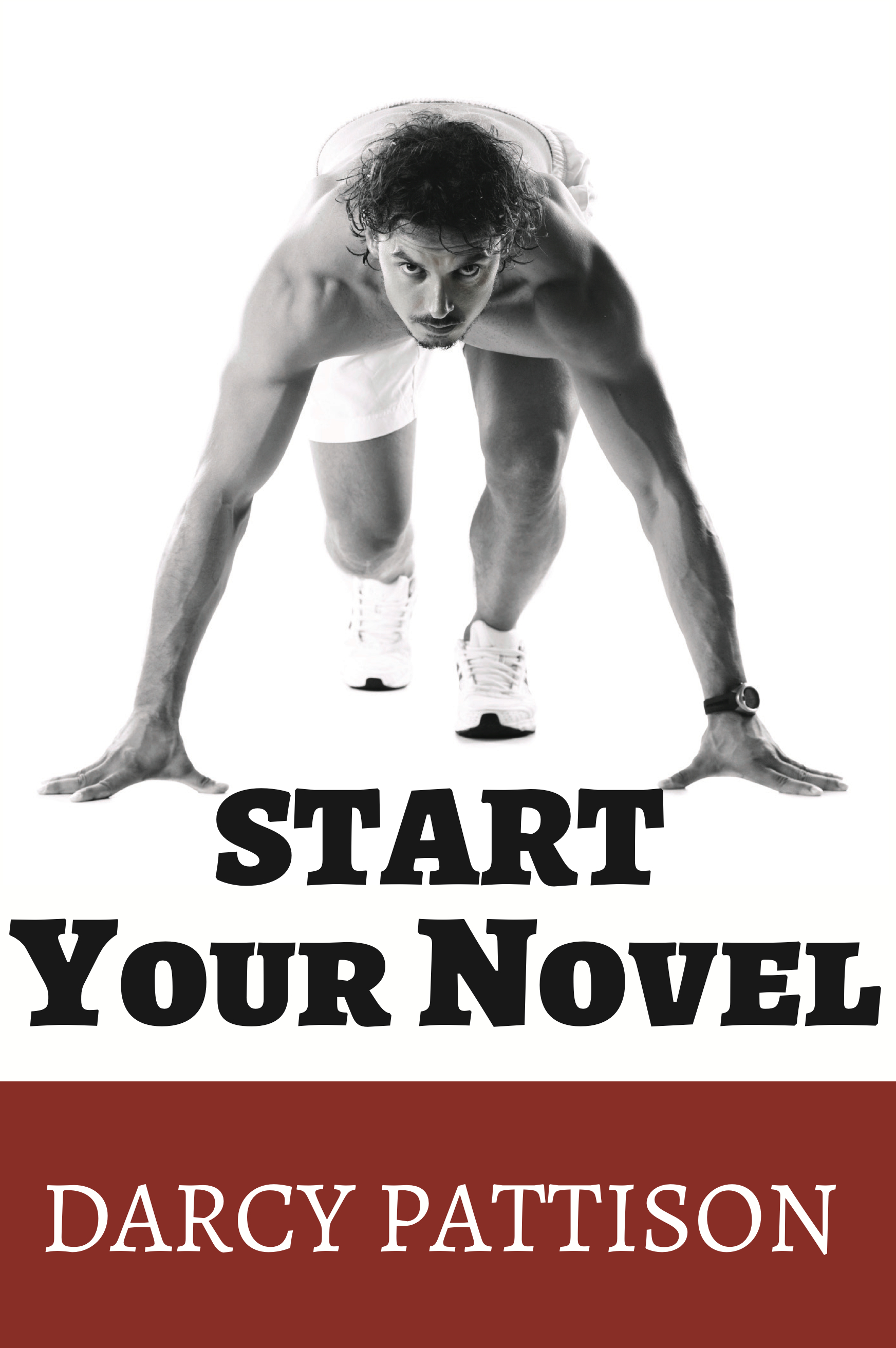
START YOUR NOVEL: SIX WINNING STEPS TOWARD A COMPELLING OPENING LINE, SCENE, AND CHAPTER by Darcy Pattison

The one thing I can count on when starting a new manuscript is the feeling I’ve never written a book before. Because each of my stories has to find its own way, and I can always use a refresher course on this thing called writing, I decided to use writing guru Darcy Pattison’s latest book, START YOUR NOVEL, as my guide when drafting a new book during National Novel Writing Month last November.

Darcy opens her book by stating everything a first chapter must accomplish:

  • grab your reader’s attention
  • ground your reader in the setting
  • intrigue the reader with a character
  • give the reader a puzzle to solve
  • set the pace

The first chapter sets the stage for the rest of the book. The first sentence builds on the first page builds on the first chapter. And to grab an editor’s attention, all three must shine.

I consider myself a “plotser” (or “planster”, as Darcy would say) -- someone who doesn’t fully plot a story but also doesn’t fly by the seat of her pants. Darcy says her approach might feel overly rigid to pantsters or too loosey-goosey to plotters. For me, her system feels like the perfect fit.

So you have an idea for a story? Now’s the time to brainstorm possible scenes. Next Darcy suggests studying the “29 Plot Templates” to decide which structure might best tell your story. Will your book be a quest? A story of escape? One about an underdog or forbidden love? “Each plot pattern would require a different set of scenes, emotions, motivations.” The approach you take will affect how you let your possible scenes play out.

Darcy then briefly discusses exploring your protagonist with one key element in mind: your character’s pain. “What is the character most afraid of; what could make the character hurt the most? Of course, you must make your character face this very thing.”

Now you’ve got some possible scenes and a structure for these scenes to unfold. With your character’s pain pinpointed (and the things you know she must face to bring about change), you have the beginnings of your character’s arc.

scene ideas + plot pattern + character arc = the beginnings of your book

Because you’ve not yet committed hours and hours to writing at this point, there is plenty of freedom to play with your ideas: adding scenes, deleting them, changing a character’s motivation or the type of story you’d like to tell. As someone who’s written a few books and many more “trunk manuscripts,” I appreciated this experimental phase. It’s something I need to do more of before my drafting begins.

“The function of a first draft is to find your story. The function of the next few drafts is to find the best way to tell that story.”

To that end, Darcy spends much of her book showing authors how to experiment with different approaches. For example, what type of sentence structure might you use to start your book? Darcy identifies twelve types of opening sentences*, gives examples of each, and then tries each type for her own novel-in-progress. In pushing herself to study her opening from different angles, she’s able to find the best way to tell the story.

As I planned and then drafted my NaNo novel, this book was an invaluable guide. And once I've given it a few months to breathe, I’ll pull Darcy’s revision book, NOVEL METAMORPHOSIS, off my shelf.

What books do you recommend for starting a new piece of writing?

*Here are a few to consider:
  • It was... It is... This is...
  • viewpoint on life
  • mid-action
  • dialogue
  • landscape
  • misleading lines

Monday, November 11, 2013

An Incurable Pantster Plots with Her Characters

With the galleys of THE EIGHTH DAY mailed back to the publisher and revisions of Book 2 sent to my editor, the time came to face Book 3. So I called on my characters for help ...

Dianne: Hello, team! Glad to have you all back for Book 3 in this series – and to the new characters, welcome. I assume you’ve seen the proposed outline for the next book, and ...well ... you know I’m not very good with outlines. But after two books, we’re used to working together, so I figure you guys will know where I’m going astray.

MG Protagonist: Well, there’s something majorly wrong with the climax. In the first book, we saved the world. I mean, the Villain was this close to succeeding. (holds up his fingers a millimeter apart) And in the second book, you backed off from that. There was plenty of exciting stuff, all right – my identity was at stake, and my two YA friends’ lives were in danger … But it was all very personal.

YA Character 1: Yeah, he’s right. Personal stakes were okay for Book 2, but in Book 3, we’ve got to get back to saving the world.

Dianne: But the New Villain has an evil plan … That's End of the World stuff right there.

YA Character 2: And you have us stopping him while he’s still three or four steps away from succeeding. Not very scary.

Dianne: I see your point.

New MG Character: If you let the New Villain get a little closer to success, he’s going to have to involve me. I’m going to have to make up my mind which side I’m on. Won’t that solve the problem you’re having with my character arc?

Dianne: You’re right. It will! Good idea!

New Villain: I object to my cartoonish nature. You did everything but give me a cape to swoop and a mustache to twirl. Can’t you provide me with some depth?

Dianne: Not in the outline, buster. You’re going to have to develop your personality on the page, just like everybody else here.

YA Character 1: Yeah. You should have seen how she had me planned in her outline for Book 1. But I set her straight by the end of the first draft.

Secondary MG Character: Hey, how come I don’t show up until the middle of the book? I was beginning to think I didn’t have a part!

Dianne: We couldn’t have a story without you! Readers simultaneously love you and want to strangle you. But you aren't needed until this part.

Secondary MG Character: But after you bring me in, I’ve got nothing to do. I don’t even see my name mentioned in the climax!

Dianne: I didn’t know how I was going to use you in the climax of Book 1 either, but I brought you along for the ride – and when the time came, I discovered what you needed to do. Trust me. You’re my wild card. When it’s time to use you, I’ll know.

Secondary YA Character: Now it’s my turn to complain. What’s this about me possibly dying?!

Dianne: It’s the third book. There should be casualties. We can’t just kill off bad guys and lose none of our own. What do you think this is, the Twilight series?

Secondary YA Character: But why me? Do you know how many times I’ve saved his life or bailed him out of trouble? (points at YA Character 1)

Dianne: That’s kind of why you have to go. That and your unrequited feelings for him.

YA Character 1: (holds his hands up) Hey, don’t kill her off for the sake of my character arc. I don’t want to take the rap for that!

MG Protagonist: I don’t think it’s fair for you to kill her as a cheap emotional trick.

Secondary YA Character: I refuse to be the All is Lost Moment! (starts cleaning her weapons in a threatening manner)

Dianne: I wouldn’t waste you like that. If you go, it will be a Turning Point – a Courageous Sacrifice for your friends. Otherwise, I won’t do it. Deal?

Secondary YA Character: (puts away her weapons) Deal. I’m never going to win his heart away from her anyway. (shoots a dirty glance at YA Character 2) I might as well go out in a Blaze of Glory.

YA Character 2: (under her breath) Please do.

MG Protagonist: Hey, the ending scene is all right by the way.  Good job there.  All that mushy stuff between the YA characters is over and it’s back to me. Me and  my MG friends and How I’ve Grown Up Since Book 1. But there’s still room for more, know what I mean? I’m only in eighth grade after all.

Dianne: That’s what we’re working toward, then. That ending. Okay, folks. Let me mull over the World Stakes Climax and New MG Character's arc, and we’ll meet back here for Chapter 1 in a couple days. We can do this. Right?


Right? Cross your fingers for me, PM readers. I hope I can do this!

Friday, November 9, 2012

Outlining: write with the end in mind


Write with the end in mind. That advice has been around for a pretty long time, I think, but it seems to me that in the writers' blogosphere, pantsers (a.k.a. people who don't outline) run amok, for various reasons: it's liberating to write without an outline; if you don't know where your plot's going, then neither will your readers be able to predict the plot. (Honestly, I'm not quire sure of the reasons. As you might've guessed, I'm not a pantser.)

But there's a reason, I believe, why "write with the end in mind" is valid advice. Every story needs a plot arc. If you know where your plot arc ends, you'll always have an end goal towards which you can work. It also saves you from wandering through your middle in one direction, only to realize that your story actually ends up over there -- and thereby rendering your first 10,000 words useless.

As an outliner, I like to go beyond figuring out the ending; I usually summarize the general events of my middle, too, so I always have a general idea of the scene I should be writing. But as long as you know where and how to bring your story to a close, I think you can go ahead and pants your way through the middle.

Do you follow this advice? Why or why not?

-Yahong

Wednesday, June 22, 2011

Highlighters, coloured index cards & gel pens, oh my!

(Side note: who says "oh my" anymore? Not any young'uns, that's for sure. Oh and plus, this post is looong. So maybe... don't read it on your lunch break?)

I have a stationery fetish.

 In fact, I'm writing these very words on gorgeous paper that can only be defined as orchid (aka purple). I take any opportunity to use my rawksome old-fashioned writing utensils. Yeah, that's right, I actually write on paper. And this is the Millenium baby you're talking to! In my opinion, there's no better way to put your hand muscles to work than when outlining. Here's a colourful method to try. (And, since this post turned out to be way longer than I thought, I gave you subtitles! Yay!)

index cards + setting = highlighters + characters

Assign each setting in your novel an index card colour, say orange for school, blue for home, red for the water park, etc. Write down a summary sentence for each scene on its respective colour and lay them out in front of you. What do you see?

If there's a lot of orange, then you know you can take the time to develop your protag's school life more in-depth. Add some teacher names, describe a favourite (or hated) class, maybe even a little description about the barf-coloured bathrooms? My point is: if one setting is particularly important, make it interesting, make it reactive. Make it alive. Setting is a powerful element you can manipulate, and coloured index cards will help you do just that.

Now assign each of your secondary characters (basically, everyone except your main character) a highlighter colour. Mark every scene with the colours of the characters present and then take a gander. Just like with your settings, identify which secondary characters are most essential to the story and make them distinctive. Consider giving them some backstory, or conflict amongst themselves. An active setting is a treat, but active characters are a must.

gel pens + small stuffz = OMG I WANT THAT GLITTER PEN.

Now that you've got some of the big-picture stuff down, arm yourself with those gel pens -- oooh, is that a sparkly teal blue? Here, I'll trade you my hot pink for it. Pretty please? What? Keep going? Oh right, sorry. Got sidetracked. Ahem. *clears throat*

We're going hunting for adverbs, telling vs. showing and dialogue tags. Underline any adverbs you find in, say, purple, any passages full of telling where you could be showing in yellow, and dialogue tags in green.

Look over each purple mark and ask yourself if those adverbs really are necessary. Same with the dialogue tags -- can the conversation carry itself after a while? And for yellow passages, decide whether showing or telling would be more effective. Sometimes it is the latter, but those occasions must be judiciously identified.

conclusion. Because my high school English teacher always tells me I need one.

By now your hands are probably smeared with glitter and your floor might be littered with index cards. But hey, who ever said a creative mind is an organized one? ;)