Showing posts with label setting. Show all posts

Wednesday, September 30, 2015

Melanie Crowder on Setting in A NEARER MOON


When I saw the cover for Melanie Crowder's A NEARER MOON, I jumped at the chance to read and share it with Project Mayhem. In person, the book is even more beautiful than the image appears on your screen - there's a shimmer to the gorgeous illustration, which wraps around the entire cover. Inside, the book is every bit as lush and gorgeous as it is on the outside. I found such a deliciously realized setting (along with a heartfelt story and memorably characters) that I had to bring Melanie Crowder in to answer some questions about crafting setting in MG.

The setting in A NEARER MOON is essentially a character in the book, and an extremely important one at that. The plot and the central conflict are inextricably tied into the setting. At what stage in your development of this book's idea did the setting start forming?

At the very start!

I’m a really visual person, so my stories almost always begin with an image. This time, I could see a thin girl on a shallow boat, poling through still water. All around her was a jungle, and a mist of sorts that told me there was magic in that swamp.

That’s it—that’s all I had! No plot. No character motivation. No idea why she was there, or where she was going. But the setting I knew, and the rest fell into place as I began writing.

Does the setting develop as you create the plot and characters, or do you brainstorm specifically on setting?  Does that development happen in your head, or do you make a map or a Pinterest board or some other visual reference?

What I do is research. I seek out travel photographs and indexes of flora and fauna from the ecosystem I’m inspired by. Even though my setting is made up, I am pulling details from our world. I think that serves to ground the story so that when I add in the culture I created in my mind and the magic I imagined, they feel believable.

The coolest part was researching homes around the world that float or are held up on stilts above the water. Try it—search online for images of houses on stilts. Fascinating, isn’t it? How could I not be inspired?

A NEARER MOON is your first fantasy. How did the process of crafting a setting differ when writing a fantasy, versus a contemporary or historical? 
It’s so fun!

The great thing about fantasy is you’re not only inventing the world that exists during the time in which your story is set, but you’re also creating that world’s history and traditions. The world I created had two civilizations living side by side: humans and sprites. So I got to write the setting from two very different perspectives, and I got to layer in the history of both civilizations, and the imprint each had on the land they inhabited. 

With contemporary or historical, you have to be true to history and reality. With fantasy, you have the freedom to make the choices that are true to your story.

You've written for both MG & YA audiences. Do you think there's anything that distinguishes a great MG setting from a setting for any other age level? What do MG readers respond to in a setting?

The thing I love most about middle grade readers is their willingness to believe that magic is real and possible and right there around the corner if you only look hard enough. You know—the Tinkerbell effect!

My readers believe in the creature at the bottom of the swamp, so when I describe the murky layers of silty water below the boat, they shiver with delight because, of course a terrifying swamp creature lives down there!

Your cover is amazing, with a strong focus on the book's all-important setting. Can you tell us a little bit about the cover process? Does it match what you imagined in your head as you were writing?

Yes! The cover is fantastic! I am so grateful to the team at Atheneum for placing this story inside such a lovely package. The cover shimmers when you hold it in your hands—it’s magical!

My editor came to me with two options for cover artists they were considering. It’s so fun—you get to look through their online portfolio and imagine what, with that artist’s style and techniques and tastes, he or she might imagine for your story. It’s so fun!

That said, the covers for my books are never quite what I would have imagined, and that’s a good thing. What I have in my head when the book exists solely in my own mind is different from what the book is to a reader who comes to the story with an open heart and mind. The cover is a reflection of that fresh impression, that first read. It’s something that I, with all my attachments and connections to the story, could never imagine. Bringing a book into the world truly is a team effort, and I am so grateful for my team!

Finally, any tips for other writers as they craft their own settings for MG audiences?

I’ll leave you all with a challenge:

Think about your setting, and how you can infuse those qualities into the very sentences that you write. If your setting is lush, how can you mirror that in your prose? If your setting is harsh, how can you mirror that in your prose?

My first middle grade book was about a dry, barren landscape, so the prose style was sparse to match it. A NEARER MOON is set in a swamp, and explores the interconnectedness of actions and emotions through time, so I used a lot of repetition in my writing; I picture the repetitive prose style as ripples extending out from a pebble dropped into still water.

It’s all connected—setting, plot, character, prose style. The more you can make the setting a part of the other three, the more your setting will feel intentional and essential to your story.

Good luck!

Thanks so much, Melanie! You can find Melanie at her website or on Twitter.

Here's a bit more about A NEARER MOON, which you can find here and here and here:

Along a lively river, in a village raised on stilts, lives a girl named Luna. All her life she has heard tales of the time before the dam appeared, when sprites danced in the currents and no one got the mysterious wasting illness from a mouthful of river water. These are just stories, though—no sensible person would believe in such things.

Beneath the waves is someone who might disagree. Perdita is a young water sprite, delighting in the wet splash and sparkle, and sad about the day her people will finally finish building their door to another world, in search of a place that humans have not yet discovered.

But when Luna’s little sister falls ill with the river sickness, everyone knows she has only three weeks to live. Luna is determined to find a cure for her beloved sister, no matter what it takes. Even if that means believing in magic…


Friday, May 17, 2013

Using new settings to refresh your story, by Yahong Chi

I was in the midst of revising my current middle-grade novel when one of my beta readers gave me a piece of feedback I found enlightening. In essence, she suggested I move my protagonist to a new location and have the next plot-related event happen there. Instead of returning to the same locale, my characters could interact in, and with, a whole new setting.

This struck home in so many ways. Why? Because a well-developed new setting introduces variety; allows different character traits to develop; provides potential plot fodder; and, finally, is just plain fun to write!

It would be impossibly monotonous if your contemporary middle-grade protagonist moved from home to school and back again for the entirety of the novel, wouldn't it? Not to mention it wouldn't be very realistic. Introducing a new setting can give your world more texture and make it feel more complete. This also has the bonus of making the scene a little harder to predict, especially if you've established certain routines in other settings (e.g. get nagged at by mom at home).


People act and think differently in different places, and this can be a powerful tool in developing your characters by showing, not telling. If your protagonist is shy at school, for example, a local soccer field may be the perfect place for her or him to let their confidence grow, which could then contribute to their overall character arc. Or contrast how your outgoing social butterfly is confident when helping tutor kids at a Kumon facility but feels small and inadequate when shopping at a big mall—and why. By having your characters interact with the setting, you can show facets of their personalities in different but potent ways.

The discovery of new places is always exciting, even if it's just a hidden grove of trees in an otherwise urban city; or it could be a new planet in a sci-fi novel that sparks the entire plot. Whatever the level, introducing a new setting always comes loaded with the potential of moving the plot forward. Clues or hints can be dropped, and clandestine meet-ups can be planned. Or, conversely, epic battles could take place there, or your worst nightmare could come true. Because of the shift in setting, possibilities open themselves up in all directions.


Finally, I don't know about you, but starting a scene in a new location is always a jolt of fun for me! I get to wind new bits of description into the narration, then figure out how these characters I've created are going to react. I get to explore the new paths offered by this setting and have character relationships develop in very interesting ways in the new locale. All in all, the new setting provides a feeling of freshness, an optimistic sort of "I-haven't-tried-this-yet-so-I-haven't-messed-up-on-it-yet!" feeling.

Of course, new settings should be as well-developed as possible, and too many locations can end up confusing the reader. As always, it's all about balance. So whenever you feel like you might be suffering from writer's block, or you can't decide how to move forward, try creating a new setting.

What do you think? Do you use your settings in this way?

Wednesday, June 6, 2012

It's Old, and it's New


Tomorrow I start a ten day period where I will be living in the home I grew up in, and with some of the people I grew up with—my mom and dad. My dad just had a kidney removed, he’s 85 years old, and will take some time to recover. I’m traveling to Indiana help with his recovery.

Life is a mixing of the familiar with the new. The oak tree in our backyard still stands, but the cottonwood, honey locust, and weeping willow (the one I used to climb as a kid) are all long gone.

In the living room my mom’s piano, which she’s had for almost 60 years, occupies one wall. When their grandsons come over sometimes they use sheet music on an Ipad while playing.

With the exception of two, the other houses on my parents’ street have changed owners several times. Most of the backyards which used to provide short cuts have all been fenced in but I can still remember taking them.

In our stories we’ve got a couple hundred pages to create a meaningful and engaging, and hopefully page-turning, arc of growth. It doesn’t matter whether your story takes place over 24 hours or 24 months or 24 years. You take a life-cycle and you sort of compress it and expand it at the same time. You take an old theme, because there are no new ones, and shine a light on it from your experience and you see something new.


It’s old, and it’s new.

Monday, August 22, 2011

Setting CPR


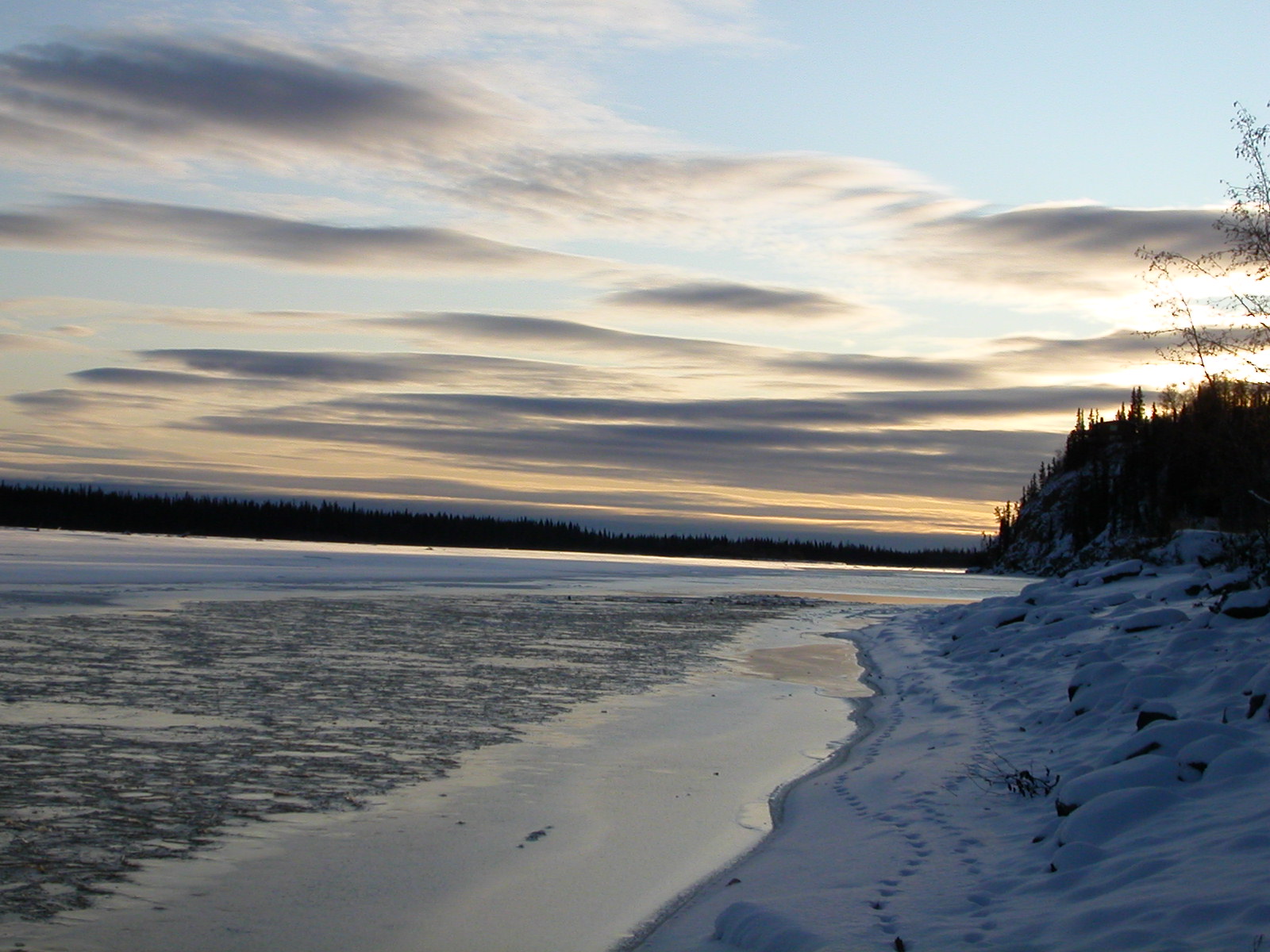
The Tanana River carves its way through birch forests and black spruce swamps. By Alaska standards it’s a pretty ordinary river: silty and swift, braided but no white-water, and glacial in its origins.

I float parts of the Tanana every summer.


A couple summers ago it was over eighty degrees and we had a tail wind for two days. But sometimes the wind blows so hard that you find yourself in a dust storm and five foot standing waves. One year I had a bad headache and what was usually enjoyable
was tortuous.

Sometimes we find surprises, like the entrance to a wolf den.


And that’s just summer. Here’s what the Tanana looks like in late fall.


Several years ago three of my former students stole a canoe and took off down the Tanana. Maybe to have a Huck Finn adventure, I’m not sure. They swamped their canoe and ended up on a remote island in the middle of the river. Cold and soaked and with no supplies. Luckily a helicopter plucked them from the island after a couple of cold nights.

Take a look at the setting (or settings) in your story. Are you utilizing your setting to its potential? Look at it from odd angles and different seasons. Through different eyes.

Here’s some questions I ask myself when I’m doing CPR on my setting:

How do the setting details I choose to include drive the story forward?

How do they develop character?

But most important, consider the emotional state of your POV character. Let that emotion infuse and drive setting details whether your character is in a padded room or on top of a mountain. Otherwise, that description might stop your story dead in its tracks.

I think that setting, if properly developed, can turn a good story into a great one.

And, a little bit of writing-news: My MG novel, Stranded, was awarded second place in the Pacific Northwest Writers Association's Annual Contest.

I'll be teaching school all day today but I'll check back in the evening to see what's happening.
Thanks for stopping by.

Tuesday, November 30, 2010

Setting the Setting


When I pick up a new book, setting is one of the key ingredients that will keep me reading. It may be a slow story or one in which I haven't yet connected with the characters, but if it has a captivating setting, I'll keep going just to visit that world a little bit longer.

Some of my favorite authors are masters at crafting welcoming settings. L. M. Montgomery instilled in me a sight-unseen love for Prince Edward Island when I first read her books. So much so that fifteen years later my husband surprised me with a honeymoon trip to PEI one autumn. How's that for the far-reaching influence of an author's imagination? And every time I reread an Anne of Green Gables story, I want to skip on over to Canada for another visit.

As a fantasy author, setting is also a crucial component of my world building. It can be difficult to find the right balance between an overload of details and the one or two lines that will sketch the scene for my reader. I often have to tone down my over-enthusiastic descriptions when I'm revising. But when I'm writing a first draft, I let myself go.

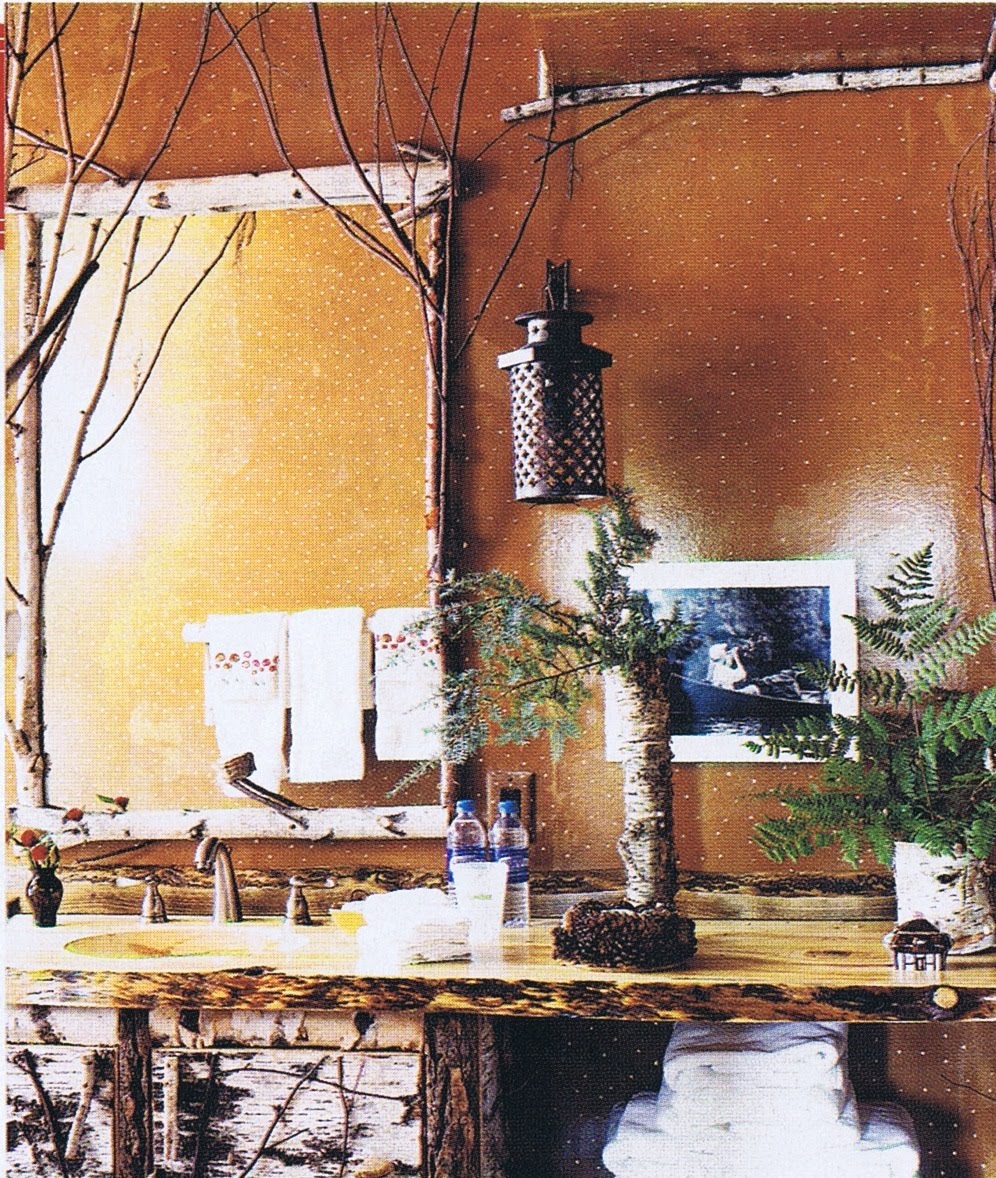
My favorite way to get my creative juices flowing is to weed through my hoard of magazine clippings. Whenever I spot an eye-catching setting in a catalog or magazine, I tear it out and file it away. Sometimes, the picture itself is so inspiring that I want to create a scene around it. That's what happened with the dormitory in The Tale of Una Fairchild. In my mind, the students were housed in a wooded area, and I had a vague idea that there were giant trees involved. Then I saw these clippings:

I loved the fairy tale feel of the rooms,


the beds that resembled trees,


and the lodge-like decor.


What do you think, fellow readers? Would you like to wing over on a flight of imagination and visit the rooms above? Have you ever wanted to go and stay awhile in some delightful book world? What are some things you remember about the setting of your favorite books?

**To see more of this fabulous decor, you can find the article on-line from House Beautiful.**