Showing posts with label yahong chi. Show all posts

Thursday, April 7, 2016

Where Are They Now? Tales of Project Mayhem Alumni by Michael Gettel-Gilmartin


Here at Project Mayhem, we've been fortunate over the years to have quite the cadre of talented writers and to maintain a wonderful sense of community. Through the years, we've said our share of goodbyes--but we've also been able to keep in touch. I thought our readership would be interested in what the Mayhem Alumni are up to right now!

Braden Bell:
Life is good. I've just finished directing "Mary Poppins," at the middle school where I teach, which was a joy of course. I had a book that was picked through KindleScout. It's a YA novel and will probably come out sometime in late Aprilish. I'm trying to write every day, currently querying a new MG fantasy.


Marissa Burt:
As you know most of my time has been happily taken up soaking in this new baby girl, Beatrix. She is almost three months old, such a gift to us all, and stays busy entertaining her three big brothers with all of her coos and smiles.

I've also just finished the final edits on A LEGEND OF STARFIRE (sequel to A SLIVER OF STARDUST), due out in October. And I've been working on a first draft for a write-for-hire project with Harper, which has been such a learning experience. That book will come out Fall of 2017. Other than that, I'm working on new book ideas and hope to have some time to dive into a new project this summer.

Yahong Chi:
Hello, dear Mayhemers! I'm writing from small-town Belgium—I'm currently studying for one term in Europe until the end of June. In the years since I left Project Mayhem, I've finished and shelved one MG contemporary novel, and begun a new MG fantasy along with a YA sci-fi. To fill the blog-shaped hole in my heart, I ran a small but dedicated book blog for two years. Most recently, I've taken on the role of social media coordinator at Disability in Kidlit, which I'm so very excited about! (And in non-book-related news, I've started a knits blog & shop at Théo&Tia! Thank you to Michael for this chance to catch up with you all.
Dee Garretson:
I had a Boxcar Children book come out in fall 2015, THE SLEEPY HOLLOW MYSTERY, and I have another one coming out this fall, an election-themed one. I'm not sure of the title yet. I have the first book in a YA science fiction trilogy coming out in April 2017 from Month9 titled STATION FOSAAN and I'm very excited about that. I'm keeping busy writing the other two books in the trilogy. I also have a historical middle grade out on submission.


Joe McGee:
First things first, Project Mayhem ROCKS! I’m very happy to have been welcomed into the Mayhem with open arms and just as happy to be able to pop back in and share a bit about what I’m up to and what is going on. Ok, so…what IS going on?

Well, I’m very happy to announce that I just signed a two-book deal with Abrams! ALIENS AND JELLY, the sequel to PEANUT BUTTER AND BRAINS, is set for Fall 2017. Reginald and Abigail are back to solve a Quirkville dilemma. Aliens have landed and nobody knows exactly what they want. One thing is certain…if things aren’t cleared up soon, the mayor is going to have a very sticky situation on his hands. The second picture book is yet untitled (nothing to do with PB&B) and scheduled for Fall 2018.

Let’s see, besides that, I am working on a middle-grade series that I am very excited about and visiting schools to share my book and my love of writing, reading, creativity and imagination.

While I am still teaching writing at Rowan University, I am thrilled to announce that I have been hired as faculty at Sierra Nevada College’s low-residency MFA program, specifically in Writing for Children and Young Adults (WCYA)! SNC has an established MFA program for poetry, writing, and creative non-fiction, but this WCYA track is brand new. I’ll be joining YA superstars Amy (A.S.) King, Ellen Hopkins, and e.E. Charlton-Trujillo, middle-grade rock stars Pablo Cartaya and Lisa Papademetriou, creative non-fiction writer and poet, Gayle Brandeis, as well as literary agent, Jessica Regel (Foundry Literary and Media). So, yeah…super excited! Quite the line-up. Come write your stories by our campfire! In fact, I’ll be joining Brian Turner, the MFA Program Chair on #LitChat (Twitter), Monday, April 11th, at 9 p.m. EST.
For more info about #LitChat check out http://litchat.com/a-special-litchat-mfa-chat-series/ 
To learn more about SNC, go to: http://www.sierranevada.edu/academics/humanities-social-sciences/mfa-in-creative-writing/children-young-adults/

I’m with a new agency now! My agent, Linda Epstein, joined Mandy Hubbard at her new agency: Emerald City Literary Agency. I’m grateful for everything the Jennifer DeChiara Literary Agency has done for me, but I am also very excited to continue with Linda in the Emerald City.

I’m living in rural Pennsylvania in a tiny town (a village actually) that might be tucked away in a Harry Potter novel, with my absolute best friend and complete heart, Jessica Rinker. She has a YA novel and a middle-grade out on submission, is currently finishing another YA novel and putting the wraps on an awesome picture book biography.  So, yeah…a lot of writing going on in our house. We just started a really good kid lit critique group featuring one of our own Mayhemmers, Donna Galanti! There are really good stories being developed in this group. Other than that, my hair is getting longer, my beard is getting grayer, and I’m just writing away!

Thanks for checking in. Happy writing, friends!

Shannon O'Donnell:
Right around the time I left Mayhem, I accepted the head coaching position of my high school's speech & debate team. My oldest son was a sophomore at the time. He is now a freshman in college, far from his mom and Montana, in Ripon Wisconsin.
I took some time away from my writing, but I recently submitted final edits of the first 13,000 words to my agent. We have a plan to submit the finished manuscript to publishers by fall. Finally. I had no idea life (teaching, coaching, parenting) would extend the end of this novel for so long, but I am eager to reach the end of final edits and the beginning of submissions.
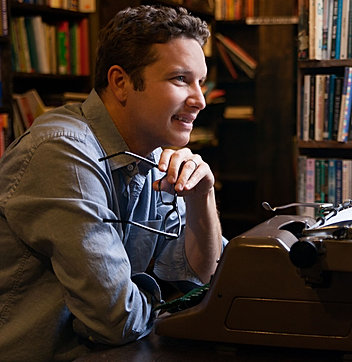
Tracy Edward Wymer:
Two years ago I moved from teaching to administration. I'm now an assistant principal, and in my fifteenth year as an educator, all at the same school. The change to administration has been a learning experience, but I still get to connect with our students daily, and for that I am thankful. I'm still learning in my writing endeavor too. If you stick with the process long enough, there comes a little success. Okay, I'd consider this more than "little" but I think you know what I mean.

In 2015, Penguin (Grosset & Dunlap) released the anthology BEEN THERE, DONE THAT: Writing Stories from Real Life (edited by former Project Mayhemer Mike Winchell). I was lucky enough to be part of this book, alongside an all-star lineup of middle grade authors and illustrators. In this anthology each author offers two stories, a nonfiction account of what really happened, and a fictional twist on the real events. I'm very proud of this book, and even more thrilling was watching Mike Winchell's vision unfold from idea to finished book.

In 2014 my agent sold my middle grade novel to Aladdin/Simon & Schuster. After months of editing and more months of final revisions, SOAR will be released on July 5, 2016. On July 4, there will be fireworks across the country to celebrate this great occasion. :-)

So great to catch up with all these fine former Mayhemmers. Go follow them on Facebook and Twitter, and all places social. Guys, best of luck to you all. Thanks for all you did to make the Mayhem so magical!


Wednesday, April 30, 2014

So long, farewell... Yahong Chi


Time flies. It's a cliché, but that's because it's true: I joined Project Mayhem over three years ago (three years! So long ago!), and yet it seems like nearly no time at all has passed between then and now. Now, when I must sadly announce my departure from Team Mayhem. I'm looking to focus on my higher education studies next year and on, and therefore am bidding a farewell to the blog and to all our amazing readers.

Never fear, however: the team behind the mayhem is about to get even better, with some new contributors coming around to stay! Visit again tomorrow for the announcement of our new mischief-makers. Be ready to expect great things!

Writing for Project Mayhem has been a wonderful opportunity, and you'll always be able to find my posts under my name. Thank you to everyone who ever scrolled through one of my posts, and especially to those who took the time to comment; my gratitude is yours. To the rest of the team, thank you for everything.

May the mayhem live on!

Love,

Yahong

Tuesday, April 1, 2014

Happy April Fool's Day: writing humour, by Yahong Chi


Practical jokes, riddles, pranks and puns: these are all real-life sources of humour which almost always guarantee a few chuckles. Who doesn't love a well-planned prank? (Well, besides the victim, probably.) But translating this humour to the written page doesn't always work. When you're trying to make your reader laugh, it's important to note that just making your characters laugh probably won't do the trick.

Because the characters' experience is, to a certain extent, removed from the reader's experience, you'll often find that readers are laughing when characters aren't. As Dee outlined in her post about Star Wars humour, it's often the situation that's being presented which tickles the objective viewer's funny bone. Think about all those funny home videos you've watched; were the people being filmed laughing along with you? And the way a situation is presented can make a difference as well. Some scenes that would be dull in most authors' hands may be funny in the actual author's book.

Furthermore, humour is incredibly subjective, which is a good thing: this means there's all types of humour being written for all types of readers. For example, there's the wacky, absurd humour featured prominently in Louis Sachar's legendary Wayside School series, and the deadpan humour which Gordon Korman is known for. Judy Blume's Fudge series excels at presenting hilarious situations in a way which the reader can join in and laugh at, too.

Now, for some textual examples!


One of my favourite recent middle-grades series is Trenton Lee Stewart's The Mysterious Benedict Society trilogy. His books are full of adventure, friendship and plenty of humour:
(p. 160) Constance, in the meantime, was looking disgusted. "This is a terrible spyglass, Kate. It makes everything look far away."
Kate turned the spyglass around and handed it back to her.
One single sentence is all that's needed to show the mistake Constance has made, and to gently poke fun at her character while contrasting it with the dialogue she's just spoken. This is a great example of simple yet effective contrasting humour.


Tom Angleberger's The Secret of the Fortune Wookie is the third book in his Origama Yoda series, and it features many perspectives from different middle-grade students in the story. This allows us to experience many different POVs, including Murky Kahleel's, who happens to have the type of exuberant personality which translates excellently to writing:
(p. 91) it was the Rug-Boni!!!!!!!!
"Stooky!" I shouted. in case you dont know what a Rug-boni is do you know what a ZAMboni is? a Zamboni is this jacked-up thing they drive around on the ice at a hockey game to make the ice icier or something. Ben told me about it. he watches hockey on TV and used to go see the Roanoke hockey team play before they stopped.
well a Rug-boni is like a Zamboni but for carpets instead of ice!
its like a vacuum cleaner that you ride on!!!!
the only reason I know its called a Rug-Boni by the way is that it says RUG-BONI right on the side of it! draw a picture of it Kellen!
(And then follows a hand-drawn picture of the Rug-Boni.)

Seriuosly, have you ever seen exclamation marks convey a personality so well? Murky's sheer ebullience makes him a highly entertaining read.


The historical fantasy Magic Marks The Spot by Caroline Carlson is another recent MG that I thoroughly enjoyed, featuring magic, hijinks, adventure and also plenty of deadpan humour.
(p. 52 - 53) "Actually," said Hilary, "I'm going to be a pirate."
"Oh, that's brilliant!" Claire hopped up and down again. "It sounds so thrilling. And you could meet all sorts of dashing sailors."
Hilary squirmed. The only sailor she knew particularly well was Oliver, and he was only dashing in the sense that whenever she was near him, she wished he would dash away as quickly as possible.
Here our protagonist's discomfort is paired with a contrast in thought to the other character's dialogue, along with a semi-pun for good measure, and the result is a flash of humour for the reader to enjoy.


How do you write your humour? Alternatively, what kind of humour in middle-grade do you enjoy the most?

-Yahong

Monday, March 3, 2014

Foreshadowing: why and how to do it, by Yahong Chi


Literary devices aren't just for English classes. Foreshadowing is a powerful technique that can enhance your plot, add substance and intrigue and bring closure to the story; it's the full circle connection in really good books that makes you go "whoa, cool". But foreshadowing relies on subtlety and unobtrusiveness. Therefore, avoiding being obvious is essential.

Let's follow J. K. Rowling's example, who is, unsurprisingly, is a master of foreshadowing and at linking plot devices in later books to objects mentioned in early books. Although some of her later connections could be the result of an excellent memory, such as how Harry's knowledge of the bezoar from The Philosopher's Stone is used to save Ron in The Half-Blood Prince, she also creates connections within books that are almost indubitably foreshadowing. Take, for example, in The Chamber of Secrets, Ron's comment about why Tom Riddle could possibly have a trophy with his name on it:
'Could've been anything,' said Ron. 'Maybe he got thirty O.W.L.s or saved a teacher from the giant squid. Maybe he murdered Myrtle; that would've done everyone a favor...' (p. 251, Raincoast Books paperback edition)
Ron's joking, of course. But at the same time, he's right: Tom Riddle was the one who opened the Chamber of Secrets, let loose the Basilisk and killed Myrtle in the bathroom she now haunts. This innocuous piece of information, dressed up as a (somewhat mean-spirited!) joke, becomes a clue which later reveals itself to be the key to the mystery that dominates The Chamber of Secrets. And because the truth is framed in a sidenote-style comment, it works.

This sidenote approach is a very good way to think about foreshadowing. You're not coming right out and saying "this is important, remember it!!11!"; instead; your hints are casual observations about setting, character or events that could be innocuously taken... or could mean something more.

Straddling the line between "innocuous" and "obvious" can sometimes be tricky. As a book reviewer, I've grown to gauge the amount of attention paid by the narrator or narration to any one certain object or event. Oftentimes, foreshadowing is clunkily done when the author takes one too many sentences to point out an item that will be important; this sets off alarms in my head that say, "This will be important later on!", like foreshadowing for dummies. Not what you're trying to achieve!

Therefore, it's important to slide your clues among like-sentences. As shown above, Ron listed a series of reasons why Tom Riddle would have won the trophy. If your middle-grade mystery's real culprit is someone who chews a lot of gum, let's say, have your protagonist note the amount of gum wrappers around the scene of the crime in context with something else—maybe they like to be environmentally conscious.

After you've set up your hints, it's important to make good on them in the right way. J. K. Rowling didn't ever have Ron say, "Oh, wait, I was actually right!" at the end of The Chamber of Secrets. Rather, letting the reader realize on their own how the reveal was set up spurs that "cool!" feeling. It also can bring closure; linking your book's end back to its beginning brings your story full-circle and gives it resonance.

How do you use foreshadowing in your writing? What do you think of foreshadowing as a writing technique?

-Yahong

Friday, January 31, 2014

Taking a look at title structures, by Yahong Chi


Titles are as much a part of the creative process of writing a book as anything. They come with their own set of troubles -- how creative can I get? is it representative of my story? does it grab readers' attention? -- and, like other aspects of books, can be categorized and analyzed. As such, I decided to examine titles of middle-grade novels over the past year, using these two Goodreads lists, and see if I could categorize them into specific structures.

Firstly, I took note of the very large number of titles beginning with "The". This might seem inconsequential, but "The" signifies almost one hundred percent of the time that a noun is to follow. What does this tell you about the book? That the noun in question is most likely of paramount importance in the story.

I'll break it down into two subcategories of 3-words-or-less and 4-words-or-more. For example, Jennifer Nielsen's The Runaway King, Tui. T Sutherland's The Menagerie or Brandon Sanderson's The Rithmatist all imply a storyline which revolves around the noun. The longer titles allow for more detailed description of the noun, e.g. Kat Grindstaff's The Flame in the Mist or Soman Chainani's The School of Good and Evil. Certain longer titles follow a specific sub-structure too: The NOUN of NOUN, as evidenced by Ari B. Goelman's The Path of Names, Claire Legrand's The Year of Shadows or Linda Urban's The Center of Everything.

A similar titling structure is the use of nouns without an article in front, e.g. Matthew J. Kirby's Spell Robbers, Christina Mercer's Arrow of the Mist, Peggy Edelman's Sky Jumpers or Colin Meloy's Wildwood Imperium. It's evident that these sort of noun-centred titles are popular, and for good reason; they tidily summarize a unique aspect or component of the story inside to give readers an idea of what the book is about. They're usually not too abstract, and above all, they're safe.

The next subset of titles which I looked at were titles starting with verbs, which were usually continuous verbs (ending with -ing). Examples include N. H. Senzai's Saving Kabul Corner, Holly Goldberg Sloan's Counting by 7s, Clare Vanderpool's Navigating Early and Rebecca Petruck's Steering Toward Normal. These title structures suggest a journey of some sort, and can be more obscure than the previous noun-centred titles.


One-word titles are a category all to themselves because they're difficult to pull off; the single word must be distinct, representative and memorable all at once. And looking at John David Anderson's Sidekicked, Lana Krumwiede's Archon and Melanie Crowder's Parched, these qualities are more or less evident. Vaguer titles like Ellie Rollins's Snap or Jeff Probst's Stranded become more relevant once the book is read.

Full-sentence titles range from to-the-point (The Colossus Rises, Peter Larangis and Magic Marks The Spot by Caroline Carlson) to ambitious (How To Outrun a Crocodile When Your Shoes are Untied, Jess Keating and How To Catch A Bogle, Catherine Jinks). These titles are more particular because complete sentences are much less common than pairings or groupings of words; they're also my favourite type of title. The idea that a book can be represented in a complete entity, as opposed to a shortened clause or a convoluted two-sentence piece à la every single non-fiction book out there, is rather pleasing and consistently turns up fascinating book titles (There Will Be Bears by Ryan Gebhart is a stand-out).

My final category (for now!) is miscellaneous, where I'm putting all the titles that begin with prepositions (By the Grace of Todd, Louise Galveston), any of the five Ws + H (When Audrey Met Alice, Rebecca Behrens; What the Moon Said, Gayle Rosengren) and other assorted titles, such as Rita Williams-Garcia's PS: Be Eleven, Kate Messner's Wake Up Missing and Kathryn Fitzmaurice's Destiny, Rewritten. A uniquely-structured title helps set a book or series apart, and I wouldn't hesitate to say that the success of Tim Federle's Better Nate Than Ever is due in some part to his title.

Overall, structures of middle-grade titles fall within certain categories consistently, with outliers adding intrigue to the mix. Judging a book by its title might not be a thing, but it's certainly an interesting aspect of the whole package to look at!

What's the most intriguing, different or distinctive MG title you've seen?

- Yahong

Friday, December 20, 2013

End of 2013: reading & writing reflection, by Yahong Chi


This is Project Mayhem's last post of the year, and yes, there really are only 11 days left in 2013. Looking forward and anticipating the year ahead is always a tonne of fun, but it's important and useful to think back on the year that was, too.

Writing-wise, you can start with the big, general questions: how many complete drafts did you write? Did your revisions go the way you wanted? And if you made writing goals at the start of 2013, did you meet them? Writing is an art, and like all arts—like anything in life, really—you want to be constantly improving. Setting goals is a good foundation in building steps toward improving, and it's only one third of the equation; checking whether you met those goals is the last third. (The hardest third is actually writing enough to meet the goals!)

While you're all nostalgic for the year that has gone by and feeling fuzzy and warm with holiday spirit, this is also an opportunity to reflect on the personal growth in regards to your writing, the interior aspect of it as opposed to simply the words on the page. I find it fascinating to look over the stories I've written in the past year and remember my mindset at the time of writing. It's a bit of insight into my own character, the way I thought then and the way I think now. Writing is highly reflective of oneself, and sometimes it's good to reflect on the reflection and consider what it says about yourself.


Reading-wise, this is a good time to check that list you've been updatiing of all the books you read this year. And even if you don't keep track, a general look-back over the books you read can help you spot any trends in your reading, and decide whether you want to consciously make adjustments in your reading. For example, if you write fantasy, but find your past reading rather lacking in the fantasy department, then you can actively seek out fantasy titles to read in the new year. Embrace the To-Be-Read pile!

You can also identify trends in the books you've read. For example, it's pretty evident that sci-fi is dominated by male authors (check out this illuminating and thoughtful Tor.com discussion). So if you've been struck by a Shiny New Idea that has decided to categorize itself as sci-fi (like my latest MG SNI is!), then perhaps you decide to check the gender balance in your reading list, in the interest of ever-diversifying your reading and thus your writing.

One last word: remember to use your winter break to read as much as you can! As a student, I get how difficult it can be to find time to read. Writers are readers first.

Do you reflect on your reading & writing, and do you set new goals for the new year?

Wishing you happy holidays from us here at Project Mayhem!

-Yahong

Wednesday, November 20, 2013

Recurring events: when to tell and when to show, by Yahong Chi


As a reviewer, I often get offered choices of books to review by my review editor, and often these are themed books which my editor knows I have a bit of expertise in. As a result, I identify certain trends in these novels since they follow similar structures. One such area is horseback riding: I've been a rider for seven years, and so my editor offers me first go at the equestrian-themed books for review. Inevitably in these novels, our protagonist will either attend a horse show, participate in a lesson or go hacking (a trail ride). Sometimes, these events happen multiple times.

Now, if the author described every single one of these occurrences, the repetition would just about kill any momentum the story had been building up to that point. Unless the events all have massive emotional potential to develop throughout, reading about the same actions would become tiresome and flavourless.

Therefore, it's an important author decision to choose which events deserve to be fully shown and which should be summarized in context. A good rule of thumb is to open with an important, well-developed event to ground the reader in the rituals and routines that go into the specific event. For example, in an equestrian novel, the story could open with a show jumping sequence that takes the reader along with the protagonist as she goes from warm-up with her horse to walking the course to entering the ring to the actual jumping to her finish and emotional reflection on her performance. Later on, future jumping shows need not be shown in their entirety because the reader is aware of how the expected routine should go.

This holds true for most, if not all, types of recurring events: soccer games, book club meetings, coding competitions. Even school can become too repetitive—if you're constantly using math class to show your protagonist's struggles in school, go to extra lengths to make sure these classes aren't too similar in structure and have enough variation in terms of character motivation, conflict and emotion so as to avoid being repetitive.


Does that mean later events aren't as important? Not at all. What you're doing then is establishing the consequences of the event. Even though you didn't show the event in real-time, it still happened, and thus you'll be dealing with the physical (e.g. exhausted, wobbly-legged) and emotional (e.g. euphoric, dejected) outcomes. It's only the actual happenings that are summarized; you'll still be taking your character through the physical and emotional ramifications, like dominoes. (Susan Dennard over at Publishing Crawl has a great post on the domino effect!)

And for an ending with good punch, a fully-developed scene featuring an event similar to the beginning's works wonderfully. Not only is this excellent story-telling symmetry, it also provides you with the opportunity to bring your characters' growth and development arcs to a wholesome close, starting with the simple contrast between your beginning and your ending. With a well-crafted ending that resonates with your story's beginning, you'll be that much closer to creating that fulfilling sense of closure that marks a truly good book.

What do you think? What guidelines do you follow when it comes to recurring events?

-Yahong

Wednesday, October 30, 2013

The dreaded middle: why you don't have to dread it, by Yahong Chi

source
The beginning, the middle, and the end. Each strikes horror into a writer's heart for different reasons. Common anxieties regarding the middle include the pacing (what if we can't keep the reader's attention?), the length (what if we ramble on too long?) and direction (what if we take too many side detours?). Over at Terrible Minds, Chuck Wendig has an entire post on 25 ways to tighten up your story's mushy middle. And it's always important to be cognizant of potential pitfalls.

But the middle doesn't have to be feared, either! Why? Because you have room, space and time.

Unlike the beginning, which needs to hook the reader and set up the plot and subplots, and unlike the end, which needs to tie up all storylines and leave a feeling of satisfication, you have a wide-open avenue throughout your middle. Your subplots have been established; your characters are introduced and your climax is your fixed point to drive toward. This is the time to explore every possibility that your fictional world can allow. You don't have to worry about consequences just yet (leave that to your ending). Pull the lids off all those broiling ideas and uncork the possibilities. You have room to do it!

These possibilites apply to everything. Introduce new settings to help refresh your story; with the space you have to spin out your story through your middle, you can take the chance to more fully develop and realize the locales in your world. You can introduce new characters or deepen the dynamics between current ones; there's space to add quirks, kinks or wrinkles to relationships.

Your beginning is what enables your middle; your ending needs to tie up everything you've developed in your middle. Those are big responsibilities. But during your middle? Take your time. You've got the room and space to do it.

What are the hardest/best aspects about middles for you?

-Yahong

Monday, October 7, 2013

A highlight on MG series: three series recommendations, by Yahong Chi

Series have always been relatively strong in the middle-grade market. While the young adult market swung back and forth between trilogies and stand-alones, middle-graders avidly eat up Harry Potter, Series of Unfortunate Events and multi-author series like The 39 Clues and Scholastic’s latest, Spirit Animals. Epic adventures—whether set in this world or another—are always fun, and here are three more in three different genres to embark upon.


The Theodosia Throckmorton series by R. L. LaFevers, illustr. by Yoko Tanaka


As can be guessed from the series title, these books feature Theodosia, the daughter of two museum curators and archaeologists who has an uncanny ability to sense curses on long-lost artifacts. Set in the late 1800s – early 1900s, Theodosia has the most stellar, idiosyncratic voice I’ve yet to read in an MG historical; she truly makes the books, and as she ricochets through fantastical adventures rife with Egyptian mythology, her growth and her dynamics with other characters makes these books absolutely delightful to read.


The Mysterious Benedict Society series by Tristan Lee Stewart, illustr. by Carson Ellis


I’m late to this series, I know, but holy goodness, is it amazing. With a team of four gifted children at its core, these books combine darker themes similar to George Orwell’s 1984 with rollicking, high-risk quests and friendships that are genuine, hilarious and touching to unfold over the course of three books. This series is contemporary, yet manages to feel timeless.


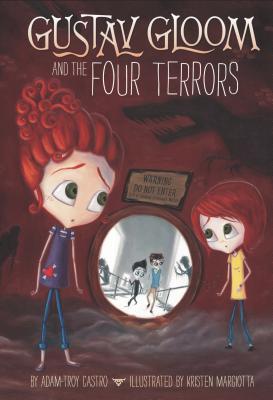
The Gustav Gloom series by Adam-Troy Castro, illustr. by Kristen Margiotta


When sisters Fernie and Pearlie What meet Gustav Gloom, the unusual boy who lives in the shadowed house across from their new home, the quirky 3rd-person limited narration of this series is perhaps the most attention-grabbing aspect as you crack open the first book. Soon enough, you’ll be equally sucked in by hair-rising chases through Gustav’s wonderfully odd house, his stories that hint at a much more grandiose backstory to come in the next books, and the funny, poignant moments that highlight the dynamics between all the characters. Best of all, this is true MG paranormal—not vampires, werewolves or demons, but good old-fashioned ghosts and risers of the dead.


And the best part about all these series? They're all accompanied by fabulous illustrations.

What good middle-grade series have you read lately?

-Yahong

Wednesday, September 11, 2013

Connecting music to story by Yahong Chi

source
You know that feeling when you discover a new artist whose songs you connect to on another level? Well, for me, it’s not too different from that feeling when you become emotionally invested in the characters you’re spinning right out of your head, the atmosphere you’ve created in this one perfect scene, or the diction that sustains the elevated introspection at the core of this one chapter. So what could be more natural than to join a song with a scene, character or entire novel?

It can be as simple as choosing a song (or two, or three, or ten) that remind you of your current WIP. Depending how much you’re invested in both songs and story, of course, that task could also be immensely complex. At its core, the linking of music with story is an exercise born from emotional connection. Just as some people enjoy assigning real-life actors to their characters and some people don’t, matching songs with your novel isn’t for everyone.

Personally, I like to assign each of my characters a song. It’s their “theme”, similar to how film soundtracks usually compose a score piece for the protagonists. I take a few things into consideration, such as lyrics, melody and production. For the protagonist of my contemporary middle-grade WIP, Victoria, her song is Owl City’s “Hello Seattle”. This song is quirky and imaginative, and by the same hand it’s also a little left of centre, matching her “loner” tendencies. However, it’s upbeat as well, which is in direct contrast to her general attitude, and I like to think that this dichotomy adds more depth to her character.

Sometimes I also match a specific song to one scene in particular, especially if the scene runs high with unresolved tension and emotion. When stakes are particularly high, I find that finding the perfect song to accompany the scene expands my understanding and perception of the way I view the scene, and that in turn inflects the way I write it.

Playlists for entire novels are also common and fun to make. And from a reader’s viewpoint, they also offer an intriguing look into the author’s mindset while they were writing the book—and they offer insight into how the author him/herself views the book itself. Basically, music can be a reflection of your novel, and it can also be a reflection of the way you perceive your novel. If a reader were to create a playlist for your novel, would it be similar (accounting for different genre & musical tastes) in style and meaning? That’s a question that could lead to some eye-opening information in how readers approach your book, as opposed to yourself, as the writer.

Just as you develop character nuances with character worksheets and plan backstory that never makes it into the final book, linking music with your story can add another layer in representing what you want to portray through your writing. With so many websites out there offering quick and easy playlist-making capabilities (try 8tracks or Grooveshark), this exercise in matching music to book can be fun, easy and insightful for you as both writer and reader.

I’m curious: Do you connect songs to your story?


—Yahong

Friday, August 16, 2013

Diversity & naming your characters, by Yahong Chi


There's a reason why I chose a French class student list for that image up there, and you can guess why by taking a peek at the title of this post. Need a hint? It's the first word.

[Edited 17/08/13]

It has been a common practise for non-Western families to name their children common Western names so as not to ostracize their poor children in school, and to allow them to adopt a presentable name to ease their way into Western society. But more and more, I'm seeing students bearing (both with pride and with resignation) names of their own ethnicity, of their own culture—at least here in Canada. As multiculturalism moves away from being a fad and toward being an unquestioned part of society, names that would previously have made their bearer a bullying victim are now being normalized.

I'm not talking about exotic spellings (how many ways can we think of to spell "Caitlin" "Kaitlyn" "Catelyn" anyways?). I'm talking about names like "Churan". Like "Kalika". Like, hmm, I don't know, like "Yahong".

"Churan" and "Kalika" are actual names of POC (people of colour) kids I am acquainted with, and seeing how I am Chinese, I could list you a dozen Chinese acquaintances who have chosen to keep their original names rather than take the "easy" way out and go for a more "socially acceptable". Why are those words in quotation marks? Because—good news!—now other kinds of names are socially acceptable too, not just Molly or Abigail or Heather or other "white-sounding" names.

But wait! you say. What's wrong with POC kids having commonplace names? And I say: nothing. I am certainly not condemning any parent who chooses to name their kid "Jacob" or "Edward" or "Bella". Rather, what I'm saying is: if you're going to include a POC character at all, make sure you get them right. This includes making decisions on what kind of name to give them, just like you decide on any character's name. (Pro-tip: Do not use "Wang" as a Chinese boy's first name, when it is predominantly—as in, approximately 99% of the time—a last name.)

Writing diversity might be harder than normal, since we all tend to default to white male characters (check out Megan Crewe's great post on defaulting to white male characters). But is that an excuse for avoiding diversity? Well, in the words of Ellen Oh: "Being called a racist is nowhere near as painful as dealing with actual racism." We all can stand to be a little more thoughtful when it comes to diversity. So why not start with the names?

--Yahong

Tuesday, August 13, 2013

Critical success vs. reader success: the correlation, by Yahong Chi

Take any random middle-grade bookworm out there. How much would you be willing to bet that they pay any attention to or place any value in the blurbs—brief lines of praise from big-name authors or review companies—on the cover of their current favourite novel?

If you said zero, high-five. Me too.

The reason for this varies, but I’ve found that it mostly comes down to the fact that readers like to find out what they like for themselves. If they’re not paying much attention to the book industry (and I’m operating under the assumption that most middle-graders don’t), then the praise of a sterile name like “Kirkus Reviews” or “Horn Book” doesn’t mean much to them.

Author blurbs are a little different, as readers do collect and remember past favourite authors. So if your middle-grader is a big fan of James Dashner, for example, they might be inclined to give some of the (many) books he’s blurbed a try. But in general, from my personal observations, our target audience—kids—does not place anywhere near as much importance on blurbs as we in the industry do.

So do those blurbs mean anything? Is there a correlation between a book’s critical success and its sales numbers (i.e. its reader success)?

Common sense says “yes”. If critics love a book, then surely all the aspects which were loved by reviewers will translate into readers’ reading experience, even if they’re not actively looking out for it, right? But there’s a marked difference here: while reviewers tend to know precisely what they’re looking for (and what is missing), such as a lack of character growth, immersive worldbuilding, or quicker pacing, young readers aren’t so specific.


To illustrate this point, I asked a middle-grader to describe what she liked about a recent book. She said she liked how it had superpowers, and super-interesting characters, and it had lots of good ideas. I asked her what she didn’t like about it; she said she felt it was too long, and the plot could’ve been “spun” better. When I asked her to elaborate, she said she didn’t really know, but she just felt like the author could’ve done the plot more differently, better.

Now, if a critic were reviewing the book, would they say the same things (in much fancier lingo, of course)? Or would they note completely different things, because they were looking for different things? This is a question which I as a reviewer am personally very interested in, especially when you look at examples like the Artemis Fowl series, which has been reviewed as “clichéd” and worse, and yet has had so much commercial success.

What do you think? What kind of correlation exists between critical success and reader success?

-Yahong

Friday, May 17, 2013

Using new settings to refresh your story, by Yahong Chi

I was in the midst of revising my current middle-grade novel when one of my beta readers gave me a piece of feedback I found enlightening. In essence, she suggested I move my protagonist to a new location and have the next plot-related event happen there. Instead of returning to the same locale, my characters could interact in, and with, a whole new setting.

This struck home in so many ways. Why? Because a well-developed new setting introduces variety; allows different character traits to develop; provides potential plot fodder; and, finally, is just plain fun to write!

It would be impossibly monotonous if your contemporary middle-grade protagonist moved from home to school and back again for the entirety of the novel, wouldn't it? Not to mention it wouldn't be very realistic. Introducing a new setting can give your world more texture and make it feel more complete. This also has the bonus of making the scene a little harder to predict, especially if you've established certain routines in other settings (e.g. get nagged at by mom at home).


People act and think differently in different places, and this can be a powerful tool in developing your characters by showing, not telling. If your protagonist is shy at school, for example, a local soccer field may be the perfect place for her or him to let their confidence grow, which could then contribute to their overall character arc. Or contrast how your outgoing social butterfly is confident when helping tutor kids at a Kumon facility but feels small and inadequate when shopping at a big mall—and why. By having your characters interact with the setting, you can show facets of their personalities in different but potent ways.

The discovery of new places is always exciting, even if it's just a hidden grove of trees in an otherwise urban city; or it could be a new planet in a sci-fi novel that sparks the entire plot. Whatever the level, introducing a new setting always comes loaded with the potential of moving the plot forward. Clues or hints can be dropped, and clandestine meet-ups can be planned. Or, conversely, epic battles could take place there, or your worst nightmare could come true. Because of the shift in setting, possibilities open themselves up in all directions.


Finally, I don't know about you, but starting a scene in a new location is always a jolt of fun for me! I get to wind new bits of description into the narration, then figure out how these characters I've created are going to react. I get to explore the new paths offered by this setting and have character relationships develop in very interesting ways in the new locale. All in all, the new setting provides a feeling of freshness, an optimistic sort of "I-haven't-tried-this-yet-so-I-haven't-messed-up-on-it-yet!" feeling.

Of course, new settings should be as well-developed as possible, and too many locations can end up confusing the reader. As always, it's all about balance. So whenever you feel like you might be suffering from writer's block, or you can't decide how to move forward, try creating a new setting.

What do you think? Do you use your settings in this way?

Wednesday, April 17, 2013

Author Twitter Etiquette by Yahong Chi


Self-promotion is crazy easy now. Creating an account on any major social media site is extremely simple; posting links to your latest blog post or cover reveal is instantaneous and effortless. But it's also never been easier to be impersonal. Or worse, annoying.

We all know a few ground rules: no auto-DMs to anyone who follows you, no following a whole bunch of people just to get follows back (i.e. you're not actually interested in conversing with them). But even if you start out with good intentions, you can fall into habits that will turn off everyone who follows you.

Don't retweet everything said about you. This seems vain and is supremely irritating. Not only are we unlikely to take Bobby Rae's gushing about your book to heart, but we probably already like you and/or your book. Unless it's Kirkus Reviews or another bestselling author, we don't need to be swayed.

Twitter now even has a "Turn off Retweets" for a user you're following, which shows you that this is a definite widespread problem.

Talk about more than your books. A reminder: Twitter is a social media platform for conversation. You want to sound like a genuine person! So talk about your cats, the movies you're excited for, the political parade going through your town. Then, when you do talk about your books, people feel a little more familiar with you, and won't mind clicking through your link.

Near your release day or another major event, you naturally will be tweeting more content related to your books. This is fine!—for a short period of time, say, a week or so. The key is to transition back into normal, I'm-a-real-person-not-a-promotion-machine tweeting.

Don't reply to all tweets with periods in front of the user's handle, or put the user's handle at the end. This makes all your followers view your tweet, not just the followers who follow both you and the other user. There's a reason why Twitter is set up the latter way—we don't need to see out-of-context conversations or dozens of inane "Thanks for the #FF @[username]!" tweets.

Of course, if the tweet has information or content you'd like to share and stands alone, this is perfectly fine. But like everything else, it must be done in moderation.

The takeaway from all this? Don't clog up people's feeds. An overwhelming social media presence might just be worse than no social media presence. And think how you'd want your feed to look like. Remember that Twitter is a conversation tool.

Do you agree? Disagree? How do you use or view Twitter?

Friday, March 22, 2013

Keeping sight of your story


You know those pesky Shiny New Ideas? The ones that pop up while you're supposed to be revising your current WIP, tantalizing as heck and glittering with potential? Well, I think one of the main reasons that they're so shiny is because they seem perfect. As though if only you could get your words down, you'd be able to craft a masterpiece from this idea.

This happened to me a while back: I was reading my sister's fantasy adventure comic, and I thought: I want to write an epic fantasy adventure like this. And it gripped me. Not the plot of her comic, but the concept of writing a sweeping fantasy where magic was used as part of modern life. I wanted to make it as epic and fun as the illustration style of the comic panels showed.

So I started writing. I fleshed out character and central conflicts and themes, but as I continued writing, the fun started to seep out. I began getting bogged down in plot wrinkles and relationships. And I think I lost what drew me to write the story in the first place.

In fact, when I thought of my sister's comic again, I was surprised to find how off my story felt. It didn't seem to be heading in that sweeping fantasy direction I wanted, and that was why it no longer felt fun. So I outlined a few scenes that would capture the essence I was trying to achieve. A fight scene; a market scene for worldbuilding; the climax, an ultimate display of girl-power.

And I think I've found my story again. I've found what made me want to write it in the first place.

It's vitally important to hold onto the essence of your story, to keep sight of the ideal. Even if it doesn't quite reach the perfection you imagined, you'll only get there by trying.

Has this happened to you before? How do you keep sight of your story?

Monday, January 28, 2013

How Epic is Your Storyline?


Pop quiz!: over what period of time do each of the Harry Potter books take place?

Did you say one year? Absolutely correct. And a lot happens in each year: unlikely friendships form, prisoners break loose, people go rogue and the main story arc advances a little further. With this much time to fill, J. K. Rowling has ample room to introduce a large cast, change the seasons and send her characters on extended camping trips on a quest to save all of the world from evil. In a word, epic, right?

Now take Gary D. Schmidt's The Wednesday Wars. Take a guess at its timeline. One year? Right again! But this time, the story hews much closer to home. The conflicts are personal: Holling Hoodhood just wants to get through junior high without scraping into too much trouble.

The difference here can be summed up in a question: what's at stake?

Have you ever started a book thinking it'll be a nice, light read? Then halfway through, the stakes rise. All of a sudden, bigger issues are involved -- a massive underground organization is revealed, or something gets traced back to the government. All of a sudden, the story's scope is much larger than it was; it becomes epic.

Now, to clarify, I don't mean "epic" in the contemporary slang term equivalent of "awesome" or "cool". Instead, I mean "epic" in the ancient Greek epic poem sense: it's lengthy, it's involved and it's a world unto its own. It's a read that'll take you some time to digest.

This isn't to say that less-epic reads aren't as good; on the contrary, both have their places. But it's something to think about when planning your story arc. How epic do you want your story to get?

What do you think? How epic do you like your own stories?

Friday, December 7, 2012

What To Do With the Parents


It's a common enough trend: parents mysteriously missing in middle-grade and young adults. (Our own Matthew MacNish posted about this phenomenon right here on PM.) And it makes sense: without parental figures around to fix problems, keep our protags from risking their necks or offer advice, our central characters wouldn't have their own discoveries to make or solutions to find or adventures to go on.

But that isn't to say the parents are in no way useful to the development of character, story and theme in children's books. So how can they contribute? A few suggestions:

1. The parent brings an "adult" problem into the storyline for the protagonist. This problem should add to the protagonist's load and provide opportunity to show growth. For example, in Vikki VanSickle's Words That Start With B, Clarissa's mother is diagnosed with an illness that Clarissa struggles to deal with along with troubles at school and with her friends. This helps to develop Clarissa as a character, as well as her mother.

2. The parent and the protagonist have a dynamic relationship that contributes to both their development. In Carl Hiaasen's Chomp, for example, Wahoo knows how aggressive his father can be; he both admires him and wishes that he were a little more restrained. This push and pull makes for equally hilarious and touching scenes.

3. The adult restrains the protagonist in some way. This isn't to say that the protagonist must resent the parent figure, only that our main character encounters some form of restriction in the parent. Take Kathleen O'Dell's The Aviary, a historical fantasy-mystery; our main character Clara loves her mother, but she comes to realize that her mother is literally restricting her -- she won't let Clara out of the house for fear of her health. Over time, Clara decides that she's able to make her own decisions regarding her health, displaying growth we can get behind as readers.


The important thing to remember is that parents are characters too, and usually the way they interact with their child, the protagonist, will determine how they contribute to the story. Besides, nobody ever said that you couldn't write awesome parents, right?

What are your favourite middle-grade books with parents?

--Yahong

Friday, November 9, 2012

Outlining: write with the end in mind


Write with the end in mind. That advice has been around for a pretty long time, I think, but it seems to me that in the writers' blogosphere, pantsers (a.k.a. people who don't outline) run amok, for various reasons: it's liberating to write without an outline; if you don't know where your plot's going, then neither will your readers be able to predict the plot. (Honestly, I'm not quire sure of the reasons. As you might've guessed, I'm not a pantser.)

But there's a reason, I believe, why "write with the end in mind" is valid advice. Every story needs a plot arc. If you know where your plot arc ends, you'll always have an end goal towards which you can work. It also saves you from wandering through your middle in one direction, only to realize that your story actually ends up over there -- and thereby rendering your first 10,000 words useless.

As an outliner, I like to go beyond figuring out the ending; I usually summarize the general events of my middle, too, so I always have a general idea of the scene I should be writing. But as long as you know where and how to bring your story to a close, I think you can go ahead and pants your way through the middle.

Do you follow this advice? Why or why not?

-Yahong

Friday, October 12, 2012

Learn all you can so you can write what you know


I fell off a horse the other day. It bruised my confidence; it hurt my backside; and, because it happened while my horse was going over a jump, I didn't exactly want to go over that jump again, not right after. But I did. I hauled myself up into the saddle, rerode the course -- and jumped it.

And now? If I ever have to write a scene where my protagonist falls off a horse, I'll know how to do it. (I'll probably need to at some point, actually. My current WIP involves horseback riding and mystery and superstition and family.) I'll know the emotions that go hand-in-hand with the experience. I'll know which muscles ache the most an hour afterward, and five hours afterward. And I'll know how hard it is to get back into the saddle again.

This, I believe, is at the core of the phrase "write what you know": use your own personal experiences to create scenes that ring emotionally true for whoever reads it.

It's not just about having the physical knowledge. After all, I don't have to have physically gone to Starbucks and ordered an iced cappucino to know how to write a scene involving one such trip. It's more to do with how your character will feel throughout the experience. Maybe a local Starbucks has a particular atmosphere -- shades hanging low, lamps lit, French vanilla scent especially strong -- that reminds your character of home. And these emotions can be worked in at the best of moments to connect the reader with the character.

This doesn't always apply, of course; sometimes, a scene isn't consequential enough to warrant a living, breathing description. Or how about fantasy and the supernatural: who can say they've ever experienced being a vampire? In these cases, making up the experience is necessary. What you won't want to make up are the emotions that go with the experience.

So jump a horse. Learn to climb trees (again). Set up a blind date. And remember that both failures and successes are experiences that everyone goes through, and good writers use all experiences to their advantage.

--Yahong

Friday, September 14, 2012

Illustrations in middle-grade novels


Middle-grade might be far from picture books, but that doesn't mean our novels lack in art. Illustrations in middle-grade novels, to me, are an unexpected but delightful surprise. Because novels more often than not contain no illustrations at all, finding little bursts of art is like uncovering a loonie in a pile of dimes and nickels. (In case you're American and/or don't know what a loonie is: here you go.)

And here, when I speak of illustrations, I include everything small-scale yet intricate chapter headings to full-page illustrations. This comprehensive article from Publishing Crawl on the design process covers many behind-the-scenes details on the process of choosing an illustrator and decisions on illustrations; it's definitely worth a read.

 But on a more simple, reader level,  I wanted to share some personal favourites. I adore chapter heading/first page drawings, like the kinds found in Peter Nimble and His Fantastic Eyes by Jonathan Auxier:


And take a look at the in-chapter drawings from The Hero's Guide to Saving Your Kingdom by Christopher Healy:


Text + art will always be a winning combination in my opinion. (I could go on and on about typography art... but that'd take an entire other post.) So what do you love most about illustrated middle-grade novels?