Showing posts with label Revision Techniques. Show all posts

Wednesday, February 25, 2015

Finding Your Childlike Wonder by Donna Galanti


Childlike wonder. What was yours as a kid? I walked along rock walls under the stars at night when the whole world was asleep. Climbed trees as high as I could to sing songs to the woods. And hid away in rose bush caves with a notepad to write my stories – all the while believing that magic existed.

My son still knows how to find his childlike wonder.
What evokes childlike wonder? And as adults writing for children, how can we recapture that? 

Regaining a childlike sense of wonder isn’t about returning to a childlike state, it’s about letting yourself be awed by the little things in your grownup life. The mundane every day is what can dull our wonder. And just because those little things happen every day doesn’t mean they aren’t miraculous. 

But keeping your childlike wonder can be difficult when grownup duties mount. Recently, in a pressure-cooker twist I had final proofs to revise and edit on book one in my fantasy series, Joshua and the Lightning Road, and was committed to deliver book two on the same day. Did I say “same day”? I did. Zap! Zap!

With two books due on February 1st I had to grasp the wonder again.

So I ran away to a secret lodge to get it all done. I wallowed in editing drudgery. Line by line. Word by word. Character by character. Emotional moment by emotional moment.

Book one was the story I spent three years writing and revising with a developmental editor then, after I got an agent and book deal for it, was presented with additional story edits – all over again. Book two was the story I wrote in six months and had six weeks to revise – and know what needed to be done. But did I? Could I?

And somewhere in my editing elbow grease I lost what the stories had become. I was amuck in a mopping muddlement! Words to eliminate. Sentences to re-arrange. Ensure consistent details through the series. Repetitive scenes to cut and move. Find and replace. And…repeat. 

Each day through my prison window I rattled my chains and watched two kids sled. Up and down the hill they went. And their laughter and joy snapped me out of my trapped trance. I remembered being ten years old and how a whole day of sledding was magical. I also remembered turning twelve and sad with the awareness that I didn’t want to sled anymore. I had moved on, just like we move on into adulthood.

And I realized now that in order to do my job well as a children’s author, and to find joy in it, I needed to rekindle my kid wonder again. Just as I pondered this, a video of babies going through tunnels popped up in my Facebook feed. I couldn’t help but laugh at their wonder. And I thought, as writers of middle grade, how can we keep that kind of wonder with us? 

My wonder list:

Me with my lion ring. I
found wonder in my hero then,
Aslan, the lion from The Lion,
the Witch and the Wardrobe
.
1. Re-visit pictures of ourselves as kids. Daydream about what we were doing in those photos. What we were excited about?
2. Did you write diaries as a child or teen? Go back and read them to inspire that voice of youth in your own writing.
3. Look at the world from a different perspective. Like that tunnel. Like the snow. I went out in it and made a snow angel and looked up at the sky. Something I hadn’t done in years.
4. Create a new bucket list together with our kids or grandkids. What do they dream of doing that we could do with them?
5. Read stories by our own children, or grandchildren, to see how they view the world in their words.
6. Revive memories of being the age of our characters. Draw a map of the neighborhood we grew up in. Remember what we saw, what we felt, and how we reacted to events there and write them down.
7. Act out a scene in our book, or any book, with dramatic flair.
8. Face a childhood fear (mine was going down in our dark 200-year-old cellar where I was sure dead bodies were buried in the dark hole in the wall).

So what did I pick to do on my retreat? I paced and read my books aloud, acting them out with great dramatic flair. I became the hero running for his life (in my son’s voice of course) and his fierce but loyal mentor (Thorin Oakenshield from The Hobbit) and the bad guy (Liam Neeson). 

And I remembered how awesome it was to be a kid again and lost in the moment. And that every day as a kid was about being lost in the magical moments. Kind of like tiny miracles over and over – in the little things.

So…I made my deadline. 

I turned in the best stories I could for my Joshua and the Lightning Road series with the time that I had.

And on my way home at dusk through the snow covered Pocono Mountains in Pennsylvania, the Lehigh Tunnel loomed in twilight. Its lights were ablaze in the dark. I raced through it like a wide-eyed rider surfing a lightning road. Fitting I think. And I was once again, lost in the wonder – and the small things.


Thursday, October 16, 2014

Character 101: Quotes and Links to Help You On Your Way - Caroline Starr Rose

When revising, it's essential you study your characters carefully to determine what's working and what's not. Here are some quotes and links I used in my revision class last spring. I hope they point you in the right direction with your own work:

Quotes from Novel Metamorphosis:
Villains and emotional complexity: “Look for a place where you dislike the villain the most. At that point, how can you work in a tender scene with the villain’s friend?”

“Most dialogue is too long winded, too formal, and includes too much information.”

Quotes from Second Sight:
“At the end of your book, your main character should be better equipped to live that life…”

Characters often don’t know what they truly NEED. Don’t spell it out for the reader! Let them figure it out.

“...a character is a plot.You just have to find the other characters and the moral dilemmas that will force the character to change and grow.”

“Put those characters in situations that fascinate or trouble you personally -- problems you want to write about, conflicts that move you in some way.”

Samuel Johnson: “Inconsistencies cannot both be right; but imputed to man [and characters!], they make both be true.”

“Use backstory to show the reader how the character became who she is, what her relationships with other people are like, and why the frontstory matters to her.”

“Action: what a character does to get what they want. Action is a result of Desire plus Attitude.”

“ To the minor characters in your book, the hero of your books isn’t your main character -- it’s them...Everyone has reasons for doing the things they do and you need to know the reasons.”

“[As we read] we are right there in [the characters’] heads, having these experiences with them, sharing their pain; as as a result we share their growth as well.”

“No description should ever be content to play only on the surface. Whether a reader is aware of it or not, he should always be learning about character on multiple levels, especially at the beginning of your story.”

“We must always know what your characters want (each and every one of them) when we see them in a scene together.”

Unconscious objective (Cheryl would classify this as an unknown need / desire): “Characters struggling with Unconscious Objective shouldn’t be able to articulate them. But those deep desires are something that you, the writer, must absolutely think about.”

“Think of how you can lend your stories a more complex undertone by always reminding us of your character’s worries and anxieties.”

Links:
Where Do Character Strengths Come From? :: Cynsations
Determine Your Character’s Destiny :: The Write Practice
The Sensitive, Passionate Character :: Live, Write, Thrive
Character Development :: Janice Hardy's Fiction University (a collection of articles covering protagonists, antagonists, developing strong characters, secondary characters, and character arcs)
Stickman Character Development (this is the super high-tech image from above!) :: Caroline Starr Rose

What tips, techniques, or quotes do you find helpful when thinking about character?

Wednesday, September 17, 2014

Plot 101: Quotes and Links to Help You On Your Way - Caroline Starr Rose

When revising, it's essential you study your plot carefully to determine what's working and what's not. Here are some quotes and links I used in my revision class last spring. I hope they point you in the right direction with your own work:
plot line
Quotes from Novel Metamorphosis:
“The connection between the inner and outer arc, the emotional arc and the plot arc, isn’t always easy to see! When you set up an initial plot conflict, you need to immediately ask yourself what obligatory action scene is set up. When the inner conflict is set up, you need to ask what epiphany is set up.”

Quotes from Second Sight:
Good fiction creates “deliberate emotion...through immersing us in the character’s lived experience [via] well-crafted prose: prose where every word has been considered carefully by the author and belongs in the work; prose that communicates clearly.”

WANTS = action plot / NEEDS = emotional plot

“The difference between starting with premise and starting with character is usually that in a premise plot, the character has something done to him or her from the outside; and in a character plot, the character is the one who causes the action, thanks to the Desire.”

Avoiding the infodump: “Information must emerge organically, usually within the context of action.”

“A kid reader, whether he knows it or not, is picking up a book with the following request in mind: Make me care.”

“Fiction runs on friction and trouble.”

“Decide whether we need to see the full action of every instant in your book. ...Focus on your most powerful scenes.”

“You are a writer, not a security camera...Shape events and cherry-pick the ones that are going to be the most exciting and most significant for your story.”

Links:
Plot Structure :: Ingrid's Notes (This is an incredible series on classic plot and arch plot, alternative plots and alternative structures)
Plotting :: Janice Hardy's Fiction University (Another comprehensive list of posts on plot)

What tips, quotes, or techniques have helped you when working on plot?

Monday, August 18, 2014

Revision 101: Quotes and Links to Help You On Your Way

Revision requires an author to see her work with new eyes. Here are some quotes and links I used in my revision class last spring. I hope they point you in the right direction with your own work:


Quotes from Novel Metamorphosis:

Revision: What is the most dramatic way to tell this story?

“Revisions are the messy route toward powerful stories. ...I never tell someone how to revise their story. Instead, I ask you to look at your story in different ways, apply various strategies of revisions, and tell your story, your way. You are in control and will make all the decisions yourself.”

“Competence is a hard-won prize that only comes with lots of study and practice.”

Quotes from Second Sight:

“When you’re writing that first draft, don’t worry about following the rules. Instead, tell yourself the story you’ve always wanted to hear, the story you’ve never read anywhere else, the one that scares you with the pleasure of writing it. Treasure the joy of the work, because it is hard work, but when you can find that just-right word, that perfect plot twist -- there are fewer greater pleasures.”

“Editors work forward from the manuscript to make its truth all it can be...paying attention to details that add up to an overall result.”

“Good prose repeats words in close proximity to each other only by strategy or design, not by accident or sloppiness.”

“I test every sentence against the question ‘What purpose doest this serve?’”

“An editor’s greatest joy is a writer who can recognize his own weaknesses and respond with an intelligent revision.”

“For a writer, an artist, making a choice gives you something to work with. You make a choice, get the words on the page, see if it feels right. If it doesn’t, you edit it or go back and make a different decision. The hardest thing is getting past the fear of making a choice at all.”

Saul Bellow: “The main reason for rewriting is not to achieve a smooth surface, but to discover the inner truth of your characters.”

“As you’re sitting down to write, you need to ask yourself: Am I writing a specific story that could only happen to this character in this world, in this time? What am I trying to say with this story? What do I want my readers to think when they put my book down?”

“What questions or mysteries does your first line raise?”

“Just because you put it first doesn’t mean that your current opening section is the real beginning.”

“Be a curator, not a camera...Believe it or not, most beginning writers will transcribe, as if they were a video camera...Another big mistake is focusing on transition scenes because you think you need to show how a character gets from one place to another.”

Links:

Novelists: You Are Gifted and Talented :: Darcy Pattison
WFMAD The Bones of the Writing Process, Parts 1 and 2 :: Laurie Halse Anderson
23 Essential Quotes from Ernest Hemingway About Writing :: The Write Practice
WFMAD (Write Fifteen Minutes a Day) Revision Roadmap #18 :: Laurie Halse Anderson
WFMAD Temper Tantrums and Do Overs :: Laurie Halse Anderson
I don’t want an honest critique :: Darcy Pattison
WFMAD Getting Feedback on Your Story :: Laurie Halse Anderson
WFMAD Belonging to a Critique Group Without Murdering Anyone :: Laurie Halse Anderson
Balancing Thoughts, Description, Dialogue, and Action :: Between the Lines: Edits and Everything Else
Novel Revision Charts: 2 Tools for Smart Re-Thinking of Your Story :: Darcy Pattison

What quotes, techniques, or tips have you found helpful when it comes to revision?

Friday, July 11, 2014

Novel Revision 101

In the spring I taught a four-week class on novel revision. The idea for this course came while I was on a run. I was listening to Cheryl Klein and James Monohan's Narrative Breakdown podcast on Revision Techniques, and it struck me how perfect this podcast would be as a starting place for a revision class. From there I developed a course for SCBWI members who'd drafted a middle grade or young adult manuscript but weren't quite sure how to go about revision.

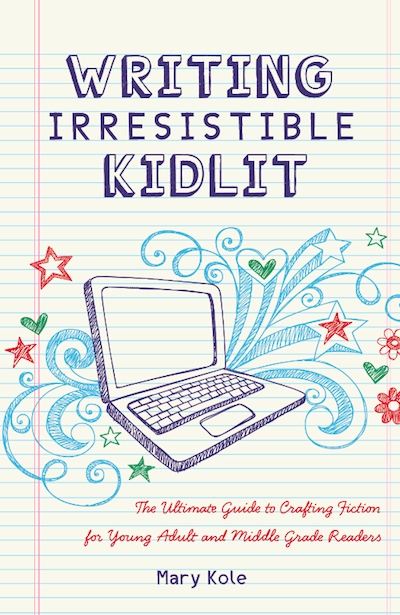
Those who signed up for the course received copies of Darcy Pattison's NOVEL METAMORPHOSIS and Cheryl Klein's SECOND SIGHT. Because so many already had Cheryl's book, I gave those participants Mary Kole's WRITING IRRESISTIBLE KIDLIT.
Members were paired with partners and exchanged manuscripts. They focused on big-picture changes (character growth instead of punctuation, for example) and wrote a letter to their partner which focused on three things:
  • What works
  • What needs work
  • What stuck out
Participants also wrote "letters to a sympathetic reader," a technique Cheryl Klein sometimes uses with her authors when they begin the editing process together. The sympathetic letter focuses on
  • The real thing / key ideas / effect on reader the author is aiming for
  • Where the novel started from / idea came from
  • Big ideas the author is exploring
  • The things the author loves and wants to keep
  • The things the author knows are not working
  • How the author sees their main character (their purpose, journey, etc.)
  • What the book is now and where it should be
  • Mission / vision statement for the book
A sympathetic letter helps a writer to get back in touch with their initial ideas. It can also show how ideas have changed over the course of the draft. Though partners exchanged letters, its primary function is to teach a writer about their own work.

Are you interested in improving your revision techniques? Try writing your own sympathetic letter. Listen in to the Revision Techniques podcast. Find a copy of Cheryl and Darcy's books. 

For my posts in the months ahead, I'll share quotes and links from the class on revision and story's key components, character, plot. 

Here's to strengthening your writing, friends!

Friday, November 1, 2013

Revision Technique: Book Mapping by Caroline Starr Rose

In 2009, I attended Darcy Pattison's Novel Revision Retreat. One of the many things she encouraged us to do while working with our manuscript was to check for "emotional zig-zags" within our first hundred lines. This technique Darcy developed after having a manuscript rejected for characters who felt "too flat". She determined she'd change her manuscript so that each description carried emotional weight and used Libba Bray's A GREAT AND TERRIBLE BEAUTY as a way to teach herself how to accomplish this (go read the first chapter if you haven't before. It's wonderfully done).
I was working on another manuscript at the time but came home to MAY B., the book I'd recently finished and had just sent out to agents. I decided I should look for the emotional changes within MAY and set up a chart, poem by poem, marking the topic and emotion in each. Unbeknownst to me, it was my first book map.
I first learned the term "book mapping" write reading Scholastic editor Cheryl Klein's book, SECOND SIGHT: AN EDITOR'S TALKS OF WRITING, REVISING AND PUBLISHING BOOKS FOR CHILDREN AND YOUNG ADULTSA book map is simply a quick way to get an overview of an entire book, scene by scene. It can be plugged into an elaborate chart, showing things like point of view, setting, conflict, character growth, and "emotional zig-zags", as Darcy would say, or can be a simple list with a few words meant to remind an author (or editor) of various points along a story's path.
Cheryl asks each of her authors to create a book map of current manuscripts, and she does the same while editing their work. This helps them both see where the book moves effortlessly from scene to scene -- and the areas that need overhauling. She has a fabulous podcast about this process and other editing techniques here.

BLUE BIRDS is the only manuscript I've ever mapped in its entirety. I've jotted poem topics in a notebook; made a more formal written record of setting (both location and time), sub plots, and POV narration; typed a fancy spreadsheet version; and hastily mapped a couple dozen poems where things weren't unfolding as I'd hoped.
Like Darcy's lesson in the richness emotional complexity can bring a text, a book map can teach a writer to see what's truly happening in a book, whether they're aware of it or not. My first map showed me BLUE BIRDS, narrated by characters Alis and Kimi, leaned too heavily on Alis's point of view. The spreadsheet version I created a week before receiving my first editorial letter was a way for me to reintroduce myself to the book (I hadn't looked at it from the time it sold in April until that week in July) and spot weak areas in character development. The most recent mini map (in the last picture above) helped me through a rough portion when many story strands were coming together. I was able to see how things currently stood and where I needed to change things -- either moving poems to new places, cutting them entirely, or adding something new.

I'll confess I don't really refer to the book map once it's created, as some authors must do. It's the process itself that helps cement the book in my mind. I firmly believe the best way to find the "answers" your story needs is to go back to the story and dig them out. I promise the seed of what you need is already there. Book mapping has been an invaluable tool to examine BLUE BIRDS in a new way.

Here are some other blog posts about authors who have also used this technique:
Mapping Your Book to Ensure it Works :: Adventures in YA and Children's Publishing

What are some revision techniques you find helpful?

Monday, August 26, 2013

Do At Least Two Things At Once, by Matthew MacNish


I'm not sure the many-armed statue of Shiva is the best image to represent this post, but it's important to use open licensed images, so it's what we've got.

Anyway, today I want to discuss one of many revision techniques I use. That is, for lack of a better term: do at least two things at once. And I don't mean multi-tasking, though the photo may imply otherwise. What I mean is, while reading back through a manuscript, and revising it, one thing I try to focus on is making sure that every scene accomplishes at least two things. Here are some examples of goals that scenes can strive for:

  • Furthering the reader's understanding of a character
  • Furthering the reader's understanding of the world
  • Describing the setting
  • Foreshadowing a coming plot element
  • Echoing a past plot element
  • Speaking to theme
  • Ramping up tension
  • Purposefully slowing down (or speeding up) pace

There are dozens, if not hundreds more, and I would love to see more examples in the comments, but I'm sure this list is enough to make my point.

Of course we all know about the four rhetorical modes of discourse: exposition, argumentation, description, and narration. While argumentation isn't much used in fiction, sometimes, depending on point of view and narrative distance, two of the others can be done at once. But that's not really what I mean either.

Whatever the method may be, and certain methods work better for certain types of scenes (dialog vs. action, for example, or inner thoughts vs. description) the point is to try to make sure that every scene exists for more than one reason, and that it accomplishes at least both of those goals (hopefully more than two, but by having a rule of at least two, I find that helps me decide what to trim).

I wish I could share an example from my own work, but I've got nothing published except for some very short flash fiction/vignettes, and they don't really follow the same rules as longer stories. Hopefully this technique makes enough sense to be understood without an example, but feel free to share one if you have one (or more goals that scenes can strive for)!