Showing posts with label character development. Show all posts

Monday, November 13, 2017

Characters in Conflict – Plotting Your #NaNoWriMo Novel

Are you doing #NaNoWriMo? If so, I hope by now you have a solid story idea. But it’s possible you got started and realized your idea might not be strong enough, or complex enough, to sustain a whole novel.

A strong story needs conflict. Without conflict, you have one of those “slice of life” episodes that isn’t a real story. But conflict doesn’t just come from dramatic things happening. It comes from the character – what he or she needs and wants, and why he or she can’t get it easily. Conflict comes from a character with a problem or a goal.

Some authors prefer to start with a plot idea, while others start with an interesting character. Either can work, but ultimately the plot and character must work together. Let’s look at character development, as it intersects with plot.

We’ll start with a premise: a kid has a math test on Monday. Exciting? Hardly. But ask two simple questions, and you can add conflict.

·                     Why is it important to the character? The stakes should be high. The longer the story or novel, the higher stakes you need to sustain it. A short story character might want to win a contest; a novel character might need to save the world.

·                     Why is it difficult for the character? Difficulties can be divided into three general categories, traditionally called man versus man, man versus nature, and man versus himself. You can even have a combination of these. For example, someone may be trying to spy on some bank robbers (man versus man) during a dangerous storm (man versus nature) when he is afraid of lightning (man versus himself).

For our kid with the math test, here’s one example: It’s important because if he doesn’t pass, he’ll fail the class, have to go to summer school, and not get to go to football camp, when football is what he loves most. Assuming we create a character readers like, they’ll care about the outcome of this test and root for him to succeed.

Our football lover could have lots of challenges – he forgot his study book, he’s expected to babysit a sibling, a storm knocked out the power, he has ADHD, or he suffers test anxiety. But ideally we’ll relate the difficulty to the reason it’s important. So let’s say he has a game Sunday afternoon and is getting pressure from his coach and teammates to practice rather than study. Plus he’d rather play football anyway.

We now have a situation full of potential tension. Let the character struggle enough before he succeeds (or fails and learns a lesson), and you’ll have a story. And if these two questions can pump up a dull premise, just think what they can do with an exciting one!

Fears and Desires

As that example shows, conflict comes from the interaction between character and plot. You can create conflict by setting up situations that force a person to confront their fears. If someone is afraid of heights, make them go someplace high. If they’re afraid of taking responsibility, force them to be in charge.

For example, my middle grade fantasy The Genie’s Gift is set in the fifteenth-century Middle East and draws on the mythology of 1001 Arabian Nights. It could have been simply a magical adventure tale, but the main character gives the story depth. She is anything but the typical swashbuckling hero:

             Thirteen-year-old Anise, shy and timid, dreads marrying the man her father chooses for her. Her aunt tells her about the Genie Shakayak, the giver of the Gift of Sweet Speech, which allows one to charm everyone. Anise is determined to find the genie and ask for the gift, so she can control her own future. But the way is barred by a series of challenges, both ordinary and magical. How will Anise get past a vicious she-ghoul, a sorceress who turns people to stone, and mysterious sea monsters, when she can’t even speak in front of strangers?

Because Anise is so desperate to reach her goal, she tackles challenges far beyond her comfort zone. This makes the dramatic action even more dramatic, while providing a sympathetic character and a theme about not letting your fears stop you from achieving your dreams.

You can also create conflict by setting up situations that oppose a person’s desires. Sometimes these desires are for practical things. In my middle grade mystery set in ancient Egypt, The Eyes of Pharaoh, the main character is a young temple dancer whose one goal is to win an upcoming contest. When her friend disappears, she has to decide if winning the contest is really more important than helping a friend.

Perhaps your character simply wants an ordinary life. In my Mayan historical novel, The Well of Sacrifice, Eveningstar never dreams of being a leader or a rebel. But when her family, the government, and even the gods fail to stop the evil high priest who is trying to take over the city, she’s forced to act. The reluctant hero is a staple of books and movies because it’s fun to watch someone forced into a heroic role when they don’t want it. (Think of Han Solo in Star Wars.)

Even with nonfiction, you can create tension by focusing on the challenges that make a person’s accomplishments more impressive. In Jesse Owens: Young Record Breaker, I made this incredible athlete’s story more powerful by focusing on all the things he had to overcome – not only racism, but also childhood health problems, poverty, and a poor education. I showed his successes and his troubles, to help the reader understand what he achieved.

To build conflict:

  • Start with the character’s goal. Create conflict by setting up situations which oppose a person’s needs and desires.
  • What does your main character want? What does he need? Make these things different, and you’ll add tension. It can be as simple as our football player who wants to practice football, but needs to study. Or it could be more subtle, like someone who wants to be protected but needs to learn independence. (Or the reverse, someone who wants independence but still needs to be protected. Those two characters could even be in the same story. Life is complex, with many shades of gray, and books can explore that. Subtle concepts may be confusing for younger readers, but they are entirely appropriate for middle grade and young adult books.)
  • Even if your main problem is external (man versus man or man versus nature), consider giving the character an internal flaw (man versus himself) that contributes to the difficulty. Perhaps your character has a temper, is lazy, or refuses to ever admit she’s wrong. This helps set up your complications and as a bonus makes your character seem more real.
  • Your character may change or grow as a person during the story. This is called a character arc. A character who changes is usually more interesting than one who does not. However, growth does not always mean a reversal of attitude. The growth can come from reaffirming what the character already knew. For example, a child could know what is right but struggle to do it. In the end he does what is right, growing by following and reinforcing his beliefs.
  • A character’s growth can reflect your theme, by showing what the character learns.
  • Test the idea by considering different options. Change the character’s age, gender, or looks. Change the point of view. Change the setting. Change the internal conflict. What happens? Choose the combination that has the most dramatic potential.
  • The conflict must be important enough to sustain the story, and it must not be too easy to solve. This will vary by story length and readership age group.
  • It should take more than one attempt to solve the problem – three tries works well for shorter fiction. For longer fiction, add more attempts, or have each attempt made up of several parts.
  • To build original plots, brainstorm 10 possible things that could happen next. Pick the least likely, so long as it makes sense for the story.

Some writers start with plot ideas and then develop the character who’ll face those challenges, while others start with a great character and then figure out what he or she does. Regardless, remember to work back and forth between plot and character, tying them together with conflict.

Do you tend to start with plot or with character? How does this affect your writing process?

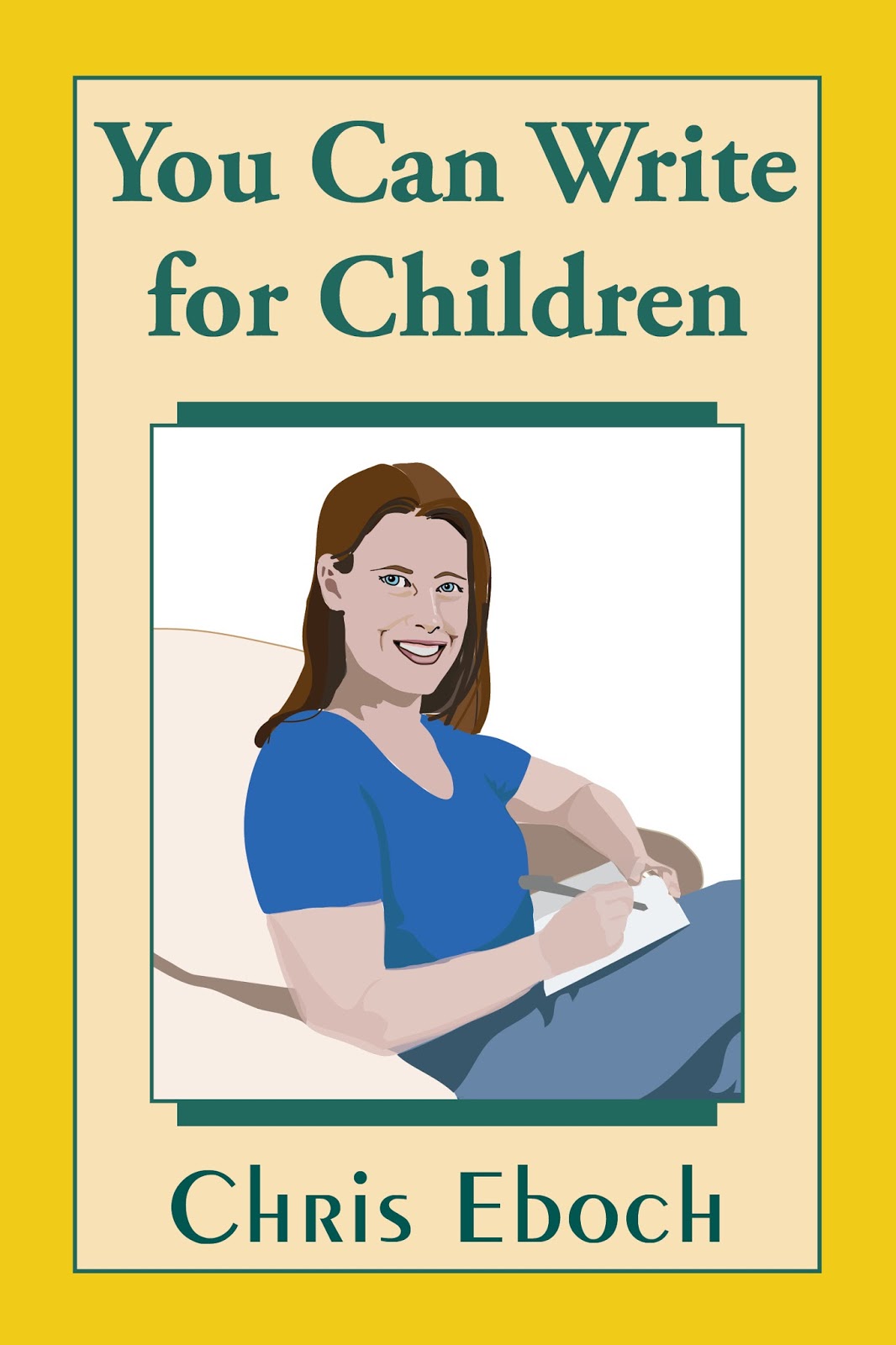
This post was adapted from You Can Write for Children: How to Write Great Stories, Articles, and Books for Kids and Teenagers. The book is available for the Kindle, in paperback, or in Large Print paperback.

Chris Eboch is the author of over 50 books for children, including nonfiction and fiction, early reader through teen. Her novels for ages nine and up include The Eyes of Pharaoh, a mystery in ancient Egypt; The Well of Sacrifice, a Mayan adventure; The Genie’s Gift, a middle eastern fantasy; and the Haunted series, about kids who travel with a ghost hunter TV show, which starts with The Ghost on the Stairs. Her writing craft books include You Can Write for Children: How to Write Great Stories, Articles, and Books for Kids and Teenagers, and Advanced Plotting.

Learn more at https://chriseboch.com/ or her Amazon page, or check out her writing tips at her Write Like a Pro! blog.

Friday, June 23, 2017

Kill the villain? Or save them? by Joanna Roddy


For my last post, I talked about villains and the layering of roles often seen in kids lit: rivals, agents, and the true enemy. I want to continue that discussion and talk about what we as writers do with our villains in the end. 


Disney (and for that matter, most traditional story-telling) tells us that the villain needs to die. Especially the true enemy, especially if they are powerful through magic or supernatural ability. They're too dangerous to live. Lesser villains, like agents, need to be punished, and rivals and bullies need to be humiliated. It's often an eye-for-an-eye system in which just deserts are served up to satisfy the viewer's sense of fairness. In these narratives, good is good, though it may be flawed or misguided; and bad is intentionally bad. The hero must vanquish evil. Ultimately, these stories have a power struggle as the central conflict and the story ends when power ultimately resides with the protagonist. 

Other story-tellers, like Japanese animated fantasy film-maker Hayao Miyazaki, show us villains who are unquestionably bad and clearly set against the protagonist, but the hero's path to overcoming that villain isn't through violence or a show of definitive power. This is because the hero has a different skill-set altogether. Where traditional heroes need to harness their power in physical or magical battle, these alternative heroes are equipped with empathy, loyalty, and kindness. They will still need bravery and perseverance, but the result will be something far different than vanquishing the villain. Rather, the villain can be saved. 


Take for example Spirited Away, Miyazaki's 2003 Oscar-winning film in which the ten-year-old hero, Chihiro, defeats a monstrous spirit feeding on people's greed by simple indifference to its offers of gifts and gold. After returning it to its benign form, she befriends it, taking it as a traveling companion. Later, Chihiro is able to win her freedom from a witch, Yubaba, who is holding her and her parents prisoner, through her wits and monopolizing Yubaba's weak spot: her devotion to her bratty son. Does Chihiro hold the son hostage or threaten him? No. She earlier made friends with him, transforming his selfishness into compassion that then is leveraged in her favor. The story is left with the possibility that Yubaba's love for her ennobled son will lead to her own transformation.


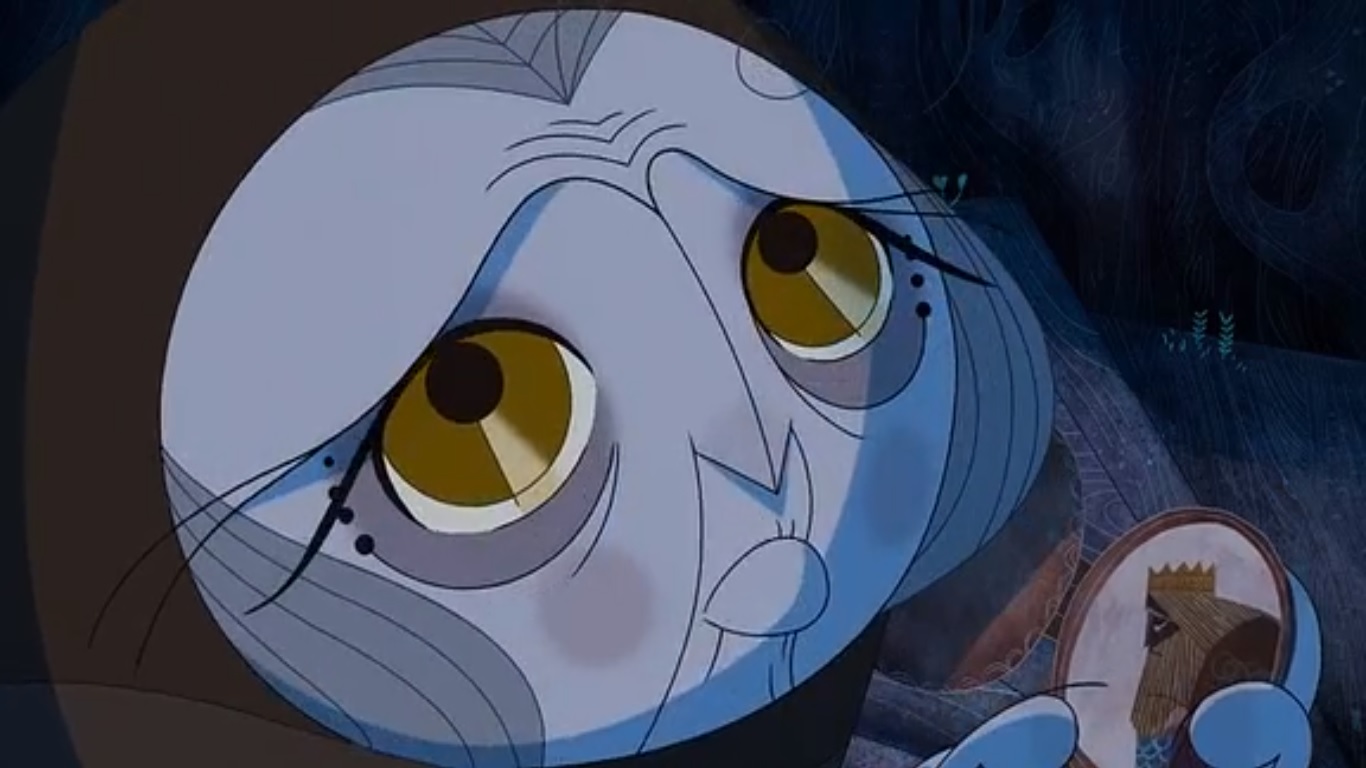
Another example: Tomm Moore's Song of the Sea. Based on Irish folklore, the villain in this film is Macha, the owl witch. She steals people's emotions, keeping them in glass jars while the people themselves are turned to stone. We learn that she does this because her son's broken heart was too painful for her to witness, and, thinking she was giving him mercy, she turned him to stone. Now she is determined to do the same for everyone, including herself. The child protagonists break the jars and the emotions all come flooding out. Macha realizes that allowing oneself to feel things, even great emotional pain, is preferable to feeling nothing and being barely alive. In the end she becomes their ally and her relationship with her son is restored. 

The only irredeemable villains in these films are destructive forces. Miyazaki presents war and pollution again and again in his films as true evils that must be resisted. Moore's Song of the Sea offers only time and the rules of magic as the heroes' greatest enemies. 

I find myself torn. Evil is real. Just look at the news. Kid readers understand this in a pure and simple way, often overlooking the nuance and splitting the world into good guys and bad guys. I think the longing to see justice for wrongdoing is innate. But as writers, I feel we owe it to children to represent the world as it truly is: seemingly evil people have complicated motives, and no one is completely irredeemable. Our choices have power and the possibility to choose good is always there. Some villains will never choose good--that's the power of free will too. 

Typically our heroes destroy the villain in a final showdown in which good prevails against all odds. The hero seems ill-equipped and powerless until that last moment when what is needed to overcome impending doom finally arrives, and they win. But what if instead the thing that arrives against the odds is that elusive magic--the kind we all wish we had--that gives the hero the exact key to unlock the villain's heart and return them to a path of love? Everyone wins. What if we told stories like that, and instilled the belief in children that maybe there's something inside them that can transform the world through love instead of violence? Through peacemaking instead of division. 

Maybe that's idealistic, but doesn't our world need those kind of heroes now more than ever? 

Monday, April 17, 2017

Villains: Rivals, Agents, and Enemies by Joanna Roddy


Antagonists come in many forms: natural disasters, well-meaning friends, or even unwitting coincidence. But I think the most fun to write are villains. 

Project Mayhem has posted some great material about villainy in the past, but I thought I'd revisit the subject with some ideas that have been helpful to me lately.

Many many types of villains have been identified before. But I've noticed lately that there are often three levels of villains that come up within the same novel, especially those with young protagonists. So let's break them down and look at their roles, functions, and pitfalls.


RIVALS:
What they are: Rivals are someone on the same level, or close to it, with the protagonist. They may only serve to drive the protagonist forward as a competitor who poses a true challenge, or they may become a bully who actively causes harm. Rivals are not typically the main threat. They are usually unrelated to the true villain of the story; however, they may be conscripted to become an agent of the greater enemy, or used as a pawn. They may also be somehow redeemed before the end, often as a result of their encounters with the protagonist. 

Examples: Draco Malfoy (Harry Potter), Josie Pie (Anne of Green Gables), Boromir (Fellowship of the Ring), Edmund (The Lion, the Witch, and the Wardrobe), Marion Hawthorne (Harriet the Spy)

Function: The Rival creates situations that test the protagonist, calling out and revealing their strengths, weaknesses, and true character. They also serve as a foil to the protagonist, so that readers become more invested in the main character through seeing their virtues in contrast to the Rival's character flaws. They are a training ground for the climactic confrontation with the greater enemy and create try/fail cycles to track the protagonist's progress. In reality-based fiction, the Rival may be the only intentional human antagonist. 

Pitfalls: Like all villains, Rivals need to have a good reason in their own minds for treating our protagonist the way they do. Just being a spoiled brat or the next best competition isn't enough for them to single out the protagonist. Get inside their head and figure out what pressures, insecurities, and prejudices make them the way that they are. Frenemies, former friends, or family members can make for a much more complex kind of Rival who has both love and hatred at play in how they relate to the protagonist.


AGENTS:
What they are: Agents are tools used by the true enemy to do their evil work. Often they are secret Agents, posing as allies but actually working against the protagonist. Sometimes they are overtly acting as a representative of a greater evil but are clearly motivated by lesser impulses and desires, which can allow for crueler and pettier torments for the protagonist. Sometimes they are corrupted or possessed by evil, or they may be a henchman. Often Agents are in positions of power or inherent trust, which lends to more surprising revelations and to abuses of that power, amplifying the largeness of the overall threat.

Examples: Wormtail/ Peter Pettigrew (Harry Potter), Barty Crouch Jr./ Mad-Eye Moody (Harry Potter), Professor Quirrel (Harry Potter), Luke (Percy Jackson: The Lightning Thief), Saruman (Lord of the Rings), Darth Vader (Star Wars)

Function: Agent villains allow for layers of complexity to the greatest source of antagonism in a novel. They create good plot twists when their motives and loyalties are revealed. They give the reader a sense of the pervasiveness of the evil and the immensity of what the protagonist has to overcome. Agents are often the more interesting villains because their ability to deceive about their true motives gives the reader both good and bad interpretations of their character, heightening the horror of what seemingly good people are capable of. 

Pitfalls: Again, this type of villain needs a strong personal reason for doing what they do. They may believe in the cause of the true enemy, or they may be acting under duress, but their willingness to be used as an Agent has to have that additional personal motivation based on past experiences, beliefs, and circumstances. It can be tricky to keep a secret Agent disguised from your reader while finding that balance of giving them believable flaws, a compelling motivation for what they're doing, and some well-hidden hints before the reveal. Likewise, a too-perfect Agent will automatically be suspect. 


THE ENEMY:
What it is: This is the mastermind, entity, Dark Lord, or true source of evil who will pose the greatest threat to the protagonist, which they must overcome. These are the more traditional villains. 

Examples: Sauron (Lord of the Rings), Voldy (Harry Potter), The White Witch (The Lion, the Witch, and the Wardrobe), The Emperor (Star Wars), Lex Luther (Superman), Kronos (Percy Jackson)

Function: The Enemy's main function is to pose the greatest threat and bring the protagonist to their ultimate limits as they try to overcome that threat. They personify everything the protagonist must reject, and good Enemies actually do make clear the allure of their perspective, or offer such horrific consequences that the reader would understand why the protagonist would capitulate.

Pitfalls: One pitfall here is having only the central Enemy. As you can see from the above, layers of challenges with lesser villains better prepares the protagonist, and in turn the reader, for the final confrontation with the true Enemy. If you do layer in this way, though, you shouldn't just plunk in the Enemy at the end. Threads of the Enemy should be woven throughout the story, and the challenges the protagonist faces should relate in some manner to the ultimate challenge in the climax. Another major pitfall is to make the Enemy one-dimensional. Remember that every villain is a hero in their own eyes--they are a distortion of what goodness and heroism should be, not necessarily the total opposite of it. Understand why they do what they do.

I hope you find this as helpful as I have! Please let us know in the comments if you've noticed this hierarchy before, or if you think there might be other things to add to the levels of villainy. Now go practice your evil laugh. 

Monday, January 30, 2017

What's in a Name? by Dianne K. Salerni

Shakespeare’s Romeo said that “a rose by any other name would smell as sweet.” But I wonder, would a character named Rose have the same personality if the author changed her name to Daisy?

In 2011, when I started planning a story about a secret dayof the week, the protagonist came to me with his name already selected. By him. “I’m Jax,” he said, and since I was toying with the idea of setting the story in a fantasy world, I didn’t object at first. But when I decided to set the story in modern day U.S.A, I thought I needed to change his name. American boys weren’t named Jax. (In 2011, I had never heard of that name.)

The problem was, Jax wouldn’t change his name. Not even to something close, like Jack. Somehow, an entire personality had become attached to that name. Jax was stubborn and had a smart mouth on him, but he was also good-hearted and likeable and loyal to a fault. He was impetuous, prone to making mistakes, but always willing to take responsibility for his actions and make things right. All those things had somehow become uniquely tied to three letters: J-A-X.

(Of course, by the time the book was published, I found myself encountering the name Jax or Jaxon everywhere. So, he was right all along.)

I’m not the only author who’s experienced this name-character connection.  Susan Lynn Meyer reports that after hearing the name September Rose (a friend’s daughter’s friend), she immediately knew she had the name of the MG for her book Skating with the Statue of Liberty. She tells me, “I can't exactly say why, maybe because it is such a vivid and unique name, but the name September Rose (Seppie for short) conjured up to me an African-American girl who is full of confidence, energy, and joie de vivre, even in the face of discrimination. She wants to be a singer and dancer, like her idol Josephine Baker.”

In Diana Peterfreund’s Secret Society Girl series, a character with the code name Poe is eventually revealed to have the real name of James. However, when the protagonist first called him by that name, the author got a surprise. He shouted that nobody called him James; his name was Jamie. “The scene took ME by surprise,” she says. “I didn't even think of trying to change it. He was so certain.”

Another character who chose her own name is Fairday Morrow. In the book, The Secret Files of Fairday Morrowreaders find out that her mother, Pru, grew up in Nantucket. Because her baby daughter’s gray eyes reminded her of the ocean, Pru named her child after a phrase local fishermen said to tourists. Authors Jessica Haight and Stephanie Robinson say that Fairday’s name inspired her character: “Fairday has an even-keeled personality that built up around her name, though we'd say she does have her own style!”

I could share countless other stories of how my characters’ name choices drove the development of their personality, such as my feisty and ever-truthful Verity Boone and Riley Pendare—who in my original story notes was named Wiley, but who changed his name and hijacked his intended role just before I started the first chapter. Rather than recount them all, I’ll leave you with some writing advice from Diana Peterfreund. When it comes to characters’ names, the characters know best.  

“Follow the names,” Diana says. “Always follow the names.”


Thursday, October 20, 2016

Character Rules

We've passed October's middle point, and as Halloween approaches, the air crackles with the energy November brings, not only because of the Holiday season, but because of NaNoWrimo. If you, dear reader, scroll down to previous blog posts, you'll find wonderful and inspirational advice shared by my fellow Mayhemers. I started writing because of NaNoWrimo, and I've loved the experience ever since. I'd always wanted to write a book, but I used to complain I didn't have any story ideas--until I found a character (or the character found me) and wouldn't stop badgering me until I wrote her story. See, for me, character rules above all the other elements of a story: plot, setting, writing style, and structure. If I care about a character, I'll read through anything to know what happens to the character I either fell in love with or found fascinating in some way. Of course, plot, setting, writing style, and story structure affect the character, or they should for the character to be unforgettable and compelling; in other words, for a character to be a real person (or bunny doll, like Kate DiCamillo's Edward Tulane or Drew Daywalt's rebellious crayons). Even if a character finds the writer and whispers in her ear until the writer gives in and gives life to the story, the writer must work hard to fully flesh out the whispering voice and transform it into Harry Potter, Percy Jackson, Anne with an "E," Eugenides, Bartimeus the Genie, Katniss, Ramona, or Max and his wild things. 

In The Magic Words: Writing Great Books For Children and Young Adults, author and editor extraordinaire Cheryl B. Klein devotes several chapters to the art of creating compelling characters. She says, "You'll want to employ different characterization strategies, at different depths, for different members of your cast, depending upon where you're in the plot, the character's role in the plot, and the character's reactions to each other and the reader" (105). 

After many years of attending writing conferences, workshops, and even an MFA program, and reading countless writing craft books and writing blogs, I've compiled a list of ways in which I can explore my characters' traits to understand their desires, goals, and motivations from which all my stories enfold. As Cheryl b. Klein suggests, all these techniques have helped me at different time, in different ways to get to know "my people:" 

  • Free writing: usually I start a manuscript or story idea with the faint form of a character in a particular situation. The character's actions will lead to the rest of the story. 
  • A vision of where I want the character to become or what they want to achieve by the end of the manuscript. If I know where the character starts and where he/she/it should become by the end of their story, I can build up to that vision.
  • Borrowing from real life: Maggie Stiefvater (the creator of characters such as the Raven Boys and Blue Sargent, Sean Kendrick and Puck Connolly) has publicly and repeatedly confessed that she borrows characters from people she meets in real life. Before you go ahead and get in trouble for modeling your villain after the elementary school teacher who might one day read your story and recognize himself and get you in trouble, be aware that Maggie meant she borrows certain traits, mannerisms, even looks. She's also said that her characters usually represent an answer to a question in her head
  • A collage: in a workshop I attended with Cynthia Leitich Smith, she had us, the students, make a collage that represented our character's fears, dreams, motivations, goals, or view of the world. Some writers use Pinterest boards to the same effect. 
  • Zodiac signs
  • Myers-Briggs personality type test or any personality test on facebook
  • Sorting your character into their Hogwarts House or discover their Dungeons and Dragons alignment.
  • Having your character write you a letter, telling you, the writer, something you don't know about them yet. This exercise has been surpringly revealing and productive for me when I feel like I'm still not connecting to my character in some way. 
  • Write your character's biography or Wikipedia style entry.
  • Journal a week in the life of your character.
  • Character interview or questionnaire.
Of course, there must be moderation in all things. I don't employ all of these techniques on a single character or even on all the different members of my cast. Like any type of research, character exploration can easily become just another way in which I put off writing because I'm planning on writing. Sometimes the easiest way to know a certain character is by trial and error, and many times, and although I've made a detailed entry in a character bible, my characters still surprise me and make the story even more exciting than I could've imagined on my own.

So writer friends, what are some techniques you have used to flesh out you "imaginary friends?" Share in the comments! 


Thursday, September 22, 2016

4 WAYS "STRANGER THINGS" GETS MG RIGHT by Mary E. Cronin


I admit I’m not a big TV viewer, but watching Stranger Things on Netflix lit up the middle grade parts of my brain like a string of Christmas lights.

The eight-episode show, set in the 1980s in a small Indiana town, is a mystery/horror/drama that pays tribute to such movie classics as Stand By Me and E.T.


Kids are the stars of this show, and middle grade writers can draw much inspiration from it. Here are four ways that the creators of Stranger Things totally nail middle grade:


Invincibility
The kid characters are active. They are DOING things all the time: playing Dungeons and Dragons, hopping on their bikes and tearing off into rough terrain, arguing, taking matters into their own hands. These kids have agency. If your characters suffer from talking head syndrome, or a bad case of letting the world happen to them, watch how these four tweens make things happen. Even in the face of fear, in the face of uncertainty, they have the wonderful early-adolescent belief in their own invincibility, that they will survive, that good will triumph over bad.


Vulnerability
At the same time, the characters show moments of vulnerability that draw us closer to them. They deal with adults who underestimate or doubt them. They face up to bullies and quake. Two are growing up in the shadow of stronger older siblings, a near-universal experience. They argue amongst themselves and battle doubts about their friendship. The “stranger in a strange land” character, El, has the haunted vulnerability of a refugee, someone who has experienced trauma and yet still holds out hope for something better. Her facial expressions are worth paragraphs. None of the kids collapse into hopelessness or ennui in the face of their vulnerabilities—they keep going, keep trying, keep taking risks. As a middle grade writer, I took note of this, over and over.


Seeing the adult as “other”
Stranger Things flirts with the “all adults are clueless” trope. Some of the adults are comically unaware of the shenanigans going on under their roof—like hiding a runaway child for days on end in the basement rec room. There are the classic scenes of teens sneaking in and out of the house, the scenes in which tweens are lost in games or bike-riding adventures for hours on end, away from the gaze of adults. At the same time, the adults in the series are not cardboard cut-outs—they care, they cry, they try. But they don’t eclipse the quest of the kids as they try to find their missing friend, protect the strange newcomer, and crack the mystery. As far as these middle-graders are concerned, adults exist in a parallel universe. This allows the kid characters to shine.


It toys with gender roles
El, the otherworldly runaway character, is the classic “stranger in town.” With her shorn hair and angular face, she presents as a “tomboy” type, entering into a well-established friendship group of boys. She possesses vulnerability as well as supernatural powers that vanquish adults and blow the boys away. She is by turns fragile, fierce, and protective. She is a study in contrasts, in girl power, in gender-bending attributes, in character magnetism.


These characters will stay with you long after you’ve clicked off the television. They provide nail-biting entertainment as well as lots of food for thought for the middle grade writer. Take note, be inspired, and enjoy!


Thursday, April 14, 2016

The Enneagram for character development by Joanna Roddy


I have to confess, I put little stock in personality tests. They seem too generic, like magazine horoscopes that, with a little finagling, could apply to anyone. The tests are fun to take, but they're more like acceptable vanity exercises. Only the saints and psychologists among us really dig into understanding types other than their own. At best we say: "Oh you're an INFJ? I'm an ENFJ!" and remark on our shared traits and the differences between introverts and extroverts. 

But recently a psychologist friend introduced me to a personality system she uses in her practice, and I have found it incredibly helpful, both personally and in my relationships. Recently I decided to use it in my writing as well. I was having a hard time making certain characters distinct and clear. Using this system, two-dimensional characters suddenly popped up off the page. I began to understand what motivated them, how they would react in situations, what they might say (or not say), what vice they might gravitate toward, and what core virtue would emerge under the right circumstances. In short, it was character development magic. 

The Enneagram:

The personality typing system is called the Enneagram, and it articulates nine personality types that are interrelated. In an extremely condensed form, here are the nine types and their core motivations:

Type 1: The Reformer/ Perfectionist. "I must be/ do right."
Type 2: The Helper/ Giver. "I must help others."
Type 3: The Achiever/ Motivator/ Performer. "I must succeed."
Type 4: The Individualist/ Artist/ Romantic. "I must be unique."
Type 5: The Observer/ Investigator/ Thinker. "I must understand the world around me."
Type 6: The Loyalist/ Skeptic. "I must be secure."
Type 7: The Enthusiast/ Adventurer. "I must seek new experiences."
Type 8: The Challenger/ Leader. "I must be in control."
Type 9: The Peacemaker/ Mediator. "I must have/make peace."

Each personality type perceives these motivations as the means for them to be safe, to have meaning in their lives, or to be loved.

There are a lot more details to each type, like key fears and desires, and basic virtues and vices. Check out this cheat sheet from Wikipedia (click to enlarge):


Integration/ Disintegration:

What I like about the Enneagram is its nuance and complexity. We all know that a healthy or growing person and an unhealthy or stressed person behave in totally different ways, even if they share personality traits. The Enneagram predicts what traits emerge under stress and during personal growth.  Every Enneagram type uniquely integrates to the healthiest characteristics of another type and disintegrates to the least healthy behaviors of a different type.


For example, threes integrate to a six and disintegrate to a nine. Achieving threes can be self-focused, but with maturity, they look more like other-focused healthy sixes. Threes can be driven, but under stress they begin to look like unhealthy nines: disengaged and apathetic.

Wings:

Enneagram types can have an even greater degree of complexity by demonstrating traits from one of the numbers adjacent to them, which are called wings. The wing augments the primary personality. So you can have an observant five with an artistic four wing, which might produce a professorial art school type, or an achieving three with a helpful two wing might be an front-person for a non-profit organization. These are gross generalizations, but I find the flexibility of wings accounts for a wide array of personality manifestations, even among people who share a primary type. It keeps it all from becoming too canned and stereotyped, but not so general as to become meaningless. 

In Writing:

The Enneagram goes much farther and deeper than this crash course, and those who are interested could spend a lot of time learning about it. I think most of us instinctively pick up on others' personalities, especially writerly types who want to write believable characters. If people were clocks, we immediately perceive the difference between a cuckoo clock, a grandfather clock, a digital clock and an alarm clock. We get, on a basic level, what makes them tick. The Enneagram, then, is effectively like a screwdriver that removes the backing so we can see the actual mechanics at work. 

The most helpful aspect of the Enneagram for me is the basic fears and desires. It helps me to know how a character is going to react to the sticky situations I put them in. For example, one of my characters is an adventurous seven. When his parents want him to go into the military for a war he doesn't agree with, his response is to hop a plane out of the country. A seven's core fear is being trapped or in pain and their spontaneity can make them impulsive, so this response makes sense for him, drastic though it may seem. Another of my characters is a loyal six. A six's basic fear is making the wrong decision. They need guidance to orient themselves. In this situation, my six character would have struggled with living up to his parents' expectations. In fear of making the wrong decision for himself, he probably would have enlisted despite his own reservations. And that would have made for an entirely different plot.

A Warning: 

Fully fledged characters will still surprise us. They should never act against their own character, but they might step out of the box that a personality type wants to put them in. A challenger-leader eight who tends toward domineering might unexpectedly resist the urge to step into an argument, which would mean something substantial for that character. Perhaps they are moving in their direction of integration to look like a helping two, or they've newly realized that winning a fight is less effective than leading by example. This flexibility is how we avoid stereotypes and wooden characters. I like that the Enneagram allows for the changes brought on by maturing or devolving or blending a couple of personality types together. But once these type of tools have helped you build your writing, like scaffolding, they should fall away and let the real, living world on the page play itself out as it must. Using the Enneagram as a tool, not as a law, is the best way. 


Resources:

Start with the Enneagram Institute site and the Enneagram of Personality Wikipedia page. From there, there are lots of books, sites, and articles available to learn more about the Enneagram. And here's a link the the long version of the test if you want to find out what Enneagram type you are and to a shorter version and another type of short test. The last one is my favorite. I apologize in advance for the productive time you will inevitably lose on those tests, but if it gets you to an understanding of good character building, then I think you don't have to feel too guilty about it. 

Please leave a comment if you've used the Enneagram or other personality typing for character building! I'd love to hear your insights. And here's something I'm deeply curious to know: do the main characters you write have the same personality type as you do? Happy writing!

Monday, April 11, 2016

Beverly Cleary at 100: 5 Things I've Learned about Compelling Characters from Ramona Quimby

Tomorrow is Beverly Cleary's 100th birthday. In celebration, I'm sharing a post that first published in 2011. Three cheers for the wonderful Ms. Cleary!

I loved the Ramona books when I was a girl, but if it's possible, I love them even more as an adult. Re-reading these books has taught me a lot about writing compelling characters. Here are a few things I've learned from Ramona Quimby:

  • Make them real: Ramona feels like a real pesky kid sister; she's as familiar as our own siblings or neighbors.
  • Make them realer than real: Ramona is a bigger-than-life character, the type that does and says things beyond the regular, everyday world. Somehow, this over-the-top aspect of her character is what makes her seem most like an actual kid: the more unique and outrageous she acts, the more she reminds us of real life.
  • Make them sympathetic: It would have been easy for Beverly Cleary to create a character whose flaws made her unattractive, like good ol' Bugs Meany in the Encyclopedia Brown books (has there ever been a better mid-grade villian's name, by the way?). But those flaws are precisely why we love Ramona -- we feel for her in the midst of her problems because we see our own selves in her experiences.
  • Make them logical: Part of Ramona's appeal is the way she makes sense of the world: the time she walks to school at 25 after the hour (because she was supposed to leave her house at the quarter hour), the time she is convinced her teacher is going to give her a gift because she tells her to sit for the present. Even when she's wrong we can relate to her logic because we're seeing her world through her young eyes.
  • Show them respect: The thing that has really struck me as an adult re-visiting the Ramona books is the compassion Beverly Cleary has for her character. Though she doesn't shy away from awkward moments, there is a tenderness in the way Cleary deals with Ramona when she throws up in class, when she kicks her bedroom walls in anger, when she names her doll the most beautiful name she can think of -- Chevrolet. 
These books have reminded me what it was like to be a child. They've nudged me to be more patient with my own children. They've encouraged me to treat my characters with compassion. 

Thank you, Beverly Cleary, for creating such a memorable, remarkable character. My writing -- and living -- are better for it.

Thursday, February 18, 2016

Marrying Story Structure and Character Arcs by Joanna Roddy


I'm a natural planner, but over the past year or two, I've been trying to loosen up and just write, as I've shared here before. But, at least for me, even when I'm letting the story lead me step by step as I'm writing it, I like to still have in my head the big beats I need to hit and where I hope to arrive at the end. I've also tried to press into character arcs as an equally important motion of the plot. 

As I've been working on my current project, I've discovered an approach that is giving me what seems to be the perfect balance between plan and discovery and between plot and character. I've been wanting to share this technique with you, and it makes a nice dovetail to Chris's post last week on layering plot and character in story. 

You may have heard about seven point plot structure before. It's kind of a hero's journey lite, if you're familiar with that approach. I heard about seven point plot structure from a writer friend, but when I looked it up, the blogs I found only confused me. Hook? Pinch Point? Plot Turn? The descriptions were vague and uninspiring. 

But then my friend directed me to the videos of Dan Wells presenting at a writing symposium using the seven points for story structure. If you want a quick master class on writing, I encourage you to set aside forty-five minutes and take yourself out to coffee with headphones, a laptop, and this link

In the case that you don't have time to go watch the whole thing right now, I'll give you the one paragraph summary in the order Wells directs you to plan the points (which is not the order they will happen in your story): 

1. Figure out how you want the story to end (Resolution). 
2. Create a beginning with an opposite status quo (Hook). 
3. The middle should be when your character makes the deliberate choice to pursue the Resolution (Midpoint). 
4. Set the character in motion from the Hook toward the Midpoint. Call them out of the status quo and introduce conflict (Plot Turn 1). 
5. Get the character the last and most important thing they need to accomplish the Resolution (Plot Turn 2). 
6. Apply pressure, force your characters to action, and create hurdles to their goals on either side of your Midpoint (Pinch Points 1 and 2). 

So now you have your seven points. This is the order they'll occur for your reader:


This is pretty straightforward stuff. It's a way to do it, and it pretty nearly encompasses most story-telling from a western worldview. What I like most about Wells's presentation is when he takes the character arcs, main plot, and subplots (using The Matrix as his example) and charts where each point of the the story structure occurs for each one and how they then weave together in the chronology of the story. 


This got me excited and it got me thinking about how seven point plotting takes shape for characters, something Wells doesn't have time to fully unpack during his presentation.

I understood the idea of a Hook to Resolution arc for any character, but the finer details evaded me. I had to dig a little deeper to understand what a Midpoint would mean for a character arc. That's when I discovered this excellent series of posts by K.M. Weiland


She argues that in the beginning of a story, the hero is operating from a lie about who they are, what they are capable of, or what the world is like. This lie shapes who they are and how they are. The Resolution for that character will be to reject the lie and learn, accept, and live out the truth instead. So, then, the Midpoint is when the character is able to finally see and accept the truth, but still has not rejected the lie or its effects on their choices. This enlightens the rest of the seven points for character arc. The Plot Turns introduce the truth, expose the lie, and give the character what they need to reach the Resolution. The Pinch Points refute the truth, reinforce the lie, and create barriers to the character's journey to truth. 

Brilliant stuff, right? To have this internally-driven structure woven into the externally-driven one allows for complexity, ingenuity, and well-rounded characters amidst a satisfying story. 

As I'm drafting a novel right now, the seven plot points are really helping. Some of the story points will happen simultaneously with character points, but some will occur separately. Many of the points are already clear scenes in my mind. But there are so many other scenes and so much happening between the points in order to get the story there, they serve more as guideposts than outline. It's definitely pacifying my inner Hermione Granger who needs to have answers, but it's giving spaciousness for the story to open itself to me as I write it. I'm loving that balance.

Have you used seven point plot structure before? Have you applied it to character development? Have you encountered other teachers/bloggers/writers who have an approach to it that you've found helpful? Please share in the comments below!

Monday, February 8, 2016

Plot-Driven or Character-Driven? Why Not Both! by Chris Eboch

Author Chris Eboch
This post is adapted from You Can Write for Children: How to Write Great Stories, Articles, and Books for Kids and Teenagers, from Chapter 5: Characters.

Some authors prefer to start with a plot idea, while others start with an interesting character. Either can work, but ultimately the plot and character must work together. Let’s start with a look at character development, as it intersects with plot.

A strong story needs conflict. Without conflict, you have one of those “slice of life” episodes that isn’t a real story. But conflict doesn’t just come from dramatic things happening. It comes from the character – what he or she needs and wants, and why he or she can’t get it easily. Conflict comes from a character with a problem or a goal.

Let’s start with a premise: a kid has a math test on Monday. Exciting? Hardly. But ask two simple questions, and you can add conflict.

·     Why is it important to the character? The stakes should be high. The longer the story or novel, the higher stakes you need to sustain it. A short story character might want to win a contest; a novel character might need to save the world.

·     Why is it difficult for the character? Difficulties can be divided into three general categories, traditionally called man versus man, man versus nature, and man versus himself. You can even have a combination of these. For example, someone may be trying to spy on some bank robbers (man versus man) during a dangerous storm (man versus nature) when he is afraid of lightning (man versus himself).

For our kid with the math test, here’s one example: It’s important because if he doesn’t pass, he’ll fail the class, have to go to summer school, and not get to go to football camp, when football is what he loves most. Assuming we create a character readers like, they’ll care about the outcome of this test and root for him to succeed.

Our football lover could have lots of challenges – he forgot his study book, he’s expected to baby-sit a sibling, a storm knocked out the power, he has ADHD, or he suffers test anxiety. But ideally we’ll relate the difficulty to the reason it’s important. So let’s say he has a game Sunday afternoon and is getting pressure from his coach and teammates to practice rather than study. Plus he’d rather play football anyway.

We now have a situation full of potential tension. Let the character struggle enough before he succeeds (or fails and learns a lesson), and you’ll have a story. And if these two questions can pump up a dull premise, just think what they can do with an exciting one!

Fears and Desires

As that example shows, conflict comes from the interaction between character and plot. You can create conflict by setting up situations that force a person to confront their fears. If someone is afraid of heights, make them go someplace high. If they’re afraid of taking responsibility, force them to be in charge.

For example, my middle grade fantasy The Genie’s Gift is set in the fifteenth-century Middle East and draws on the mythology of 1001 Arabian Nights. It could have been simply a magical adventure tale, but the main character gives the story depth. She is anything but the typical swashbuckling hero:

“Thirteen-year-old Anise, shy and timid, dreads marrying the man her father chooses for her. Her aunt tells her about the Genie Shakayak, the giver of the Gift of Sweet Speech, which allows one to charm everyone. Anise is determined to find the genie and ask for the gift, so she can control her own future. But the way is barred by a series of challenges, both ordinary and magical. How will Anise get past a vicious she-ghoul, a sorceress who turns people to stone, and mysterious sea monsters, when she can’t even speak in front of strangers?”

Because Anise is so desperate to reach her goal, she tackles challenges far beyond her comfort zone. This makes the dramatic action even more dramatic, while providing a sympathetic character and a theme about not letting your fears stop you from achieving your dreams.

You can also create conflict by setting up situations that oppose a person’s desires. Sometimes these desires are for practical things. In my middle grade mystery set in ancient Egypt, The Eyes of Pharaoh, the main character is a young temple dancer whose one goal is to win an upcoming contest. When her friend disappears, she has to decide if winning the contest is really more important than helping a friend.

Perhaps your character simply wants an ordinary life. In my Mayan historical novel, The Well of Sacrifice, Eveningstar never dreams of being a leader or a rebel. But when her family, the government, and even the gods fail to stop the evil high priest who is trying to take over the city, she’s forced to act. The reluctant hero is a staple of books and movies because it’s fun to watch someone forced into a heroic role when they don’t want it. (Think of Han Solo in Star Wars.)

To build conflict:

·     Start with the character’s goal. Create conflict by setting up situations which oppose a person’s needs and desires.
·     What does your main character want? What does he need? Make these things different, and you’ll add tension. It can be as simple as our football player who wants to practice football, but needs to study. Or it could be more subtle, like someone who wants to be protected but needs to learn independence. (Or the reverse, someone who wants independence but still needs to be protected. Those two characters could even be in the same story. Life is complex, with many shades of gray, and books can explore that.)
·     Even if your main problem is external (man versus man or man versus nature), consider giving the character an internal flaw (man versus himself) that contributes to the difficulty. Perhaps your character has a temper, is lazy, or refuses to ever admit she’s wrong. This helps set up your complications and as a bonus makes your character seem more real.
·     Your character may change or grow as a person during the story. This is called a character arc. A character who changes is usually more interesting than one who does not. However, growth does not always mean a reversal of attitude. The growth can come from reaffirming what the character already knew. For example, a child could know what is right but struggle to do it. In the end he does what is right, growing by following and reinforcing his beliefs.
·     A character’s growth can reflect your theme, by showing what the character learns.
·     Before you start, test the idea by considering different options. Change the character’s age, gender, or looks. Change the point of view. Change the setting. Change the internal conflict. What happens? Choose the combination that has the most dramatic potential.
·     The conflict must be important enough to sustain the story, and it must not be too easy to solve. This will vary by story length and readership age group.
·     It should take more than one attempt to solve the problem – three tries works well for shorter fiction. For longer fiction, add more attempts, or have each attempt made up of several parts.
·     To build original plots, brainstorm 10 possible things that could happen next. Pick the least likely, so long as it makes sense for the story.

Some writers start with plot ideas and then develop the character who’ll face those challenges, while others start with a great character and then figure out what he or she does. Regardless, remember to work back and forth between plot and character, tying them together with conflict.

You Can Write for Children: How to Write Great Stories, Articles, and Books for Kids and Teenagers offers an overview on writing for young people. Learn how to find ideas and develop those ideas into stories, articles, and books. Understand the basics of character development, plot, setting, and theme – and some advanced elements, along with how to use point of view, dialogue, and thoughts. Finally, learn about editing your work and getting critiques.

You Can Write for Children: How to Write Great Stories, Articles, and Books for Kids and Teenagers is available for the Kindle, in paperback, or in Large Print paperback.


Note: If you order the print or large print version from Amazon, you can get the Kindle version as a free add-on. You Can Write for Children includes many links to additional resources; in the Kindle version you can click to go directly to the websites or blogs listed. If you don't have a Kindle, download a free Kindle app for your computer.