Showing posts with label books. Show all posts

Thursday, October 12, 2017

Did I Make the List? by Linda Williams Jackson


I hope that third grade was not as horrible for anyone reading this post as it was for me. When I was in third grade, there was one girl who was considered “the boss.” I’m not sure how she came into this position, but the position was respected to the point that this one girl (one girl!) made a list every morning and the rest of the girls in our class adhered to it.

The title of the list was: “Who I’m Playing with Today.”

The list was passed around for EVERY girl to check for her name. And if your name wasn’t on that list, then P—, “the boss,” wasn’t playing with you (or even acknowledging your existence) that day.
 

Obviously, P— was the most popular girl in class, and she had a group of favorites who ALWAYS made the list. I, unfortunately, was not one of her favorites. As a matter of fact, I rarely made the list. Sadly, one day rather than an inclusion list, P— passed around an exclusion list. It read:

Who I’m Playing with Today:

Everybody except Linda Williams

Ouch! That stung! When the list got passed around, I noticed the look of shock on all the girls’ faces. They knew that I was not to be spoken to or even acknowledged that day. But there were two girls, Tammy and Yolanda, who were bold enough to ignore the list. And they both came to my desk and said, “We’ll play with you, Linda.”

I was happy to at least have two real friends, but it hurt, nonetheless, to be the sole exclusion from “The List” and to be the one girl who almost NEVER made “The List.”

What the heck am I trying to say with all this?

Before I became a published author, I didn’t pay much attention to all the “Best of” lists. But once my little book made a list, I started to notice these lists more. I started to click every time a link to a new list appeared. When I didn’t see my book listed, I would begin to feel a tad bit sad. That’s when memories of third grade came flooding back to me. Who are these people making the lists? Um, mostly our peers—peers who, at some point, have been deemed the experts in defining the “Best of” lists.

Sure, these lists have value, and it’s an honor for the author when his/her book makes one. But there are SO MANY GREAT BOOKS published each year that will never make the “Best of” lists. Remember Tammy and Yolanda, the two girls who played with me on Exclusion Day? They saw value in me even if P— didn’t. And those books that never make any “Best of” lists? Guess what VERY important list they made? A publisher’s list! Yep, that’s right. An editor saw value in that author’s words and said, “Hey, we’d like to publish this.” After which, they invested their own time and money into turning that author’s words into a bound book (or e-book) for others to read. Now, isn’t that the most wonderful of all lists? And if you are a published author who is reading this, please remember that your book did indeed make “The List.” It made your publisher’s list. It made your fans’ lists. So let’s all be like Tammy and Yolanda. Let’s try our darnedest to ignore the lists and celebrate the joy of writing and reading!

Can I get an amen?

Thursday, May 14, 2015

On Letting Go of Books by Joy McCullough-Carranza


I was so proud of myself, having sorted through the picture book shelves with my kids. They’re five and nine, and while we still read plenty of picture books, we most often pull from the revolving library haul, rather than the old favorites. Combined with a general desire to declutter, I went through the shelves with them. If anyone wanted a book to stay (including me), it stayed.

When my husband got home and saw the 75 books marked for give-away, he howled. “Why do you hate books?! Dr. Seuss?? Sandra Boynton?? What is wrong with you people!!”

But it was freeing to lighten the shelves, to know these books will move along to homes where they’ll be loved. (I did tell my husband he was welcome to go through and pull out any he couldn’t bear to part with.) And in the process of thinning those shelves, we rediscovered a number of books we hadn’t read in ages. We've happily added them back into the regular rotation.

Just after we did the picture book shelves, I read a post by Project Mayhem contributor Joanna Roddy on a larger-scale decluttering she recently went through. I’m still waiting on my library hold on the book she recommended, THE LIFE CHANGING MAGIC OF TIDYING UP, by Marie Kondo, but Joanna’s post inspired me to keep going with the books. (Thanks, Joanna!)

Once I’d finished with my adult shelves, I had 275 book marked for giveaway.


It wasn’t always easy. When my daughter cleared out the American Girl books and only kept two sets, I balked. We homeschool, and those books are educational! What if we study the Great Depression and no longer have the Kit books?!?! But then I remembered that awesome place down the road where they let us borrow books. For free!

When I got to my own shelves, my holdovers from my theater major days just demanded to stay. I mean, I got rid of the books on design, the esoteric, analytical books. But RESPECT FOR ACTING? AN ACTOR PREPARES? I have to admit, I didn’t get rid of those, even though I’m 100% sure my acting days are over. I just wasn’t ready.

And I’ll admit: I barely thinned out any middle grade at all. But in my defense my kids are still on the younger side, so it seemed far too soon to get rid of anything they still might enjoy over the next five years.

If you get inspired to thin your shelves, here are a few ideas of what you can do with them:

·      DONATE THEM TO YOUR LIBRARY: I’ve seen some people mention donating books to their library for circulation. Maybe it’s because my library system is vast and decently-funded, but my library doesn’t use donated books for circulation. They do, however, take donated books and sell them in their regular Friends of the Library sale, using the funds to support the library. Win-win!

·      DONATE THEM TO GOODWILL, SALVATION ARMY, ETC:  When my kids were babies, I got very excited about the children’s books we’d read together. Long before they were ready for them, I built up our children’s library through second-hand stores. Your donation will help more overzealous new parents build their collections!

·      SELL THEM TO USED BOOKSTORES: In my area, I have multiple options for selling used books to second-hand bookstores. They’ll give me cash or in-store credit. They won’t take everything, but even a little in-store credit is better than none, right?

·      BUY NOTHING GROUPS: We boxed up the majority of our books and took them to the library, but when I had several complete sets of American Girl books, I offered them up on my local Buy Nothing group and people went crazy. There was a HUGE demand. I mentioned that I had more children’s books for giveaway, and teachers came over to see if there was anything they could use in their classroom libraries. See if there’s a Buy Nothing group in your area. 

·      DONATE TO A LOCAL SCHOOL: Speaking of teachers, I’m guessing local schools and teachers might be excited about an influx of new-to-them books as well. I’ve never gone this route, but maybe some of Project Mayhem’s teachers and former teachers can weigh in.


So what do you do with books you’ve decided you don’t need anymore? What do you do with all the extra shelf space? Is it wrong that it makes me want to fill it up with more books?

Wednesday, June 4, 2014

Gear up for Summer Reading


I remember the smell of the library in summer, how the hot pavement of the parking lot turned into the air-conditioned quiet, leaving me walking stiffly to silence the sound of my flip-flops. I searched the shelves for books to fill the hours, something I would have done regardless, but in the summer it was even more alluring, because that was when the Summer Reading Lists came out.

Did your library have these? I remember pirate and astronaut themes, papers with little round dots to color in whenever you read a book, and at the end of them all was the promised certificate and shiny medal on a ribbon. My kids participate now, and KCLS does an outstanding job with their summer reading program. For our whole family, summer isn't quite summer without a reading list, and a huge chunk of mine will be hopefully filled with new middle-grade reads. Here are a few of the ones I'm looking forward to exploring:


Eighth grade is set to be a good year for Diggy Lawson: he’s chosen a great calf to compete at the Minnesota State Fair, he’ll see a lot of the girl he secretly likes at 4-H, and he and his dad Pop have big plans for April Fool’s Day. But everything changes when classmate Wayne Graf’s mother dies, which brings to light that Pop is Wayne’s father, too. Suddenly, Diggy has a half-brother who moves in and messes up his life. Wayne threatens Diggy’s chances to win Grand Champion, horns in on his girl, and rattles his easy relationship with Pop.

Despite his high hopes, eighth grade quickly turns into Diggy’s worst year ever, filled with jealousy, fighting, and several incidents involving cow poop. But as the boys care for their calves, pull pranks, and watch too many B movies, they learn what it means to be brothers and how weird the concept of family can be as they slowly steer toward a new kind of normal.

My Thoughts: 4-H, B-movies, state fairs - this just screams summer. Also: I've never read a MG book about raising cows.


Lucy Darrington has no choice but to run away from boarding school. Her father, an expert on the supernatural, has been away for too long while doing research in Saarthe, a remote territory in the Pacific Northwest populated by towering redwoods, timber barons, and the Lupine people. 

But upon arriving, she learns her father is missing: Rumor has it he's gone in search of dreamwood, a rare tree with magical properties that just might hold the cure for the blight that's ravaging the forests of Saarthe. Determined to find her father (and possibly save Saarthe), Lucy and her vexingly stubborn friend Pete follow William Darrington's trail to the deadly woods on Devil's Thumb. As they encounter princesses, giant sea serpents, and all manner of terrifying creatures, Lucy hasn't reckoned that the dreamwood itself might be the greatest threat of all.

My Thoughts: The cover caught me. Besides, a fantasy-adventure set in a mysterious forest in the Pacific Northwest? I'm in.


Twelve-year-old Dorothea Barnes can hold her own in any fake Renaissance Faire sword-fight, but she despairs of ever finding something more important to do with her sword. Then she stumbles into Petrarch's Library, the sprawling headquarters of a secret society of librarians. Ninja librarians.

The Library's wings stretch into every century that has passed since the invention of the written word. The librarians who serve it pursue an important mission: Protect those whose words have gotten them in trouble. They pull heretics off of stakes in fourteenth century Spain, track down stolen manuscripts through the wilds of ancient Persia, and maneuver always against those who prefer to control the flow of ideas and information for their own gain.

Dorrie wants nothing more than to be allowed to stay and apprentice with these unusual librarians. Some of them, however, fear Dorrie has connections to the Foundation, an old and ruthless enemy. The Library's Director of Security would like to send Dorrie home and permanently close the door on the twenty-first century behind her. When a traitor arises from within the Library, events pull Dorrie into a pivotal role. But in order to save Petrarch's Library, she may have to erase herself from its history, forever.

My Thoughts: I'm drawn to any stories that play with the book/reader relationship. Add in ninja librarians and a journey through history - this looks so fun!


Set in 1981 Guatemala, a lyrical debut novel tells the powerful tale of a boy who must decide what it means to be a man during a time of war.

Carlos knows that when the soldiers arrive with warnings about the Communist rebels, it is time to be a man and defend the village, keep everyone safe. But Mama tells him not yet—he’s still her quiet moonfaced boy. The soldiers laugh at the villagers, and before they move on, a neighbor is found dangling from a tree, a sign on his neck: Communist.

Mama tells Carlos to run and hide, then try to find her. . . . Numb and alone, he must join a band of guerillas as they trek to the top of the mountain where Carlos’s abuela lives. Will he be in time, and brave enough, to warn them about the soldiers? What will he do then? A novel in verse inspired by actual events during Guatemala’s civil war, Caminar is the moving story of a boy who loses nearly everything before discovering who he really is.

My Thoughts: The summary for this caught my eye - I'm already invested in Carlos' story - as well as the fact that I know so little about Guatemala's Civil War and would like to learn more. 


Alice always thought fairy tales had happy endings. That--along with everything else--changed the day she met her first fairy

When Alice's father goes down in a shipwreck, she is sent to live with her uncle Geryon--an uncle she's never heard of and knows nothing about. He lives in an enormous manor with a massive library that is off-limits to Alice. But then she meets a talking cat. And even for a rule-follower, when a talking cat sneaks you into a forbidden library and introduces you to an arrogant boy who dares you to open a book, it's hard to resist. Especially if you're a reader to begin with. Soon Alice finds herself INSIDE the book, and the only way out is to defeat the creature imprisoned within.

It seems her uncle is more than he says he is. But then so is Alice.

My Thoughts: Another fantastic sounding book-world. With talking cats. !!! Besides, maybe all these stories aren't wrong. Maybe we really CAN go inside the book-worlds? ;)


Jack's parents have been chased out of Tokyo, gone broke in Greece, and hosted Nairobi's least successful safari. Next they're taking Jack to the Caribbean, whether Jack wants to go or not. The Berensons have devised their latest get-rich-quick scheme - a new sport called 'drift-snorkeling.' With these experienced world travelers at the helm, what could go wrong?

Jack's used to staying indoors and not taking chances. When his parents take him out on the water, he ends up shipwrecked. Now Jack has to survive on a tropical island...and avoid a whale shark that's cruising along his beach.

My Thoughts: I like the set-up here. Underdog, risk-adverse character and wild jet-setting parents. I'll give it a try. 


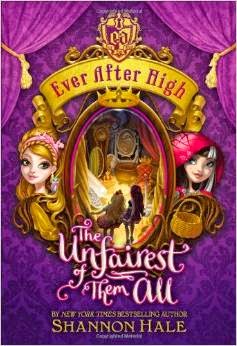
It's the aftermath of Legacy Day, the day when the students at Ever After High are supposed to pledge to follow in their fairytale parents' footsteps, and everyone is in a huff and a puff! Raven Queen, daughter of the Evil Queen, has refused to sign the Storybook of Legends, rejecting her story--and putting everyone else's in jeopardy.

The Royal Apple White doesn't want to think Raven is being a rebellious pain, but Raven's choice means Apple might never get the poisoned apple, Prince Charming, and a kingdom to rule. Behind Apple stands the Royals, those who want to play by the book and embrace their stories. The Rebels, supporters of Raven, believe in breaking free from destiny and writing their own stories.

My Thoughts: I really liked the first book in this series, and the sequel looks just as fun.


It is ridiculously difficult to get a pizza delivered to 1600 Pennsylvania Avenue.

First Daughter Audrey Rhodes can’t wait for the party she has planned. The decorations are all set, and the pizza is on its way. But the Secret Service must be out to ruin her life, because they cancel at the last minute for a “security breach,” squashing Audrey’s chances for making any new friends. What good is having your own bowling alley if you don’t have anyone to play with?

Audrey is ready to give up and spend the next four years totally friendless—until she discovers Alice Roosevelt’s hidden diary. The former first daughter’s outrageous antics give Audrey a ton of ideas for having fun . . . and get her into more trouble than she can handle.

My Thoughts: I've heard good things about this book, and I love stories where characters discover a friend in the past.

What about you Mayhemers? I know my list is heavy on the fantasy-adventure stories, so I'd love to hear your middle-grade summer reads. 

Tuesday, March 25, 2014

Heroes Needed: No Cape Required

The world is filled with heroes.

It's true. And if you're reading this, odds are you're one of them.
I'm not talking about the tights-wearing, cape-clad, witty banter kind of hero (although what you wear in the comfort of your own home, or while grocery shopping, or when feeding your goats, is entirely your business).
No, I'm talking about the kind of hero that takes the time to share a book with a child. I'm talking about the kind of hero that delights in watching the joyful smiles form on little faces when he or she shares the magic of  a story. You don't need tights, or a cape, or some super emblem on your chest...not when you sit down to share a story with a child. The book, your voice, your time and interest and genuine
commitment to your young audience makes you a hero in their eyes. A shared story, a favorite book, a bedside read...these moments wrap children up in love and affection. These are the moments that can put a smile on a child who has had a bad morning, or comfort a kid who is nervous about his first night without his nightlight. Reading a story to a sick child can help soothe their pain and comfort them in time of need.

Trust me, I know. First hand.

March 25th is always a difficult day for me, and for my family. Eleven years ago, on this day, my youngest brother, Jack, passed away. He was 7-years-old. Jack was born with cerebral palsy. And while he couldn't walk, or talk, he knew what was going on. Despite his handicaps, he was a very happy boy. Jack loved to hear me read to him. His favorite was Dr. Seuss's Fox in Socks. The faster I read it (and I can read it quite quickly), the more he'd laugh and smile. We read many books together, but that was our favorite. So on this day, eleven years ago, as he lay dying at home, comforted by his family and a slow morphine drip, I read to him. I read Fox in Socks and I can still see that smile on his face. Even through the medicine, even through the pain, I know that in that last hour my reading to him helped him when he must have been so scared. While it is not my intent to declare myself a hero, it IS my intent to demonstrate that we can help brighten a child's life just by reading a story to them.

But it does not have to be as heavy a moment. I read to all three of my boys each night. Arms laden
with books, I make the rounds. My 10-year-old and I are reading the Harry Potter books. To my youngest, it's a picture book, or some of the Chronicles of Narnia. I sit at the bedside of my middle-schooler and read him a couple of pages of the Percy Jackson books he's devouring. No, he doesn't need me to read them to him (he tears through the books), but he just likes the experience of hearing my voice; of sharing a few minutes with me. It's an important moment for all three of my boys. So, I guess, in a way, that makes me a part-time hero in their eyes. Maybe?

But you're heroes too, or you can be. Make sure you are taking the time to read to your children. If you don't have children, read to your nieces or nephews, or volunteer to read at your local library's story hour, or go to a children's hospital and read to the kids there.

You might be surprised how much of a difference you can make in a child's life just by reading them a story.

Share a book. Be a hero.


Tuesday, July 30, 2013

Nightstand Check, by Tracy Edward Wymer


Can't go wrong with Hiaasen. Hoot. Flush. Chomp. 

August is almost here, which means summer is almost over. Noooooooooo..... How does it go by so quickly? The real question is, how does it go by so quickly when I'm doing basically nothing? So far, my summer off from teaching has been full of home repairs (minor), day trips with the fam (fun!), and afternoons at the beach (funner!). We didn't plan a major vacation this summer, and that has turned out to be an awesome idea (note to self). 

When not patching drywall or hanging at Sea World with the fam, I've been reading and writing. Speaking of reading, two things I've always loved about the online literary community are the quality book recommendations and reviews. Honestly, I find about 75%* of the books I read from book reviews and blogs. Twitter is also a quality book recommendation source (depending on who you follow). 

For this mid-summer post, I thought I'd share what I've read this summer, and what I plan to read. Basically, these are the books sitting on my nightstand, or ones that are put away in my backpack ready to glide into my school library's book drop. 

Besides Carl Hiaasen's Scat, which I'm almost finished with, I've also read some other quality middle grade books. 

I must read because Mike Winchell said so. 

Great cover, great concept. Loved the voice. 

I have one YA book on my nightstand:

Honestly, the cover made me pick this up. And, the blurb is great. 
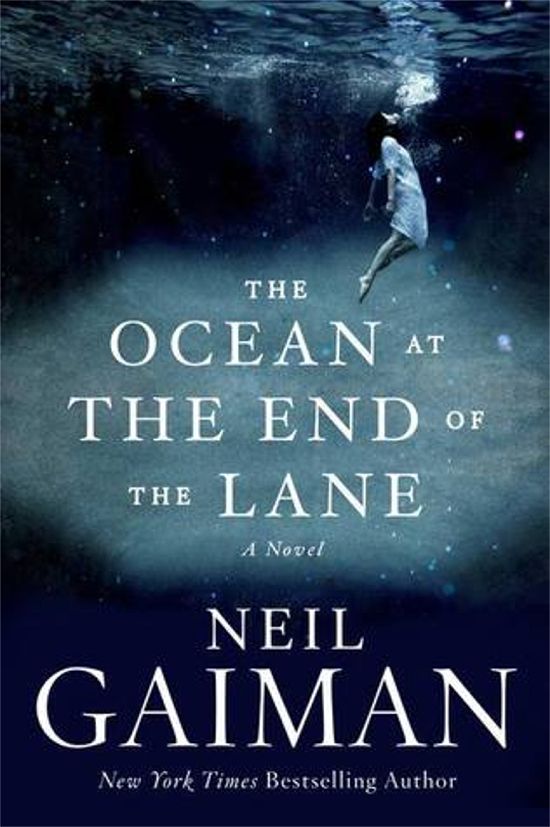
One of my personal reading goals is to read more "adult" fiction. I put "adult" in quotations because kids can read these books, too. They're not just limited to people over 18 years-old. These "adult" books are also on my nightstand, collecting dust under the middle grade books. Funny how that always happens. But I'll get to them soon (especially the Gaiman book!). Promise. 


Can't wait for this one! Loved Coraline and The Graveyard Book. 
My favorite King book is The Girl Who Loved Tom Gordon (a quiet little book).
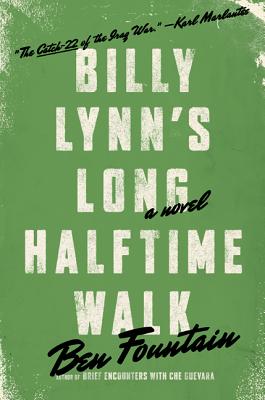
I read a stellar interview with Ben Fountain. Therefore, I got the book.
If you love a book, or you hear great things about a book, the best deed a reader can do for an author is tell someone else about the book. 

So... what are you reading this summer? 
   
_____________________________________

*the other 25% I find in my school's library

Wednesday, July 10, 2013

WORDS OF A REVOLUTION by eden unger bowditch

-->


As I sit here from this side of the ocean, word from Cairo sounds as horrid to me as to everyone else here. But I know what it was like last time when the news was scary.

 We played games and read stories together. Families got together for garden parties. Yes, there were moments when the tanks rolled in that one could almost hear a violin being played among the gunshots. Were we all Nero while Rome was burning? Or were we simply trying to maintain grace under fire, literally?

Our neighborhood is an international community and a grand mix of many different people. We all bonded together during the worst of it and have worked together to come to terms with a very different Egypt. Now, my family and I are in the US. We plan to be here for the year, at least. But, ringing in our ears, we hear the sounds of a world uncertain and a future full of fear.

When we, as authors, write, we want to bring our readers on a journey. We want them to join us in our strange new worlds. Escaping into a book can be one of the most profound experiences in someone’s life. Enduring uncertainty and conflict may sometimes depend on escaping from it. Having books to share and, for each of us, having books to savor privately, was how my family managed to wake up each day, ready for whatever we had to face.

I want to take this moment to thank all of you, the brilliant minds who author the worlds we are privileged to experience whenever we step into the pages of your books.

Wednesday, November 21, 2012

Middle-Grade Novels About Foster Kids

Every once in a while, I notice patterns in the books I'm reading. Lately I've come across three that deal with foster kids and and their families (or in some cases, kids' attempts to hide their need for social services to step in). I've added these new titles to some classics, refreshed my memory on a few other books, and came up with this list: Middle-Grade Novels About Foster Kids.

Why are there so many books on this topic? Here's my take: A child finding her way in a new home setting is probably vulnerable, guarded, out of place and in need of love. And really, even if we've never been in a similar circumstance, can't we all relate?

All descriptions have been taken from Amazon and Goodreads:

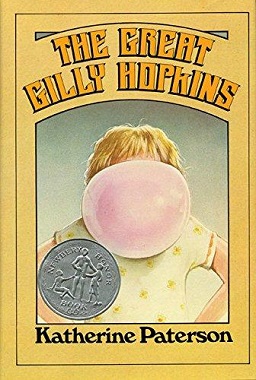
THE GREAT GILLY HOPKINS - Katherine Paterson
Eleven-year-old Gilly has been stuck in more foster families than she can remember, and she's disliked them all. She has a county-wide reputation for being brash, brilliant, and completely unmanageable. So when she's sent to live with the Trotters -- by far the strangest family yet -- Gilly decides to put her sharp mind to work. Before long she's devised an elaborate scheme to get her real mother to come rescue her.

But the rescue doesn't work out, and the great Gilly Hopkins is left thinking that maybe life with the Trotters wasn't so bad ...

TOUCH BLUE - Cynthia Lord
Touch Blue and your wish will come true.

The state of Maine plans to shut down Tess's island’s schoolhouse, which would force her family to move to the mainland--and Tess to leave the only home she has ever known. Fortunately, the islanders have a plan too: increase the numbers of students by having several families take in foster children. So now Tess and her family are taking a chance on Aaron, a thirteen-year-old trumpet player who has been bounced from home to home. And Tess needs a plan of her own--and all the luck she can muster. Will Tess’s wish come true or will her luck run out?


SUMMER OF THE GYPSY MOTHS - Sara Pennypacker
Stella loves living with Great-aunt Louise in her big old house near the water on Cape Cod for many reasons, but mostly because Louise likes routine as much as she does, something Stella appreciates since her mom is, well, kind of unreliable. So while Mom "finds herself," Stella fantasizes that someday she'll come back to the Cape and settle down. The only obstacle to her plan? Angel, the foster kid Louise has taken in. Angel couldn't be less like her name—she's tough and prickly, and the girls hardly speak to each other.

But when tragedy unexpectedly strikes, Stella and Angel are forced to rely on each other to survive, and they learn that they are stronger together than they could have imagined. And over the course of the summer they discover the one thing they do have in common: dreams of finally belonging to a real family.

ONE FOR THE MURPHYS - Lynda Mullaly Hunt
A moving debut novel about a foster child learning to open her heart to a family's love.

Carley uses humor and street smarts to keep her emotional walls high and thick. But the day she becomes a foster child, and moves in with the Murphys, she's blindsided. This loving, bustling family shows Carley the stable family life she never thought existed, and she feels like an alien in their cookie-cutter-perfect household. Despite her resistance, the Murphys eventually show her what it feels like to belong--until her mother wants her back and Carley has to decide where and how to live. She's not really a Murphy, but the gifts they've given her have opened up a new future.

HARRY SUE - Sue Stauffacher
Harry Sue Clotkin is tough. Her mom's in the slammer and she wants to get there too, as fast as possible, so they can be together. But it's not so easy to become a juvenile delinquent when you've got a tender heart.

Harry Sue's got her hands full caring for the crumb-snatchers who take up her afternoons at the day care center, and spending time with her best friend Homer, a quadriplegic who sees life from a skylight in the roof of his tree house. When Harry Sue finds an unlikely confidante in her new art teacher, her ambitions toward a life of crime are sidelined as she comes to a deeper understanding about her past--and future.

BUD, NOT BUDDY - Christopher Paul Curtis
It's 1936, in Flint, Michigan. Times may be hard, and ten-year-old Bud may be a motherless boy on the run, but Bud's got a few things going for him:

1. He has his own suitcase filled with his own important, secret things.

2. He's the author of Bud Caldwell's Rules and Things for Having a Funner Life and Making a Better Liar Out of Yourself.

3. His momma never told him who his father was, but she left a clue: flyers of Herman E. Calloway and his famous band, the Dusky Devastators of the Depression!!!!!!

Bud's got an idea that those flyers will lead him to his father. Once he decides to hit the road and find this mystery man, nothing can stop him--not hunger, not fear, not vampires, not even Herman E. Calloway himself.

THE PINBALLS - Betsy Byars
Carlie knows she's got no say in what happens to her. Stuck in a foster home with two other kids, Harvey and Thomas J, she's just a pinball being bounced from bumper to bumper. As soon as you get settled, somebody puts another coin in the machine and off you go again. But against her will and her better judgement, Carlie and the boys become friends. And all three of them start to see that they can take control of their own lives.


PICTURES OF HOLLIS WOODS - Patricia Reilly Giff
Hollis Woods has been in so many foster homes she can hardly remember them all. She even runs away from the Regans, the one family who offers her a home.

When Hollis is sent to Josie, an elderly artist who is quirky and affectionate, she wants to stay. But Josie is growing more forgetful every day. If Social Services finds out, they’ll take Hollis away and move Josie into a home. Well, Hollis Woods won’t let anyone separate them. She’s escaped the system before; this time, she plans to take Josie with her.

Yet behind all her plans, Hollis longs for her life with the Regans, fixing each moment of her time with them in pictures she’ll never forget.

KEEPING SAFE THE STARS - Sheila O'Connor
When crisis hits, a young girl becomes the only one left to take care of her family.

Pride, Nightingale and Baby are the Stars. Orphaned and living with their grandfather, Old Finn, in rural Minnesota, the children, like their grandfather, are wary of outsiders. They believe, as Old Finn taught them, in self-reliance.

But then Old Finn falls seriously ill and is taken to the hospital all the way in Duluth, leaving the children to fend for themselves. Pride, as oldest, assumes the lead. Though she makes mistakes, she keeps them afloat; they even earn money for the bus trip to Duluth. But when they finally see Old Finn, he can't walk or even say his own name, and Pride knows her days of keeping safe the Stars are drawing to a close. Self-reliance can't make Old Finn well again. But maybe, just maybe, a secret from Old Finn's past might make a way for them to stay together after all.

Any books to add to the list? Leave them below!


Friday, September 14, 2012

Illustrations in middle-grade novels


Middle-grade might be far from picture books, but that doesn't mean our novels lack in art. Illustrations in middle-grade novels, to me, are an unexpected but delightful surprise. Because novels more often than not contain no illustrations at all, finding little bursts of art is like uncovering a loonie in a pile of dimes and nickels. (In case you're American and/or don't know what a loonie is: here you go.)

And here, when I speak of illustrations, I include everything small-scale yet intricate chapter headings to full-page illustrations. This comprehensive article from Publishing Crawl on the design process covers many behind-the-scenes details on the process of choosing an illustrator and decisions on illustrations; it's definitely worth a read.

 But on a more simple, reader level,  I wanted to share some personal favourites. I adore chapter heading/first page drawings, like the kinds found in Peter Nimble and His Fantastic Eyes by Jonathan Auxier:


And take a look at the in-chapter drawings from The Hero's Guide to Saving Your Kingdom by Christopher Healy:


Text + art will always be a winning combination in my opinion. (I could go on and on about typography art... but that'd take an entire other post.) So what do you love most about illustrated middle-grade novels?

Wednesday, August 15, 2012

Before reading: have you already made up your mind?

Found here.

There's always a kind of book that calls to you, one you're positive you will enjoy just from the summary. For example, I read the copy for Kathleen O'Dell's historical middle-grade fantasy The Aviary and fell in love on the spot. (Read it yourself and let me know what you think!)

Then there are books that don't sound quite up your alley. They might surprise you, you know, but really, it comes down to whether you're willing to invest some time into starting something that probably won't hold your attention.

Those are the basic judgements you mentally make before reading any book. But there are more, subtler factors that go into deciding your opinion of a book before you've even cracked open the covers.

  1. Summary. Sure, you might've decided that you like the sound of the book. But your decision was founded on the book's summary, right? And that summary was written by a copywriter, whose job is to sell that book. If winged mermen are on trend, maybe they'll emphasize that aspect of the book, even if it doesn't play a large part. Thus a book's summary is only as good as its writer.
  2. Hype. It's everywhere, thanks to ye old Internet -- less so for MG authors than YA (anyone notice that all-out marketing campaign/Internet takeover for Veronica Roth's Insurgent?), but it's definitely present. Take R J Palacio's Wonder. I wouldn't have picked it up if our own Michael Gettel-Gilmartin hadn't talked it up -- but when I did pick it up, I expected much more than if I'd found it myself.
  3. Series. Sequel-itis happens a lot. If a debut was critically acclaimed, you might go into the second book either expecting more of the same awesomeness, or fearing the book won't live up to the first -- or a mixture of both. (This is especially true for trilogies: it's that dreaded middle book.) Or if it's a last book -- how much of a happily-ever-after do we get? I face this worry right now with Eoin Colfer's last Artemis Fowl: The Last Guardian. I'm both anticipating and fearing reading it.
Other factors include publisher (e.g. I don't expect great things from Simon Pulse -- but don't let them know), author (my friend Audrey would give her pancreas for Markus Zusak's unreleased The Bridge of Clay) or even yourself. Maybe you've gorged on contemporary and you just want to read a sci-fi, which makes the next contemp that crosses your desk the unlikely victim. Or you've had one bad experience with a verse book that's soured other verse books for you.

Of course, you might go into a book completely blind, free of judgement. And there's nothing wrong with that, either. But it seems to happen less and less these days,

What do you think? How much affects your opinion before you read?

--Yahong :)

Friday, July 20, 2012

Review: Chomp by Carl Hiaasen


Published March 27 2012, Random House Children's Books

Remember Hoot? As far as I can remember, that was Carl Hiaasen's break-out middle-grade novel, Newbery Honor and all. He'd been writing a couple of other single-title middle-grade novels dealing with the environment, like Flush and Scat, so I grabbed this one from my library when I saw it.

Summary (adapted from Goodreads):
Wahoo Cray's father Mickey Cray is an animal wrangler, so he's used to dealing with all sorts of unstable critters. But when they sign on to supply wildlife for a reality TV show called Expedition Survival!, Wahoo's not certain he'll be able to keep his dad from killing Derek Badger, the obnoxious star with a fake Australian accent who actually believes he can manage the menagerie of gators, snakes and snappers. Shooting on location in the wilds of the Everglades doesn't help -- and within a day Derek's been bitten by a bat and is lost in a storm. With Wahoo providing shelter for a girl named Tuna hiding out from her abusive dad, the search for Derek isn't going exactly well... and then Tuna's dad shows up toting a gun. It's anyone's guess who'll actually survive Expedition Survival!...
Review:

 At first, I didn't remember Carl Hiaasen's writing style being so idiosyncratic. Using third-person, writers always run the risk of not getting the reader right into the protagonist's head; however, once I got into the rhythm of the quirky narration, Wahoo endeared himself to me, and the best quality of Hiaasen's style becomes apparent: his punchlines. This book is funny, and it's obvious that its author isn't afraid to go over-the-top. While Derek Badger is somewhat too annoying (it's hard to imagine anyone like that in real life), Wahoo's father is a realistically flawed man with firm morals, while Wahoo himself is practical, pragmatic and wise, making him and Tuna the perfect pair to track down the runaway adults.

The side characters are just as amusing: from older sister Julie studying law to the mercenary owner of the grounds which the film crew rents for the show, each personality adds to the novel's vibrant atmosphere. As well, the setting is lush and excellently incorporated, seeing how it's vital to the book's plot. Speaking of plot: Chomp boasts fantastic pacing, with a wacky, amazing climax and the perfect denouement that's sure to speak to middle-grade readers.

Basically, this book is everything we've come to expect from Carl Hiaasen. Rigorously satisfying.

(Also: who doesn't love a book with alligators, snapping turtles and snakes? :D)

-Yahong

Wednesday, July 18, 2012

Bookstores of the Future

I adore bookstores, and I'm sure almost all booklovers do. But we all know they are facing tough times. What can bookstores do to survive? I can’t imagine a world without them, but it’s clear that most traditional bookstores are searching for ways to stay in business with the rise of ereaders and the ease of ordering books on the internet. It’s been fascinating for me to check out various independent bookstores and their websites to see how some have adapted. Some are really community centers, those with the space to allow groups to meet and talk books or listen to music and poetry readings. That’s a good thing, because I’m sure once people are in the store, it’s hard to walk away without a purchase. I love meeting my critique group at a bookstore, because what better place can someone go to be inspired to write?

I know space is a limitation in many bookstores. If they use some of the room for people to meet, that's less room for books. I have not yet used an Expresso Book Machine, but I'm excited about this idea. It is a print-on-demand contraption that can print a 200-page paperback book or less in just a few minutes. They have full color covers and black and white interiors. Right now they are only in a few bookstores in the U.S. and in other parts of the world. Here's a picture of one at Village Books in Bellingham, Washington: http://villagebooks.com/espresso-book-machine-print-demand 

 No matter what, I’ll continue to do much of my shopping at bookstores instead of ordering online, but what will draw other people in, those more casual readers? All of us traditionalists say we love the feel of a real book, but we are fast becoming the minority. Our family has two ereaders and we all read books on them even though it's not my first choice, but it is very convenient for traveling.

Some physical bookstores do sell ebooks though Google, and I hope more follow. A customer with a google account and an ereader device that reads epub versions (not Kindles) of books can purchase the book through the bookstore website or by simply linking the bookstore to their google account. This gives the bookstore a percentage of the sale. The book can then be downloaded to a computer and transferred to the ereader by a usb cable, or if you have an ereader with access to the internet, it can be downloaded right to it. Here's link to explain this process: http://www.yourbooksforless.com/gbook/help/ibreader

Even with ereaders, I still go to bookstores so I can browse. I want to look for new books I haven’t heard about, and find out enough about them so that I can decide if I want to buy them. Again, space limitations are a problem with this. Bookstores want to sell books, so it is hard for them to stock a huge range of books.Some of you will cringe at this next idea, so I apologize in advance. Should bookstores become more high tech? What about display walls with computer screens that show book covers you can touch to get more information, like the back cover blurb, a read-inside and the book trailer. Reviews don’t influence my particular buys, but if people are interested in those, they could be available as well. Essentially it would be like the Amazon model, but in a store atmosphere. We all know Amazon is very successful with their model, so how can it be adapted to the physical bookstore? Physical inventory would be cut down, so more books could be shown, including those of newer authors who might not get a place in the bookstores of today.

It might help with grouping books of a similar type as well. For example, I’d love to see children’s books grouped more by type of book rather than just alphabetical by author’s last name. I have a daughter who loves animal stories, so it would be convenient to see a section of middle grade books about animals. You could browse historical books, adventure books, school settings, and on and on. With computer screens , books could be in more than one category too. Once you found a book you liked, you could download it right there. Somehow it seems easier to browse when you see the larger images in front of you, rather than trying to get around on a small home computer screen.

A high tech bookstore would of course be very expensive to configure, but we can dream, can’t we? So I’d love to hear comments from others about why they go to bookstores and what they would like to see in the bookstore of the future.

~Dee Garretson

Monday, June 4, 2012

How do you Tumbl?


Tumblr: yet another Internet timesuck. Without the benefits of social networking of Twitter, and without the benefit of readers of Blogger. So how do writers turn this randomly eclectic collection of images, audio clips, quotes, links and videos to their use?

Before I elaborate, let me briefly detail the finer points of Tumblr: it’s a micro-blogging platform, which means that, rather than writing/creating original full-length content, the focus is on small pieces: single snapshots, a short inspirational message, a funny video of the day. What makes Tumblr so powerful is the ease of sharing: by encouraging users to “reblog” posts that interest them (“repinning” in Pinterest is the same concept), one photo can reach multitudes and multitudes of Tumblr users in one hour. It’s why it’s normal to have Tumblr followers in the two-hundreds within a week: like-minded bloggers find each other very easily on this platform.

So: how do writers use Tumblr?

1. A personal Tumblr. Obviously, a personal Tumblr is the simplest and most effortless way to use Tumblr. If you go this route, the Tumblr users you follow and are followed by will most likely be fellow writers or people you know who are interested in what you’re interested, and vice versa. Get started by finding blogs focused on your interests, be that cooking, soccer, greyhound racing or XHTML. (You’ll find all that and more on Tumblr, promise.)

2. A writing-related Tumblr. A quick search for the tag “writing” within Tumblr can turn up dozens upon dozens of gems in graphic, quote and video form in an instant. Reblog your favourites, and if you find writing-related tidbits on the Internet in other places, it’s easy to post it to Tumblr (providing a source, of course) to add to your collection. A writing-related Tumblr blog can be a place of inspiration, a space to vent frustration or a veritable community of like-minded writers.

3. A Tumblr related to your book. This is probably the most reader-/audience-focused approach. R J Anderson, author of Ultraviolet (yes, it’s YA, sorry!), has a Tumblr for quotes, images, etc. related to her book, and since her novel focuses on synesthesia, a lot of her content focuses on that condition, which makes for very interesting reading. If I were to create a Tumblr for my current WIP, Faking the Aurora Borealis, there would be a continuous stream of horseback riding-related content, since riding figures largely into FtAB. This type of Tumblr is perfect for readers looking for more insight into your novel, and plus it’s fun to dedicate a little bit of cyberspace solely to the masterpiece you’ve been working on for so long.

Now that I’ve laid out three methods to use Tumblr, I want to know: do you use Tumblr already? And how?

Yahong

Friday, May 4, 2012

DNF: Are You a Patient Reader?

In the writing/reading/book blogging/generally bookish community, the acronym "DNF" stands for "did not finish". Basically, it says that for whatever reason(s), you didn't or couldn't finish a certain book.

A lot of factors go into whether you keep reading a book. It might be that you picked up a genre you don't normally try... and realized why you don't usually read it. Or maybe you can't click with the writing; it just sounds too stilted and unnatural. Many many times, it comes down to patience.


How often have you read a review that went along the lines of, "Once you get past the beginning, things start to get going"? I know I've personally had friends say to me, "Yeah, it's kind of boring in the middle, but the ending's awesome." With these books, it seems to boil down to whether or not you're willing to slog on for a hundred or so pages to get to the really good part.

So how patient are you? Would you be willing to take on the task of finishing the book even though it looks as though it'll take effort? Or are you the one with the full-to-bursting "did-not-finish" shelf on Goodreads? And what makes or breaks a book for you?

Wednesday, April 11, 2012

How literate are your characters?


Every character in every novel is different. They're people, composed of different traits and personality quirks to make them real and authentic. We have smart boys, athletic gals, tech geniuses, sports fans... the list of character traits goes on and on.

Something I haven't noticed much of, though, is bibliophiles.

bibliophile (n): a lover of books; a collector of books.

Oh, you'll have the aspiring journalist/novelist/writer-in-general. And maybe the character will even come with a little description saying "he/she loved to read." And yet the actual books, the role that reading plays in the character's life, will have little to do with the actual story.

There is the worry that mentioning any titles will date your book right off the bat. The potential is high that mentioning any middle-grade book that's popular nowadays will decrease the longevity of your own book. I mean, if a reader picks up your novel a few years from now, chances are low they'll know exactly which book you're talking about, seeing how quickly times change.

...Unless you're talking classics like Harry Potter, of course. See page 336 (paperback) of Rick Riordan's The Lightning Thief: "He was reading a huge book with a picture of a wizard on the front. I wasn't much into fantasy, but the book must've been good, because the guard took a while to look up."

Okay, so we don't want to date our books. Let's focus on the ways in which reading affects your character, shall we?
As a writer, you (hopefully) know the impact that books have on an average person's life. To me, it's magical that a few hundred pages of black-text-on-white-paper can make me cry, make me laugh, make my heart twinge and pound and ache in turn. Books are such precious things; stories take on their own lives, and no one knows this better than writers themselves.

So write it out. If your character is literate, show it to us. Make it part of your character's growth, or part of your character's past. Show how your character curls up with a new book on a rainy (or sunny) day, or turns to a well-worn title for a surefire pick-me-up when they need one.

Because if your character is literate... then I want to know. Because it means that I might just like them that much more. :)

--Yahong

Wednesday, December 14, 2011

On Loss, Grief, and Young Readers


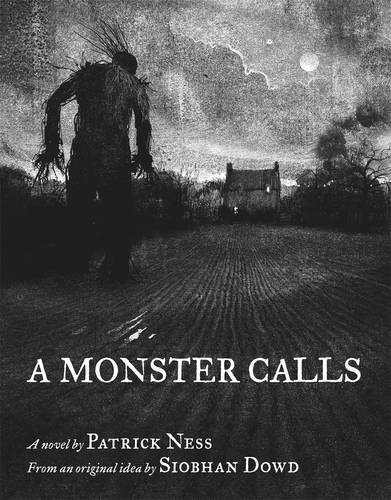
I am currently reading this wonderfully imagined novel, A Monster Calls, by Patrick Ness, from an original idea by Siobhan Dowd. I'm not done with it yet, so it may be a bit presumptuous for me to write this post, but I think I know where the story is going. I could be wrong, but that's not really the point.

I'm the father of a young adult, and a middle grader (well, technically Madison is only 10, and not in middle school yet, but she reads above her level). Luckily my children have not had to endure much loss, but loss doesn't always have to be a death in the family. Loss can be moving away from friends, divorce, heck, even summer camp can feel like a temporary loss.

The loss in my own life almost all occurred in those middle grade years. My dad was out of the picture when I was ten. My mom died when I was eleven. Then, just to make things worse, my aunts and uncles decided to separate me from my older sister when they determined our living situations, in their infinite wisdom. Yeah, needless to say, I was a messed up, angry kid.

But I managed to survive. Loss hurts like salt in an open wound at first, but eventually it simply becomes part of who you are. The trick is getting through that first part. One of the best ways to get through the hard part is to escape into stories. Storytelling has a magical ability to heal, or at least to give you solace from the storm, when things are at their worst. Movies, TV, theater, all these venues for telling stories are great, but none of them really compare to books.

Books can take you anywhere, and sometimes where you need to be is very far away from where you are. Middle Earth. Narnia. Krynn. Westeros. There are so many places full of so much wonder and beauty in books, it can make the pain of real life seem less ... sharp, for a time.

But then there are also books that face the harsh truth of this topic head on. Books like A Monster Calls, that deftly look the pain of suffering dead in the face, and show with courage that life goes on.

I'm glad my children haven't had to endure much loss in their lives, but if they did, I'd be sure to share books like this with them. Or books like Danny, Champion of the World, by Roald Dahl, or Wintergirls, by Laurie Halse Anderson, or Yummy: The Last Days of a Southside Story, by Greg Neri, or The Deathday Letter, by Shaun David Hutchinson, or even, Marley and Me, by John Grogan.

What books about loss and grief, or even just to help one through loss and grief, would you recommend for young readers?

Monday, November 28, 2011

Sports, Kids, and Books


I have to apologize for these terrible photos, but I only recently upgraded to a phone with a decent camera, and I don't have the steadiest hand. Anyway, this is my daughter, Madison, and my nephew, Bryce, at their very first NFL game.

We live in Atlanta, so it's a Falcons game, but we're from Minnesota (well, sort of) so we're Vikings fans. It was a pretty good game, but that's not really my point.

The point I want to make, is that I think sports, whether professional, collegiate, intramural, or just community organized, are a great way for kids to get exposed to many important things in life. Things like teamwork, respect, sportsmanship, pushing ourselves to succeed in spite of pain and/or fatigue. There are a lot of great lessons to be had from sports.

And the great thing is that sports, especially if the kids are participating, but even if they're just watching a game, don't beat you over the head with those lessons like ... some other venues for education.

I love that sports give kids an opportunity to learn things for themselves, without someone having to tell them anything. Showing is always better, right?

So anyway, after the game, it got me to thinking: what are some great young adult and middle grade books about or with sports in them, that maybe aren't exactly sports books?

I suppose I'm not the most widely read when it comes to these kind of books, but I couldn't think of many, so I figured I'd come to you guys. I mean I really enjoyed My Dog Skip (both the book and the film) and I suppose there is some mention of sports in both, but it's not really the kind of book I'm thinking of. The film The Sandlot would be a great example, but I don't think that story is also a novel, or at least I've never read it.

I did find a decent list, which you can read: here, but I was hoping our wonderful Project Mayhem readers would be able to recommend some books they'd actually read. Do any of you have a young adult or middle grave novel you can recommend that has sports in it?

I hope you all had a great Thanksgiving. Here's one more photo, just for fun: