Showing posts with label Dianne Salerni. Show all posts

Thursday, August 13, 2015

Suspension of Disbelief (Part 2) by Dianne K. Salerni

Last month I talked about suspension of disbelief – the reader’s willingness to enjoy a fictional story as if the events are really occurring. This month I’m going to focus on speculative fiction. How do you introduce your reader to the fantastic elements in your book while making them believable and a seamless part of your story?

You’ll want to immerse your reader in your setting as soon as you can – whether it’s an alien planet, a magical kingdom, or an alternate reality where ghosts are known to be real and everyone has one in their house. But I don’t think the way to do this is by pushing readers into the deep end of the pool without any warning! A first chapter filled with author-invented words, unpronounceable names, and characters doing inexplicable things is not going to draw a reader in. It’s more likely to slam down the barrier of disbelief and cause them to close the book.

It’s better to let readers walk into the pool, experiencing a gradually increasing immersion. Therefore, no matter what kind of world your story takes place in, make sure there’s something readers can relate to in the opening chapters. Readers might say, “Well this is a strange place. But I see that the MC is nervous about an upcoming challenge … jealous of his brother … learning a new skill from her father, etc.” There needs to be something recognizable about the situation so the reader can make a connection with your protagonist and take a few steps more into your world.

If your story starts out in our world, then takes an unexpected turn into the supernatural, the best way to encourage suspension of disbelief is by showing your reader what normal means before throwing in the abnormal. Children’s writers are often encouraged to rush right to the inciting incident, but I don’t think this means dumping Godzilla on the first page. For instance, if a boy moves into a new house and it turns out to be haunted, I don’t think the ghost should appear on the first page – or even the second or third. (Unless, as stated above, meeting ghosts in your house IS normal in the world of your story.)

Instead of having that ghost pop up too soon, use the early pages to set the mood. Have something strange happen, use foreshadowing, and bring in the ghost when the reader has already suspended disbelief and is expecting its arrival.

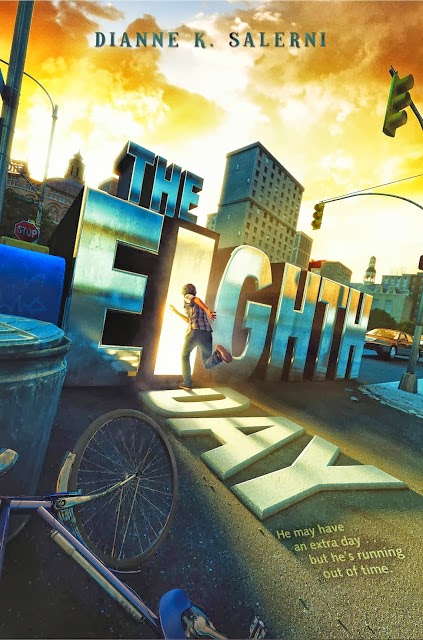
Finally, make sure your characters behave/react in ways that make sense, given the situation. In The Eighth Day, when Jax first experiences the secret day of the week, he panics, thinks it’s the zombie apocalypse (based on what he’s seen on TV) and breaks into a Walmart to steal survival supplies. He doesn’t think it’s “cool” or “neat” and go off to explore until the second time it happens, when he has reason to believe everything will be back to normal the next day. Likewise, at the end of the book when the world is at stake and a real apocalypse might be happening, Jax doesn’t suddenly develop fighting skills he never had before. His actions in the climactic scene are limited to what a 13-year-old boy might be able to do and skills Jax has already demonstrated.

Suspension of disbelief in speculative fiction for kids is a lot like coaxing a toddler into a new situation: Do it gradually. Appeal to the familiar. Establish normality before introducing the startling and strange. And always keep in mind how a real kid (living vicariously through your character) would react and behave. 

Thursday, August 6, 2015

Magic Realism or Fantasy? What's the Difference? by Joy McCullough-Carranza


In a recent blog post describing what sort of manuscripts I’d like to work with as a mentor in the Pitchwars contest, I specified that I’d like magic realism, but not fantasy. Immediately I began to get questions. What’s the difference? Why had I said I didn’t want fantasy, but then listed Flora & Ulysses as one of my favorite books? Isn’t that fantasy? After all, squirrels that write poetry on typewriters are pretty fantastical.

But I'd call Flora & Ulysses magic realism.

So I thought I’d unpack the difference between fantasy and magic realism, as I see it anyway. These terms are fluid, and perhaps it all falls on a spectrum, with completely realistic novels on one side and completely fantastical novels on the other. But I think it’s useful to understand the distinction for a couple reasons. For one thing, it’s not uncommon for agents or editors to say they’re looking for one or the other in their submissions. Agents are extremely unlikely to reject a query because the author has miscategorized their manuscript, and publishers will figure out how to market a book. But on the other hand, a query shines more brightly when the author clearly understands where they fall in the market.

Also, there can be a cultural misunderstanding around the term magic realism. A blog post at Tor.com recounts a well-known author at a convention who referred to “Magic realism—which we all know is just fantasy written by a Latin American author!”

It’s true that some of the most famous magic realism has come from Latin America. But not all Latin American fiction with magic is magic realism, and not all magic realism is based in Latin American cultures. To assume either is culturally ignorant.

So what is magic realism? For one thing, it’s firmly grounded in the real world, and deals with real people grappling with real world conflicts. The elements of magic are employed (with a light hand) to illuminate those characters and their real world struggles. The magical elements in magic realism do not tend to have rules and systems around how they occur. And they’re usually presented side by side with the realistic elements, as though the magic is completely ordinary (which, in turn, can elevate the ordinary to magical). I love magic realism in MG because I think this is how so many kids live day to day (before their imaginations get squashed, anyway) – magic is ordinary, and the ordinary can be magical.

Fantasy is a really broad category, encompassing a huge array of sub-genres.  We can probably agree that anything that takes place in a completely imagined world populated by fantastical creatures or talking animals or witches and wizards is fantasy. It gets trickier to draw the line when we consider books that are set firmly in this world, but contain magic or supernatural elements. These are often called contemporary fantasies or urban fantasies.


So let’s consider a few different books and decide where they fall. (Feel free to argue in the comments if you think I’m off-base. There aren’t hard rules in all this.)

STORYBOUND by Marissa Burt – A girl in our world opens a magical book and ends up in a completely different world, where she attends a school for fairytale characters. Other elements of note: talking animals, very systematic magic, instructed in a special school. VERDICT: FANTASY


THE EIGHTH DAY by Dianne Salerni – A boy in a world that seems very much like our own discovers he is a rare sort of person who lives in an eight day week, and that some people only exist in the eight-day week, because of a magic spell. Other elements of note: non-human characters like brownies, characters who are descendants from Arthurian legend, some characters have magical powers like the ability to force someone to speak truth, or tell through scent whether someone is magical. VERDICT: FANTASY


CENTAUR RISING by Jane Yolen - Set firmly in the real world in the 1960’s, a farm girl’s horse gives birth to a baby centaur. While the focus of the story is on real world people with real world problems, the presence of the mythological creature, together with the fact that that creature is regarded as extraordinary, all say fantasy to me. VERDICT: FANTASY


THE CABINET OF EARTHS by Anne Nesbet - When I asked Project Mayhem contributors if any of them had written magic realism, Anne Nesbet mentioned that a number of reviewers had called The Cabinet of Earths magic realism. I haven’t read it yet, and would be curious to hear what some who have read it think. In magic realism, the magical is treated as ordinary, and in this book, it sounds like the magic cabinet is seen as quite extraordinary. So I’d lean fantasy, but couldn't say for sure without reading. VERDICT: STILL OUT


DEADWOOD by Kell Andrews - A story firmly grounded in the real world, in which a spirit tree (so named not for mystical reasons, but because messages of school spirit are carved into the trunk) uses text messages to communicate with kids about lifting a curse on their town. I’m looking forward to reading this. It sounds like it could be contemporary fantasy or magic realism, depending on how extraordinary the tree seems to the characters it interacts with. VERDICT: STILL OUT


WHEN THE BUTTERFLIES CAME by Kimberly Griffiths Little – Tara is struggling with her mom’s depression and the death of her grandma when butterflies start to follow her. (Right away, this is a nod to the butterflies that follow a character in the magic realism classic One Hundred Years of Solitude.) The butterflies are there, propelling Tara forward and illuminating her journey, but the focus always stays on Tara’s real world stakes and goals. VERDICT: MAGIC REALISM


To be clear, I don’t believe writers should let genre distinctions color what they’re writing in any way. Tell the story that needs telling in the strongest possible way. And if you write something that defies categories, that's awesome! But in the interest of understanding where your work fits in the market, and targeting the best possible people to help you get it read, it could be helpful to know whether you’re writing fantasy or magical realism.

Do you define magic realism in another way? Do you think I've miscategorized one of the books above? What are some MG titles you consider magic realism?


Wednesday, July 22, 2015

Suspension of Disbelief (Part 1) by Dianne K. Salerni

Samuel Taylor Coleridge coined the term “suspension of disbelief” in 1817, and it refers to a reader’s willingness to enjoy a fictional story as if the events are really occurring. It applies equally to realistic fiction and speculative fiction, although one might argue that introducing fantastic, magical, or science fiction elements in a believable way adds an extra challenge for the writer. (I’ll address that in Part 2 of this topic next month.)

In all works of fiction, maintaining point of view is essential for suppressing the “disbelief” that pulls a reader out of the story. For instance, first person narratives should not break into long expository paragraphs where the only purpose is to convey information to the reader that the narrator already knows – and therefore has no reason to explain. Almost as bad are “As you, know, Bob …” dialogues in which characters tell each other information they both already know.

Third person narratives should not contain info dumps from the author that hijack the story – unless that’s the intention, such as in The Series of Unfortunate Events, where the narrator “Lemony Snicket” is as much a character as any other in the book. His repeated interruptions to define a word for the reader or moralize about the behavior of a character are part of the charm and humor in these books. Likewise, in A Barrel of Laughs, A Vale of Tears, Jules Feiffer writes as a self-aware story-teller, directly engages with the reader, and even complains about his characters not sticking to their planned roles. By contrast, unintentional info dumps and expository passages stand out to the reader as a clumsy means of conveying back story that should instead develop organically within the plot.

From A Barrel of Laughs, A Vale of Tears:
an example of intentional (and humorous) interruption

Head-hopping is another mistake that breaks suspension of disbelief and jars readers out of the book. An omniscient point of view should be carefully planned by an author, and the same goes for multiple points of view. When this is done correctly, the reader immediately picks up on the idea that he/she will know the thoughts of many characters – or that different passages will be seen through the eyes of various characters – and this becomes part of the suspension of disbelief. Head-hopping, on the other hand, is when we’ve been following Mary’s viewpoint for fifteen chapters and suddenly there’s a paragraph where we know what John is thinking about Mary. This never fails to derail me from my immersion in a story as I wonder: How do we know that?

To sum up, suspending the disbelief of the reader and providing immersion in the story requires a careful attention to point of view and presenting information through action, dialogue, and internal thoughts that always make sense in the context of the story and never in a way that calls the author out of hiding the way Toto pulled the curtain away from the Wizard.


Next month – How to present fantasy and science fiction elements while maintaining that suspension of disbelief.

Friday, April 25, 2014

Happy Book Birthday to Dianne Salerni--Middle Grade Mafioso's Interview and Review of THE EIGHTH DAY

We are always thrilled, here at Project Mayhem, to celebrate the successes of one of our own. Tuesday marked the book birthday of Dianne Salerni's THE EIGHTH DAY (HarperCollins), which I for one can't get enough of. In honor of Dianne, I am reposting a review and an interview from Middle Grade Mafioso--with the blog owner's permission. (Hey, the blog owner happens to be me, in partnership with Don Vito, so who's arguing?!)

What It's About (from Goodreads): In this riveting fantasy adventure, thirteen-year-old Jax Aubrey discovers a secret eighth day with roots tracing back to Arthurian legend. Fans of Percy Jackson will devour this first book in a new series that combines exciting magic and pulse-pounding suspense.


When Jax wakes up to a world without any people in it, he assumes it's the zombie apocalypse. But when he runs into his eighteen-year-old guardian, Riley Pendare, he learns that he's really in the eighth day—an extra day sandwiched between Wednesday and Thursday. Some people—like Jax and Riley—are Transitioners, able to live in all eight days, while others, including Evangeline, the elusive teenage girl who's been hiding in the house next door, exist only on this special day.

And there's a reason Evangeline's hiding. She is a descendant of the powerful wizard Merlin, and there is a group of people who wish to use her in order to destroy the normal seven-day world and all who live in it. Torn between protecting his new friend and saving the entire human race from complete destruction, Jax is faced with an impossible choice. Even with an eighth day, time is running out.

Opening Lines: "Jax pedaled home from the store and muttered in cadence with the rhythm of his bike wheels: This sucks. This sucks. This sucks."

Great Stuff: This is truly a fast-paced book which I couldn't put down. It starts with a mystery: after Jax's father's death, why is Jax no longer living with his his aunt Naomi? Why is Riley Pendare, a teenager whom Jax despises, his new guardian? And what did Riley say to Aunt Naomi and the lawyer to make them change their minds?


I loved the character arc, in which Jax little by little begins to understand his situation. I loved the interweaving of Arthurian legend, and the fantastic world Dianne Salerni creates, with Transitioners and Kin, and the mysterious Eighth Day. And the final battle atop a Mexican pyramid is a heart-stopper.

Dianne kindly agreed to answer some of my nosy questions:

1. Have you always been interested in Arthurian legend? Do you have a favorite novel set in this time period?
I’ve long had an interest in Arthurian legend. I can’t say that I have a favorite, but what I really enjoy is seeing the legends retold in new and surprising ways. (For example, I read an early draft of Camelot Burning, an Arthurian steampunk novel by Kathryn Rose. Highly recommended!)  

To be honest, when I started planning The Eighth Day, Arthurian legends weren’t part of the story at all. Then, while researching something else, I randomly stumbled upon the story of Merlin’s apprentice Niviane tricking him into a place of suspended time. Some versions of the tale call it an eternal forest; others describe it as a cave. There were similarities in the way this place was described and the vision I had for the eighth day. Once I’d noticed the possible connection, the idea stuck – and blossomed.

  1. Is this your first published middle grade book? Can you tell us about the process of working with your editor?
This is my debut as a middle grade author. It’s strange that I waited so long to write a book for this age group, since I’m a fifth grade teacher.

Working with my editor, Alexandra Cooper, and her assistant, Alyssa Miele, has been wonderful. Originally, my book was acquired by Barbara Lalicki, and when Barbara retired, it was a few months before I was assigned a new editor – and I had a lot of time to worry if the new editor would love my book as much as Barbara did.

But Alexandra was great to work with. We went through several rounds of revision, and boy, did she make me work hard! But she got a better book out of me, and when I submitted my second manuscript to her, I couldn’t wait to receive her editorial notes. I trusted that her instincts would pinpoint the strengths and weaknesses of my story and help me take it to a higher level.

  1. If you were a Transitioner, who would you choose as your liege?
Without question, I would swear my allegiance to Riley. I know he doesn’t make a good impression at first, but Jax has reason to resent Riley in the beginning. We get a biased view of him. He’s not perfect, certainly, and he’s only 18 and inexperienced at leadership. However, by the end of the book, I think he’s someone worth following.

  1. I loved the battle scene set on top of an Aztec pyramid. Did you travel to Mexico for research? Did you have any help in creating such a melee, or are you a military strategist in your own right?
I am in no way a military strategist! Originally, I planned the scene based solely on books, photographs, and YouTube videos of people who filmed themselves climbing the Pyramid of the Sun. For military expertise, I called on my brother-in-law, who’s a retired federal agent with combat experience. He laid out basic strategies for me, and I wrote the scene. Afterward, I sent him the chapters to read, and he let me know where I needed to tweak them.

Dianne: "Those steps were hard!"
But I worried a lot about writing all this based on the photographs and videos of strangers, so my husband said, “Let’s go to Mexico.” And we did! I can’t tell you how amazing it was to visit Teotihuacan after writing the book – and best of all, to discover that my scenes worked in that setting!


Pyramid of the Sun, Teotihuacan, Mexico


  1. How do you balance working as a teacher and being a writer, as well as being an involved parent?
There are many days when it’s really hard to juggle those things. I’ll have schoolwork to do when I want to be writing. I’ll have emails from my editor I want to answer when I have a class to teach. Sometimes, I wonder why my family tolerates me when I’m holed up in the basement, writing and ignoring them.

In February and January, we lost a lot of school days to snow, ice, and power outages. We no longer have a spring break, and we might be going to school in July, but I used the days to make significant progress on the draft for Book 3 in the series. So for me, it was a blessing.

  1. Are there any sequels in the works? Or any movie deals on the horizon?
Three books are planned, with the option for more if the series is successful. My editor and I completed revisions on Book 2, The Inquisitor’s Mark, in January. I’m hoping to get Book 3 written before The Inquisitor’s Mark boomerangs back from copy-editing.

Book 2 is tentatively scheduled for release in the Winter of 2015, and I think Book 3 will come out late that same year. No movie deals yet, but my agent is in contact with a Hollywood film agent with plans to shop it around.

Doesn't that sound exciting?! Dianne, the Project Mayhem cohorts are proud to have you in our midst. Happy Book Birthday!!!

Saturday, February 1, 2014

Winner of Dianne Salerni's The Eighth Day (ARC)


I could not stop reading THE EIGHTH DAY yesterday, so the kids were very nearly late for school. It is a heart-stopper/page-turner and I really don't want to give up my copy. But a promise is a promise, and Random.org agrees. So, randomly, our winner is...


I'll be contacting you soon, Suzanne, for your snail mail address. Thanks to all who entered--have a great weekend (watching my favorite team win the Superbowl.)

Wednesday, January 29, 2014

Three 2014 Novels I'm Excited About by Michael Gettel-Gilmartin


One of the exciting things about being a writer and a blogger is making connections with others. I am privileged to say that I "know" all three of these great writers--one of them in real life! Here's a bit about them, and a bit about their books:

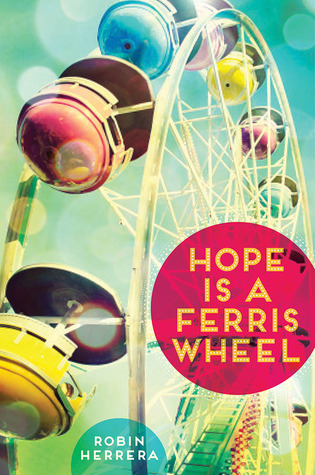
HOPE IS A FERRIS WHEEL by my good friend and critique group member, Robin Herrera (March 11, 2014, Amulet Books). (I have the immense good fortune of being in a critique group with Robin and seven other amazing writers--for a total of 9, kinda like the Muses--which meets every couple of weeks in Portland. Robin joined the group just as her novel was being accepted for publication, so I never actually got to read it and sprinkle my pearls of wisdom on its pages. But having read her new work, I can vouch that she is incredibly funny and an amazing craftsperson.) Here's a summary of Hope is a Ferris Wheel--all blurbs are from Goodreads:
Ten-year-old Star Mackie lives in a trailer park with her flaky mom and her melancholy older sister, Winter, whom Star idolizes. Moving to a new town has made it difficult for Star to make friends, when her classmates tease her because of where she lives and because of her layered blue hair. But when Star starts a poetry club, she develops a love of Emily Dickinson and, through Dickinson’s poetry, learns some important lessons about herself and comes to terms with her hopes for the future.With an unforgettable voice with a lot of heart, Hope Is a Ferris Wheel is the story of a young girl who learns to accept her family and herself while trying to make sense of the world around her.
ALL FOUR STARS by Tara Dairman (July 10, 2014 Putman). Tara and I connected when we were both selected to take part in the 2011 Baker's Dozen agent auction at Miss Snark's First Victim. I immediately loved the voice in her opening paragraphs and knew that this novel would go on to great things. Tara and I are Facebook and Twitter pals. Here's what All Four Stars  is about:
Gladys Gatsby has dreamed of becoming a restaurant critic for New York's biggest newspaper--she just didn’t expect to be assigned her first review at age 11. Now, if she wants to meet her deadline and hang on to her dream job, she’ll have to defy her fast-food-loving parents, cook her way into the heart of her sixth-grade archenemy, and battle Manhattan’s meanest maitre d’.
THE EIGHTH DAY (April 22, 2014 HarperCollins) by Project Mayhem's very own Dianne Salerni. Dianne is an amazing writer, as well as being a 5th and 6th grade teacher. I am thrilled she is a part of Project Mayhem. I am equally thrilled that I got to read an ARC of this fast-paced novel--and could not put it down!!! Here's the blurb from Goodreads:
When Jax wakes up to a world without any people in it, he assumes it's the zombie apocalypse. But when he runs into his eighteen-year-old guardian, Riley Pendare, he learns that he's really in the eighth day—an extra day sandwiched between Wednesday and Thursday. Some people—like Jax and Riley—are Transitioners, able to live in all eight days, while others, including Evangeline, the elusive teenage girl who's been hiding in the house next door, exist only on this special day.
And there's a reason Evangeline's hiding. She is a descendant of the powerful wizard Merlin, and there is a group of people who wish to use her in order to destroy the normal seven-day world and all who live in it. Torn between protecting his new friend and saving the entire human race from complete destruction, Jax is faced with an impossible choice. Even with an eighth day, time is running out.
One of the things I've read about supporting authors is to pre-order their novels from your local indie bookseller. You can bet I'll be letting my fingers do the walking for all three of these delicious novels, as I call Annie Bloom's, my local in Portland, and make a huge deal about my desire to own all three of these.

In the meantime, I'm giving away my ARC of THE EIGHTH DAY. Leave a comment and cross your fingers! (Extra credit for Tweeting, sharing on Facebook, and the like.)