Showing posts with label Plot. Show all posts
Thursday, February 18, 2016
Marrying Story Structure and Character Arcs by Joanna Roddy
I'm a natural planner, but over the past year or two, I've been trying to loosen up and just write, as I've shared here before. But, at least for me, even when I'm letting the story lead me step by step as I'm writing it, I like to still have in my head the big beats I need to hit and where I hope to arrive at the end. I've also tried to press into character arcs as an equally important motion of the plot.
As I've been working on my current project, I've discovered an approach that is giving me what seems to be the perfect balance between plan and discovery and between plot and character. I've been wanting to share this technique with you, and it makes a nice dovetail to Chris's post last week on layering plot and character in story.
You may have heard about seven point plot structure before. It's kind of a hero's journey lite, if you're familiar with that approach. I heard about seven point plot structure from a writer friend, but when I looked it up, the blogs I found only confused me. Hook? Pinch Point? Plot Turn? The descriptions were vague and uninspiring.
But then my friend directed me to the videos of Dan Wells presenting at a writing symposium using the seven points for story structure. If you want a quick master class on writing, I encourage you to set aside forty-five minutes and take yourself out to coffee with headphones, a laptop, and this link.
In the case that you don't have time to go watch the whole thing right now, I'll give you the one paragraph summary in the order Wells directs you to plan the points (which is not the order they will happen in your story):
1. Figure out how you want the story to end (Resolution).
2. Create a beginning with an opposite status quo (Hook).
3. The middle should be when your character makes the deliberate choice to pursue the Resolution (Midpoint).
4. Set the character in motion from the Hook toward the Midpoint. Call them out of the status quo and introduce conflict (Plot Turn 1).
5. Get the character the last and most important thing they need to accomplish the Resolution (Plot Turn 2).
6. Apply pressure, force your characters to action, and create hurdles to their goals on either side of your Midpoint (Pinch Points 1 and 2).
So now you have your seven points. This is the order they'll occur for your reader:
This is pretty straightforward stuff. It's a way to do it, and it pretty nearly encompasses most story-telling from a western worldview. What I like most about Wells's presentation is when he takes the character arcs, main plot, and subplots (using The Matrix as his example) and charts where each point of the the story structure occurs for each one and how they then weave together in the chronology of the story.
This got me excited and it got me thinking about how seven point plotting takes shape for characters, something Wells doesn't have time to fully unpack during his presentation.
I understood the idea of a Hook to Resolution arc for any character, but the finer details evaded me. I had to dig a little deeper to understand what a Midpoint would mean for a character arc. That's when I discovered this excellent series of posts by K.M. Weiland.
She argues that in the beginning of a story, the hero is operating from a lie about who they are, what they are capable of, or what the world is like. This lie shapes who they are and how they are. The Resolution for that character will be to reject the lie and learn, accept, and live out the truth instead. So, then, the Midpoint is when the character is able to finally see and accept the truth, but still has not rejected the lie or its effects on their choices. This enlightens the rest of the seven points for character arc. The Plot Turns introduce the truth, expose the lie, and give the character what they need to reach the Resolution. The Pinch Points refute the truth, reinforce the lie, and create barriers to the character's journey to truth.
Brilliant stuff, right? To have this internally-driven structure woven into the externally-driven one allows for complexity, ingenuity, and well-rounded characters amidst a satisfying story.
As I'm drafting a novel right now, the seven plot points are really helping. Some of the story points will happen simultaneously with character points, but some will occur separately. Many of the points are already clear scenes in my mind. But there are so many other scenes and so much happening between the points in order to get the story there, they serve more as guideposts than outline. It's definitely pacifying my inner Hermione Granger who needs to have answers, but it's giving spaciousness for the story to open itself to me as I write it. I'm loving that balance.
Have you used seven point plot structure before? Have you applied it to character development? Have you encountered other teachers/bloggers/writers who have an approach to it that you've found helpful? Please share in the comments below!
Monday, February 8, 2016
Plot-Driven or Character-Driven? Why Not Both! by Chris Eboch
![]() |
| Author Chris Eboch |
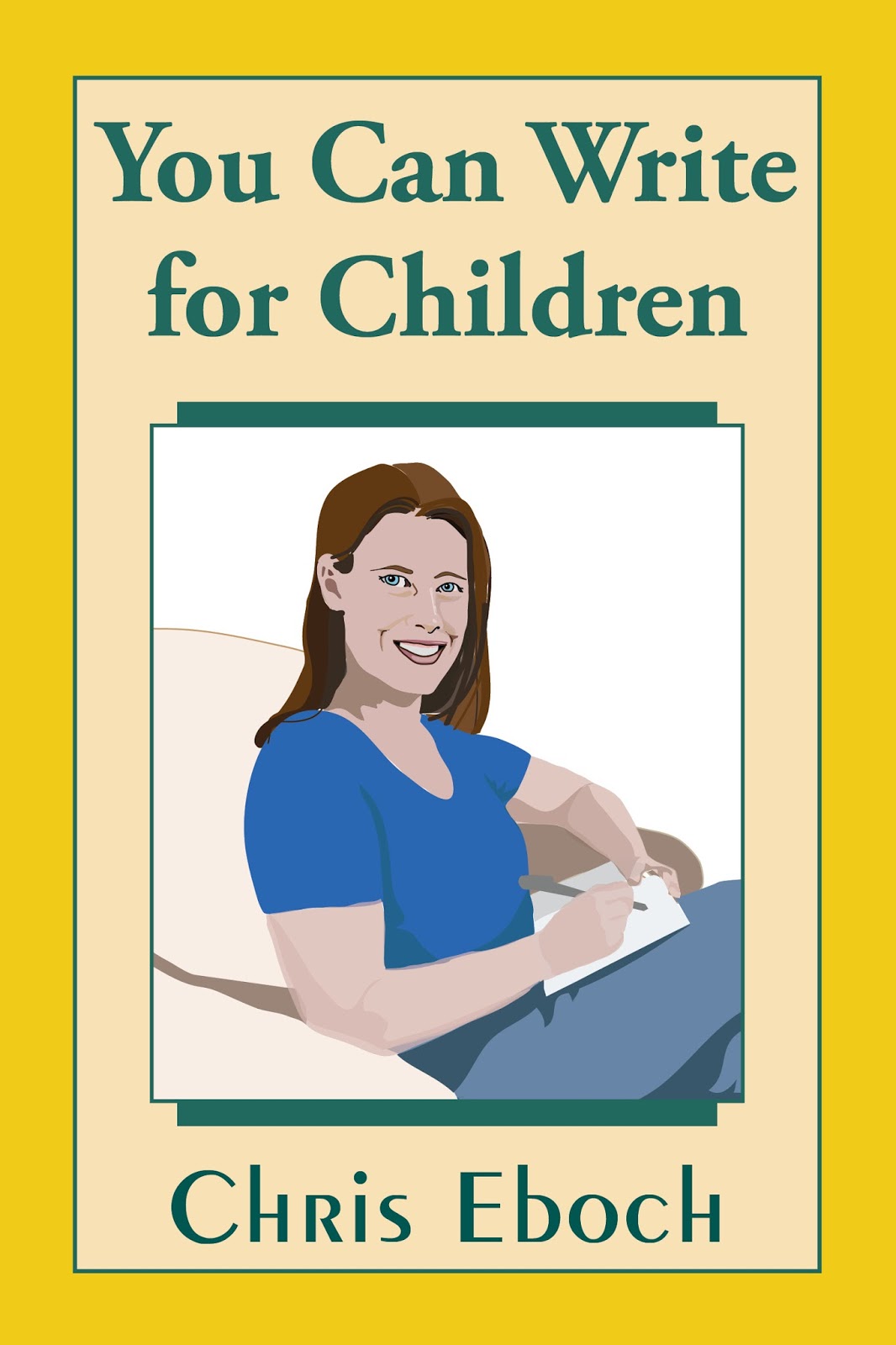
This post is adapted from You Can Write for Children:
How to Write Great Stories, Articles, and Books for Kids and Teenagers, from Chapter 5: Characters.
Some authors prefer to start with a plot idea, while
others start with an interesting character. Either can work, but ultimately the
plot and character must work together. Let’s start with a look at character
development, as it intersects with plot.
A strong story needs conflict. Without
conflict, you have one of those “slice of life” episodes that isn’t a real
story. But conflict doesn’t just come from
dramatic things happening. It comes from the character – what he or she needs
and wants, and why he or she can’t get it easily. Conflict comes from a
character with a problem or a goal.
Let’s start with a premise: a kid has a math test on
Monday. Exciting? Hardly. But ask two simple questions, and you can add
conflict.
· Why is it important to
the character? The stakes should be high. The
longer the story or novel, the higher stakes you need to sustain it. A short
story character might want to win a contest; a novel character might need to
save the world.
· Why is it difficult
for the character? Difficulties can be divided
into three general categories, traditionally called man versus man, man versus
nature, and man versus himself. You can even have a combination of these. For
example, someone may be trying to spy on some bank robbers (man versus man)
during a dangerous storm (man versus nature) when he is afraid of lightning
(man versus himself).
For our kid with the math test, here’s one
example: It’s important because if he doesn’t pass, he’ll
fail the class, have to go to summer school, and not get to go to football
camp, when football is what he loves most. Assuming we create a
character readers like, they’ll care about the outcome of this test and root
for him to succeed.
Our football lover could have lots of challenges – he
forgot his study book, he’s expected to baby-sit a sibling, a storm knocked out
the power, he has ADHD, or he suffers test anxiety. But ideally we’ll relate
the difficulty to the reason it’s important. So let’s say he has a game Sunday
afternoon and is getting pressure from his coach and teammates to practice
rather than study. Plus he’d rather play football anyway.
We
now have a situation full of potential tension. Let the character struggle
enough before he succeeds (or fails and learns a lesson), and you’ll have a
story. And if these two questions can pump up a dull premise, just think what
they can do with an exciting one!
Fears and Desires
As that example
shows, conflict comes from the interaction between character and plot. You can
create conflict by setting up situations that force a person to confront their
fears. If someone is afraid of heights, make them go someplace high. If they’re
afraid of taking responsibility, force them to be in charge.
For example, my
middle grade fantasy The Genie’s Gift is set in the
fifteenth-century Middle East and draws on the mythology of 1001 Arabian Nights. It could have been
simply a magical adventure tale, but the main character gives the story depth.
She is anything but the typical swashbuckling hero:
“Thirteen-year-old
Anise, shy and timid, dreads marrying the man her father chooses for her. Her
aunt tells her about the Genie Shakayak, the giver of the Gift of Sweet Speech,
which allows one to charm everyone. Anise is determined to find the genie and
ask for the gift, so she can control her own future. But the way is barred by a
series of challenges, both ordinary and magical. How will Anise get past a
vicious she-ghoul, a sorceress who turns people to stone, and mysterious sea
monsters, when she can’t even speak in front of strangers?”
Because Anise
is so desperate to reach her goal, she tackles challenges far beyond her
comfort zone. This makes the dramatic action even more dramatic, while
providing a sympathetic character and a theme about not letting your fears stop
you from achieving your dreams.
You can also
create conflict by setting up situations that oppose a person’s desires.
Sometimes these desires are for practical things. In my middle grade mystery
set in ancient Egypt, The Eyes of Pharaoh, the main character
is a young temple dancer whose one goal is to win an upcoming contest. When her
friend disappears, she has to decide if winning the contest is really more
important than helping a friend.
Perhaps your
character simply wants an ordinary life. In my Mayan historical novel, The Well of
Sacrifice, Eveningstar never dreams of being a leader or a rebel. But
when her family, the government, and even the gods fail to stop the evil high
priest who is trying to take over the city, she’s forced to act. The reluctant
hero is a staple of books and movies because it’s fun to watch someone forced
into a heroic role when they don’t want it. (Think of Han Solo in Star Wars.)
To
build conflict:
· Start with the character’s goal. Create conflict
by setting up situations which oppose a person’s needs and desires.
· What does your main character want?
What does he need? Make these things different, and you’ll add tension. It can
be as simple as our football player
who wants to practice football, but needs to study. Or it
could be more subtle, like someone who wants to be protected but needs to learn
independence. (Or the reverse, someone who wants independence but still needs
to be protected. Those two characters could even be in the same story. Life is
complex, with many shades of gray, and books can explore that.)
· Even if your main problem is
external (man versus man or man versus nature), consider giving the character
an internal flaw (man versus himself) that contributes to the difficulty.
Perhaps your character has a temper, is lazy, or refuses to ever admit she’s
wrong. This helps set up your complications and as a bonus makes your character
seem more real.
· Your character may change or grow as
a person during the story. This is called a character arc. A character who
changes is usually more interesting than one who does not. However, growth does
not always mean a reversal of attitude. The growth can come from reaffirming
what the character already knew. For example, a child could know what is right
but struggle to do it. In the end he does what is right, growing by following
and reinforcing his beliefs.
· A character’s growth can reflect
your theme, by showing what the character learns.
· Before you start, test the idea by considering
different options. Change the character’s age,
gender, or looks. Change the point of view. Change the setting. Change the
internal conflict. What happens? Choose the combination that has the
most dramatic potential.
· The conflict must be important enough to sustain
the story, and it must not be too easy to solve. This will vary by story length
and readership age group.
· It should take more than one attempt to solve
the problem – three tries works well for shorter fiction. For longer fiction,
add more attempts, or have each attempt made up of several parts.
· To build original plots, brainstorm 10 possible
things that could happen next. Pick the least likely, so long as it makes sense
for the story.
Some
writers start with plot ideas and then develop the character who’ll face those
challenges, while others start with a great character and then figure out what
he or she does. Regardless, remember to work back and forth between plot and
character, tying them together with conflict.
You
Can Write for Children: How to Write Great Stories, Articles,
and Books for Kids and Teenagers offers
an overview on writing for young people. Learn how to find ideas and develop
those ideas into stories, articles, and books. Understand the basics of
character development, plot, setting, and theme – and some advanced elements,
along with how to use point of view, dialogue, and thoughts. Finally, learn
about editing your work and getting critiques.
You
Can Write for Children: How to Write Great Stories, Articles,
and Books for Kids and Teenagers is
available for the Kindle, in paperback, or in Large Print paperback.
Note: If you
order the print or large print version from Amazon, you can get the Kindle
version as a free add-on. You Can Write
for Children includes many links to additional resources; in the Kindle
version you can click to go directly to the websites or blogs listed. If you
don't have a Kindle, download a free Kindle app for your computer.
Monday, October 5, 2015
Outline or No Outline: Where Do You Fall? by Hilary Wagner
I'm not an outline driven writer. For me, the closest I'll ever get to an outline, is a few random, but nonetheless important items I want to get into the manuscript, usually written on various pieces of paper saved in various places...under my laptop, stuck in drawer or a book. I even found notes once under the seat of my car (yes, as you can tell I'm the queen of organization). It's not that I have anything against writers who create outlines for each book, it's more that, innately, it's just not in me. If fact sometimes I wish I could go the outline route, but I've realized my brain just doesn't work that way. It would be difficult for me to create an entire outline to begin with (or even the outline of a single chapter) and if I ever actually did complete one, I know I'd probably ignore most of it once I got going. Generally, when I do save any kind of notes on my laptop, I actually forget that I saved them or what I saved them under!
Now, I'm sure some writers out there who do follow the
outline format just cringed as they read the above. There must be a wonderful
level of comfort for having your book all mapped out and I can't imagine the fulfilment
a writer must have after following their
outline through to completion as they write their manuscript and having that manuscript be successful. I've
realized, though, I tend to start with a main character and then build the
world around that character scene by scene. So as willy-nilly as my process
might appear, it's really not. There is more structure to it than meets the
eye.
So, for those of you who outline, have you ever written a
manuscript without an outline? Do you think you could or you'd even want to?
And for those of you whose outlines are the equivalent of scribbles on a
cocktail napkin (like me), do you think you could ever complete an outline
start to finish, before diving into your manuscript?
Wednesday, September 9, 2015
Chris Eboch on Writing Great Endings
[This post is adapted from a chapter in You
Can Write for Children: How to
Write Great Stories, Articles, and Books for Kids and Teenagers]
If you’re a writer or a reader (or both), you probably know
about story climaxes. The climax is the most intense point of the story. It’s
an exciting, dramatic challenge, where the main character must finally succeed
in her goal, or fail with terrible results. You want the climax to be the most
dramatic part of the story, so the reader walks away satisfied.
But first let’s look at the moment right before the climax.
My brother, script writer Doug
Eboch, points out that movie plots have a moment of apparent failure (or
success). However the movie ends, “There needs to be a moment where the
opposite appears to be inevitable. So if your character succeeds at the end,
you need a moment where it appears the character will fail. And if your
character fails at the end, you need a moment where they appear to succeed.” (Doug’s
full essay is in my writing craft book, Advanced Plotting.)
I wondered whether Doug’s point held equally true for
novels. Looking through a few of the books on my shelf, certainly the climax includes
a crisis point where the reader may believe that everything is going wrong and
the main character could fail.
In my paranormal adventure The Ghost on the Stairs, Tania is possessed by a ghost and her
brother Jon isn’t sure if he’ll be able to save her.
In my historical drama The
Well of Sacrifice, Eveningstar is thrown into the sacrificial well, a
watery pit surrounded by high cliffs, and realizes no one will rescue her.
In The Lion, the
Witch, and the Wardrobe by C. S. Lewis, the lion Aslan is killed and the
good army is losing their battle.
In Eden Unger Bowditch’s first Young Inventors Guild book,
The Atomic Weight of Secrets or The Arrival of the Mysterious Men in Black,
Faye tries to escape the clutches of the mysterious men in black when her
parents seem to have completely abandoned her. She jumps from the car and runs
but is quickly grabbed and brought back to be taken and deposited bodily, on
the ground, outside the farmhouse. How can she possibly escape now, when the
men are watching her closely?
In mystery or suspense novels, this may be the point where
the bad guy has captured the hero or is threatening to kill him. In a romance,
this is the point where the couple is farthest apart and we wonder how they’ll
ever resolve their differences to live happily ever after.
Does your story or novel have a crisis point, a moment at
the climax where readers truly believe the main character could fail? If not,
you may want to rethink your plot or rewrite the action to make the climax more
intense and challenging. The happy ending is only satisfying if it is won at
great expense through hard work. In literature as in real life, people don’t
always value what comes easily. Success feels that much sweeter when it can be
contrasted to the suffering we’ve had to endure.
The Climax
Finally, at the climax, the main character must succeed or
fail. You’ve built to this point with your complications. Now time is running
out. The race is near the end. The girl is about to date another guy. The
villain is starting the battle. It’s now or never.
However you get there, the climax will be strongest if it is
truly the last chance. You lose tension if the reader believes the main
character could fail this time, and simply try again tomorrow.
In The Well of
Sacrifice, the high priest throws Eveningstar off a cliff into a
sacrificial pool. If she can survive and get back to the main temple in secret,
she can confront the high priest with new status as a messenger from the gods.
But the penalty for failure is death, the highest stake of all.
In Dianne K. Salerni’s
middle grade fantasy adventure, The
Eighth Day, Jax has failed to protect his liege lady from being used in an
evil ritual to destroy seven days of the week. The person he hoped would save
them both, his guardian, has just been delivered bound and gagged for use as a
human sacrifice by somebody Jax thought was on their side. Jax has one last,
desperate idea, but his hands are tied behind his back and he can’t implement
it.
Movies are well-known for this “down to the wire” suspense,
regardless of genre. In Star Wars,
Luke blows up the Death Star during the final countdown as the Death Star
prepares to destroy a planet. In Back to
the Future, Marty must get his parents together before the future changes
irretrievably and he disappears. He’s actually fading when his parents finally
kiss. In the romantic comedy Sweet Home
Alabama, Melanie decides whom she really loves as she’s walking down the
aisle to marry the wrong man. The technique works just as well for books and
stories, and you’ll get the most suspense if the stakes are high.
Tips:
Don’t rush the climax. Take the time to write the scene out
in vivid detail, even if the action is happening fast. Think of how movies
switch to slow motion or use multiple shots of the same explosion, in order to
give maximum impact to the climax.
To make the climax feel fast-paced, use mainly short
sentences and short paragraphs. The reader’s eyes move more quickly down the
page, giving a sense of breathless speed.
Exercises:
Study some of your favorite books. Is there a “ticking clock,”
where the characters have one last chance to succeed before time runs out? If
not, how would it change the book to add one?
Now look at your work in progress, or a completed manuscript
draft or outline. Do your characters have a time deadline? Do you wait until the
last possible moment to allow them to succeed? If not, can you add tension to
the story by finding a way to have time running out?
You Can Write for Children: How to Write Great Stories, Articles, and
Books for Kids and Teenagers is available for the Kindle, in paperback,
or in Large
Print paperback.
Hot Tip: When you buy a paperback (or if you
purchased one in the past), the Kindle eBook should automatically be set to
$0.00. Even if you do not have a Kindle, you can get a free Kindle app for your
computer. You Can Write for Children lists many websites and
blogs among the resources; with the e-book version, you can click to go
directly to the sites. So pick up your paperback copy for easy reading and
markup, and get a free Kindle copy for quick clicking!
Thursday, June 11, 2015
Chris Eboch on Developing an Idea into a Story
At the end of the month, I'll be releasing a new writing
guide, You Can Write for Children: How to
Write Great Stories, Articles, and Books for Kids and Teenagers. Order for Kindle,
in paperback,
or in Large
Print paperback. Here's an excerpt from chapter 4, on developing an idea into a story.
From Idea to Story
Once you have your idea, it’s time to develop it into an
article, short story, or longer project. Of course, you can simply start writing
and see what happens. Sometimes that’s the best way to explore an idea and see
which you want to say about it. But you might save time – and frustration – by
thinking about the story in advance. You don’t have to develop a formal,
detailed outline, but a few ideas about what you want to say, and where you
want the story to go, can help give you direction.
You can look at story structure in several ways. Here’s one
example of the parts of a story or article:
· A
catchy title. The best titles hint
at the genre or subject matter.
· A
dramatic beginning, with a hook. A
good beginning:
– grabs the reader’s attention with action, dialogue, or a
hint of drama to come
– sets the scene
– indicates the genre and tone (in fiction) or the article
type (in nonfiction)
– has an appealing style
· A
solid middle, which moves the story
forward or fulfills the goal of the article.
Fiction should focus on a plot that builds to a climax, with
character development. Ideally the character changes by learning the lesson of the
story.
An article should focus on information directly related to
the main topic. It should be organized in a logical way, with transitions
between subtopics. The tone should be friendly and lively, not lecturing.
Unfamiliar words should be defined within the text, or in a sidebar.
· A
satisfying ending that wraps up the
story or closes the article. Endings may circle back to the beginning,
repeating an idea or scene, but showing change. The message should be clear
here, but not preachy. What did the character learn?
· Bonus material: An article, short
story, or picture book may use sidebars, crafts, recipes, photos, etc. to
provide more value. For nonfiction, include a bibliography with several
reliable sources. Novels do not typically have these things, but they may
contain an author’s note, a glossary of unfamiliar words, maps, or whatever
makes the material more accessible and appealing. Classroom resources can be
made available separately. For example, teachers can download lesson plans for use
with The Eyes of
Pharaoh and The Well of Sacrifice,
on my website.
Developing an Idea
If you have a “great idea,” but can’t seem to go anywhere
with it, you probably have a premise rather than a complete story plan. A story
should have three parts: beginning, middle, and end (plus title and possibly
bonus material). This can be a bit confusing though. Doesn’t every story have a
beginning, middle, and end? It has to start somewhere and end at some point,
and other stuff is in the middle. Beginning, middle, and end!
Technically, yes, but certain things should happen at those
points.
1.
The beginning introduces a character with a problem or
a goal.
2.
During the middle of the story, that character tries to
solve the problem or reach the goal. He probably fails a few times and has to
try something else. Or he may make progress through several steps along the
way. He should not solve the problem on the first try, however.
3.
At the end, the main character solves the problem
himself or reaches his goal through his own efforts.
You may find exceptions to these standard story rules, but
it’s best to stick with the basics until you know and understand them. They are
standard because they work!
![]() |
| Conflict is important! Death of Messalina, Francesco Solimena Getty open content program |
Teachers working with beginning writers often see stories with no conflict – no problem or goal. The story is more of a “slice of life.” Things may happen, possibly even sweet or funny things, but the story does not seem to have a clear beginning, middle, and end; it lacks structure. Without conflict, the story is not that interesting.
You can have two basic types of conflict. An external conflict is something in the
physical world. It could be a problem with another person, such as a bully at
school, an annoying sibling, a criminal, or a fantastical being such as a troll
or demon. External conflict would also include problems such as needing to
travel a long distance in bad weather.
The other type of conflict is internal. This could be anything from fear of the dark to
selfishness. It’s a problem within the main character that she has to overcome
or come to terms with.
![]() |
| Show conflict inside and out Greek vase with Swan: Getty open content program |
An internal conflict is often expressed in an external way.
If a child is afraid of the dark, we need to see that fear in action. If she’s
selfish, we need to see how selfishness is causing her problems. Note that the
problems need to affect the child, not simply the adults around her. If a
parent is annoyed or frustrated by a child’s behavior, that’s the parent’s
problem, not the child’s. The child’s goal may be the opposite of the parent’s;
the child may want to stay the same, while the parent wants the child to
change.
For stories with internal conflict, the main character may
or may not solve the external problem. The child who is afraid of the dark
might get over that fear, or she might learn to live with it by keeping a
flashlight by her bed. The child who is selfish and doesn’t want to share his
toys might fail to achieve that goal. Instead, he might learn the benefits of
sharing.
However the problem is resolved, remember that the child
main character should drive the solution. No adults stepping in to solve the
problem! In the case where a child and a parent have different goals, it won’t
be satisfying to young readers if the parent “wins” by punishing the child. The
child must see the benefit of changing and make a decision to do so.
You Can Write for
Children: How to Write Great Stories, Articles, and Books for Kids and
Teenagers
Remember the magic of bedtime stories? When you write for
children, you have the most appreciative audience in the world. But to reach
that audience, you need to write fresh, dynamic stories, whether you’re writing
rhymed picture books, middle grade mysteries, edgy teen novels, nonfiction, or
something else.
In this book, you will learn:
- How to explore the wide variety of age ranges, genres, and styles in writing stories, articles and books for young people.
- How to find ideas.
- How to develop an idea into a story, article, or book.
- The basics of character development, plot, setting, and theme.
- How to use point of view, dialogue, and thoughts.
- How to edit your work and get critiques.
- Where to learn more on various subjects.
Order for Kindle,
in paperback,
or in Large
Print paperback.
Subscribe to:
Posts (Atom)