Showing posts with label reading. Show all posts

Monday, January 4, 2016

The Creative Value of a Binge by Kell Andrews

My winter vacation comes to an end, and with it the end of a binge -- not the usual holiday eating indulgence (although plenty of Christmas cookies were involved) but of a lengthy reading binge spent immersed in Regency romance. I started with Austen, went deep into the Georgette Heyer catalog, then branched out into modern writers, then back to Austen.
The holiday binge is over.

As after most binges, I've ended feeling slightly overindulged -- I've had enough younger brothers with gambling problems, dukes with rakish reputations, and haute ton society gatekeepers to last me another six months. I also have completed a crash course in rule-bound historical romantic tension, which is just what I need for the YA historical fantasy I'm writing.

Prolonged reading binges are how I became literate in the fantasy genre and in the middle-grade category. Until those self-directed educations, I read primarily adult literary fiction, and I haven't gone back yet. Deep and wide immersive reading is form of research for fiction writers, and for me a purely pleasurable one. I had to know the voice and rhythms before I could find my own. I needed to learn the tropes and conventions so that I could avoid or deploy them purposefully, rather than falling into them inadvertently.

Binges are the modern way of consuming media. Binge TV watching started with broadcast marathons, then exploded with DVD box sets. Now digital streaming has turned video consumption from a rationed-out, once a week television appointment to on-demand indulgence. Netflix and Amazon now release whole series at once, and Amazon boasts that its series are "bingeworthy." Why watch one episode at a time when you can watch two or three in a night or a whole series in a weekend?

That kind of immediate gratification is the same for books -- finish one book by an author, then download the rest of the backlist or series. It's how many experience video gaming -- a weekend spent in MMORPG. They're all vicarious forms of living, from which we emerge slightly bleary-eyed, but with a sense of having lived in these imagined worlds and genres.

The difference between a binge that saps energy or feeds creativity is how you feel when it's over. Does it leave you with a hangover or an afterglow? Do you feel as drained as if you were really the one battling invaders, solving murder mysteries, or saving the world, or are you energized to create something new?

For fiction writer, an uninterrupted immersion is just what many of us need -- especially in the form of a binge of inspired writing, whether National Novel Writing Month, a writers' retreat, or just a really good writing day when we somehow quadruple our usual output. For me, my writing binge lasted from August through October, when I wrote 75,000 words, before I fell back into a reading cycle. I've used that extended reading cycle to recharge my creative juices so I can finish this manuscript and try to make it a book.

Today I am back at work, back in the real world after a vacation binge of family and fiction. I'm back to reading middle-grade fantasy (right now The Wrinkled Crown by Mayhemmer Anne Nesbet), and my writing will likely each go back to an hour a day, which is enough to get me where I need to go if I keep working consistently. But I can only do it because I let my creative spirit vacation somewhere else, for just a little while.

(And it probably is time to cool it on the Christmas cookies.)

Monday, November 2, 2015

Getting Lost as a Reader - and Finding Your Way Again by Donna Galanti


Photo courtesy of Flickr
In becom­ing a nov­el­ist I soon lost the one thing I had loved all my life.

Read­ing.

Hard to imag­ine, right? My dad likes to brag that I had read every book in the school library by the time I was eight.

But it was as if I had traded my love of read­ing for a new love – that of writ­ing. And writ­ers must read. If suc­cess comes with sac­ri­fice did it have to be the one thing that I needed to do to be a writer? I suddenly feared that writ­ing and read­ing were not compatible.

It struck me in way it was like hav­ing your first child. When my son was born all my love and affec­tion went to him. It was so intense, this new love. It col­ored my entire world. It was a force that hit me and cov­ered me in need, dri­ving all my energy to it. Parents know what I am talk­ing about. You love your spouse but a child – that is a crazy intense love that takes you unaware. Even­tu­ally, I found my own iden­tity again as a mother and wife – and author. I had bal­ance again.

But I had become so sucked into the world of cre­at­ing that I needed to redefine my bal­ance as a new author. My brain burst with words, ideas, dia­logue, action, and char­ac­ters. I couldn’t slow my thoughts down. All of my concentration went toward writing.

But a writer reads! I forced myself to slow down my brain and set aside time to read. From book to book I traveled. I would read a few pages then move on like a wan­der­ing nomad. There was no joy. The words jumped and crashed into each other. I couldn’t absorb them.

Then a writer friend told me some­thing that changed every­thing. She said I wouldn’t be happy with what I used to read before I was an author. I would need books to chal­lenge me, not just the same book escape. She was right. I had become bored with read­ing. I needed more. 

I wanted to be affected by what I read. Changed, trans­formed, and moved - exactly what I yearned to achieve in my own writing. I didn’t want to read for empty enter­tain­ment. As our tastes in food, clothes, and music change as we grow, so do our reading tastes. This realization uplifted me. I had a new quest. Discover what kind of reader I had become.

My son reading one of my fave books from childhood
I kept look­ing for the book to change me. One day I hap­pened upon a sweet middle grade book, Spar­row Road by Sheila O'Connor. It was beau­ti­ful and sad and hope­ful. I cried and laughed as I read it straight through. I had fallen in love again. This time with middle grade and young adult. And this prompted me to switch from writing thrillers for adults to thrillers for children. You can read my review of Spar­row Road here.

Stephen King said, “The more you read, the less apt you are to make a fool of your­self with your pen.” I aim to be less of a fool for sure.

So then I thought, why not re-read my favorite books from childhood all over again and discover why I fell in love with reading? These are my ragged books I’ve held onto for decades. The ones close to my heart. And that’s just what I did. I re-read White Fang, Fahren­heit 451 (RIP Ray Brad­bury), The Secret Gar­den, Fantastic Mr. Fox, My Side of the Mountain, The Crys­tal Cave, The Children of Green Knowe, and Island of the Blue Dol­phins. And of course, ALL of the Little House on the Prairie books.

Sample of my bookshelf now
I fell in love with reading again and soon wished I had a whole week to just READ. A reading vacation. To gobble up as many books as possible. Of fantasy, adventure, drama, middle grade, adult, young adult, and memoir.

As writers we need to read. I’m glad I found my lost-love again. The Argen­tin­ian writer, Jorge Luis Borges, said “I have always imag­ined that Par­adise will be a kind of library.”

I’m glad my par­adise is back. Have you ever lost and found your par­adise? If so, how did you find it again?

Wednesday, May 27, 2015

Reading and Writing a Child’s Voice

A few weeks ago, I was on a panel of MG fantasy writers at Books of Wonder in NYC, and one of the attendees asked:

How do you manage to write in a voice that engages a child’s interest when all of you (he inserted a half-apologetic smile and shrug here) are well past being children yourselves?

The panel members answered the question individually, but basically we all had the same answer, in slightly different words:

In our heads, we are still children.

To be completely honest, I think that answer should have been obvious. I was, after all, sitting next to a grown man wearing a cardboard Pharaoh’s headdress.

To be a writer of children’s books, you need to be a child inside. You need to write like a child would write (except with the skill of an adult), and you need to read what your child-self wants to read. I’m not saying that I never read adult books, but the vast majority of what I read is chosen to entertain my child-self, not my adult-self.

In fact, an elderly librarian recently confronted me on my reading selections. I had just checked-in a stack of MG fantasy and adventure books and was checking-out more of the same. She looked up at me, squinting in puzzlement, and asked: “This is what you read?”

Behind her, a librarian who knew me cringed in embarrassment. For my part, I was rather shocked by her question. I said, “This is what I write, and this is what I read.”

At first, I thought that was going to suffice, but then she asked, “Why? So you can find ideas?”

I bit back my first thought: Right. I have to steal ideas from other books. Instead of being sarcastic, I gave her a better, truthful answer. “No. This is what I like to read.” I wasn't picking out these books as research or to learn the market or assess the competition. I wanted to read them.

She clucked her tongue and promptly suggested other titles I should try – all of them adult memoirs or literary fiction. The kind of books that makes my child-self want to say, “Yuck. Sounds booooooring.” But I didn’t. Because I respected her reading choices in a way that she wasn’t respecting mine.

For all I know, maybe this librarian comments on everybody’s choices. “Thrillers? Is that what you read? Basket weaving? Is that what you read?” But I doubt it. She disapproved of an adult woman coming into the library and checking out nothing but children’s books and she thought she could improve me by suggesting something of supposed greater value.

That’s exactly the kind of person who cannot write children’s books and who will never capture a voice that engages child readers. The best children’s literature is written by adults who think they are still children, not by adults who want to "help" children grow up.

I am proud of my reading choices. But I do regret that I didn’t snag one of those Pharaoh headdresses from Michael Northrop to wear the next time I visit the library.


Thursday, October 30, 2014

Compelling Middle-grade Boy Readers to Turn the Page (Post by Joe McGee)

This past weekend I had my three young boys over to stay with me – ages 13, 11, and 7. And while they’re active and get outside to play, they are, like the majority of today’s children, addicted to technology. If it were up to them, they’d stay on the couch, eyes glued to a screen (iPod, iPhone, Xbox, etc). But they read, they most definitely read  (their dad’s a writer, they’d better read), and when they come over they know they’re not watching television. I don’t even own a television, but I do own books…shelves upon shelves upon shelves of books. But watching them on the couch, all pushing buttons and wrapped up in their game thing-a-ma-jigs, I got to wondering, how do we inspire this same hunger for reading? How to we get middle-grade boys eager to turn the page? How do we get boys reading as voraciously as they are when playing video games?

Peter Langella, in his 2013 Vermont College of Fine Arts graduate lecture “Boys and Literacy:
Reverse-Engineering the Writing Process,” offered a startling statistic: that only 1/3 of 13-year-old boys read and that 30 percent of potential middle-grade readers are plugged in for three or more hours.

As writers of middle-grade fiction, how can we meet the needs, and challenge the cognitive and critical development, of the present day middle-grade boy reader?

Through progressive revelation, shorter chapter construction, and powerful, chapter-ending beats, middle-grade fiction can compel boy readers to keep turning pages, despite the lure of the multitude of electronic sirens.

On the “Guys Read” website, a web-based literacy program founded by the award-winning children’s writer and first National Ambassador of Young People’s literature, Jon Scieszka, several reasons are offered as to why boys may not read as much as their female counterparts. One such reason is their “action-oriented, competitive learning style.”

In the same sense that video games provide “achievement” awards for completing segments of a scene, accomplishing a task, or acquiring necessary information, books can award their readers with satisfying information or pivotal answers to clues.

In The Art of War for Writers, James Scott Bell states, “progressive revelation keeps readers turning pages.” Bell instructs the writer to drop clues like bread crumbs, drawing the reader forward with “unanswered questions.”  Bell further explains that mystery and hints, introduced in stages, makes the reader wonder what is happening and, ultimately, discovering the plot in controlled, incremental doses.

This method of pulling the reader forward through the desire to see questions answered and secrets revealed acts in a similar manner to video game rewards for in-story accomplishments. In short, satisfying curiosity and providing a path towards logical storyline completion is the achievement children are used to getting.

Charles Gilman does a wonderful job of progressive revelation in his “Tales From Lovecraft Middle School” series. As each book in the series is conceptually designed as a self-contained mystery, with links to an overall arc built on intrigue and suspense, the reader is fed a steady diet of clues, questions, and answers; just enough to sate their appetite and evoke deeper interest.

Another method to get boys turning pages and eager to read more than they currently do, is in the design and construction of the story itself. Shorter chapter lengths provide a different sense of accomplishment than the aforementioned concept.

Shorter chapters serve to compel increased page turns for two reasons. On a deeper level, containing a scene in a smaller vessel (i.e. a shorter chapter) allows the generally distracted reader to more easily grasp the story they are offered. Parceling plot in smaller chunks allows the reader to digest it quicker, easier and more satisfyingly.

Secondly, there is an inherent feeling of satisfaction in finishing a chapter. I believe that this holds true for both children and adults. Humans like completing things. If a young reader is able to read a chapter rather quickly, they may feel as if they have accomplished something. If the story has captured their interest and if the questions demand answers, they are more likely to turn that page and dive into the next chapter (especially if they expect that next chapter to be manageable).

Another element for compelling middle-grade boy readers is using chapter ending beats.

Robert McKee, in his book, Story, defines beat as “an exchange of behavior in action/reaction” that “shape[s] the turning of a scene.” That last beat, he explains, is the “Turning Point.”

While McKee intends his use of turning point in the traditional sense of story structure, I refer to it in the literal sense of a page turning point. Referring to the “Guys Read” contention that boys are more inclined towards “action-oriented” and “competitive learning” styles, the idea of fashioning powerful, cliffhanger endings is certainly a good way to get them turning pages.

Leaving a reader in the midst of action, or introducing a potential obstacle or challenge, may be enough to trigger the arguably innate desire for young male readers to turn that page.

While these are in no way intended to be gimmicks or ploys to trick an audience, they are concepts intended to meet the current mindset of a majority middle-grade boy readers.

The numbers of male readers within the middle-grade and young adult genre are depressingly low. Through understanding, accepting, and challenging the cognitive and critical thinking skills of middle-grade readers, as well as recognizing the needs existing in their own learning and reading processes, we may be best able to keep them turning pages and picking up more books.

To quote Jon Scieszka’s online literacy program: “Guys Read.”

Now, let’s get them reading more.

Tuesday, March 25, 2014

Heroes Needed: No Cape Required

The world is filled with heroes.

It's true. And if you're reading this, odds are you're one of them.
I'm not talking about the tights-wearing, cape-clad, witty banter kind of hero (although what you wear in the comfort of your own home, or while grocery shopping, or when feeding your goats, is entirely your business).
No, I'm talking about the kind of hero that takes the time to share a book with a child. I'm talking about the kind of hero that delights in watching the joyful smiles form on little faces when he or she shares the magic of  a story. You don't need tights, or a cape, or some super emblem on your chest...not when you sit down to share a story with a child. The book, your voice, your time and interest and genuine
commitment to your young audience makes you a hero in their eyes. A shared story, a favorite book, a bedside read...these moments wrap children up in love and affection. These are the moments that can put a smile on a child who has had a bad morning, or comfort a kid who is nervous about his first night without his nightlight. Reading a story to a sick child can help soothe their pain and comfort them in time of need.

Trust me, I know. First hand.

March 25th is always a difficult day for me, and for my family. Eleven years ago, on this day, my youngest brother, Jack, passed away. He was 7-years-old. Jack was born with cerebral palsy. And while he couldn't walk, or talk, he knew what was going on. Despite his handicaps, he was a very happy boy. Jack loved to hear me read to him. His favorite was Dr. Seuss's Fox in Socks. The faster I read it (and I can read it quite quickly), the more he'd laugh and smile. We read many books together, but that was our favorite. So on this day, eleven years ago, as he lay dying at home, comforted by his family and a slow morphine drip, I read to him. I read Fox in Socks and I can still see that smile on his face. Even through the medicine, even through the pain, I know that in that last hour my reading to him helped him when he must have been so scared. While it is not my intent to declare myself a hero, it IS my intent to demonstrate that we can help brighten a child's life just by reading a story to them.

But it does not have to be as heavy a moment. I read to all three of my boys each night. Arms laden
with books, I make the rounds. My 10-year-old and I are reading the Harry Potter books. To my youngest, it's a picture book, or some of the Chronicles of Narnia. I sit at the bedside of my middle-schooler and read him a couple of pages of the Percy Jackson books he's devouring. No, he doesn't need me to read them to him (he tears through the books), but he just likes the experience of hearing my voice; of sharing a few minutes with me. It's an important moment for all three of my boys. So, I guess, in a way, that makes me a part-time hero in their eyes. Maybe?

But you're heroes too, or you can be. Make sure you are taking the time to read to your children. If you don't have children, read to your nieces or nephews, or volunteer to read at your local library's story hour, or go to a children's hospital and read to the kids there.

You might be surprised how much of a difference you can make in a child's life just by reading them a story.

Share a book. Be a hero.


Monday, March 3, 2014

Foreshadowing: why and how to do it, by Yahong Chi


Literary devices aren't just for English classes. Foreshadowing is a powerful technique that can enhance your plot, add substance and intrigue and bring closure to the story; it's the full circle connection in really good books that makes you go "whoa, cool". But foreshadowing relies on subtlety and unobtrusiveness. Therefore, avoiding being obvious is essential.

Let's follow J. K. Rowling's example, who is, unsurprisingly, is a master of foreshadowing and at linking plot devices in later books to objects mentioned in early books. Although some of her later connections could be the result of an excellent memory, such as how Harry's knowledge of the bezoar from The Philosopher's Stone is used to save Ron in The Half-Blood Prince, she also creates connections within books that are almost indubitably foreshadowing. Take, for example, in The Chamber of Secrets, Ron's comment about why Tom Riddle could possibly have a trophy with his name on it:
'Could've been anything,' said Ron. 'Maybe he got thirty O.W.L.s or saved a teacher from the giant squid. Maybe he murdered Myrtle; that would've done everyone a favor...' (p. 251, Raincoast Books paperback edition)
Ron's joking, of course. But at the same time, he's right: Tom Riddle was the one who opened the Chamber of Secrets, let loose the Basilisk and killed Myrtle in the bathroom she now haunts. This innocuous piece of information, dressed up as a (somewhat mean-spirited!) joke, becomes a clue which later reveals itself to be the key to the mystery that dominates The Chamber of Secrets. And because the truth is framed in a sidenote-style comment, it works.

This sidenote approach is a very good way to think about foreshadowing. You're not coming right out and saying "this is important, remember it!!11!"; instead; your hints are casual observations about setting, character or events that could be innocuously taken... or could mean something more.

Straddling the line between "innocuous" and "obvious" can sometimes be tricky. As a book reviewer, I've grown to gauge the amount of attention paid by the narrator or narration to any one certain object or event. Oftentimes, foreshadowing is clunkily done when the author takes one too many sentences to point out an item that will be important; this sets off alarms in my head that say, "This will be important later on!", like foreshadowing for dummies. Not what you're trying to achieve!

Therefore, it's important to slide your clues among like-sentences. As shown above, Ron listed a series of reasons why Tom Riddle would have won the trophy. If your middle-grade mystery's real culprit is someone who chews a lot of gum, let's say, have your protagonist note the amount of gum wrappers around the scene of the crime in context with something else—maybe they like to be environmentally conscious.

After you've set up your hints, it's important to make good on them in the right way. J. K. Rowling didn't ever have Ron say, "Oh, wait, I was actually right!" at the end of The Chamber of Secrets. Rather, letting the reader realize on their own how the reveal was set up spurs that "cool!" feeling. It also can bring closure; linking your book's end back to its beginning brings your story full-circle and gives it resonance.

How do you use foreshadowing in your writing? What do you think of foreshadowing as a writing technique?

-Yahong

Friday, December 20, 2013

End of 2013: reading & writing reflection, by Yahong Chi


This is Project Mayhem's last post of the year, and yes, there really are only 11 days left in 2013. Looking forward and anticipating the year ahead is always a tonne of fun, but it's important and useful to think back on the year that was, too.

Writing-wise, you can start with the big, general questions: how many complete drafts did you write? Did your revisions go the way you wanted? And if you made writing goals at the start of 2013, did you meet them? Writing is an art, and like all arts—like anything in life, really—you want to be constantly improving. Setting goals is a good foundation in building steps toward improving, and it's only one third of the equation; checking whether you met those goals is the last third. (The hardest third is actually writing enough to meet the goals!)

While you're all nostalgic for the year that has gone by and feeling fuzzy and warm with holiday spirit, this is also an opportunity to reflect on the personal growth in regards to your writing, the interior aspect of it as opposed to simply the words on the page. I find it fascinating to look over the stories I've written in the past year and remember my mindset at the time of writing. It's a bit of insight into my own character, the way I thought then and the way I think now. Writing is highly reflective of oneself, and sometimes it's good to reflect on the reflection and consider what it says about yourself.


Reading-wise, this is a good time to check that list you've been updatiing of all the books you read this year. And even if you don't keep track, a general look-back over the books you read can help you spot any trends in your reading, and decide whether you want to consciously make adjustments in your reading. For example, if you write fantasy, but find your past reading rather lacking in the fantasy department, then you can actively seek out fantasy titles to read in the new year. Embrace the To-Be-Read pile!

You can also identify trends in the books you've read. For example, it's pretty evident that sci-fi is dominated by male authors (check out this illuminating and thoughtful Tor.com discussion). So if you've been struck by a Shiny New Idea that has decided to categorize itself as sci-fi (like my latest MG SNI is!), then perhaps you decide to check the gender balance in your reading list, in the interest of ever-diversifying your reading and thus your writing.

One last word: remember to use your winter break to read as much as you can! As a student, I get how difficult it can be to find time to read. Writers are readers first.

Do you reflect on your reading & writing, and do you set new goals for the new year?

Wishing you happy holidays from us here at Project Mayhem!

-Yahong

Wednesday, August 14, 2013

Book World by Caroline Starr Rose

My reading life began with a picture book called The Littlest Rabbit. I would solemnly quote the first page, “Everybody is bigger than I am,” entertaining my family by (unknowingly) speaking the truth about my place in the big, wide world. That world placed limitations on what I could do and where I could go, but the book world — my world — was simultaneously about discovery and adventure, safety and familiarity, a place I could set the rules and make the boundaries, carry the flashlight and lead the way. My book world was a place I could revisit as often as I wanted, relaxing in the steadiness of treasured words and friends.
In that place I encountered Little Bear and his birthday soup, Timmy Tiptoes and his terrifying entrapment in a tree, and Pooh and Piglet singing through a snowstorm (tiddley pom). I devoured books about Aslan, that lion who wasn’t safe but good, and Laura, a girl who lived so very long ago bears and panthers lived outside her door, and a penny in her Christmas stocking was worth celebrating. There was Ramona (a girl who said exactly what she thought, bravely doing the things I didn’t dare try on my own), Nancy Drew, and the boy wonder, Leroy Brown, who figured out the most puzzling mysteries and put the world to rights. There was Anne Shirley, who imagined and dreamed and long for puffed sleeves. And Arriety, with her Borrowed name and cigar box bed.

I loved Charlie, with his hard-won golden ticket in hand; Taran, the pig boy turned hero; and Edmund Dantes, the innocent imprisoned in the Chateau D’If. Doctor Doolittle and Scarlett O’Hara. Guy Montag and Mary Poppins.

I learned about the Holocaust while reading When Hitler Stole Pink Rabbit, about the middle ages while reading Katherine, and the French Revolution while reading Desiree. I learned about heartache alongside Jody when he lost his beloved Flag. (Rereading The Yearling as an adult, I ached in a new way — as a parent watching a child face hardship for the first time). I learned compassion reading Follow My Leader and Mine For Keeps.

“I am a part of everything that I have read,” John Kieran said, and my life echoes this truth, for who I am is richer, broader, and kinder because of my book world and the characters who’ve met me there.

What books have shaped your Book World?

Tuesday, July 30, 2013

Nightstand Check, by Tracy Edward Wymer


Can't go wrong with Hiaasen. Hoot. Flush. Chomp. 

August is almost here, which means summer is almost over. Noooooooooo..... How does it go by so quickly? The real question is, how does it go by so quickly when I'm doing basically nothing? So far, my summer off from teaching has been full of home repairs (minor), day trips with the fam (fun!), and afternoons at the beach (funner!). We didn't plan a major vacation this summer, and that has turned out to be an awesome idea (note to self). 

When not patching drywall or hanging at Sea World with the fam, I've been reading and writing. Speaking of reading, two things I've always loved about the online literary community are the quality book recommendations and reviews. Honestly, I find about 75%* of the books I read from book reviews and blogs. Twitter is also a quality book recommendation source (depending on who you follow). 

For this mid-summer post, I thought I'd share what I've read this summer, and what I plan to read. Basically, these are the books sitting on my nightstand, or ones that are put away in my backpack ready to glide into my school library's book drop. 

Besides Carl Hiaasen's Scat, which I'm almost finished with, I've also read some other quality middle grade books. 

I must read because Mike Winchell said so. 

Great cover, great concept. Loved the voice. 

I have one YA book on my nightstand:

Honestly, the cover made me pick this up. And, the blurb is great. 
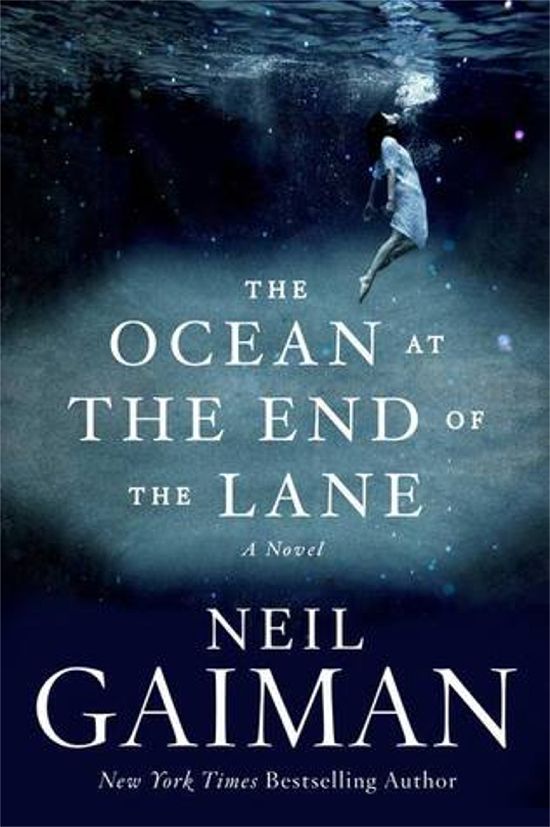
One of my personal reading goals is to read more "adult" fiction. I put "adult" in quotations because kids can read these books, too. They're not just limited to people over 18 years-old. These "adult" books are also on my nightstand, collecting dust under the middle grade books. Funny how that always happens. But I'll get to them soon (especially the Gaiman book!). Promise. 


Can't wait for this one! Loved Coraline and The Graveyard Book. 
My favorite King book is The Girl Who Loved Tom Gordon (a quiet little book).
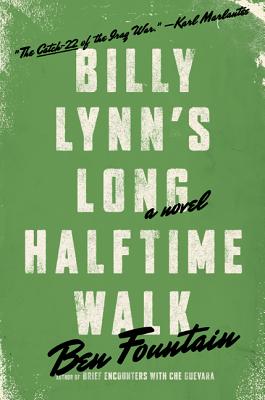
I read a stellar interview with Ben Fountain. Therefore, I got the book.
If you love a book, or you hear great things about a book, the best deed a reader can do for an author is tell someone else about the book. 

So... what are you reading this summer? 
   
_____________________________________

*the other 25% I find in my school's library