Showing posts with label goals. Show all posts

Monday, October 30, 2017

Signs


Although I wanted to write a novel for as long as I could remember, I wrote my first one in November 2007. That year was special. My baby had just turned one-year old, and I was at the end of my twenties. I’ve always been a challenge driven person, and with the THIRTIES looming over my shoulder, I was searching for a sign of what to do with my life (because mothering 4 children under 6 and 2 dogs wasn’t enough?). You see? I believe in signs, that if we’re unsure of which way to go, and if we ask for guidance, we’ll get it.
And I did.
Reading my favorite blog, I came across a vague mention to NaNoWriMo, a writing competition that pushed you to write a novel in a month.
Competition?
Writing a novel?
Sign me up! It was November 6, and when I went to the NaNoWriMo website, I realized I’d lost six precious day to try to achieve this feat! But have I mentioned that I’m very driven, especially by competition (I’m a proud Slytherin after all)?
And then there was the sign… You see? I couldn’t just ask for a sign and then ignore it. Otherwise, how could I expect to get help when I needed it next? Because I knew there would be a next time. Have I mentioned I had four kids under the age of six?
So, with a pounding heart and starry eyes, I opened a new document and poured out my heart and years of assimilated clichés on it. Day by day I wrote just enough to reach my word count. Each day, I was surprised by the words that flowed without effort, and other times, by the words that I wrenched out of my mind and heart after the kids were in bed and my eyes were heavy with exhaustion. When November 30th arrived, I typed the magical words, THE END, just with enough time to validate my word count and get my NaNoWriMo certificate.
Friends, I haven’t stopped writing since. But I wasn’t content only with writing, then I wanted to make my writing better. So I signed up for classes; I found a critique group. I read more voraciously than ever before. I went to conferences where I met amazing friends.
Now that the forties are welcoming me with open arms, I’m grateful for that sign, that little nudge to take the plunge and start writing already.
If you’re waiting for a sign to start writing, or doing the thing you’ve been wanting to do for a long time but you’re not sure if you can, consider these humble words your sign.
Write the story.
Do the thing.
Dare!
There’s never a perfect time when everything aligns to make things possible. We re-arrange responsibilities and obligations; we put fear and doubts aside, and make things possible even when all the odds are stacked against us.
Whether you’re doing a full NaNo (fifty thousand words) or a modified version, take advantage of the creative energy in the air. Believe me! It’s a real thing. I love the feeling of typing alone in my office in the early morning or the middle of the night, knowing that around the world, thousands of believers in the magic of words and story are doing the same thing.

Tell me in the comments if you’ll be participating, and what your goals are. If you want, find me on the NaNo website and add me as your “buddy;” we’ll cheer each other up. My user name is cheboricuas, and I have a good feeling about this November. Let’s end the year with a bang! 

Monday, June 20, 2016

Reading and Writing Should Be Dangerous, and other things Stephen King said

Few things compare to the feeling of meeting a person we admire, and last Friday I had the chance to attend an event in Stephen King’s END OF WATCH national tour. I purchased tickets months in advance, and when I arrived to the venue hours before the event, the line already snaked around the building. That day temperatures hit the 90s for the first time of the summer, but I was undeterred. Melting under the scorching sun, I spoke with friends and strangers about when we’d discovered King’s books. His books hardly qualify as middle grade or young adult (with the exception of CARRIE, which in my opinion is fully YA), but the vast majority of us, his fans, confessed to finding his words in our tween and early teen years, 
Although I arrived early, I was still kind of far from the stage.  

 Growing up, I never chose books according to grade-reading level. I read whatever was available. The newspaper. Nutritional information behind the saltbox. I read even graffiti-ed poems on the front of the building where I lived.
 A novel was a special kind of treasure, but I knew even at a young age what I was ready to read then, and what could wait.
 Sometime in tenth grade, I read my first Stephen King: DIFFERENT SEASONS, a collection of novellas among which is Rita Hayworth and The Shawshank Redemption. I read it in Spanish, and although I know so many things are lost in translation, King’s trademark voice and mood stayed with me forever. When I read it again in college (this time in English), once again I fell into the reading trance I crave and that I look for in every book I read.
      Friday night in Salt Lake, King said that the Stephen in front of the audience wasn’t the one readers probably expected to find. Scary Stephen/Writer Stephen stays at home, waiting for Popular Stephen/Book-touring Stephen to return to the page for a new work-in-progress. He claims he hardly knows what goes on in Scary/Writer Stephen’s mind when creating a story, but that he knows that Writer Stephen has two things in mind when creating his worlds: verisimilitude and a character the reader will care about and follow to the end of the story.
 An author achieves verisimilitude when the story contains vivid, specific details that bring the world to life. A successful character needs to want something and yearn to achieve it, and the reader should identify with the wanting so much, she will not put the book down until she knows how the story ends. The reader should see a part of herself in the story.
 Maybe that’s why when I was younger I intuitively knew what things I was ready to read then, and what I should leave for later in life. That’s why even now sometimes I don’t connect with the character of a highly acclaimed book, but a few months from now, or even years, that book becomes one of my favorite ones ever (hello, Melina Marchetta’s JELLICOE ROAD). For every book, there's a time and a season, don't you think?
I’m currently in my final year of a MFA program at the Vermont College of FineArts, and I’ve been writing for a long time, so the advice to both write believable worlds and creating characters with a strong desire line was familiar to me. But the statement that struck me the most was when King said that reading should always be dangerous.
    I’ve been pondering on those words this weekend.
    Reading, everything and anything, changes me in some way, even if small, and that’s what makes it magical. It doesn’t mean that I, or any of us for that matter, should only read literary horror or edgy books. It means that we should be aware that everything we read leaves a mark upon us. Stephen King doesn’t throw those words—“reading should be dangerous”—in vain. Besides being a super-prolific writer, he’s a voracious reader, and has reviewed HARRY POTTER, TWILIGHT, and even FIFTY SHADES OF GRAY. As with writing, he knows what he’s talking about when he talks about reading.
     We read dangerously when we read outside of our comfort zone, about experiences vastly different from ours, in formats that we haven’t tried before.
For children, who are experiencing the world for the first time, reading is always a dangerous endeavor, so dangerous that sometimes well-meaning adults prevent them from reading books that are sorely needed, like Kate Messner’s THE SEVENTH WISH, Walter Dean Myer’s MONSTER, Sherman Alexie’s THE ABSOLUTELY TRUE DIARY OF A PART-TIME INDIAN, or Judy Blume’s ARE YOU THERE GOD? IT’S ME, MARGARET.
     King’s words inspire me to write dangerously too, to try formats and genres that I haven’t tried before, experiences and situations that make me curious, excited, or even afraid.
     This summer, I pledge to read and write dangerously:
I’m stretching myself to read more non-fiction and graphic novels. I’ll even dive into some “adult” books (gasp!).
With my son, 15, who's eager for his first Stephen King
 and a summer of reading dangerously
I’m double-dog daring myself to write the draft of that picture book I’ve been fantasizing with for months.
I’m challenging myself to write more poetry, even if it’s amateurish and still such a mystery to me.
I’m bribing myself with chocolate and a binge-watch-worthy show on Netflix if I finish revising the middle grade that’s been very hard emotionally for me and send it to my agent once and for all.

Tell me friend, how will you read and write more dangerously this summer?


Tuesday, March 15, 2016

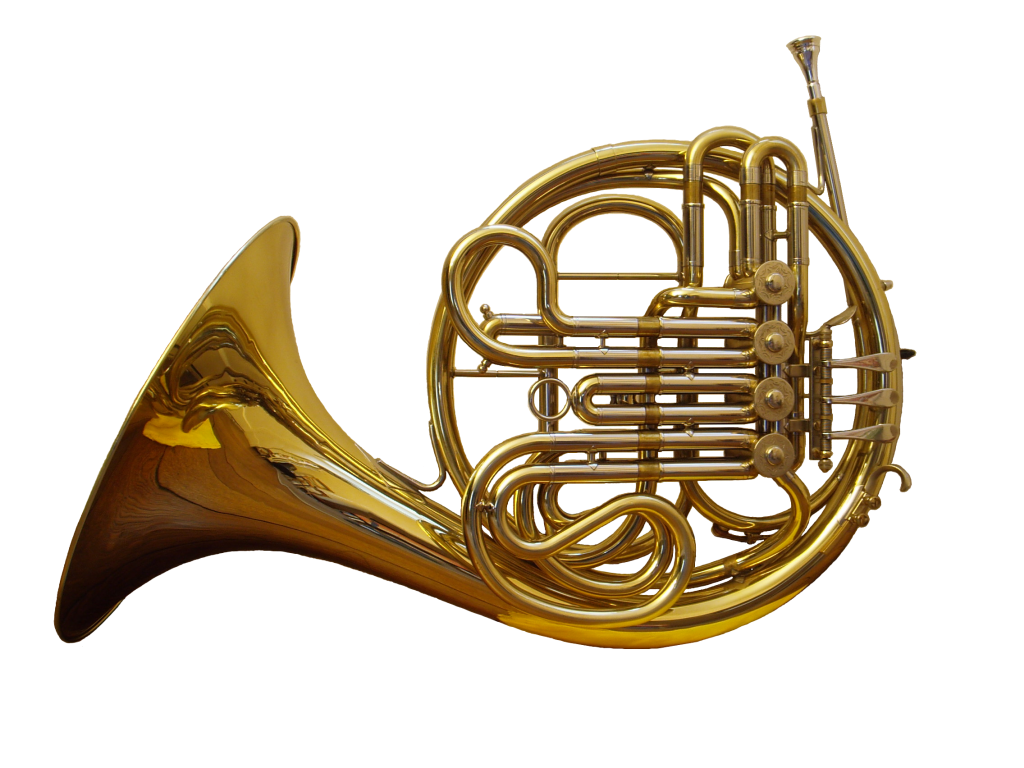
He Toots. He Scores! By Jim Hill


It’s been a great week. Spring has almost sprung (in the northern hemisphere), and the old, creative juices are flowing again. I’ve had great conversations with friends near and far and exciting things are coming. I can tell. And I can’t wait to tell you about it.

Which brings me to this week’s point – toot your horn! This week has been great because it started off with an email from a friend doing just that. His group had a performance over the weekend, and the Boston Globe singled him out for praise. Awesome! I sent him a pithy four-word reply, (the title of this week’s newsletter – I’m such a wit) which led to a nice, long phone call.

Now, I knew he had a performance over the weekend but due to logistical and geographical issues my wife and I couldn’t make it. We would’ve caught up eventually and discussed it but I wouldn’t have seen the review. But because he emailed it to us we were able to share in the joy and celebrate his success with him. And that, my friends, is awesome.

No, I’m not advocating egotistical PR updates for everyday activities (I flossed!), just those efforts that are special to us, and, therefore, our circle o’ friends. Why? Sharing works, and it works at home, at the office or in the gym. Pretty much anywhere really.

Here're my bare bones guide to “Sharing for Success” (Please use air quotes when you tell your friends)

  1. Share a goal with your friends, peers or mentors
  2. Check in with each other on a regular basis
  3. Adapt your goal if your situation changes significantly
  4. Celebrate with your group when you reach your goal

Sounds easy right? By sharing your goal, you make a public commitment to it. Your group helps you with your goal. You help them with theirs. Chocolate cake tastes great (well, that’s how I like to celebrate victory).

You don’t even have to be face-to-face to make this work. Email, phone calls, online achievement communities, Skype, SMS, etc., ad nauseum. We live in an age of near barrier-free communication. Our old excuses are getting harder to make because it’s easier than ever to find a group that shares your interests (and hopefully your love of success. And cake).

So this week I challenge you to share a goal. Spring has sprung. It’s time to get off your aspirations and mix it up.

I expect to hear a symphony of horn tooting from the lot of you.

Toot-toot, yeah, beep-beep.


NOTE: I wrote this ten years ago for the Goals Gone Wild newsletter. It still applies today. While not directly about writing, but it's definitely about writing. Hope you like it. Go forth and be amazing.

Monday, January 5, 2015

Headlight Goals by Kell Andrews

With the Headlight Method, you only need to see what's coming next -- works for me for both writing and other goals.
I'm working on a new novel, one that I have outlined in a synopsis but no further. I have a clear creative vision, but not a clear outline. I have novels that have been waylaid in the process of outlining, where I couldn't solve a plot point and then the whole thing fell apart. As much as outlines have helped me in the past, this time I'm using the Headlight Method, which I first learned of in James Scott Bell's indispensable reference, Plot & Structure.

E.L. Doctorow is credited with the saying, "Writing is like driving a car at night. You can only see as far as the headlights, but you make the whole trip that way."

Neither pantser nor plotter am I, but something between. I need to see the next step, but if I have to have every detail done, I will never be done.

In the Headlight Method, you only need see as far as what's in your headlights -- you write scene by scene. When you get to the end of each, ask what next? What is the character's emotional state? What is the next action the character needs to take?

I have a synopsis; I know where I'm going. I use the Headlight Method for what's next.

This is going to be my approach to plotting but also writing goals, and other goals for 2015 too. When I have think about how long it will take me to write 100,000 words, I'm daunted. But I can think about 10K words, I can see my way to what's next. Similarly, if I have to think about how to achieve a long-term health goal or a large financial goal, I'm overwhelmed. But if I can plan until the end of this month, I can be ready for next month.

So instead of New Year's Resolutions or New Year's goals, I have goals for what's next in my headlights -- for this month, this week, or today.

Or perhaps just next 30 minutes for  a writing sprint to get in another 500 words or another scene. Then I'm ready for what's next.


More explanation of the Headlights Method:
How to Outline a Novel Using the Headlights Method

Thursday, December 18, 2014

Jumpstart Your Writing in 2015 by Caroline Starr Rose

I have nothing to share about writing that is earth-shattering. What you’ll read here you probably already know. But like it is with all important things in our lives, it doesn’t hurt to hear certain things more than once. Here goes:


Read widely
Often writers are told to be well-versed in their genre. This is excellent advice, but reading shouldn’t end there. Picking up books in genres other than your own brings freshness to your writing and strengthens what you ultimately create. This nourishes you as a reader, too.

Study craft
None of us ever arrives. Our writing will improve if we continue to read craft blogs and books and take advantage of classes, critique groups, or conferences. Here are a few books I’ve read recently, am working on now, or plan to pick up this next year:

The Art and Craft of Writing Historical Fiction -- James Alexander Thom
Writing the Breakout Novel -- Donald Mass
Reading Like a Writer: A Guide for People Who Love Books and for Those Who Want to Write Them -- Francine Prose
Writing Irresistible Kidlit -- Mary Kole

Take time away from writing
Make sure you are doing things outside of writing. Now that I write full-time, it’s very easy to stay detached from the rest of the world. Make an effort to engage your surroundings, whether that means tuning in to nature as you walk the dog or making a point to get involved in a new activity.

Play with words
I find first drafts terrifying. One way I ease in is to tell myself I’m simply experimenting with language. Give yourself permission to approach writing playfully, whether you’re working on a “real” piece or simply collecting words that pique your interest. Enjoy the rhythm of words, poke at meaning, stretch old metaphors into something new. Your writing will benefit from it.

Avoid the comparison game
This is probably one of the hardest bits of advice to follow but one of the most beneficial to your writerly well-being. There are so many ways to get sucked into comparing, from measuring the number of blog followers you have against a friend’s to tracking the amount of time it took others to secure agents. It’s easy to think once you’ve “arrived” with a book deal, these worries fall away, but they don’t: there will be friends with bigger deals, with more push from their publishers, or better reviews and general buzz. Envy finds us at every level.

Choose to see your writing journey as yours alone. It’s not something anyone can do for you; there’s no way your experience will mirror another’s. Just like we all have something unique to contribute to the literary world, we all will go through different struggles and triumphs.

The only thing you will get out of the comparison game is disappointment.

And to negate everything I’ve said earlier...give yourself permission
In a world where instant information is available at all times and opinions are everywhere, you’re bound to come across conflicting advice on how to draft, edit, revise, submit -- do anything in relation to writing. For some of us, this becomes paralyzing; even if your approach works, you might worry that you’re not doing things right.

Give yourself permission to write in a way that works for you, whether that means writing daily or just on the weekends, editing as you go or waiting until your first draft is done. Though some advice seems to dictate otherwise, there’s no right way to write. Give yourself permission to alter the way you write if what you’re doing now isn’t working. Your patterns, needs, and abilities could change from manuscript to manuscript. Or they might not. And that’s okay.

Want to write to the market? Go for it. Want to try a story that can’t be categorized? Give it a try. You have permission to do as you wish with your writing. While there is no promise of success with this approach, there’s tremendous liberation in letting go of the “rules” we’ve absorbed consciously and subconsciously.

You’ve got a new year ahead of you. How will this affect your writing?

Tuesday, January 14, 2014

Chris Eboch on A Year of Success

Do you make New Year’s resolutions? I have some problems with the concept of “resolutions” (mainly in the way it’s almost assumed that you’ll keep them for a week or two and then fail). However, I do think it’s a good idea to check-in with yourself a couple of times a year. Are you on the path you want to be on? Do you even know the path you want to be on? Do you have a plan with achievable, specific goals along the way?

Last winter we did several SCBWI schmoozes in Albuquerque on issues in the writing life. During one meeting, we explored the idea of success. Here are some notes. Consider getting together with your critique group, other writing friends, or your family, to share these goals and figure out ways to keep each other on track.

Defining Success

If you have only vague ideas of what “success” means for your writing career, spend some time defining what success means to you. Set specific, achievable goals. Preface your resolutions or goals with a phrase such as, “I’m going to make my very best effort to _____________.” Ask yourself:

  • What is my primary writing goal?

  • What are my secondary writing goals?

  • How can these goals work together? Do they contradict each other at all? Do they interfere with other career, family, or personal goals?

  • What steps do I need to take? Do I need to work on specific craft techniques, time management, market research, or submissions?

  • Which steps come first? How can I schedule the steps to reach my goals?

It's easy to set goals and then forget all about them, so find a way to check in regularly – put a pop-up notice on your computer calendar, make goals check-in a monthly part of your critique group meeting, or have a weekly online chat with friends where you check progress.

More help (some of these posts are from last year, but the ideas are just as valuable):

Goal Setting Without Fear, from Crime Fiction Collective, by Peg Brantley: “One of my favorite sayings is ‘It doesn’t matter where you start out. What matters is where you end up.’”

Kelly Bennett on defining what you want as a writer: “I defined for myself what being a successful writer meant. Not vague “I want to be somebody,” wishes, either….”

Luke Reynolds on Redefining Success: “Redefining success allows us to continue to focus on the work at hand rather than the result.”

A Writer’s HAPPY New Year, by Kristi Holl: “I am going through my goals list again. I am adding goals geared toward renewal.” (Kristi has a great inspirational blog on issues in the writing life, such as overcoming self-doubt.)

Make Your Own Luck, by Angela Ackerman: We tend to say, “If I could ____, then it would help me succeed. Whatever your blank is, instead of thinking that it’s too hard to do, or something out of your control, Make Your Own Luck.”

Writing and Life Balance, by Susan Uhlig: on Discipline, Setting Priorities, and managing Life and Volunteer Duties.

Did you make writing resolutions this year? Did this post inspire you to start? How are you going to make sure you stay on track?


Chris Eboch’s novels for ages nine and up include The Genie’s Gift, a middle eastern fantasy, The Eyes of Pharaoh, a mystery in ancient Egypt; The Well of Sacrifice, a Mayan adventure; and the Haunted series, which starts with The Ghost on the Stairs. In The Ghost Miner’s Treasure, a brother and sister help a ghostly miner find his long-lost mine. Her book Advanced Plotting helps writers fine-tune their plots. Learn more at www.chriseboch.com or her Amazon page, or check out her writing tips at her Write Like a Pro! blog.

Friday, December 20, 2013

End of 2013: reading & writing reflection, by Yahong Chi


This is Project Mayhem's last post of the year, and yes, there really are only 11 days left in 2013. Looking forward and anticipating the year ahead is always a tonne of fun, but it's important and useful to think back on the year that was, too.

Writing-wise, you can start with the big, general questions: how many complete drafts did you write? Did your revisions go the way you wanted? And if you made writing goals at the start of 2013, did you meet them? Writing is an art, and like all arts—like anything in life, really—you want to be constantly improving. Setting goals is a good foundation in building steps toward improving, and it's only one third of the equation; checking whether you met those goals is the last third. (The hardest third is actually writing enough to meet the goals!)

While you're all nostalgic for the year that has gone by and feeling fuzzy and warm with holiday spirit, this is also an opportunity to reflect on the personal growth in regards to your writing, the interior aspect of it as opposed to simply the words on the page. I find it fascinating to look over the stories I've written in the past year and remember my mindset at the time of writing. It's a bit of insight into my own character, the way I thought then and the way I think now. Writing is highly reflective of oneself, and sometimes it's good to reflect on the reflection and consider what it says about yourself.


Reading-wise, this is a good time to check that list you've been updatiing of all the books you read this year. And even if you don't keep track, a general look-back over the books you read can help you spot any trends in your reading, and decide whether you want to consciously make adjustments in your reading. For example, if you write fantasy, but find your past reading rather lacking in the fantasy department, then you can actively seek out fantasy titles to read in the new year. Embrace the To-Be-Read pile!

You can also identify trends in the books you've read. For example, it's pretty evident that sci-fi is dominated by male authors (check out this illuminating and thoughtful Tor.com discussion). So if you've been struck by a Shiny New Idea that has decided to categorize itself as sci-fi (like my latest MG SNI is!), then perhaps you decide to check the gender balance in your reading list, in the interest of ever-diversifying your reading and thus your writing.

One last word: remember to use your winter break to read as much as you can! As a student, I get how difficult it can be to find time to read. Writers are readers first.

Do you reflect on your reading & writing, and do you set new goals for the new year?

Wishing you happy holidays from us here at Project Mayhem!

-Yahong