Showing posts with label May B.. Show all posts

Monday, September 29, 2014

Age 14 – The No Man’s Land Between MG and YA -- Dianne K. Salerni

When my manuscript for THE EIGHTH DAY was submitted to an editor at HarperCollins, my protagonist Jax was 14 years-old. Before bringing it to the acquisitions board, however, the editor reduced his age to 13. Later, she explained to me that age 14 was a No Man’s Land as far as book stores (primarily Barnes & Noble) are concerned. If my main character was 14, the book would be shelved in the Teen section, where it didn’t belong. When I mentioned to her that there are 14 year-old protagonists in EVERLOST and that Percy Jackson ages past 14, she gently pointed out that I was not Neal Shusterman or Rick Riordan.

Four women MG authors: Main Characters aged respectively 13, 12, 11, and 14

I’m not alone in this experience. Within our Project Mayhem team alone, one author tells me she had to drop her protagonist’s age from 13 to 11, and another had to drop her character’s age from 14 to 12. A recent conversation thread in a Facebook group for MG Women Writers discussed the “Age 13-14 Problem” at length. Nine women reported having to drop the age of their main character at least one year to fit within MG specifications, and three said that their protagonist’s age was never directly stated, just to obscure the issue.

On the other hand, Mayhemer Paul Greci’s upcoming book, SURVIVING BEAR ISLAND, features a male 14 year-old protagonist, and author Robert Lattrick has two MG books via Hyperion Disney with main characters aged 14.

Four male MG authors: Main Characters aged respectively 14, 14, 14, and adult

At this point, I started wondering if it was a gender thing. Male authors are allowed to write age 14; female authors are not? But then someone pointed out that Terry Lynn Johnson’s MG book ICE DOGS features a 14 year old protagonist – and a female one at that. (Yay!)

So, what’s the deal? Is it just a random benchmark applied by one giant book store chain that some publishers buy into, and others don’t? Why does this particular age matter so much? A couple writers pointed out to me that 14 year-olds are usually high school freshmen – which means YA. But what if it’s not a contemporary realistic story set in high school?

What if it’s a story about a girl who discovers a storybook world? (STORYBOUND) How about a 19th century pioneer girl trapped alone in a house during a blizzard? (MAY B.) When I first gave THE EIGHTH DAY to my agent, I wrote it as a YA novel, with a 15 year-old Jax.  My agent was excited about the manuscript but told me that the premise of a secret, hidden eighth day was all MG. So Jax dropped to 14 … and then to 13. And (of course) I made other changes to the manuscript for an MG audience – most of which were a lot more important than my main character’s age.

It seems to me that the premise of the story, the tone, the voice, and the themes matter more than the age of the main character. After all, Christopher Healy’s HERO’S GUIDE series features all grown-up characters! (Of course, he’s also a male author …)

So please – share your experiences! Have you been asked to lower the age of your protagonist to fall within an accepted MG range? Can you think of 14 year-old protagonists in MG books you’ve read? Are these characters male or female? What about the author?

Tuesday, January 7, 2014

She's arrived! MAY B.'s available in paperback, and you can win a copy!

Two years ago, I welcomed my first book baby, MAY B., into the world. Today I greet her again, this time as a paperback. In celebration of May's arrival, I'm giving a copy away to a Project Mayhem reader.
The thing I love about this girl is her bravery. She's strong and resilient, though she doesn't know it. When May is faced with insurmountable obstacles, she passes through them. And she doesn't just survive. She thrives.

As an author, you spend a lot of time with your characters. Years, most likely, first creating them, then writing about their world, revising their story on your own and then maybe later with an agent, later still with an editor. All that time together forces self reflection. So here's what I know: I don't possess an ounce of the bravery May does. She's taught me so much and has inspired me to be more. So thank you, May, for being in my life, for sharing so much of your world with me.

What does bravery mean to you? Is there someone whose bravery you admire? Share your stories in the comments below. One of you will be randomly selected to win a copy of MAY B. This contest closes Thursday, January 9.

Monday, November 25, 2013

DYSLEXIA IN MIDDLE GRADE FICTION by Joy McCullough-Carranza


Percy Jackson is probably the most famous dyslexic character in middle grade fiction, inspired by Rick Riordan’s own dyslexic son. Wanting to engage his son with books and capitalize on his interest in Greek myths, Riordan created a world in which dyslexia was not a disability—it was a side effect of being a demigod. What's more, the things that are a hindrance in the classroom become some of Percy’s most valuable assets when battling hydras and Titans.

Seeing characters like Percy and his demigod friends turn their challenges into real advantages as they save the world is incredibly powerful for other kids with similar struggles. But not all kids are epic fantasy types, and Percy Jackson isn’t the only dyslexic in middle grade. I wanted to highlight a few of my favorites.


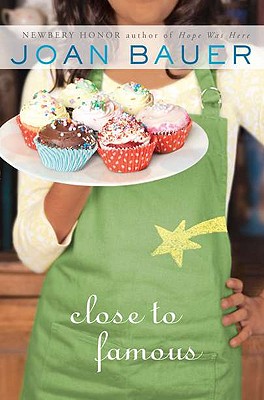
CLOSE TO FAMOUS – This beautiful contemporary novel introduced me to Newbery Honor winner Joan Bauer, and now I’m itching to get my hands on everything she’s ever written. Her protagonist Foster can barely read, but she’s a whiz in the kitchen. When she and her mother flee an abusive boyfriend and land in a quirky small town, Foster’s baking skills help her make friends. Her seriously delicious treats even help her befriend a reclusive Hollywood movie star, who helps Harper learn to read while Harper teaches her a thing or two as well.


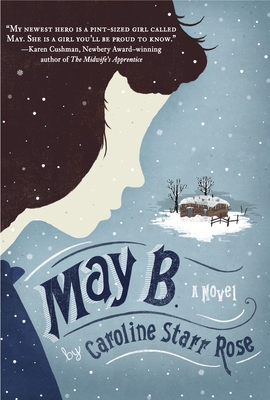
MAY B – Written by Project Mayhem contributor Caroline Starr Rose, MAY B is a verse novel about May, who struggles to teach herself to read while trapped alone by a blizzard on the American frontier. Caroline, whose own nephew is dyslexic, has received very moving feedback from readers who felt the book spoke directly to them. One said, “It was as if she were writing right into the places of my heart where those accusations of being careless and not good enough had settled. And she whispered that like May, I could overcome. I could hope for the good things even when they are hard. Thank you, Caroline. Thank you, May.”


ELEVEN – Written by Newbery Honor-winning author Patricia Reilly Giff, ELEVEN is an engrossing mystery about Sam, an eleven year old with dyslexia who must make friends with a new girl so she can help him solve the mystery of his own abduction. This book beautifully balances a story about friendship and family with a suspenseful mystery.


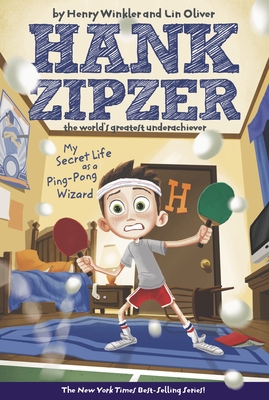
The HANK ZIPZER series – Written by Henry Winkler (that’s right, the Fonz), along with SCBWI executive director Lin Oliver, this lower middle grade series features a character based on Winkler himself as a boy growing up with dyslexia. Winkler says, “When I was growing up in New York City, no one knew what dyslexia was. I was called stupid and lazy…I spent most of my time covering up the fact that reading, writing, spelling, math, science—actually, every subject but lunch—was really, really difficult for me.” There are seventeen books in this funny, fast-paced series.


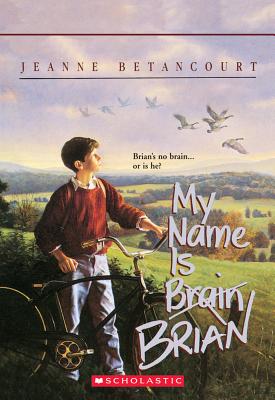
MY NAME IS BRAIN BRIAN – This straight-forward contemporary novel is written by dyslexic author Jeanne Betancourt, who points out on her website that Gustav Flaubert, W.B. Yeats, Hans Christian Anderson, F. Scott Fitzgerald, and Agatha Christie were all dyslexic. Of all the books listed, this book deals the most directly with the issue, showing the journey of a boy’s diagnosis with dyslexia. Betancourt also writes a chapter book series called PONY PALS, which features a dyslexic main character.


We’re all about middle grade here at Project Mayhem, but I would also like to give honorable mention to the brilliant young adult novel MAGGOT MOON by UK author Sally Gardner, who is dyslexic herself, and the poignant and wonderful picture books THANK YOU, MR. FALKER and THE ART OF MISS CHEW, which both show Patricia Polacco’s journey through dyslexia as a child.

Do you know of other great middle grade books that feature characters with dyslexia? Or books that show some other perceived disability in a new light? I’d love to hear about them!

Monday, September 17, 2012

On Persistence and Plowing

I love to hear author's publication stories. Here's mine.

It was 2004. While driving to meet my writing group, I happened to catch an interview on NPR with Adrienne Young, a folksinger just starting out. She talked about her first album, inspired by some advice she’d gotten while struggling to make it as a musician:
If you want to do this with your life, stay focused and see this through. You’ve got to plow to the end of the row, girl.
That simple phrase – plow to the end of the row – was enough to push Adrienne to continue. It became the title of both her album and lead song.

I can’t quite explain what that interview meant to me, hearing an artist choose to create despite the struggle, to push against fear and sensibility and make it “to the end of the row.” I’ve carried this image with me for years, the plant metaphor standing in for artistic endeavor, the plow the unglamorous slog needed to dig deep and make it to the end.

Sometimes I find it funny I’d choose a profession so bent on forcing me to wait, so full of uncertainty and disappointment. An almost foolish optimism kept me working, trusting that the next editor or the next agent or the next story would be the one to launch my career. I’ve haunted mailboxes and inboxes, waiting for something positive to come through. I’ve ceremoniously sent off manuscripts, chanting, “Don’t come back!” (entertaining postal workers, for sure). I’ve journaled again and again “this next editor is a perfect match!”, managing somehow to keep on plowing in midst of little validation.

After twelve years of writing and hundreds of rejections, I sold my first book, May B., a historical verse novel about a girl with her own challenging row to hoe. May’s determination carried me through a rocky publication experience: losing my first editor; the closing of my Random House imprint, Tricycle Press; the weeks when my book was orphaned, with no publishing house to claim it and its future uncertain; the swooping in of Random House imprint, Schwartz and Wade; edit rounds six, seven, and eight with editor number two; and finally, May B.’s birth into the world this January, only three months behind its original release date.

Though each row’s length varies, they’re still mostly lonely, not very straight and loaded with stones. But the soil has gotten better as I’ve worked it, and each little sprout I’ve planted has been stronger than the last. And I keep at it -- plowing, planting, hoping, dreaming -- because I’m made for this. And knowing this is enough to continue, enough for my work to thrive.


Monday, January 23, 2012

Win a Copy of May B.!

I'm thrilled to share with one lucky Mayhemer a copy of my debut novel, May B.
May is part Hatchet, part Little House on the Prairie, part Out of the Dust. It's a story of courage and hope
and is a great fit for reluctant readers.


To enter, simply follow our blog and share a courageous character from children's literature in the comments below. This contest closes Sunday, 29 January.

Monday, October 3, 2011

The Rose Boys on Life as an Author's Kid


My boys, Noah, 10, and Caleb, 8, weigh in on what it’s like to live with a writer in the family. I'll be honest: not all their answers are flattering and have shown me a few things I'd like to do better in the mom department. But a couple made me smile. Without further ado, I give you the Rose Boys.


What’s one good thing about having a mom who’s an author?
N: You like books.
C: You get money so we can do special things, like buy our dog, Boo.


What’s one bad thing about having a mom who’s an author?
N: Sometimes, when no one else is at home and I want to do something with you, I can’t because you’re writing your story.
C: You go on your blog and don’t do stuff with us. Not always, but it seems like it.

Describe May B. in one sentence:
N: May B. is scared when the Oblingers don’t come back, so she basically hides in the house.
C: It’s a survival story.

Finish this sentence: At first I thought May B. would be ______ . Now I think _______.
N: Boring. Now I think it’s good.
C: Good and it was good. I knew Mom would be a good author.

Why should boys read this book?
N: More girls should read it, but boys should read it too because she’s not really girly and she doesn’t play with girl toys like My Little Pony.
C: I think girls would read it more. Boys won’t read it because a girl’s in the story. I think it’s good. I don’t care there’s a girl in the story.

Thank you, boys, for sharing your experience with Project Mayhem!