Showing posts with label middle-grade reads. Show all posts

Thursday, August 25, 2016

MG Gets Real by Dianne K. Salerni

When Kerry O’Malley Cerra, author of Just a Drop of Water, was a teen, she was diagnosed with a hearing problem. She says:

“I tried desperately to hide from it and pretend it wasn’t true. I felt ashamed and insecure. I wish more than anything that I could have met another kid like me, or even read about one. It might have kept me from losing so much of my confidence. And yet, I didn’t discover a book with a character like me until CeCe Bellwrote El Deafo. By then, I was an adult with my own family and had burned a lot of bridges along the way because people simply confused my lack of being able to hear them with me being a snob. I should have admitted my problem. I should have been honest. I shouldn’t have been ashamed. But I was.”

This is one of the reasons that Kerry, along with authors Shannon Wiersbitzky, Shannon Hitchcock, Joyce Moyer Hostetter, and Kathleen Burkinshaw,  founded #MGGetsReal, an initiative to highlight middle grade books in which characters face tough, real life issues. Teachers, librarians, counselors, and parents should bookmark this expanding list of titles for use in classrooms, book clubs, and as recommendations for readers facing similar problems.

Kerry explained that they were looking for titles where the MC was facing a realistic problem, even if the book itself fell into a non-realistic genre. The problem itself needed to be a main theme in the book, not just a “sub, sub, sub plot to a larger story.” She also sought to include titles that were as new as possible.

Just a few of the real issues included on the #MGGetsReal list: abuse, adoption/foster care, alcohol and drugs, blended families, body image, bullying, civil rights/integration, death of a family member, depression and mental illness, discrimination/prejudices, illness, immigration, LBGTQ, learning disabilities, poverty, suicide, and war trauma.

Please check out the full #MGGetsReal list HERE, and share it with any teachers, librarians, and parents who might find it a useful resource. 

Wednesday, November 5, 2014

First Person POV: Building Kinship with the Reader by Jim Hill

First person point of view has found a home in middle-grade novels, and it’s easy to understand why. Though there are narrative limitations and challenges to writing in first person, the strengths can outweigh the weaknesses.

In her book, The Writer’s Guide to Crafting Stories for Children, Nancy Lamb states that one of the strengths is that an author can “create a sense of connection. The intimacy of first person sets up a direct communication between reader and writer.”

I refer to Lamb’s point as immediacy – the quality of bringing one into direct and instant involvement – and this connection may be one reason that first person is so engrossing to young readers. Using this technique the author draws the reader into the narrator’s private world, creating a confidante. That relationship empowers the reader with an insider’s sense of belonging. In a very real way, the narrator makes friends with the reader. They share secrets and concerns that others in the fictional world may not be privy to. BFFs in the making.

In The Lightning Thief, protagonist Percy Jackson opens the book by directly addressing the reader with a warning, and a confession about his true nature, that bridges the gap between narrator and reader.

“Look, I didn’t want to be a half-blood. If you’re reading this because you think you might be one, my advice is: close this book right now. Believe whatever lie your mom or dad told you about your birth, and try to lead a normal lifeBeing a half-blood is dangerous. It’s scary. Most of the time, it gets you killed in painful, nasty ways.”

By starting this way, Percy presumes a level of intimacy and knowledge that we want to play along with. Even if we have no idea what a half-blood is we nod our heads and smile hoping we’ll get it soon enough. As if realizing that perhaps he’s opened up too much, Percy tosses out a disclaimer to keep the reader at arm’s length, in case we’re not like him.

"If you’re a normal kid, reading this because you think it’s fiction, great. Read on. I envy you for being able to believe that none of this ever happened."

After that quick rebuff, Percy then dives back into the warning, showing his concern while bringing the reader back into his circle of intimacy.

"But if you recognize yourself in these pages––if you feel something stirring inside––stop reading immediately. You might be one of us. And once you know that, it’s only a matter of time before they sense you too, and then they’ll come for you. 
Don’t say I didn’t warn you."

First person narratives work by bringing the reader inside a private club for two. Reader and protagonist become confidantes in a shared adventure. 

Speaking directly to the reader also allows the writer the ability to establish a distinct voice quickly. Conversational quirks and flourishes are aimed straight at the reader. First person helps shrink the psychic distance, tearing down the wall between reader and protagonist.

By having the protagonist open up to the reader and share self-perceived vulnerabilities there is the opportunity to build kinship and reveal hidden truths. As the reader gains a deeper understanding of how the protagonist sees the world and reacts to it with asides and direct address, the reader can also discern how the protagonist may be misreading the situation. Just as in real life, confidantes can question the motives and authenticity of each other.

The affect of immediacy, and the opportunity to craft a unique voice through the protagonist's asides, make first person a compelling choice. With first person, the writer has the means to get the reader invested in the protagonist’s story from the very first words, a virtual arm around the reader. 

A whisper that says, “Hey, we’re in this together. Let’s go!”


Monday, October 7, 2013

A highlight on MG series: three series recommendations, by Yahong Chi

Series have always been relatively strong in the middle-grade market. While the young adult market swung back and forth between trilogies and stand-alones, middle-graders avidly eat up Harry Potter, Series of Unfortunate Events and multi-author series like The 39 Clues and Scholastic’s latest, Spirit Animals. Epic adventures—whether set in this world or another—are always fun, and here are three more in three different genres to embark upon.


The Theodosia Throckmorton series by R. L. LaFevers, illustr. by Yoko Tanaka


As can be guessed from the series title, these books feature Theodosia, the daughter of two museum curators and archaeologists who has an uncanny ability to sense curses on long-lost artifacts. Set in the late 1800s – early 1900s, Theodosia has the most stellar, idiosyncratic voice I’ve yet to read in an MG historical; she truly makes the books, and as she ricochets through fantastical adventures rife with Egyptian mythology, her growth and her dynamics with other characters makes these books absolutely delightful to read.


The Mysterious Benedict Society series by Tristan Lee Stewart, illustr. by Carson Ellis


I’m late to this series, I know, but holy goodness, is it amazing. With a team of four gifted children at its core, these books combine darker themes similar to George Orwell’s 1984 with rollicking, high-risk quests and friendships that are genuine, hilarious and touching to unfold over the course of three books. This series is contemporary, yet manages to feel timeless.


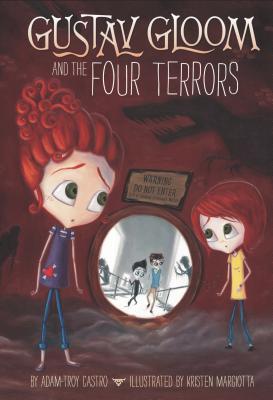
The Gustav Gloom series by Adam-Troy Castro, illustr. by Kristen Margiotta


When sisters Fernie and Pearlie What meet Gustav Gloom, the unusual boy who lives in the shadowed house across from their new home, the quirky 3rd-person limited narration of this series is perhaps the most attention-grabbing aspect as you crack open the first book. Soon enough, you’ll be equally sucked in by hair-rising chases through Gustav’s wonderfully odd house, his stories that hint at a much more grandiose backstory to come in the next books, and the funny, poignant moments that highlight the dynamics between all the characters. Best of all, this is true MG paranormal—not vampires, werewolves or demons, but good old-fashioned ghosts and risers of the dead.


And the best part about all these series? They're all accompanied by fabulous illustrations.

What good middle-grade series have you read lately?

-Yahong

Monday, April 15, 2013

STORY'S END giveaway!

**Winners update**
I have e-mailed the following winners.  Congrats to everyone and thanks for entering!
Jpetroroy - signed copy of Storybound
Cassidy Leora - signed copy of Storybound
Sarah Goodwin - signed copy of Story's End


I am so excited to announce that STORY'S END, the sequel to STORYBOUND is now available!  To celebrate, I'm giving away a signed hardback edition of STORY'S END and two paperback copies of STORYBOUND.  To enter, fill out the form below and don't forget to comment and share your favorite final line of a novel!  Entries will be open until midnight on Friday 4/19, and I'll contact the winners shortly thereafter!  This giveaway is only open to U.S. readers.  a Rafflecopter giveaway