Showing posts with label dee garretson. Show all posts

Thursday, April 7, 2016

Where Are They Now? Tales of Project Mayhem Alumni by Michael Gettel-Gilmartin


Here at Project Mayhem, we've been fortunate over the years to have quite the cadre of talented writers and to maintain a wonderful sense of community. Through the years, we've said our share of goodbyes--but we've also been able to keep in touch. I thought our readership would be interested in what the Mayhem Alumni are up to right now!
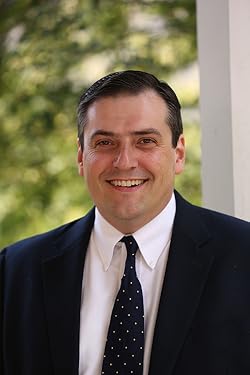
Braden Bell:
Life is good. I've just finished directing "Mary Poppins," at the middle school where I teach, which was a joy of course. I had a book that was picked through KindleScout. It's a YA novel and will probably come out sometime in late Aprilish. I'm trying to write every day, currently querying a new MG fantasy.


Marissa Burt:
As you know most of my time has been happily taken up soaking in this new baby girl, Beatrix. She is almost three months old, such a gift to us all, and stays busy entertaining her three big brothers with all of her coos and smiles.

I've also just finished the final edits on A LEGEND OF STARFIRE (sequel to A SLIVER OF STARDUST), due out in October. And I've been working on a first draft for a write-for-hire project with Harper, which has been such a learning experience. That book will come out Fall of 2017. Other than that, I'm working on new book ideas and hope to have some time to dive into a new project this summer.

Yahong Chi:
Hello, dear Mayhemers! I'm writing from small-town Belgium—I'm currently studying for one term in Europe until the end of June. In the years since I left Project Mayhem, I've finished and shelved one MG contemporary novel, and begun a new MG fantasy along with a YA sci-fi. To fill the blog-shaped hole in my heart, I ran a small but dedicated book blog for two years. Most recently, I've taken on the role of social media coordinator at Disability in Kidlit, which I'm so very excited about! (And in non-book-related news, I've started a knits blog & shop at Théo&Tia! Thank you to Michael for this chance to catch up with you all.
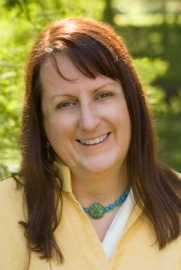
Dee Garretson:
I had a Boxcar Children book come out in fall 2015, THE SLEEPY HOLLOW MYSTERY, and I have another one coming out this fall, an election-themed one. I'm not sure of the title yet. I have the first book in a YA science fiction trilogy coming out in April 2017 from Month9 titled STATION FOSAAN and I'm very excited about that. I'm keeping busy writing the other two books in the trilogy. I also have a historical middle grade out on submission.


Joe McGee:
First things first, Project Mayhem ROCKS! I’m very happy to have been welcomed into the Mayhem with open arms and just as happy to be able to pop back in and share a bit about what I’m up to and what is going on. Ok, so…what IS going on?

Well, I’m very happy to announce that I just signed a two-book deal with Abrams! ALIENS AND JELLY, the sequel to PEANUT BUTTER AND BRAINS, is set for Fall 2017. Reginald and Abigail are back to solve a Quirkville dilemma. Aliens have landed and nobody knows exactly what they want. One thing is certain…if things aren’t cleared up soon, the mayor is going to have a very sticky situation on his hands. The second picture book is yet untitled (nothing to do with PB&B) and scheduled for Fall 2018.

Let’s see, besides that, I am working on a middle-grade series that I am very excited about and visiting schools to share my book and my love of writing, reading, creativity and imagination.

While I am still teaching writing at Rowan University, I am thrilled to announce that I have been hired as faculty at Sierra Nevada College’s low-residency MFA program, specifically in Writing for Children and Young Adults (WCYA)! SNC has an established MFA program for poetry, writing, and creative non-fiction, but this WCYA track is brand new. I’ll be joining YA superstars Amy (A.S.) King, Ellen Hopkins, and e.E. Charlton-Trujillo, middle-grade rock stars Pablo Cartaya and Lisa Papademetriou, creative non-fiction writer and poet, Gayle Brandeis, as well as literary agent, Jessica Regel (Foundry Literary and Media). So, yeah…super excited! Quite the line-up. Come write your stories by our campfire! In fact, I’ll be joining Brian Turner, the MFA Program Chair on #LitChat (Twitter), Monday, April 11th, at 9 p.m. EST.
For more info about #LitChat check out http://litchat.com/a-special-litchat-mfa-chat-series/ 
To learn more about SNC, go to: http://www.sierranevada.edu/academics/humanities-social-sciences/mfa-in-creative-writing/children-young-adults/

I’m with a new agency now! My agent, Linda Epstein, joined Mandy Hubbard at her new agency: Emerald City Literary Agency. I’m grateful for everything the Jennifer DeChiara Literary Agency has done for me, but I am also very excited to continue with Linda in the Emerald City.

I’m living in rural Pennsylvania in a tiny town (a village actually) that might be tucked away in a Harry Potter novel, with my absolute best friend and complete heart, Jessica Rinker. She has a YA novel and a middle-grade out on submission, is currently finishing another YA novel and putting the wraps on an awesome picture book biography.  So, yeah…a lot of writing going on in our house. We just started a really good kid lit critique group featuring one of our own Mayhemmers, Donna Galanti! There are really good stories being developed in this group. Other than that, my hair is getting longer, my beard is getting grayer, and I’m just writing away!

Thanks for checking in. Happy writing, friends!

Shannon O'Donnell:
Right around the time I left Mayhem, I accepted the head coaching position of my high school's speech & debate team. My oldest son was a sophomore at the time. He is now a freshman in college, far from his mom and Montana, in Ripon Wisconsin.
I took some time away from my writing, but I recently submitted final edits of the first 13,000 words to my agent. We have a plan to submit the finished manuscript to publishers by fall. Finally. I had no idea life (teaching, coaching, parenting) would extend the end of this novel for so long, but I am eager to reach the end of final edits and the beginning of submissions.

Tracy Edward Wymer:
Two years ago I moved from teaching to administration. I'm now an assistant principal, and in my fifteenth year as an educator, all at the same school. The change to administration has been a learning experience, but I still get to connect with our students daily, and for that I am thankful. I'm still learning in my writing endeavor too. If you stick with the process long enough, there comes a little success. Okay, I'd consider this more than "little" but I think you know what I mean.

In 2015, Penguin (Grosset & Dunlap) released the anthology BEEN THERE, DONE THAT: Writing Stories from Real Life (edited by former Project Mayhemer Mike Winchell). I was lucky enough to be part of this book, alongside an all-star lineup of middle grade authors and illustrators. In this anthology each author offers two stories, a nonfiction account of what really happened, and a fictional twist on the real events. I'm very proud of this book, and even more thrilling was watching Mike Winchell's vision unfold from idea to finished book.

In 2014 my agent sold my middle grade novel to Aladdin/Simon & Schuster. After months of editing and more months of final revisions, SOAR will be released on July 5, 2016. On July 4, there will be fireworks across the country to celebrate this great occasion. :-)

So great to catch up with all these fine former Mayhemmers. Go follow them on Facebook and Twitter, and all places social. Guys, best of luck to you all. Thanks for all you did to make the Mayhem so magical!


Friday, May 30, 2014

What Writers Can Learn from Traditional Storytellers


I’ve learned so much from fellow writers over the years here at Project Mayhem, both writing techniques and in overcoming obstacles in the publishing world, or at least coping with them. I’ve very, very thankful for that. And while this is my last regular post on Project Mayhem, I didn’t just want to use it to say goodbye. I wanted to share some of what I’ve been working on to improve my writing. I’ve gotten very interested in the techniques of traditional oral storytellers. I’ve been lucky enough to hear some fabulous storytellers over the years, and I’ve come to realize I actually grew up with one even though I didn’t know it. My mother had the ability to take ordinary events and in retelling them, make them extraordinary. As a child, I didn’t appreciate it. In fact, I found it down right annoying, because I knew she was "embellishing" the truth. I’d been present at these ordinary events and they never happened exactly the way she recounted them. She could hold an audience though, making people see the events she was describing, and make them wish they’d been lucky enough to be there.

Storyteller Mary Hamilton, in her book KENTUCKY FOLKTALES, Revealing Stories, Truths, and Outright Lies, says something similar about her father, “He is the kind of storyteller that when he starts telling about an event you sit there, you listen, and you can’t help but almost wish you hadn’t been there yourself. That way your memory of it wouldn’t be quite so at odds with what he’s telling.” That’s the key to telling a good story, putting just enough of a twist and a spin on describing an ordinary event to make it more than just an event, to make it a story.

Writers can’t mimic all of great storytellers’ techniques, because we don’t have the ability to use interesting voices and gestures for our audience to see, but there are some things middle grade writers in particular can take away from the storytelling process. I think most great storytellers’ main goals are to entertain. They choose their stories very carefully, and if there is a message in them, it’s subtly woven in so that the audience may not even be aware they are being given a message. Those are the kind of stories I want to write. I don’t care if the middle graders who read my stories can’t see a message in them. I just want them to love the stories.

We all strive to connect with our audiences too, by making them able to visualize whatever scene we are describing, whether through the written word or the spoken word. And with a middle grade audience, you have to bring yourself away from the adult world to see what they would see, before you can describe it. It’s all in the details, and the best storytellers I’ve seen retain an ability to pick just the right details, but not too many, to create their scenes.  I’m going to continue to listen to storytellers, to learn what I can. Maybe someday, I’ll take it up myself! There’s always a new challenge ahead. If you get a chance to listen, I love this video of storyteller Diane Ferlatte https://www.youtube.com/watch?v=QEoEGr955tw


Thanks to all the Project Mayhemers, past and present. I’ll keep in touch! ~Dee Garretson

Wednesday, April 16, 2014

Researching Historicals - Down the Rabbit Hole


“One Breakfast Cape - $3.00” What is a breakfast cape, you may ask? I’m going to tell you if you didn’t ask, but first, I wanted to share something I’ve learned about historical research. Be warned-once you start down the path of research, you may disappear in a rabbit hole of discovery you don’t ever want to leave!

Even though I’ve always loved history, and took several history classes in college, I’d never done research at a history museum archives until recently, and it was more amazing than I ever imagined. I can’t recommend it enough for the fascinating bits of information you can find, which can add incredible detail to your stories. My trip wasn’t even related to a story, though it did spark a story idea. My daughter had to research a Civil War event for a history project, and because she’s not yet sixteen, this particular facility required that I stay with her and help. To give some background on what we found, her project was on a major exhibition in our city to raise money for the war. The archives had twelve boxes of material on the exhibit, from lists of items donated (in beautiful handwriting) to actual tickets people purchased. She had already found a book on the event, but seeing the items from the event gave life to it in a way the book did not.

It was easy enough to get copies of newspaper articles about the event, but we also found a newspaper in the archives that was only printed for the event by the people involved, and detailed the events of each day. It was quite a find, because the newspaper had never been scanned and made available anywhere else.

Here’s one of the tidbits from the paper:
“A gentleman requests us to apologize to the lady, whose dress he trod on and ripped off the skirt, last evening. He is diffident, and she appeared so very angry, he was afraid to express his regret. He hopes she did not break the China vase she dropped during the incident.”

I love this, because I can picture it vividly.

Here’s another:
“There was an incipient fire at Greenwood Hall on Monday evening, creating quite a sensation. The decorations of a chandelier caught fire, falling upon one of the refreshment tables and setting things thereon in a blaze. In a trice it was denuded of its sweet contents, the flames smothered under shawls and cloaks, (not the first time these articles have covered “hidden fires”), but soon order was restored, and the table resumed to its former state.”

With these two descriptions, a writer could add such detail to a story to bring the reader right into the event. I wouldn’t have been able to imagine these on my own.

So if you are writing a historical and have a chance to get hold of some primary source material, you may find some real treasures.

And the breakfast cape? It was one of the items donated. After some further research, we discovered it was a very common item of women’s clothing from the mid 19th century, usually knitted, and worn by ladies when at home (not to be confused with an opera cape.)


Happy research!


~ Dee Garretson

Monday, February 17, 2014

Questions to Ask When Plotting a Sequel


Since it’s President’s Day, I thought I’d post about one of my projects involving a follow-up story to WILDFIRE RUN, my book about a president’s son who gets trapped at Camp David after a natural disaster.

Basically, I feel as if I’ve been breaking my brain trying to plot out a sequel, so to help my poor struggling thought process, I finally made up a list of important elements. I hope this will help other plotters in the same situation.

I’ve discovered the character of a president’s son doesn’t lend himself to lots of adventures, because he’s surrounded by people protecting him all the time. I had to come up with plausible reasons he could be put in danger again and be the one to figure out how to get himself out of it. This is true of many ordinary kid characters. Your regular kid is not going to find treasure map after treasure map, or thwart jewel thieves multiple times, so this may be where the writer has to veer off in a bit of a different direction.
Some aspects of a sequel need to be familiar, because readers want that continuity, and they want a sense of feeling they know a character already. Other aspects need to be brand new, to give the readers a surprise, and to keep away from falling into predictability. Here’s what I’ve determined I absolutely have to keep in mind as I’m plotting:

What elements of a plot will readers expect to see repeated in a new book: (action, friendship, humor, etc.)
This is the most obvious part of a sequel, but it’s so important, it doesn’t hurt to keep it right out in front. In my case, this was easy to figure out. My new book has to include a lot of action and adventure.

What element/character is going to make the plot feel different from the earlier book?
I thought about doing another outdoor adventure, but decided it would be too predictable, so I’m moving into more of a thriller with bad guys mode. It will still have action and adventure, but I want to keep the reader guessing.

I’m also adding a new character. I think this is a great way to keep a sequel fresh. The reader knows how the original characters interact with each other, so putting a new character in their midst will add more interest, and maybe even shake up comfortable relationships.

Besides the main character, what other characters will readers want to see?
I knew I had to include my main character’s two best friends, so that made me plot it carefully to have them included in a realistic way. I also know many of my readers love the main character’s dog, Comet, but he’s a little harder to include. At the moment, he appears in the opening chapter to give that sense of familiarity, but he can’t take part in most of the rest of the story. I’m hoping it will be enough.

What traits of characters will readers expect to see? (This is so important. I’ve discovered in my own reading that I want to recognize character traits or interactions that remind me of previous books. It helps make me a part of that world.)

My main character, Luke, is prone to act before he thinks, so I wanted to put that in, but his real distinction lies in his ability to think up crazy solutions to solve seemingly impossible problems. It’s hard to think these up, but I know they have to be there, so I’m spending a lot of time thinking about this. Luke’s friends have their own important roles, and these have to be woven into the plot as well. Callie is the practical one, who solves problems the boys sometimes can’t, because they tend to get too elaborate in their ideas. Theo is the fact kid, who knows important details the others don’t.


So in writing all this down, it’s made the plotting seem a little less overwhelming. I’m not there yet, but I’m hoping that by spending all the time upfront planning, I will end up with a story that doesn’t need major rewriting. So I'm off for more plotting. Good luck to all those out there attempting the same.

~ Dee Garretson

Monday, January 20, 2014

Fun Anti New Year's Resolutions for Writers


Since it’s still January, I was going to post about how much I hate traditional New Year’s resolutions. I never follow through and I resent the fact that I’ve set myself up for failure. But then I decided to look at it a different way. A new year can be a fresh start, and as I’m always looking for ways to enrich my writing ability, I came up with some anti-resolutions of things that in a roundabout way will give me new ideas and experiences to incorporate into my writing. I'm hoping some of these will inspire you too. So here’s what I’m going to do:

Try a new hobby or sport, even if it’s only one time, or volunteer someplace I’ve never volunteered before. And once I am into the process, I’m going to try to think about how it differs from writing. A character’s hobbies and interests are a huge part of them, and sometimes it’s hard to imagine how a character would feel doing something I haven’t personally experienced. I’m not going to take up marathon running (!) but I am thinking about a new hobby. Chinese brush painting appeals to me, so I’m going to try my hand at that.


Read a nonfiction book on a topic or subject I know little or nothing about. I’ve already got a book picked out. I bought this book a few years ago and it’s been sitting on my shelf ever since. I’m intrigued by mazes, but I’ve never given myself the time to read about them.

Look through a big coffee table-type or a travel book about a place I’ve never been. Whenever I look at one of these types of books, it reminds me of everything that goes into worldbuilding in a story. The little details are what draw the reader in. And just a note, if you’ve never looked at the Eyewitness Travel Guides, published by Dorling Kindersley, they are astounding for the amount of detail and images packed into one book. I'm choosing Austria.

Go have lunch or dinner or coffee somewhere by myself and NOT CHECK MY PHONE. I’m going to people watch instead, sitting and absorbing the atmosphere. Even if I can’t go back in time to Renoir's Paris in the 1800s, it will still be a useful exercise. (Notice there are no cell phones in the picture.)


Try a food I’ve never had before. Writing for middle grade readers is often writing about experiences kids are having for the first time, even if it’s something very small and unimportant.  Adults generally have a set list of food items we eat, and we don’t think much about them, beyond the fact that something tastes good or it is or isn’t cooked particularly well. I made Moroccan food the other night, which I really like, but my kids have never had. They didn’t particularly like it and I think it’s because they weren’t used to cinnamon in a main course dish. My son didn’t know what exactly was in it, but he said it all tasted “muddled.” It struck me that I haven’t thought about how to describe how I felt about a new, but small experience in a long time. I’ve decided to try chayote. I don’t know many details about it yet, but it is sold in a local grocery store and I've always wondered what it tastes like.

So that’s my list. I’m thinking that I should easily be able to do these, especially since there are only five things on it, and I have a whole year for them. Any of these ideas appeal to you out there who might be on an anti-resolution kick too?

~Dee Garretson

Monday, December 9, 2013

Holiday Gift Guide - Outdoor Adventure Books


It's snowing where I live today. I love snow, but I'm dreaming of a beach at the moment, and thinking out a plot that involves an adventure set in such a beautiful location. Anyway, to get to the point of this post, I do quite a few Skype visits with classes reading my outdoor adventures, and often teachers will ask me for recommendations of other books set in the outdoors. HATCHETT by Gary Paulsen is the classic, but they usually already have that book and are looking for others. So here are a few of my recommendations:


NAVIGATING EARLY
Clare Vanderpool


At the end of World War II, Jack Baker, a landlocked Kansas boy, is suddenly uprooted after his mother's death and placed in a boy's boarding school in Maine. There, Jack encounters Early Auden, the strangest of boys, who reads the number pi as a story and collects clippings about the sightings of a great black bear in the nearby mountains. Newcomer Jack feels lost yet can't help being drawn to Early, who won't believe what everyone accepts to be the truth about the Great Appalachian Bear, Timber Rattlesnakes, and the legendary school hero known as The Fish, who never returned from the war. When the boys find themselves unexpectedly alone at school, they embark on a quest on the Appalachian Trail in search of the great black bear. But what they are searching for is sometimes different from what they find. They will meet truly strange characters, each of whom figures into the pi story Early weaves as they travel, while discovering things they never realized about themselves and others in their lives.

ONE CAME HOME
Amy Timberlake

In the town of Placid, Wisconsin, in 1871, Georgie Burkhardt is known for two things: her uncanny aim with a rifle and her habit of speaking her mind plainly.


But when Georgie blurts out something she shouldn't, her older sister Agatha flees, running off with a pack of "pigeoners" trailing the passenger pigeon migration. And when the sheriff returns to town with an unidentifiable body—wearing Agatha's blue-green ball gown—everyone assumes the worst. Except Georgie. Refusing to believe the facts that are laid down (and coffined) before her, Georgie sets out on a journey to find her sister. She will track every last clue and shred of evidence to bring Agatha home. Yet even with resolute determination and her trusty Springfield single-shot, Georgie is not prepared for what she faces on the western frontier.

THE EMERALD QUEST (The Noah Winter Adventure Series)
Renée Pawlish


Thirteen-year-old Noah Winter, the son of sea-exploring treasure hunters, dives the San Isabel shipwreck with his parents in search of a mysterious treasure map lost in the murky depths off the Florida Keys over a century ago. The map reveals the hiding place of the priceless De La Rosa emerald. But before the Winters can find the map, a wealthy treasure-hunting rival kidnaps Noah’s parents. Now Noah must match wits with a dangerous adversary, not only to discover the treasure map first, but to rescue his mom and dad before it’s too late.

WILD LIFE
Cynthia DeFelice


Erik is preparing for his first-ever hunting trip when he learns that his parents are being deployed to Iraq.  A few days later, Erik is shipped off to North Dakota to live with Big Darrell and Oma, grandparents he barely knows. When Erik rescues a dog that’s been stuck by a porcupine, Big Darrell says Erik can’t keep him. But Erik has already named her Quill and can’t bear to give her up.  He decides to run away, taking the dog and a shotgun, certain that they can make it on their own out on the prairie.

And here are my two books:

WOLF STORM
Dee Garretson

This is Stefan’s big break. He’s on location in the mountains far from home for his first movie role, filming a blockbuster sci-fi adventure. The props, the spaceships, and the trained wolves on set should add up to a dream job, but acting turns out to be much tougher than he ever imagined, and he feels like his inner loser is all that’s showing through. From the way his famously stuck-up co-star, Raine, treats him, he’s pretty sure she thinks so too. And worst of all, no one will believe his claim that there are wild wolves haunting the forest around the set.
When a blizzard strikes, isolating the young co-stars and bringing hungry feral wolves into the open, Stefan must take on his biggest role yet—working together with his co-stars to survive. With no second takes, they only have one chance to get it right.
Lights,
Camera,
Action!

A Scholastic Book Club Selection, nominated for three state awards lists.


WILDFIRE RUN
Dee Garretson

The president's retreat, Camp David, is one of the safest places in the United States. So why can't the President's son, Luke, and his friends Theo and Callie stay there without Secret Service agents constantly hovering over them, watching their every move? And yet, when an earthquake sets off a raging wildfire, causing a chain reaction that wreaks havoc at Camp David, they are suddenly on their own.
Now Luke needs a plan:
To override the security systems
To save those who were supposed to save him
To get through an impassable gate
To escape Camp David

A Junior Library Guild Selection, nominated for seven state awards lists.

Enjoy!

~ Dee Garretson

Friday, November 8, 2013

The Creativity Killers that Keep the Idea Box Empty, and How to Fill it Back Up


Have you ever faced a blank computer screen and wondered how to think up a story that's new and interesting? I think most of us have, especially after writing more than one story. The first one is easy-we wouldn't have started writing at all if not for the first idea. It's what comes after that may be a struggle. There are obvious creativity killers, and some of those we don’t have much control over. Working long or hard hours to earn a living wage is probably at the top of the list, and the most common issue with writers. Family responsibilities or health problems are another. But sometimes even when you do have time to write, the ideas just aren’t there. I’m not talking about writer’s block, but more the way to finish a story, or even come up with one to begin with. These days I usually don’t have any trouble with ideas, because I’ve learned the best ways to generate them, but it’s taken me a little longer to figure out the best way to overcome challenges to figuring out the creative details necessary to make a plot idea into a whole story.

I know in talking to other writers, some really struggle with generating basic plot ideas. There has been quite a bit of scientific research done on creativity, especially in business environments and while much of it doesn’t translate to a writer’s creativity, some bits of it are useful. In a business environment, the lack of time to free think is a huge block to creativity. If much of a worker’s day is taken up with paperwork or talking on the phone or meetings, and the rest of the time is taken up with the actual job, there’s no time for the brain to generate new ideas. This relates to writers when we start to evaluate the value of time spent on social media. I love a writer’s forum I belong to, and I enjoy Facebook and Twitter, but I’ve realized the use of them should be more a treat to myself to relax after I’ve accomplished either some writing or some planning about what I’m going to write.

There is pressure for a writer to spend time on social media to build a “brand” or just to remind people they exist, but if you have trouble coming up with an idea or carrying a story through to the end, then saying no to social media to give yourself time to think might be the most benefit to you in the long run.

I’ve heard a writer say she can’t spend the time to think because it’s a waste of writing time. I know the pressure to write when you only have a few brief hours for it can seem too valuable to give up, but if you spend that time struggling to figure out what happens next in a story, eking out a few hundred words, it might help to step away and do something totally different. Take the pressure off your brain and it may reward you.
I don’t get my best ideas sitting in front of my computer. I have one odd way that helps me. I go to a library and roam around the nonfiction section, especially the travel, art and craft, and history sections. If you are a visual person, like I am, looking at pictures in books does wonders for my creativity. 

Walking around an unfamiliar part of my city is something else I've done that's helped, especially when it involves observing the people there. Even concentrating on observing people or places while you are doing your regular errands can help. If you can get away for a day trip, there is a wealth of inspiration out there. A few months ago I knew I needed to be somewhere new and different, but couldn't just take off on an exotic trip, so I found a place to go a few hours away. It was an annual pawpaw festival. If you don't know what a pawpaw is, it's a fruit native to the U.S., and Ohio has a region where they grow well. But that's not important to my point here. The festival turned out to have a lot more going on besides fruit. I watched a demonstration of people from the Society for Creative Anachronism (I don't know why they were at the pawpaw festival, but I'm glad they were.) That gave me a terrific idea for a story, and made the drive and the time it took worth it.  

I’ve heard from other writers that doing something physical, or doing something mindless helps them. It’s worth trying all sorts of things to figure out what works best. So what works best for you to keep the ideas flowing? And what can kill your creativity?

~ Dee Garretson

Tuesday, October 15, 2013

What Makes a Scary Story Scary?

Sally Cooper thought the lake was picture postcard perfect, something a city girl like her had only imagined. She didn’t know the lake held secrets beneath that quiet water, secrets needing to come to the surface. The past doesn’t stay buried.

That’s the description of a short story I’ve put up on my website (for free) for anyone who likes old-fashioned ghost stories. My family and I spend a few weeks every summer at a lake, and almost every night we sit around a campfire enjoying the evening. And of course we need ghost stories in such a setting. I love lakes, but as a child, I could scare myself silly by thinking about what might be under the surface of the lake. Think about that. What could be a hundred feet down in the darkest, deepest part of the lake, where no one can see? *shiver*

This summer while we were there I got inspired to write a ghost story about that very fear. If you’d like to read it, or print it out for reading or telling aloud around a campfire, click on this link to go to a page on my website. Once there, there is another link to click to get up a printable pdf:  Beneath the Lake  I hope you enjoy!

Over the past few days I’ve done an informal survey of people to find what makes certain stories very scary for them. Here’s what I heard:

1. A storyline that involves something they were very afraid of as young children. I do think residual fear can affect us very rational adults. We can tell ourselves that of course we don’t believe in ghosts any more, but some of us (me) still can’t watch a scary movie like THE WOMAN IN BLACK or easily forget a particularly scary story like THE TURN OF THE SCREW. A confession - I am particularly freaked out by ghostly children. I don’t know where this fear came from, but it’s certainly there, even though I DON’T BELIEVE IN GHOSTS.

2. Knowing there is something bad that’s going to happen before the characters do. This builds an incredible amount of tension as the reader wants to scream at the main character, “Don’t open the closet door!” I’m reading ‘SALEM’S LOT by Stephen King, and he uses this technique. The story starts with the characters who have escaped the town, and we, the readers, know something very bad happened there, even if we don’t know what. When the story shifts back to the time the troubles started, readers are able to pick up on the clues before the townspeople do.

3. Having the characters trapped in a situation where they will have to face whatever it is, and it will be bad when they do. Stephen King used that to great effect in THE SHINING with his characters snowed in at an empty haunted hotel. The movie ALIEN also fits into this category. There’s certainly no easy way off that spaceship.

4. Horrific images that get stuck in your head. I don’t like this kind of scary story, because I have a hard time forgetting certain images once they are imagined. And for middle grade writers, relying on horrific images isn’t going to work well. Our goal is not to encourage reoccurring nightmares!


The best scary opening chapter in a middle grade novel I’ve read is Margaret Peterson Haddix’s first book in The Missing series, FOUND. She does a terrific job of building up the tension as the character begins to notice odd things, trying to rationalize them, and then realizes there is something very, very wrong.

So what scares you in a scary story? And can you recommend other truly frightening books?

~ Dee Garretson

Monday, August 19, 2013

Times They are a Changing - Kids' Lives in 2013


We writers for middle grade aged readers try to portray contemporary characters accurately in our fiction, but it takes careful work not to confuse our own memories of being children with the actuality of kids’ lives in 2013. Yes, kids are still kids, and friendships and family relationships haven’t changed all that much, but day to day life has changed. I’m always fascinated by museum displays of artifacts from different time periods, those everyday objects common then, but largely gone now, and with them, the time people spent using them. How many kids these days have sling shots or decoder rings or even baseball bats?
My observations only deal with what I see in my world, which is largely made up of suburban middle class families, so the following won’t hold true with large parts of the U.S., and certainly not of the bigger world. I thought it was important to consider these things though, because when I write a collection of characters, I want them to seem as real as possible. So here are some of the differences I’ve noticed in many kids’ lives now versus even ten years ago:
Luckily, kids still play with Legos. Legos made up an important part of WILDFIRE RUN and I based that on knowing just how many kids were and are obsessed with them. Kids still play with other toys too, but toys are competing with other distractions and scheduled lessons and practice.
There is more time on organized sports and more concentration on doing just one type of sport. It used to be that soccer or swimming had a season, and when the season was done, the child was done with it for the year. Now, even ten-year-olds can and do play soccer or swim all year on leagues and elite teams. If you have a character intensively involved in one of these sports, you’ll have to figure out to work in the time commitments in your stories.
The same holds true with dance, gymnastics and ice skating. For example, by the time a dancer is about twelve, there is quite a lot of pressure from most dance studios to commit to coming two or three times a week, and to participate in extra shows or competitions. Skipping a practice is greatly frowned upon, and kids are supposed to manage their homework so they don’t need to take a night off from dance to study.
Family involvement in sports is often a requirement as well, as parents coach and sell snacks and monitor their offspring at all day meets. I’m always trying to figure a way to get parents out of the picture when I’m writing a story, but parents are far more present now than they used to be, especially in sports.
When kids do get together for some free time, what they do in that time has changed too. Group video game playing is a very common activity, particularly for boys. It used to be years ago, a kid who wasn’t good at basketball or baseball could often feel left out. Now it’s the kids who don’t have the latest video games or who aren’t good at them.
Then there is youtube. A group of kids together with a computer will often end up watching youtube videos as a social activity. I was just recently clued in to the existence of youtube stars, ordinary people with entertaining vlogs who have collected huge followings.
There are more ways for kids to find things that interest them. While you can view the time they spend on the internet as a curse, for some kids, it opens up a world to them they might not have discovered otherwise. I know kids who have become fascinating by cartooning, writing fan fiction, making short films, learning how to decorate cakes, even making their own chain mail for fun, all by discovering other people doing the same thing on the internet.
These things are only a few observations, and I know I’m missing many. So if you are writing contemporary kids, what else have you noticed about their lives now that could add believable details to your stories?
~ Dee Garretson

Friday, July 19, 2013

Writing the Opposite Gender: J.K. Rowling and THE CUCKOO'S CALLING

As I’ve posted here before, I’m a major fan of J.K. Rowling and Harry Potter, so when news came out that Ms. Rowling was the author of a new mystery for adults, I had to read it. I’m sure most of our readers have heard by now that The Cuckoo’s Calling, supposedly written by an ex-military man named Robert Galbraith, was actually written by J.K. Rowling. The story behind the unmasking is here:  http://n.pr/16DIWjv
One reason I wanted to read The Cuckoo’s Calling was to see if I could pick up any similarities with the Harry Potter books, books I’ve reread several times. I’ll admit upfront I absolutely could not tell. The only similarity I can find, trying hard to find one, is that I’m thoroughly enjoying the book, and the characters seem completely real to me, which is also my reaction to the world Rowling created at Hogwarts.
What surprised me most in the details of the unmasking was a comment that the reporters investigating the true authorship of the book thought it might have been written by a woman because of the accurate descriptions of women’s clothing. Granted, some men don’t notice details of clothing, but there are many who do. Good writers notice details, no matter what their gender. And in reading the book, I’m not finding Rowling’s descriptions jumping out at me as being overly detailed or female-like. The only section I found that seemed it might have been written by a woman, and only because I was looking for it, was the extremely realistic description of secretary Robin Ettacott’s day after her engagement. Could a man have written that? Absolutely, especially a man who has witnessed a friend’s or fiancée’s or sister’s reaction to such an event.
The whole idea of whether or not writers are capable of writing the opposite gender is debated among writers of adult fiction far more than middle grade. It’s so common now in middle grade, it’s hardly remarked upon, and that is largely thanks to J.K. Rowling, At the time the first Harry Potter book was published, we know she felt compelled to use initials because her books featured a boy main character. The success of the books taught most publishers that the gender of the author doesn’t matter, at least for middle grade.
I write from a boy’s POV, as do other Project Mayhemers, Eden Under Bowditch, Dianne Salerni, Marissa Burt, and Chris Eboch. Some of our members go even further outside a comfort zone of “write what you know” by writing from the perspective of nonhuman characters. Hilary Wagner writes from the POV of a rat, as does former member W.H. Beck. Of course, we don’t have rats weighing in on whether or not their portrayals are accurate, but if readers believe they are, that’s what is important.
I do believe to accurately write any character, there are some aspects to consider for believability.  In writing close third POV, I always think about what my character would notice when I’m writing descriptions. Most twelve-year-old will not notice the brand of women’s clothing a teacher is wearing. Nor will they notice great details about the landscape around them, unless it specifically impacts them. If a group of middle graders is walking down a street, ask them to describe what they’ve just passed. Most can’t tell you because they are intensely focused on the people around them, especially their friends. Getting that part right lends far more realism to a story than anything else.
I’m wondering if without the anonymous Twitter tip, Ms. Rowling could have stayed hidden longer had she chosen a woman’s name as a pen name. There is a long history of female mystery writers writing British male main characters. I love the novels by Agatha Christie, Ngaio Marsh, Dorothy Sayers, P.D. James, Elizabeth George and Martha Grimes. And in reading them, it never occurred to me to think about the gender of the writer.
For more details on the computer analysis run that suggested Rowling was the author, this is an interesting post: http://languagelog.ldc.upenn.edu/nll/?p=5315
~ Dee Garretson

Wednesday, June 19, 2013

Keeping the Reader Reading - Analyzing the first 50 pages of a Manuscript

I've heard the rule of thumb for adult fiction is that all the elements of the story have to be in place by page fifty of a book to keep a reader reading. For kidlit, it's probably much earlier than that. As writers, how to we know we've got the first fifty pages where they need to be? I’ve been doing some critiquing and some editing of my own work, and came to some realizations in the process. We know it’s hard to see the flaws in our own writing, but critiquing others has helped me know what to look for now. I’ve made a list of some things I use whether I’m reading my own story or someone else’s work:
1. For each character introduced, do I have a picture in my head of them besides their name and occupation/role? Will I be able to remember something about them when I encounter them later? I read fast, like many others, and if a character comes into the story and then disappears again for awhile, it’s frustrating to me when that character reappears and I can’t remember who they are and what point they serve to the story. Somehow, they need to be memorable enough the first time around to stick.
2. For the important characters, how do I feel about them? Do I like them? Dislike them? Don’t care?  Too often, when a story starts out where the main character is unhappy with their current situation, it may make sense plot-wise, but the reader needs to feel more than sympathy for a character to really be hooked. I want to know something interesting about a character. It doesn’t matter what, but I like to know how at least some tiny distinction that would make me want to keep reading about them.
3. Do I have an inkling of what the main character wants or what they are going to face? This may seem obvious, especially in middle grade where the pace moves faster, but sometimes you can get hung up on dreaded backstory infodump. It may feel like everything about the character’s world needs to be defined, but neglecting the plot to do so can kill the pacing. Relating this back to #2, it’s a fine balance to get into the plot fast enough while not neglecting the character development. If the first few pages are about your characters about to fall into a pit of boiling lava, that’s exciting, but I have to care a little about them too. 
4. Is the world in the story interesting enough to make the reader either want to be in that world or at least be able to easily imagine it? If your story is set in an ordinary place, you still can engage the readers’ senses so they can feel they are part of the story. If it’s an unusual place, again, anything you can do to make the reader believe it’s real, the more the reader will be drawn into the story. For me, the best stories of all are ones in which I want to be in that world, if only for a little while.
Any other tips for critiquing or editing? I'm always looking to add to my list!
~Dee Garretson

Friday, May 24, 2013

Title Poetry and Help Choose a Title, Please!


When I first saw samples of poetry from book titles, I knew I had to try one myself using middle grade books. I'm not sure my result is actually poetry, so I’m calling it a micro-story. If you can’t read all the titles, it goes like this:
Girl Overboard
Into the Blue
Dangerous Waters
Secrets at Sea
Tentacles
The Captive
The Quest of the Warrior Sheep
Found
Remarkable

I admit it won’t win an award, but it was a fun challenge
On a slightly different note, I think every writer struggles with titles. I know one writer who can’t start writing until she comes up with the perfect title. I would never write a word if that were me. It takes me forever to settle on even a few possibilities. I first became aware of the importance of titles when I gave a copy of TO KILL A MOCKINGBIRD to my then fourteen-year-old niece. She was an avid reader, but she wouldn’t read the book because of the title. Later, when it was assigned reading in school, she ended up loving the book so much, she named one of her cats Scout.
That was a cautionary lesson for me. Especially as a middle-grade writer, I know the title is all part of the package that makes up why a person will even begin to consider reading a book they know nothing about.
Nowadays, part of the consideration of a title is how it will look on the cover in a thumbnail-size view, because of the importance of online book sales. So we’re left with much shorter titles than before. I understand that, as well as how the title works with the cover image, but sometimes it’s hard to think you have come up with the perfect title, only to realize it’s too long from a graphic design point of view.
So here’s something I need an opinion on. I have two different titles for one of my manuscripts and cannot settle on one over the other. I describe the story as an upper middle grade historical that is somewhat Downton Abbyish, with the addition of spies. It’s set during World War I. Which of the two do you like best?
ESCAPE THE SHADOWS
or
THE FINDING OF SECRETS
???
Thanks!
~Dee Garretson

Monday, April 29, 2013

E.L. Konigsburg - Reading Beyond FROM THE MIXED UP FILES OF MRS. BASIL E. FRANKWEILER

FROM THE MIXED UP FILES OF MRS. BASIL E. FRANKWEILER is one of the classics of modern children’s literature. When I heard that author E.L Konigsburg passed away, I remembered how very much I loved The Mixed Up Files book as a child. I still think it would be amazing it would be to spend days in a museum with no one else around, and if I had a mystery to solve, all the better. Thinking about this book made me realize I’d never read anything else she wrote, and that led me on a reading journey.
First, some interesting facts about Ms. Konigsburg. The “E. L”. stood for Elaine Lobl. She had a degree in chemistry. (I’m married to a chemist, so I found this very interesting. The last thing my husband would ever do is write fiction.)  She was also the only person to both win the Newbury and be a runner up in the same year. In 1968, The FROM THE MIXED UP FILES book was the winner, and her other book, JENNIFER, HECATE, MACBETH, WILLIAM MCKINLEY, AND ME, ELIZABETH, was awarded a Newbury Honor. A side note-I doubt if that title would fly today!
While I was reading some of her other books, I realized something that marks them as different from much of middle grade fiction today. Many of them are written with more than one point of view, and those points of view include adults. These days, it’s hard to convince some people that kids will read books with adult POVs included.
She wrote more than a dozen books, and below are two I enjoyed.

THE MYSTERIOUS EDGE OF THE HEROIC WORLD
From the publisher’s description: “Amedeo Kaplan has a secret, a dream: More than anything in the world, he wants to discover something-a place, a process, even a fossil-some treasure that no one realizes is there until he finds it. And he would also like to discover a true friend to share these things with.
William Wilcox seems like an unlikely candidate for friendship: an aloof boy who is all edges and who owns silence the way other people own words:. When Amedeo and William find themselves working together on a house sale for Amedeo’s eccentric neighbor, Mrs. Zender, Amedeo has an inkling that both his wishes may come true. For Mrs. Zender’s mansion is crammed with memorabilia of her long life, and there is a story to go with every piece. Soon the boys find themselves caught up in a particular story…and a painful secret dating back to the outrages of Nazi Germany. It’s a story that will take them to the edge of what they know about heroism and the mystery of the human heart.”

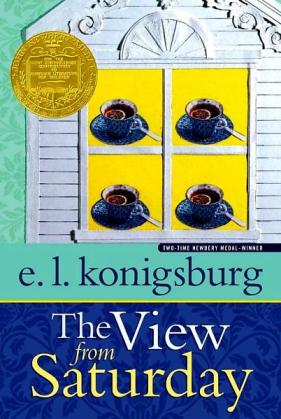
THE VIEW FROM SATURDAY (a Newbury winner in 1997)
From the publisher’s description: “How had Mrs. Olinski chosen her sixth-grade Academic Bowl team? She had a number of answers. But were any of them true? How had she really chosen Noah and Nadia and Ethan and Julian? And why did they make such a good team?

It was a surprise to a lot of people when Mrs. Olinski's team won the sixth-grade Academic Bowl contest at Epiphany Middle School. It was an even bigger surprise when they beat the seventh grade and the eighth grade, too. And when they went on to even greater victories, everyone began to ask: How did it happen?
It happened at least partly because Noah had been the best man (quite by accident) at the wedding of Ethan's grandmother and Nadia's grandfather. It happened because Nadia discovered that she could not let a lot of baby turtles die. It happened when Ethan could not let Julian face disaster alone. And it happened because Julian valued something important in himself and saw in the other three something he also valued.

Mrs. Olinski, returning to teaching after having been injured in an automobile accident, found that her Academic Bowl team became her answer to finding confidence and success. What she did not know, at least at first, was that her team knew more than she did the answer to why they had been chosen.”

These books wouldn't be the easiest to read for struggling readers, but I can see them appealing to kids who like quirkiness, along the lines of THE MYSTERIOUS BENEDICT SOCIETY, and who can keep track of the multiple POVs. As for me, I’m happy to have more of Ms. Konigsburg’s books to discover.

~ Dee Garretson

Wednesday, March 6, 2013

A Cupcake of a Teaser - New Ways to Find Readers


There’s a trend happening out there in the YA and adult fiction book world I’ve been watching with interest. Both traditionally published writers and self-published writers are releasing short stories or novellas that tie into their longer fiction, and using them as teasers to tempt readers to try their longer fiction. It's sort of like a bakery offering samples, to get dessert lovers to buy a whole cake.
While it's aggravating to worry about marketing my books, gone are the days, if they ever existed, where writers did nothing but write and publishers did all the marketing. If I’m going to be a professional writer, I have to think of it as a business. And that means I have to think about how I am going to find readers. 
Now, most writers at this point are writing these teaser stories after their books are already finished. This is a hard task. Once you've finished a book, it's hard to go back and figure out a story before the story. I’ve tried and failed. I attempted to write a short prequel for my adult historical mystery and it turned out so terrible, it's now locked up until I can get over my embarrassment. Here’s the problem-when you write a story that hinges on people meeting for the first time, writing a prequel where they meet in it is nearly impossible without changing the other story. Believe it or not, I tried the amnesia angle, having them meet and then one of them developing amnesia so he couldn’t remember they’d met. Yes, it was an embarrassing moment for me when I realized I’d stooped to soap opera tricks.  If I ever let this story out of the dungeon, I’m going to have to rewrite and focus on just one character.
For middle grade, writing a short story prequel shouldn’t be an impossible task with some planning. It is often difficult to know where to start a story. Often writers start their story too early and have to go back and discard some early chapters in revision, because those early chapters are more backstory than anything else. What about turning the backstory into an actual story? Middle grade readers often read because they like the main character, so if you can think of a way to introduce the character and what makes the character unique, you’re off to a good start. Perhaps you can have some small incident that foreshadows the main event in the later novel.
For example, had she desired to, J.K. Rowling could have done such a thing for Harry Potter. There is plenty of foreshadowing in the first two chapters of THE SORCERER’S STONE that could have become a short story. Harry, in his life before the letter and Hogwarts, has some brief encounters with some interesting people:
"A tiny man in a violet top hat had bowed to him once while out shopping with Aunt Petunia and Dudley. After asking Harry furiously if he knew the man, Aunt Petunia rushed them out of the shop without buying anything. A wild-looking woman dressed all in green had waved merrily at him once on a bus. A bald man in a very long purple coat had actually shaken his hand in the street the other day and then walked away without a word."
It’s not impossible to imagine one of these events turning into a short story. I’ve decided to try this advance planning with something I’m working on right now. I’ve written the prequel, and it turned out to be about 6000 words, a complete story in itself. It was quite a challenge for me, mainly because I find the short story format more difficult than longer stories, but there’s nothing wrong with a challenge. It also helped me define the characters, so now when I launch myself into writing the novel, I have a better feel for where I’m going.
So what do you think? Would you write your own stories this way?

~Dee Garretson

Wednesday, January 9, 2013

Young Writers and the Siren Call of Publishing

How to Encourage Young Writers
As I’ve been trying to finish what has been an extremely difficult manuscript for me, I’ve also been trying and not so successfully keeping up with other aspects of the writer’s life. One of those I find most challenging are emails I get asking me to read and critique a young writers’ work, and also to give them advice. I’m talking young, young writers-fifteen, twelve, even ten. And what bothers me the most is the question “How do I get this story published?”
First of all, I feel weird giving anyone advice. Am I really that old? Second, what to say to these requests? I don’t know what other writers do. All of the requests I’ve had so far have come from people who are acquaintances, so it feels odd to say no.  Besides the biggest issue of time, I also wonder how detailed a critique I should give of a twelve-year-old’s  story. It would be different if I were their teacher, but since I’m not, I don’t know where the line is between honesty and encouragement. All writers have to develop thick skins and be able to deal with critique, but should I be the one to give a young writer the first hint of how tough publishing can be?
And as I mentioned above, the question always comes up of how to get a story published, not at some point in the future after a writer has honed their craft, but now, right now, because the story is finished. The internet has made publishing a goal that seems within reach of everyone, even ten year olds. I also get this question in my skype session with classes. There is often one student who has written a short story and wants to publish it.
Up until now, I’ve tried to tell them it’s better to concentrate on writing to get better at it, not for the goal of publishing. It makes sense, but I can tell from the reactions I get, this is not the advice they are going to follow. So here’s my new answer I’ve just come up with a few days ago. (I have an email I need to answer from a teacher acquaintance about one of her students.) I’m going to be honest-The publishing business is hard even for adults. The amount of rejections can be so discouraging that writers lose the desire to write, and that is the worst thing that could happen to a young writer who has barely begun. So I plan to tell them to write until they’ve built up a substantial body of work, and then see if they think they are ready to publish. That will still not be what most want to hear, nor will it be the advice many will follow, but I’ll feel better giving it.
Any other suggestions? I know we have many teachers out there who may be able to give some valuable advice.

~ Dee Garretson