Showing posts with label Joe McGee. Show all posts

Thursday, April 7, 2016

Where Are They Now? Tales of Project Mayhem Alumni by Michael Gettel-Gilmartin


Here at Project Mayhem, we've been fortunate over the years to have quite the cadre of talented writers and to maintain a wonderful sense of community. Through the years, we've said our share of goodbyes--but we've also been able to keep in touch. I thought our readership would be interested in what the Mayhem Alumni are up to right now!
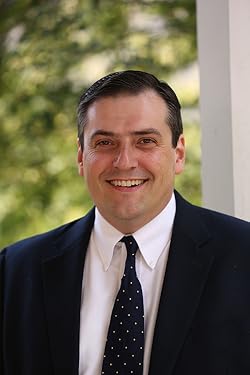
Braden Bell:
Life is good. I've just finished directing "Mary Poppins," at the middle school where I teach, which was a joy of course. I had a book that was picked through KindleScout. It's a YA novel and will probably come out sometime in late Aprilish. I'm trying to write every day, currently querying a new MG fantasy.


Marissa Burt:
As you know most of my time has been happily taken up soaking in this new baby girl, Beatrix. She is almost three months old, such a gift to us all, and stays busy entertaining her three big brothers with all of her coos and smiles.

I've also just finished the final edits on A LEGEND OF STARFIRE (sequel to A SLIVER OF STARDUST), due out in October. And I've been working on a first draft for a write-for-hire project with Harper, which has been such a learning experience. That book will come out Fall of 2017. Other than that, I'm working on new book ideas and hope to have some time to dive into a new project this summer.

Yahong Chi:
Hello, dear Mayhemers! I'm writing from small-town Belgium—I'm currently studying for one term in Europe until the end of June. In the years since I left Project Mayhem, I've finished and shelved one MG contemporary novel, and begun a new MG fantasy along with a YA sci-fi. To fill the blog-shaped hole in my heart, I ran a small but dedicated book blog for two years. Most recently, I've taken on the role of social media coordinator at Disability in Kidlit, which I'm so very excited about! (And in non-book-related news, I've started a knits blog & shop at Théo&Tia! Thank you to Michael for this chance to catch up with you all.
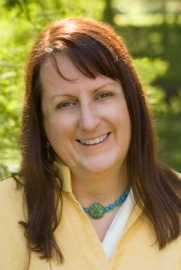
Dee Garretson:
I had a Boxcar Children book come out in fall 2015, THE SLEEPY HOLLOW MYSTERY, and I have another one coming out this fall, an election-themed one. I'm not sure of the title yet. I have the first book in a YA science fiction trilogy coming out in April 2017 from Month9 titled STATION FOSAAN and I'm very excited about that. I'm keeping busy writing the other two books in the trilogy. I also have a historical middle grade out on submission.


Joe McGee:
First things first, Project Mayhem ROCKS! I’m very happy to have been welcomed into the Mayhem with open arms and just as happy to be able to pop back in and share a bit about what I’m up to and what is going on. Ok, so…what IS going on?

Well, I’m very happy to announce that I just signed a two-book deal with Abrams! ALIENS AND JELLY, the sequel to PEANUT BUTTER AND BRAINS, is set for Fall 2017. Reginald and Abigail are back to solve a Quirkville dilemma. Aliens have landed and nobody knows exactly what they want. One thing is certain…if things aren’t cleared up soon, the mayor is going to have a very sticky situation on his hands. The second picture book is yet untitled (nothing to do with PB&B) and scheduled for Fall 2018.

Let’s see, besides that, I am working on a middle-grade series that I am very excited about and visiting schools to share my book and my love of writing, reading, creativity and imagination.

While I am still teaching writing at Rowan University, I am thrilled to announce that I have been hired as faculty at Sierra Nevada College’s low-residency MFA program, specifically in Writing for Children and Young Adults (WCYA)! SNC has an established MFA program for poetry, writing, and creative non-fiction, but this WCYA track is brand new. I’ll be joining YA superstars Amy (A.S.) King, Ellen Hopkins, and e.E. Charlton-Trujillo, middle-grade rock stars Pablo Cartaya and Lisa Papademetriou, creative non-fiction writer and poet, Gayle Brandeis, as well as literary agent, Jessica Regel (Foundry Literary and Media). So, yeah…super excited! Quite the line-up. Come write your stories by our campfire! In fact, I’ll be joining Brian Turner, the MFA Program Chair on #LitChat (Twitter), Monday, April 11th, at 9 p.m. EST.
For more info about #LitChat check out http://litchat.com/a-special-litchat-mfa-chat-series/ 
To learn more about SNC, go to: http://www.sierranevada.edu/academics/humanities-social-sciences/mfa-in-creative-writing/children-young-adults/

I’m with a new agency now! My agent, Linda Epstein, joined Mandy Hubbard at her new agency: Emerald City Literary Agency. I’m grateful for everything the Jennifer DeChiara Literary Agency has done for me, but I am also very excited to continue with Linda in the Emerald City.

I’m living in rural Pennsylvania in a tiny town (a village actually) that might be tucked away in a Harry Potter novel, with my absolute best friend and complete heart, Jessica Rinker. She has a YA novel and a middle-grade out on submission, is currently finishing another YA novel and putting the wraps on an awesome picture book biography.  So, yeah…a lot of writing going on in our house. We just started a really good kid lit critique group featuring one of our own Mayhemmers, Donna Galanti! There are really good stories being developed in this group. Other than that, my hair is getting longer, my beard is getting grayer, and I’m just writing away!

Thanks for checking in. Happy writing, friends!

Shannon O'Donnell:
Right around the time I left Mayhem, I accepted the head coaching position of my high school's speech & debate team. My oldest son was a sophomore at the time. He is now a freshman in college, far from his mom and Montana, in Ripon Wisconsin.
I took some time away from my writing, but I recently submitted final edits of the first 13,000 words to my agent. We have a plan to submit the finished manuscript to publishers by fall. Finally. I had no idea life (teaching, coaching, parenting) would extend the end of this novel for so long, but I am eager to reach the end of final edits and the beginning of submissions.

Tracy Edward Wymer:
Two years ago I moved from teaching to administration. I'm now an assistant principal, and in my fifteenth year as an educator, all at the same school. The change to administration has been a learning experience, but I still get to connect with our students daily, and for that I am thankful. I'm still learning in my writing endeavor too. If you stick with the process long enough, there comes a little success. Okay, I'd consider this more than "little" but I think you know what I mean.

In 2015, Penguin (Grosset & Dunlap) released the anthology BEEN THERE, DONE THAT: Writing Stories from Real Life (edited by former Project Mayhemer Mike Winchell). I was lucky enough to be part of this book, alongside an all-star lineup of middle grade authors and illustrators. In this anthology each author offers two stories, a nonfiction account of what really happened, and a fictional twist on the real events. I'm very proud of this book, and even more thrilling was watching Mike Winchell's vision unfold from idea to finished book.

In 2014 my agent sold my middle grade novel to Aladdin/Simon & Schuster. After months of editing and more months of final revisions, SOAR will be released on July 5, 2016. On July 4, there will be fireworks across the country to celebrate this great occasion. :-)

So great to catch up with all these fine former Mayhemmers. Go follow them on Facebook and Twitter, and all places social. Guys, best of luck to you all. Thanks for all you did to make the Mayhem so magical!


Wednesday, November 11, 2015

Joe McGee's Peanut Butter and Brains (and a Short Interview) by Michael Gettel-Gilmartin


I am so excited to welcome Joe McGee back to the blog today. Joe exemplified Mayhem as a Mayhemmer, and proves the old adage: Once a Mayhemmer, Always a Mayhemmer!

Joe's picture book, Peanut Butter and Brains: A Zombie Culinary Tale debuted on August 11th, 2015. Here's what it's about:
Reginald isn’t like the other zombies who shuffle through Quirkville, scaring the townspeople and moaning for BRAINSSSSS! The only thing Reginald’s stomach rumbles for is sticky peanut butter and sweet jelly. He tries to tell his zombie pals that there’s more to life than eating brains, but they’re just not interested. Will Reginald find a way to bring peace to Quirkville and convince the other zombies that there’s nothing better than PB&J?
Judging from all the fun pictures on Facebook, Joe's been having a great time introducing Reginald to readers young and old. I caught up with him (virtually, of course) and lobbed a few questions his way...

Me: What has been the most fun thing about bringing P B and B to the world?

Joe: By far, the most fun about bringing PB&B to the world has been the interaction with the kids. Whether it's a school visit, or a book store event, the genuine excitement and interest from the kids reminds me how lucky I am to be doing this. I love when kids show up dressed as zombies, or when they approach me and want to just tell me how funny they thought my book was, or how much they enjoyed the story. And one of the things I do when I read is get the kids all involved by moaning "Braaiinnnnsssss..." whenever the zombies say it in the book. Ever heard about 200 K-2nd-graders moaning "brains?" No? It's awesome. I also get a kick out of the anticipation right before the last page turn. So often the kids assume Reginald is after brains (wait, what does that say about the future of society?)...and the laughter and shock when I hit the last page reveal is priceless. 


Me: What is the one thing published-you would like pre-published-you to know?

Joe: Hmmm..... I suppose I would tell pre-published me to enjoy the process of creating that book and to enjoy the book-birth process...because you never get that first time back. Suddenly it's promotion and visits and the book has left and gone off to college and it never calls and you're working on five others and you get weepy when you look at old drafts and storyboard sketches of your first-born baby. 

Me: What are you working on now?

Joe: Come on, Mike, you know I can't really answer that....There are ninja assassins just waiting for me to type a response to this question. I WILL tell you this: I have a few things "in the works" and that one of them may (or may not) involve a [REDACTED].  Some of these things are other picture books. I am also in another round of revisions on my middle-grade novel and at work on a graphic novel. PLUS...I am part of [REDACTED]. So, I've got a few things up my sleeve."

Great stuff, as usual, from one of my favorite writers. If you want to know more about Joe and his goings-on, visit him at his WEBSITE. And don't forget to moan "Braaiinnnnsssss" to a reader today!

Wednesday, April 23, 2014

12 Essential Rules to Live More Like a Zen Writer

“Simple is good.”
              -  Jim Henson

I am not a Zen monk. I am not posting this blog from a monastery perched atop a remote, cloud-
shrouded mountain. But I recently read an article that shared “12 Essential Rules to Live More Like a Zen Monk” and I thought that these rules translated well to the writing life.

Barefoot and breathing and listening to the sound of one hand clapping, I give you…

12 Essential Rules to Live More Like a Zen Monk Writer:

1. Write one project at a time. Find your main project and focus on it. It is easy to collect new ideas, to become infatuated with the potential new story. However, a dozen started projects is easily a dozen unfinished projects. For every project you are simultaneously working on, you are slowing down every other project you are trying to juggle. And not only that, each of these other projects takes creative energy and focus that could be better spent fueling your novel-in-progress. Write them down. Record those ideas. File them away and come back to them...but stay focused on one primary project. If you need a creative break, allow yourself a small side project, but keep it as that; a side project. 

2. Write it with determination and deliberation. Write like a shark. Keep moving forward. Be determined to finish that draft. Be deliberate in your actions, letting every word, every sentence, serve your story. Know your characters, believe in yourself, shrug off doubt, duct tape your internal editor and write your way to your goals.

3. Write it completely. DO NOT edit along the way. A well polished first 50 pages is just that...50 pages, not a book. Write through (not necessarily in linear fashion) to the end. Complete the draft, and then ride into the magic of revision on the backs of rainbow unicorns. And while you're writing your way through the entire draft, be completely IN each scene. Be in that moment...don't worry about the entire forest. Focus on that one tree you are hugging...and then move on to the next and do the same. Be IN that scene, be on THAT page and eventually you'll string together a story, page by page, scene by scene. Otherwise it gets pretty darn scary.

4. Do less. That's right. Say "No" to things. What's that? Nope, can't mow the lawn. Novel to write. Sister's wedding? No. Cricket tournament. No. Call of Duty 17 for the Xbox? Nope. Ok, occasionally you are allowed to take a break and get to do something with other humans...but stop watching television every night, or tricking yourself into feeling obligated to attend every social event. But it's National Canned Peaches Day next Wednesday and everyone is getting together at Sven Jorgenstein's to make Peach Syrup Margaritas!! Um.....no. Write your novel.

5. Put space between things. Make time to step away from your story. I believe that we have creative batteries and that they are rechargeable. But they need time to recharge. So maybe step away and take a nice walk (while talking to your character in your head. See multitasking?). Or throw a Frisbee with the kids. Or lie on the grass and watch the clouds. Or read a book. But hey! You just said no breaks! No, I said "Don't go to Sven Jorgenstein's for Peach Syrup Margaritas." At least these breaks recharge your creative batteries and don't end with you suffering a severe fructose syrup hangover.

6. Develop writing rituals. Establish routine. Are you a night writer? A morning writer? A coffee shop writer? Do you need to write barefoot or on a unicycle or on a typewriter or with Scandinavian Yodel Quartet music blasting? Find what works for you and make these your rituals. Own your process.

7. Designate time for distractions. Facebook, Twitter, checking emails, etc., etc....all those wonderful little interwebs distractions right at our fingertips. Don't tell yourself "no," tell yourself "not yet." Write for 50 minutes and then take 10 for social media. Wash, rinse and repeat. Use them as rewards.

8. Devote time to sitting. That's right: BIC (Butt In Chair). MAKE the time to write. Nobody is going to do it for you. Sure, it'd be easy to just plop down on the couch and make origami penguins. And yes, you're tired from sitting through classes or a day at work. Sure, there's laundry and the living room needs to be vacuumed. But you know what? Making origami penguins is hard...and those other things can wait. Maybe until tomorrow. Maybe for an hour. Excuses collect entirely too easily and the next thing you know a week, a month, a year has passed. And you're no further along in your novel.

9. Smile and serve your characters. This means knowing your characters. Follow them through the story. Listen to them. Trust them. Ask them what they want, all of them, from the protagonist to the secondary character in chapter eleven who surprises the heck out of you and reveals a side of your antagonist you never knew existed! What!? Yep. Serve your characters and they'll serve you.

10. Make research and revision become meditation. When it is time to embrace these processes, be mindful of where you are and what you are doing. Do not be afraid to make the tough cuts. Know your purpose in research and what your research goals are, lest you fall into the trap of becoming lost or encumbered. Be mindful and embrace these roles. They are vital pieces of the Zen writing process. 

11. Think about what is necessary. Does everything in your story serve a purpose? Put nothing in your story for its own sake; not for shock, not as a gimmick, not because it's cool. It all must move the story forward, it all must have a purpose. If not, it is your job to remove it. Be strong.


12. Write simply. Don't overcomplicate your story. Rita Williams-Garcia, author of P.S. Be Eleven, One Crazy Summer, et. al, once told me that I had "too many things in the lifeboat. Start throwing some of them overboard." It's easy to start adding in all kinds of ingredients to the soup, but then you get some kind of convoluted inedible jumbo. No. Keep it simple. Simple, straightforward...a story that your readers can follow. No, that they are eager and anxious to follow. Be a storyteller. Just like Jim Henson said up there at the beginning of this post: "Simple is good."

While I cannot promise you enlightenment, or the path to publication, I can offer you this:
"Listening is the first step and the last step." - Cantus Fraggle

Monday, February 24, 2014

Considering Common Themes in Middle-Grade Books

So there I was, reclining in my favorite recliner, kicked back, drinking coconut milk straight of the coconut while my rare albino lemur purred gently from her perch on my shoulder. 

My ten-year-old strode right up to me and he was like: Dad...
And I said: Yes? 
And he said: I finished that book you gave me.
And I was like: Well? Did you like it?
And he was like: I did. The characters rocked. I liked Benjamin Winklesauce the best. He was pretty funny.
I laughed. My rare albino lemur laughed. And then my son said: But I really enjoyed the theme of the story.
I sat right up, he had my attention.
"Go on," I said.
"Yeah," he said, "the characters never gave up, even when things were super hard."
"So what was the theme? What was that story about?" I took a nice long sip of coconut milk, right out my crazy straw. 
"Perseverance, Dad."
I spit coconut milk all over him. All over the wall. All over my rare albino lemur. He'd nailed it. He'd boiled down the story to one word, to the driving theme, to that question writers get asked all the time: what's your story about?

LOYALTY
And while our stories have more elaborate pitches, or layers, involved, they are often just components of the theme that sits at the heart of our story. Boil it down...WHAT is your story about?

Now, while my son is very smart (straight A student, EXCEL program...yes, I'm bragging), turns out he was cheating. Kind of. ;) In his reading/writing class, the students were learning about common themes in books. They were even given a handout. And, since we're in the business of writing FOR middle-grade readers, I thought I'd share with you those themes our audience is learning about and receptive to. While we should never resort to becoming didactic, it IS important to understand WHAT you are writing about.

In fact, author David G. Allen says it best: "For me, not knowing your theme until you're finished is like using a scalpel to turn a kangaroo into Miss Universe - there will be a lot of deep cuts, and there's a high chance it won't work."

So, here are the themes from the handout:

  • Acceptance  - "These books have characters who respect & accept others' differences and beliefs."
  • Courage - "These books have brave characters who have the strength to overcome a fear or accept a risk."
  • Perseverance - "These books have characters who never give up, even when facing difficult times."
  • Cooperation - "These books have characters who work together to solve a problem or achieve a goal."
  • Compassion - "These books have characters who want to make those who are suffering feel better."
  • Honesty - "These books have characters who find that it is best to always tell the truth."
  • Kindness - "These books have friendly characters who are generous and considerate of others."
  • Loyalty - "These books have characters who trust each other and never turn their backs on their friends."
COURAGE
So, what do you think? Are there any themes missing? Anything to add to this list? I think Love is missing (yes, even for middle-grade...maybe especially for middle-grade; discovering young love). What else? And what's YOUR story about? Can you boil it down to a theme? Can you think what that milk-sopped ten-year-old boy might say about YOUR book?

 Let's hear what you have to say. Don't be shy...I'm out of coconut milk. You're safe.

Friday, December 13, 2013

'Tis the Season...to Give Them Monsters!

‘Tis the holiday season, and with that in mind, I’ll refrain from seizing upon this opportunity (it’s Friday the 13th! ) to share quirky, bizarre stuff and an otherwise creepy, twisted, middle-grade related, spooky post….

Ok, no I won’t. Sorry, I tried.

What I will give you is permission to put darkness in your middle-grade fiction. Give ‘em monsters, and lots of ‘em. It’s the gift that keeps on giving…because while your young readers may insist on sleeping with a Nerf katana, or ask you to sweep the bedroom perimeter one more time, they are (in general) utterly fascinated with the creepy crawly, shadow slinking, mystery of the monster. They might not admit that they’re scared (they're too old for that, maybe), and they may not even understand that they enjoy that fear. That it’s exciting and necessary.

Necessary? Yep.

The monster represents everything they don’t understand. Everything they fear and worry about. Christopher Vogler, a veteran Hollywood story consultant and writing teacher, calls these monsters, this darkness, the Shadow. In his book, The Writer's Journey: Mythic Structure for Writers, Vogler says that the Shadow “represents the energy of the dark side, the unexpressed, unrealized, or rejected aspects of something.” Middle-grade readers struggle with A LOT. Depending on the scale of the middle-grade spectrum, we could be dealing with puberty, adolescence, moving, divorce, abuse, relationships, emotions, identity, friendship, and the list goes on and on.

Stories need conflict and often that conflict comes in the form of the monster. Monsters offer wonderful personifications of the Shadow. The Shadow, as a monster, allows the writer to create a story in which he or she addresses those relative conflicts in the confines of the narrative. The monster allows for more traditional storytelling, offering an obvious vehicle for conflict, while providing an entertaining book. Percy Jackson is not battling kittens! He is fighting Medusa and Harpies and all sorts of monstrous creatures.

Middle-grade readers want to be entertained. They want a story they can relate to and enjoy and that offers excitement. What’s more exciting than a good monster to battle? Roald Dahl gave us The Witches, not The Unicorns. In his book, BFG, Dahl gives us flesh-eating giants. Flesh. Human flesh. The giants eat people. They crunch on people’s bones. Dahl certainly didn’t flinch at putting these horrors in the hands of definitely middle-grade readers, and I think these giants personify every seemingly impossible obstacle middle-grade readers face and the gatekeepers they fear stand before them. R.L. Stine didn’t build a reading empire on the back of his Feather Tickle series. No! Goosebumps. And it’s a slight understatement to say they did rather well.

But, to be fair, not every monster has to be big, or scary, or ugly, or have fangs and tentacles. Look at our own beloved Charlottes’s Web. You don’t think that when Charlotte says “Where’s Papa going with that ax?” she sees her father as a monster, at least in that scene? And what does she do? She runs out there to confront him. To face the monster. To do battle. And she wins. She saves Wilbur’s life. She beats the monster.

So, whether you have thought about it or not, whether you realize it or not, monsters, the Shadow, are an integral part of our middle-grade fiction. They give our readers a symbolic representation of their own fear and uncertainty in an exciting and entertaining medium: The Monster.

If you still doubt that there is any room to discuss monsters and holidays, consider The Nightmare Before Christmas in which monsters meet Santa….and kidnap him. Or look to the Germanic lore of the Krampus. American kids get coal if they’re bad. Germanic children get stuffed in a sack and get taken back to the Krampus’ lair to be eaten. I’ll take the coal.

Why am I telling you all of this? Because I want you to give the gift of darkness to your readers. Give them the Shadow. And I want to give you, as writers, permission to box up your unicorns and rainbows, pack away your puppies, and shush the critics who say “today’s fiction is too dark,” and let the mayhem loose.

Give them monsters this year. 

Wednesday, November 13, 2013

Whose Story Is It Anyway? Keeping The Kids In The Spotlight

           
            Middle-grade readers, whether they realize it or not, approach their books, their stories, like a 1920’s speakeasy.
           
            Knock, knock.
            A small panel slides open at the four-foot level.
            “What’s the password?”
            “Wedgie underwear fart soda skateboard.”
            The door swings open and the middle-grade reader is ushered inside.
            “Were you followed?”
            “No. No, I don’t think so.”
            “No adults?”
            “I didn’t see any…”
             
            Children read fiction to escape both from the perceived doldrums of their everyday lives and from the shackles of parent and teacher restraint. The last thing they want interfering in their fictional escape is the intrusion of another gatekeeper, at least not in the sense of anyone in anyway driving the story.
            Gasp, why I never…

            It’s true. My 10-year-old is already negotiating ages for certain video game and movie privileges. We’re currently scheduling tentative talks for five years from now. He can’t wait to be an adult so that he can make his own decisions.
            Children don’t like to be told what to do in real life and certainly not in their fiction. Children want to read about other children in the role of the protagonist, as the hero. In this sense they can both relate, and inject themselves into the story.
            Roald Dahl said that children were “engaged in a battle with a world of adults who were constantly telling them what to do.”
            In other words, the middle-grade writer is best served by removing adults from the story as much as possible or, at the very least, removing them from any possible beneficial role. But that’s not realistic…what business does a bunch of fourth or fifth graders have running around town fighting mutant zombie robot clowns without parental supervision? It’s fiction. It’s a story. Mutant zombie robot clowns.
            And while yes, we need adults in the story, particularly in the role of antagonist, foil, or secondary, supporting character (and Dahl did some fabulously hysterical satires of adults, a post I intend to pursue later), we have an obligation to make sure they do not try and steer the ship. This is not their story. This is the middle-grade protagonist’s story.

           
So, who is the biggest culprit? The biggest threat to taking over the story? Parents. Parents get in the way and muddle everything up. Parents want to be all, “Oh, look at me, I’m rational and logical and I know how to stop these mutant zombie robot clowns.”
            Dude, no you don’t. First of all, you don’t even believe the kids. Second of all, you refuse to let them smear themselves in butter (something mutant zombie robot clowns are allergic to) because it will drip on the carpet and smear on the walls. And third of all, your answer is not to sneak into their secret lair and destroy the gummy brain, but to call the police. Problem solved, right? NO! The police chief is their leader. Thanks, Dad. Your logical, responsible approach just doomed us all to robot zombie servitude. Let the kids handle this…

            So, what do we do with the parents? Remove them from the picture, either through deadly or creative means.
            This is nothing new. Perhaps the trick now is not in their actual removal, but how creatively and/or quickly you can do it. Clear the stage for the middle-grade protagonist(s).

            In The Witches, Roald Dahl wastes no time in removing the parents. He strikes them from the story in the first chapter (page 13 to be exact).
            “…while my father and mother and I were driving in icy weather just north of Oslo, that our car skidded off the road and went tumbling down into a rocky ravine. My parents were killed.”

            In James and the Giant Peach, Dahl tells us that James is orphaned after an errant, and angry, rhinoceros gobbles his parents up. Ok, that’s creative…

            In Lemony Snicket’s A Series of Unfortunate Events, the Baudelaire children are orphaned on page eight:
            “Your parents … have perished in a terrible fire.”
             And as if that were not clear enough, Mr. Poe continues:
            “They perished,” Mr. Poe said, “in a fire that destroyed the entire house. I’m very, very sorry to tell you this, my dears.”
            To make it painfully clear, and to remove any doubt that the Baudelaire children are indeed on their own, Snicket writes:
            “Perished,” Mr. Poe said, “means killed.”
            Not only does this put the orphans on the road to being the heroes of their own adventure, but it also creates the wonderfully awful antagonist, Count Olaf.

            And if car accidents and fires were not enough, Neil Gaiman, in The Graveyard Book, sets hand to purpose with the first line:
            “There was a hand in the darkness, and it held a knife.”
            On page five, we read, “The knife had done almost everything it was brought to that house to do, and both the blade and the handle were wet.”
            Bod’s parents are gone and he finds himself the focus of the story. If a Newbery Award-winning author says it’s ok to kill off the parents, it certainly is worth considering this practice as allowable, acceptable even.

            Ultimately, whether you choose to subject your fictional parents to auto accident, errant rhino, fire, knife, or other method of removal from the immediate picture, one things is certain: adults must not stand in the way of the child protagonist, nor be allowed to solve their problems.
            Now go write those middle-grade stories. Give your protagonists the stage without being stepped on by adults.

            Otherwise we’re just mutant zombie robot clown bait.