Showing posts with label Historical MG. Show all posts

Monday, October 24, 2016

History Moves: Thoughts on Historical Fiction by Kell Andrews


When I was in eighth grade, my school district determined that girls and boys would study the exact same curriculum. This was progress.

In sixth and seventh grade, we girls had taken Home Economics while the boys had Industrial Arts. In eighth grade, however, we would rotate to take both subjects, one half year in each one in mixed gender groups. 

I had Home Ec first. I remember making the first Caesar salad I ever ate. The recipe called for canned tuna instead of anchovies. It wasn’t authentic, but still delicious. I also remember a male classmate telling the teacher that really good cooks don’t need recipes. (We call that “mansplaining” now.)

The Industrial Arts teacher had an even worse adjustment than the Home Ec did. He took his eyes off what he was doing when a girl student called out to him, her unaccustomed high girly voice carrying across the class. He looked up, and he cut off three fingers on a circular saw. It was a memorable day for everyone. (We call that “being a distraction” now.)

Thus when I finally took my first shop class, my teacher was an experienced substitute who had been called out of retirement while the injured shop teacher healed. 

Mr. Legg was a taciturn sort, and he had lived through a lot that was far worse than the unfamiliar presence of 13-year-old girls in his classroom. He bore an Auschwitz tattoo on his forearm. He wouldn’t talk about it, but he didn’t hide it. I think he wanted you to know it was there. 

The Holocaust seemed so distant in 1983, but Mr. Legg had survived it.

Now I realize how close it was -- the liberation of Auschwitz had happened just 38 years earlier.
I’m sure middle-school students now also think the Holocaust is ancient history. It’s not.

I’m sure that the softer bigotry the required different classes for boys and girls seems distant as well. It was just 33 years ago -- history to current middle graders.

Antisemitism, sexism, and bigotry of all kind are not in the past. Racism didn’t end with slavery -- it continues. Antisemitism and misogyny are resurgent, reactionary convulsions in the face of other progress. Genocide, religious, gender, and racial violence continue on the evening news, in Mosul, Ferguson, and Orlando.  

It can be difficult for middle-grade writers to look at current events and culture with the clear eyes reserved for hindsight. History moves -- current events slide into the past as we write about them. Distant events emerge as relevant. 
But as middle-grade writers, we have an opportunity to make past and present real and vivid. That’s what historical fiction is for, even with the humbling fact that our own childhoods are now the realm of historical fiction. It’s also what contemporary fiction is for, turning the writer’s lens to the present. 
We’re living in history, past and present. All fiction that speaks truth is historical, all is contemporary.

Thursday, August 11, 2016

Noteworthy Historical Middle Grade Fiction of 2016

Last year my Project Mayhem posts were about new books I was excited to read, which I arranged according to release date. This year I'll be sharing new releases by genre. Today we'll talk about my favorite -- historical fiction. 
My love affair with historicals began with the Laura Ingalls Wilder books my dad read to me starting in Kindergarten and continued with titles I read on my own in elementary school, such as When Hitler Stole Pink Rabbit, No Promises in the Wind, and The Yearling. While I liked history class as a kid, I never felt smart enough to "get" everything we were supposed to learn. There was just too much to take in. But once a moment in history was transformed into a book, I could not only remember, I could make connections that felt real and meaningful. History came to life because these characters and their worlds were made accessible through story. 
Author Karen Cushman puts it this way:  
I think for readers historical fiction is important because it helps them to see beyond the boundaries of their own experience. It helps them to stretch and to see what life is like for others. This helps illustrate both how we are the same and how we are different, and can give readers more empathy. 
Here are a collection of boundary-stretching historicals broken into three sub-genres: historical adventure, books about WWII, and plain ol' straight up historical (I can make my own sub-genre, right?). I hope you enjoy! 
HISTORICAL ADVENTURE 
Audacity Jones to the Rescue — Kirby Larson (January 26) 
 Audacity Jones is an eleven-year-old orphan who aches for adventure, a challenge to break up the monotony of her life at Miss Maisie's School for Wayward Girls. Life as a wayward girl isn't so bad; Audie has the best of friends, a clever cat companion, and plenty of books to read. Still, she longs for some excitement, like the characters in the novels she so loves encounter.
So when the mysterious Commodore Crutchfield visits the school and whisks Audie off to Washington, DC, she knows she's in for the journey of a lifetime. But soon, it becomes clear that the Commodore has unsavory plans for Audie -- plans that involve the president of the United States and a sinister kidnapping plot. Before she knows it, Audie winds up in the White House kitchens, where she's determined to stop the Commodore dead in his tracks. Can Audie save the day before it's too late? 
The Eye of Midnight — Andrew Brumbach (March 8)
A cross between Indiana Jones and The DaVinci Code for kids, you won’t be able to put down this classic adventure set in 1920s New York City with an Arabian twist!
On a stormy May day in 1929, William and Maxine arrive on the doorstep of Battersea Manor to spend the summer with a grandfather they barely remember. Whatever the cousins expected, Colonel Battersea isn’t it. 
Soon after they settle in, Grandpa receives a cryptic telegram and promptly whisks the cousins off to New York City so that he can meet an unknown courier and collect a very important package. Before he can do so, however, Grandpa vanishes without a trace. 
When the cousins stumble upon Nura, a tenacious girl from Turkey, she promises to help them track down the parcel and rescue Colonel Battersea. But with cold-blooded gangsters and a secret society of assassins all clamoring for the same mysterious object, the children soon find themselves in a desperate struggle just to escape the city’s dark streets alive. 
An exquisitely written, gripping adventure, Andrew Brumbach’s debut novel is poised to become a contemporary classic.  
PLAIN OL' STRAIGHT UP HISTORICALS 
Sweet Home Alaska — Carole Estby Dagg (February 2)
This exciting pioneering story, based on actual events, introduces readers to a fascinating chapter in American history, when FDR set up a New Deal colony in Alaska to give loans and land to families struggling during the Great Depression.
Trip can’t wait to follow in Laura Ingalls Wilder’s footsteps . . . now she just has to convince her mom. It’s 1934, and times are tough for their family. To make a fresh start, Trip’s father signs up for President Roosevelt’s Palmer Colony project, uprooting them from Wisconsin to become pioneers in Alaska. Their new home is a bit of a shock—it’s a town still under construction in the middle of the wilderness, where the residents live in tents and share a community outhouse. But Trip’s not about to let first impressions get in the way of this grand adventure. Tackling its many unique challenges with her can-do attitude, she starts making things happen to make Alaska seem more like home. Soon, she and her family are able to start settling in and enjoying their new surroundings—everyone except her mother, that is. So, in order to stay, Trip hatches a plan to convince her that it’s a wonderful—and civilized—place to live . . . a plan that’s going to take all the love, energy, and Farmer Boy expertise Trip can muster.
John Lincoln Clem: Civil War Drummer Boy (Based on a True Story) —E. F. Abbott (February 16)
Determined to fight for his country, Johnny sneaks onto a train filled with men from the 3rd Ohio Union Regiment. Taken in by the older soldiers, Johnny becomes a drummer boy, and later, takes up his own musket. As the war rages on, Johnny experiences the brutalities of battle as well as the rampant illness and gnawing hunger in between. But the most dangerous part of Johnny’s journey is yet to come.
Based on a True Story books are exciting historical fiction about real children who lived through extraordinary times in American History.
Making Friends with Billy Wong— Augusta Scattergood (August 30)   
 Azalea is not happy about being dropped off to look after Grandmother Clark. Even if she didn't care that much about meeting the new sixth graders in her Texas hometown, those strangers seem much preferable to the ones in Paris Junction. Talk about troubled Willis DeLoach or gossipy Melinda Bowman. Who needs friends like these!
And then there's Billy Wong, a Chinese-American boy who shows up to help in her grandmother's garden. Billy's great-aunt and uncle own the Lucky Foods grocery store, where days are long and some folks aren't friendly. For Azalea, whose family and experiences seem different from most everybody she knows, friendship has never been easy. Maybe this time, it will be.
Inspired by the true accounts of Chinese immigrants who lived in the American South during the civil rights era, these side by side stories--one in Azalea's prose, the other in Billy's poetic narrative--create a poignant novel and reminds us that friends can come to us in the most unexpected ways. 
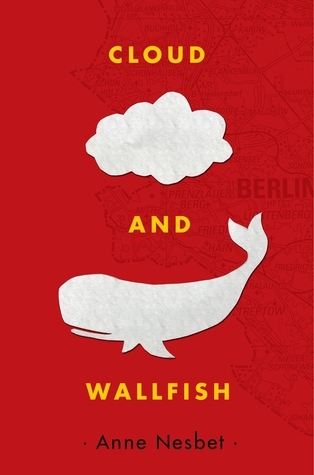
Cloud and Wallfish — Anne Nesbet* (October 2016)
East Berlin, 1989
Slip behind the Iron Curtain into a world of smoke, secrets, and lies in this stunning novel where someone is always listening and nothing is as it seems.
Noah Keller has a pretty normal life, until one wild afternoon when his parents pick him up from school and head straight for the airport, telling him on the ride that his name isn’t really Noah and he didn’t really just turn eleven in March. And he can’t even ask them why — not because of his Astonishing Stutter, but because asking questions is against the newly instated rules. (Rule Number Two: Don’t talk about serious things indoors, because Rule Number One: They will always be listening). As Noah—now "Jonah Brown"—and his parents head behind the Iron Curtain into East Berlin, the rules and secrets begin to pile up so quickly that he can hardly keep track of the questions bubbling up inside him: Who, exactly, is listening — and why? When did his mother become fluent in so many languages? And what really happened to the parents of his only friend, Cloud-Claudia, the lonely girl who lives downstairs? In an intricately plotted novel full of espionage and intrigue, friendship and family, Anne Nesbet cracks history wide open and gets right to the heart of what it feels like to be an outsider in a world that’s impossible to understand.
BOOKS ABOUT WORLD WAR II 
Paper Wishes — Lois Sepahban (January 5)
Ten-year-old Manami did not realize how peaceful her family's life on Bainbridge Island was until the day it all changed. It's 1942, after the attack on Pearl Harbor, and Manami and her family are Japanese American, which means that the government says they must leave their home by the sea and join other Japanese Americans at a prison camp in the desert. Manami is sad to go, but even worse is that they are going to have to give her and her grandfather's dog, Yujiin, to a neighbor to take care of. Manami decides to sneak Yujiin under her coat and gets as far as the mainland before she is caught and forced to abandon Yujiin. She and her grandfather are devastated, but Manami clings to the hope that somehow Yujiin will find his way to the camp and make her family whole again. It isn't until she finds a way to let go of her guilt that Manami can reclaim the piece of herself that she left behind and accept all that has happened to her family.
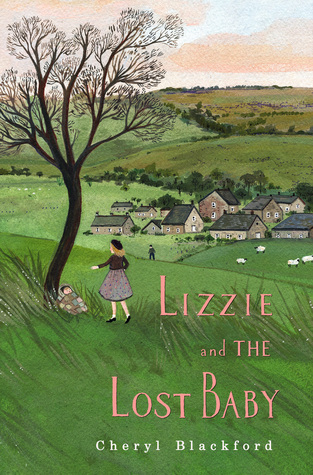
Lizzie and the Lost Baby — Cheryl Blackford (January 12)
Cheryl Blackford's debut novel is set in England during World War II and told from the dual perspectives of ten-year-old Lizzie, a homesick girl evacuated from bomb-blitzed Hull to the remote Yorkshire valley, and Elijah, a local gypsy boy. When Lizzie discovers an abandoned baby, her dangerous friendship with Elijah is put to the test. Will Lizzie be able to find the baby's parents? And if she does, can she and Elijah remain friends in a world clouded by prejudice and fear?
The Charmed Children of Rookskill Castle — Janet Fox (March 15)
“Keep calm and carry on.”  
That’s what Katherine Bateson’s father told her, and that’s what she’s trying to do:  when her father goes off to the war, when her mother sends Kat and her brother and sister away from London to escape the incessant bombing, even when the children arrive at Rookskill Castle, an ancient, crumbling manor on the misty Scottish highlands.
But it’s hard to keep calm in the strange castle that seems haunted by ghosts or worse.  What’s making those terrifying screeches and groans at night?  Why do the castle’s walls seem to have a mind of their own?  And why do people seem to mysteriously appear and disappear?
Kat believes she knows the answer: Lady Eleanor, who rules Rookskill Castle, is harboring a Nazi spy. But when her classmates begin to vanish, one by one, Kat must uncover the truth about what the castle actually harbors—and who Lady Eleanor really is—before it's too late.
What historical books are you looking forward to this year?

* A Project Mayhem author! 


Monday, April 4, 2016

Chris Eboch: Fiction Makes Learning Fun

Writers, teachers, and parents know that the way to get kids excited about reading and learning is to make reading and learning fun. This means telling exciting stories, not merely teaching boring lists of facts.

I often get e-mails from teachers who are using one of my historical novels in the classroom, and they report enthusiasms from the students. A teacher at a middle school in Washington state once told me, “We have been using your book, The Well of Sacrifice, as one of our lit circle books this year. Your book has been a very popular one for the kids … all levels of reading ability, and strongly supports our social studies theme.”

Offering a teaching guide can make it easier for teachers to incorporate your book into their classroom. One teacher used my Egyptian mystery, The Eyes of Pharaoh, in a gifted class of fourth and fifth graders in New Mexico. She said, “Using this historical fiction has been a window into Ancient Egypt – its people, culture, and beliefs. My class enjoyed doing research on Egyptian gods and goddesses, and hieroglyphs. Projects extended their knowledge of this fascinating time and place.”

Getting Your Guide

Today the educational buzzwords are Core Curriculum State Standards (CCSS), and lesson plans that align with those standards may have special appeal to teachers. It’s not hard to find educational experts who offer services in creating CCSS-aligned teaching material. Expect to pay $150-$250 and up, depending on the type of guide. Debbie Gonzales, who wrote the curriculum guide for The Eyes of Pharaoh, says, “Through the sharing of a well-crafted Curriculum Guide, we can be of tremendous support to educators in sharing our passion for the craft and our enthusiasm for reading by helping students hone their CCSS skills.”

You can also develop your own teaching guides if you’re willing to study the standards. “Most well-written books cover multiple CCSS and it’s easy to relate them to a good book,” says Shirley Duke, coauthor of Teaching STEM and Common Core with Mentor Texts, K-5, which illustrates how to do lesson plans and can serve as a template. “Read the CCSS standard and then consider how the book illustrates that idea.” Possibilities include everything from identifying theme to understanding cause and effect to identifying metaphors.

CCSS alignments aren’t the only possibility. Some states, such as Texas, have their own standards, and it might be worth researching those depending on your novel’s topic.

Beyond Language Arts

You might also have content that’s a better fit with social studies or science standards. I worked on a book called Walk like an Elephant along with a family interested in science. The book tells an exciting story about two kids helping to rescue a baby elephant in Africa. It’s also packed full of science information about animals, habitats, and much more. The teaching guide I helped develop has Common Core literacy tie-ins for each chapter, plus science projects on ecosystems, food webs, and the scientific method. We also included ways young people can help save the elephants – a great way to teach them science, social studies, and civic action.

Spellbound River Press, a new company, is releasing teaching guides for each of its books. The first list includes the re-release of The Ghost Miner’s Treasure, the fourth in my Haunted series. That teaching guide has discussion questions that cover everything from science to ethics. It also has some writing and mapmaking projects. The teaching guides for The Sweet Spot and Magic Mayhem: Jinnie Wishmaker focus more on understanding characters, while Operation Golden Llama will have an extensive guide that covers vocabulary, comprehension, and questions about Peru. It also has writing projects and an excerpt for theater.

Novels can be used to teach almost any concept you can find in the classroom. Ask teachers what would help them in the classroom. Or if you’re lucky enough to already have teachers using your book, see if they’ll share their projects with you and allow you to share them with other teachers.

Another teacher who used The Well of Sacrifice in her fourth/fifth grade classroom said, “This book is not only a great adventure for middle grade readers, but it is a useful tool for classroom teachers…. We used the book as the backbone of several language arts exercises such as: written and oral reports about the Maya; literary criticism of characters, plot, and sequence; persuasive essays on human sacrifice vs. murder and Mayan culture vs. our own culture; and art projects from wood burning to mapping. We studied geography and the rainforest. The students’ enthusiasm for this book pushed our curriculum into other disciplines including math.”

Wow, what lucky students!

Something for Every Student

Enthusiastic teachers get students involved with a text through a wide variety of projects, some clearly academic and some that appear to be mainly for fun. Students enjoy drawing cartoons or developing skits of scenes in the book. Persuasive letters or group discussions get a playful boost by having the students write or speak from the point of view of one of the book’s characters. Some teachers plan a party (perhaps with accompanying author visit) to wrap up use of the book. Parents may send in appropriate snacks, and the kids give presentations, using posters or dioramas to illustrate their areas of research.

To some, this may not look as educational as reading textbooks and memorizing information. However, people learn in a wide variety of ways. Some are more visual, benefiting from seeing lots of images. Others are verbal, learning well from words in speech and writing. Yet others need physical activity to help lock in information. Some students may learn best in social groups, while others work better on their own. Using a variety of projects in the classroom offers something to all of the students.

Lesson plans

What do you do after you develop your lesson plans? You have to get them into the hands of teachers. I offer mine on my website and also make them available for free on sites where teachers can find lesson plans, Share My Lesson and Teachers Pay Teachers (you’ll have to open accounts). If you have other ideas of where to share lesson plans, or how to let teachers know about them, please post in the comments.

For lesson plans for The Eyes of Pharaoh and The Well of Sacrifice, visit my website’s for teachers page. For lesson plans for The Ghost Miner’s Treasure and other books coming out from Spellbound River Press, visit the SRP For Teachers page. The other series launching this spring are Cousins in Action: Operation Golden Llama by Sam Bond, Magic Mayhem: Jinnie Wishmaker by Deanna Roy, and The Sweet Spot by Stacy Barnett Mozer.

Resources

Teaching STEM and Common Core with Mentor Texts: Collaborative Lesson Plans, K-5, by
Anastasia Suen and Shirley Duke

Writing for the Common Core: Writing, Language, Reading, and Speaking & Listening Activities Aligned to the Common Core, by Darcy Pattison


The Next Generation Science Standards (NSTA): http://ngss.nsta.org/


National Curriculum Standards for Social Studies: http://www.socialstudies.org/standards  

Bloom’s Taxonomy provides a hierarchy of thinking skills, with examples of questions for each level, from knowledge to evaluation:

Marcie Colleen’s website offers a free download of Picture Book Month Teachers Guide, which shows how picture books can work with CCSS. http://www.thisismarciecolleen.com/my-teachers-guides.html


Teachers Pay Teachers: http://www.teacherspayteachers.com/

SCBWI’s The Book lists people who do curriculum and book club guides under “Resources for Published Authors & Illustrators.”

Chris Eboch’s novels for ages nine and up include The Eyes of Pharaoh, a mystery in ancient Egypt; The Well of Sacrifice, a Mayan adventure; The Genie’s Gift, a middle eastern fantasy; and the Haunted series, about kids who travel with a ghost hunter TV show.

Chris’s writing craft books include You Can Write for Children: How to Write Great Stories, Articles, and Books for Kids and Teenagers, and Advanced Plotting. Learn more at www.chriseboch.com or her Amazon page, or check out her writing tips at her Write Like a Pro! blog.

Monday, February 15, 2016

Blue Birds: The Evolution of a Cover + Giveaway


As I write, sometimes an image for a book’s cover starts to form in my mind. Back in 2014, when my editor told me cover discussions for my historical novel, Blue Birds, were underway, I took a moment to get on paper the idea I that had been with me almost from the start. It wasn’t meant as direction for illustrators Elena and Anna Balbusso, it was simply a chance for me to record what I had been picturing for months.

Because Blue Birds tells the story of friendship, I knew both girls needed to be on the cover. But how to do this was complicated. Kimi wore only a skirt -- the clothing typical of the Roanoke Indians in the summer months. This sketch was my simple solution.


I set it aside, having shown no one. So it was with great surprise and a handful of goosebumps that I saw the cover art for the first time.


I was struck with the similarity between the ideas: my two characters, Kimi (on the left) and Alis (on the right) holding the wooden bird they share. Even details about which girl was on which side, whose hand was above and whose beneath -- they were exactly the same. If you look closely, the pearls I included in my sketch are also present in the picture. And with gorgeous depictions of local flora (the white flowers are the "star-centered beauties" Alis picks for her mother), the Balbussos were able to place both girls front and center.

When the cover was revealed at The Nerdy Book Club the summer of 2014, Art Director Irene Vandervoort shared her "aim [for Blue Birds] was for art that spoke to the book and felt classic and timeless... I wanted there to be no mistaking that this was/is a book of historical fiction. The most important aspect of the cover to me was to show these two very different girls and their unlikely friendship and bond."

The Balbussos said "The central idea of the cover is to communicate the meeting of the girls of two different cultures and their friendship through their mutual gaze and the union of their hands (one with light skin and one with dark-skinned). We chose the path of symmetrical composition to show both girls very similar but of a different race, without privileging one girl but equal representation. Their eyes meet for communicating friendship, equality, complicity."

Friendship. Equality. Girls who are similar, even in their difference. These ideas were everything I hoped the cover art would tell about the story and are exactly what the Balbussos so beautifully created.

This January the paperback version of Blue Birds released with a different cover, one that's both new and entirely familiar. I love the way it comes full circle, echoes the idea that started as I drafted, stayed with me as I revised.


I'm giving away one paperback copy to a Project Mayhem reader. To enter, simply leave a comment below. The contest closes Thursday, February 18 with the winner announced the following day. U.S. residents only, please.

Thursday, November 12, 2015

Interview with Lisa Lewis Tyre on LAST IN A LONG LINE OF REBELS

In September, Lisa Lewis Tyre joined us for a guest post about how to find and best utilize critique partners. It was a great post, and it made me want to invite Lisa back for a conversation about her debut middle grade novel, LAST IN A LONG LINE OF REBELS (Nancy Paulsen Books/Penguin).

Lou might be only twelve, but she’s never been one to take things sitting down. So when her Civil War-era house is about to be condemned, she’s determined to save it—either by getting it deemed a historic landmark or by finding the stash of gold rumored to be hidden nearby during the war. As Lou digs into the past, her eyes are opened when she finds that her ancestors ran the gamut of slave owners, renegades, thieves and abolitionists. Meanwhile, some incidents in her town show her that many Civil War era prejudices still survive and that the past can keep repeating itself if we let it. Digging into her past shows Lou that it’s never too late to fight injustice, and she starts to see the real value of understanding and exploring her roots.


JOY: You tackle some really big, hot button issues in this book, including racism past and present. How did you approach such big topics, particularly for middle grade?

LISA: I really only had one objective, and that was to write as honestly as possible. The Civil War happened, and racism still goes on today. I felt like it was important to the story to deal with it the way kids do – without fear.


JOY: Was that your starting point—wanting to write about racism and the Civil War? Or did you start with Lou and/or her house?

LISA: I knew from the beginning I wanted to include some Civil War gold. After I got the idea to include the diary, I though it would be fun to have an excerpt at the beginning of each chapter to show how things had changed ( or stayed the same) through the years. From there, it was a natural progression to look at the issue of race.

JOY: The main character uncovers some upsetting things about her family, including the fact that they owned slaves. When she asks her father why his grandfather had kept the slave quarters on their property intact, he says, “I’ll tell you what he told me: It’s important that we never forget our history and the awful things that man is capable of.” I think this idea is often expressed in a broad sense—we must never forget as a nation the horrors of slavery—but your book makes it very personal for Louise. She has to examine the awful things her own family members were capable of.


LISA: That’s right. It’s amazing how differently we look at things when it involves us personally. For Louise, the Civil War goes from being a story on the pages of her history book, to being about flesh and blood relatives. Like most of us, her first impulse is to hide the information. Ultimately, she understands that she’s not responsible for what her ancestors did, but it is her duty to remember.


JOY: Louise and her friends are very proactive in trying to uncover the mysteries around her family and her house. They have had an excellent example in their social studies teacher, who told them they “should examine everything [they] heard, or else [they’d] be at the mercy of those who wrote the books.” I just love bringing this idea to middle graders. I feel like I didn’t get that sort of encouragement toward college.

LISA: As a mom I think about the messages my daughter is bombarded with, and the sources of information. It’s hard to get unbiased, factual information now days, and I realized, it’s probably always been that way! I don’t want kids to be skeptical, but I think encouraging them to question the status quo is okay.

JOY: In regard to examining everything they heard, Lou goes on to say:

“But what about what you didn’t hear? You couldn’t verify what you didn’t know.”

This curiosity leads Lou into researching her own family history. Do you have suggestions for how middle grade readers can get started doing the same? And what do you tell them if they uncover something upsetting in their family history?

LISA: I love history and the things I’ve learned about my own family. The first thing I would say to readers is to begin asking questions. I have a family tree (along with lots of other links) on my website. http://www.lisalewistyre.com/family-tree/

On the back is a place for a story from each side of the family. Get your parents and grandparents talking. Think about significant historical events, the Civil War, civil rights, Vietnam, etc. and ask what people in your family were doing during that time.

You may find family members who made mistakes, but that is part of being human. Learn from it and vow not to make the same errors.


JOY: What’s next for you?

LISA: I’m currently working on my second book! It’s about a girl, who after the death of her mom, finds that when she was born she was placed for adoption for eight days before her mom changed her mind. Rather than go live with some unpleasant relatives, she sets out to find the family her mom originally chose for her.


JOY: Thanks for chatting with Project Mayhem, Lisa! You can find Lisa at her website, on Twitter, and you can buy LAST IN A LONG LINE OF REBELS here and here and here.

Wednesday, June 24, 2015

Book Review: THE GIRL IN THE TORCH, by: Robert Sharenow

Image credit: HarperCollins website
Hi Mayhemers! Marissa Burt here. Today, I'm delighted to introduce you to Robert Sharenow's wonderful new MG historical THE GIRL IN THE TORCH. I received a copy of this book in exchange for my honest review. First, a bit about the novel from the promotional materials:

"THE GIRL IN THE TORCH tells the story of Sarah, a 12 year-old immigrant girl who is orphaned when her mother dies upon their arrival in America, escaping the pogroms of Czarist Russia. Everyone in their village dreamed of America after a tantalizing postcard of the Statue of Liberty featuring Emma Lazarus' poem circulated among them. But when no American relatives can be located to sponsor Sarah after her mother's death, her hopes are crushed as she is placed on a ship for deportation back to Russia.

In desperation, she makes a daring leap into New York Harbor and swims to the nearest land mass, Liberty Island, where she takes refuge inside the Stature of Liberty, the torch becoming her own private bedroom. To survive, she scavenges for food among the tourists during the day, evading capture by hiding amid the trees and retreating to Lady Liberty upon nightfall.

Eventually, she is discovered by a troubled night watchman named Maryk who takes her under his wing and brings her to his boardinghouse in Chinatown. There, Sarah is integrated into a very diverse and eccentric group of outsiders who become like family to her. As she struggles with her new life and identity, crackdowns on illegal immigrants sweep Chinatown, putting Sarah and her housemates at risk. Will she escape their wrath or be sent back to Russia to face what promises to be a tortured life?"

I was delighted to discover that THE GIRL IN THE TORCH is as rich with historical details and
Image credit: Wikimedia, public domain
well-fleshed out characters as the promotional materials promise. The obviously well-researched historical background created a vibrant setting that was full of life.

And Sarah! What a main character! It takes skill to create empathetic characters facing difficult situations with pluck and still keep them realistic. I liked Sarah's strength despite the direness of her circumstances and how she discovers a kind community in the midst of her own loneliness and loss.

I found the narrative to be a winsome blend of gratitude, optimism, and realism that seems relevant today. I left the story with a rekindled interest in the stories of past immigrants and, though not directly addressed in the book, with questions about how we deal with immigration today.

All that to say, I highly recommend that you add THE GIRL IN THE TORCH to your summer reading list! It is available in bookstores and libraries now. Happy reading, Mayhemers. :)

Tuesday, September 16, 2014

EAGLE TALONS by Robert Lee Murphy (reviewed by Paul Greci)


Eagle Talons, Book One of the Iron Horse Chronicles by Robert Lee Murphy is a fast paced story with well-developed characters set in 1867 on the frontier as the railroad is expanding westward.

From the back cover:

Will Braddock doesn’t want some old judge dictating his future. The newly orphaned fourteen-year-old embarks upon a quest to determine his own destiny. He heads west to find his uncle, a surveyor on the first transcontinental railroad. He has to convince his only living relative not to sign the judge’s papers sentencing him to a blacksmith apprenticeship. He wants to be free to ride across the windswept prairies and through the forested mountains, not pound nails in a barn. He wants to be part of the excitement of building the Union Pacific Railroad.

This is a coming of age story set in a time where kids on their own had to grow up fast. Murphy does a great job of using the both the historical setting and the landscape as vehicles to increase the tension and keep the story moving. 

Without any spoilers, I loved the tricky situations Will had to navigate, the characters he had to confront, and the barriers he had to overcome to survive. There is much in this book to discuss, from what it was like to be a boy relying on himself in a dangerous place and time, to how the Native Americans were affected by the coming of the railroad.

Eagle Talons published by Five Star Publishing, an imprint of Gale is scheduled to be available in libraries, on-line, and in bookstores on October 22, 2014. Until then, you can read the sample chapters on the author's website.

Tuesday, December 3, 2013

Holiday Gift Guide: Historical Fiction part 2, with Chris Eboch

This morning I covered some of my own historical fiction and fictionalized historical biographies. I also want to touch on some novels by other authors set in a variety of historical eras. Please note that I have not read all of these, or read them recently. Please double check the grade level and reviews to make sure they are suitable for your gift recipients.

If you’re interested in Japan, try Dorothy Hoobler’s mysteries set in 18th-century Japan, The Ghost in the Tokaido Inn and The Demon in the Teahouse, or Lensey Namioka’s books set in16th-century feudal Japan, The Coming of the Bear and Den of the White Fox. Namioka has another series set in 16th-century Japan, featuring a Portuguese missionary. The series includes The Samurai and the Long-Nosed Devils, Village of the Vampire Cat, Island of Ogres and The Coming of the Bear.

Legend of Mu Lan: A Heroine of Ancient China, by Wei Jiang, is set in ancient China. Empress of China Wu Ze Tian, by Cheng-An Chiang, involves the only female emperor in more than 5,000 years of Chinese history (618- 907 AD). The Phantom of Tiger Mountain, by Lensey Namioka, is set in 12th-century China.

For a look at 12th-century Korea, try the Newbery award-winning A Single Shard, by Linda Sue Park. Her book Seesaw Girl is set in 17th-century Korea.

Shabanu: Daughter of the Wind by Suzanne Fisher Staples, is one of my favorites. The heroine is the daughter of nomadic camel herders in 20th-century Pakistan. It’s poignant tale of a powerless girl trying to control her own life. There’s also a sequel, Haveli. Some other Middle Eastern books are Masada: The Last Fortress, by Gloria D. Miklowitz, about Romans and Jews at the fall of Masada; Seven Daughters & Seven Sons, by Barbara Cohen, set in an ancient Arabian city; Shadow Spinner, by Susan Fletcher, an Arabian Nights legend from viewpoint of a crippled girl; and Anna of Byzantium, by Tracy Barrett, with a historical figure in ninth-century Constantinople. (See also my own The Genie’s Gift, a fantasy drawing on Arabian Nights legends.)

If you like ancient Rome, try The Roman Mysteries series by Caroline Lawrence, historical mysteries with colorful scenery, tense action, and characters who are not always likable but are sympathetic. For the ancient Greece of legendary Troy, Tracy Barrett has two books recommended for ages 12 and up: King of Ithaca, a retelling of Homer’s Odyssey narrated by the son of Odysseus, and Dark of the Moon, a retelling of the Minotaur legend. Inside the Walls of Troy: A Novel of the Women Who Lived the Trojan War, by Clemence McLaren, tells the story from the points of view of Helen and Cassandra.
  
A Year Down Yonder and A Long Way from Chicago, by Richard Peck, are fun and funny stories set in 1930s America. The Watsons Go to Birmingham-1963, by Christopher Paul Curtis, is an award winner covering the civil rights era. Esperanza Rising, by Pam Munoz Ryan is a poetic book about Mexican immigrants working in a California labor camp. Dragon’s Gate, The Serpent’s Children and Mountain Light, by Laurence Yep, cover the Chinese immigrant experience.

For Latin American stories (besides my own The Well of Sacrifice), consider King’s Fifth, by Scott O’Dell (1541, Mexico), or The Captive, also by Scott O’Dell, about a Spanish expedition to the New World, with two sequels, The Feathered Serpent and The Amethyst Ring, covering early Central American civilizations. Daniel Peters has three massive epics based on the pre-Colombian civilizations of Central and South America: The Incas: A Novel, The Luck of Huemac: A Novel About the Aztecs, and Tikal.

What about Africa? The African Mask, by Janet E. Rupert, involves the 11th-century Yoruba. Nzingha: Warrior Queen of Matamba (The Royal Diaries), by Patricia McKissack, is set in Angola in 1595. Saba: Under the Hyena’s Foot (Girls of Many Lands), by Jane Kurtz, is set in 1846 Ethiopia. Journey to Jo’burg, by Beverly Naidoo is in Apartheid-era South Africa and has a sequel, Chain of Fire. Two books with African characters outside of Africa are At Her Majesty’s Request: An African Princess in Victorian England, by Walter Dean Myers, and I, Juan De Pareja, by Elizabeth Borton De Trevino, about a 17th-century African slave who assists Spanish painter Velasquez in Europe.

The Prehistoric world is also represented. Anooka’s Answer, by Marjorie Cowley, is set near the end of the Stone Age, about 12,000 years ago. Boy of the Painted Cave, by Justin Denzel, is set in the Cro-Magnon era. Xrina At Hagar Qim (The Children of Malta series), by Kent E. Clizbe, is set in Malta, 4,500 BC. Race to the Moonrise: An Ancient Journey, by Sally Crum, involves the Pre-Puebloan people of the Southwest. 

Two other great spots for learning about historical novels for young people are Rating Historical Fiction for the Classroom and Historical Novels.

One last quick note – If you know someone who did NaNoWriMo and is now ready to edit a novel, consider giving Advanced Plotting, available at Amazon, Barnes & Noble, or Smashwords

Holiday Gift Guide: Historical Fiction, with Chris Eboch

A couple of weeks ago, we here at Project Mayhem started discussing the possibility of having a holiday gift giving guide, with different categories of books or writing goodies. Since we are independent types who are about as herdable as cats, we decided to let everyone do their own thing. But keep an eye out this month for occasional gift guides! (Caroline wrote on strong heroines yesterday, so make sure you didn’t miss that.)

After much debate, I decided to focus on historical books, starting with some of my own, since I know those best.

The Well of Sacrifice is perfect for:

·    Lovers of history or historical fiction who want to learn about an area that is seldom covered in fiction
·    Girls (or boys) looking for a strong heroine
·    Boys or girls who like action and don’t mind a bit of gore
·    Teachers covering the Maya in the classroom (get lesson plans on my website’s teacher page)

Eveningstar Macaw would never challenge the power of the Mayan government – until the King dies. To secure power, an evil high priest sacrifices anyone who challenges him. When he sets his sights on Eveningstar’s family, she fights back. Kirkus Reviews called The Well of Sacrifice, “[An] engrossing first novel…. The novel shines not only for a faithful recreation of an unfamiliar, ancient world, but also for the introduction of a brave, likable and determined heroine.”

Buy The Well of Sacrifice at Indie Bound
Buy The Well of Sacrifice on Amazon
Buy The Well of Sacrifice at Barnes & Noble


The Eyes of Pharaoh is perfect for:

·     Lovers of history or historical fiction who like a well-rounded world showing the food, clothing, religious practices, and daily life of another culture
·     The many people who are fascinated by ancient Egypt
·     Girls (or boys) looking for a strong heroine
·     Boys or girls who like mysteries and action stories
·     Teachers covering ancient Egypt in the classroom (get lesson plans on my website’s teacher page)

The Eyes of Pharaoh, set in Egypt in 1177 BC, brings an ancient world to life. When Reya hints that Egypt is in danger from foreign nomads, Seshta and Horus don’t take him seriously. How could anyone challenge Egypt? Then Reya disappears. To save their friend, Seshta and Horus spy on merchants, soldiers, and royalty, and start to suspect even The Eyes of Pharaoh, the powerful head of the secret police. Will Seshta and Horus escape the traps set for them, rescue Reya, and stop the plot against Egypt in time?

Buy The Eyes of Pharaoh on Amazon
Buy The Eyes of Pharaoh for Nook or in print at Barnes & Noble
Buy The Eyes of Pharaoh through Indie Bound

 Jesse Owens: Young Record Breaker is perfect for:

·    Kids who like real-life history or other nonfiction
·    Young athletes
·    Anyone who enjoys a heartwarming, inspiring story
·    Reluctant readers who want a “real” full-length book at an easier reading level, about someone who struggled in school but found success anyway

Through hard work and courage, African-American runner Jesse Owens overcame racism, poverty and poor health. He won four gold medals in the 1936 Olympics, in Hitler’s Germany, proving that Blacks could compete at the highest level. Jesse Owens: Young Record Breaker, for ages 8-12, is an inspiring story, focused on Jesse’s childhood up to his Olympic success. This is part of Simon & Schuster’s Childhood of Famous Americans series, and is written under the name M. M. Eboch.

Buy Jesse Owens on Amazon
Buy Jesse Owens at Barnes & Noble
Buy Jesse Owens through Indie Bound

Milton Hershey: Young Chocolatier, for ages 8-12, is an inspiring biography focused on Milton’s life as a child and young man. Learn about the many challenges he faced before founding his famous chocolate company. He struggled in school, had a difficult family situation, and went through multiple bankruptcies. Later in life, Mr. Hershey shared his good fortune by founding a school for disadvantaged children. This is part of Simon & Schuster’s Childhood of Famous Americans series, and is written under the name M. M. Eboch.

Milton Hershey: Young Chocolatier is perfect for:

·      Kids who like real-life history or other nonfiction
·      Chocolate lovers who’d like to learn a bit of the history
·      Anyone who enjoys a heartwarming, inspiring story
·      Children with learning disabilities who need an example of someone who struggled in school but found success
·                     Reluctant readers who want a “real” full-length book at an easier reading level

Buy Milton Hershey on Amazon
Buy Milton Hershey at Barnes & Noble
Buy Milton Hershey through Indie Bound


Two other great spots for learning about historical novels for young people are Rating Historical Fiction for the Classroom and Historical Novels.

I also want to touch on some books by other authors set in a variety of historical eras. But since this post is long, I’ll split it up and post the second part a little later today.

One last quick note – If you know someone who did NaNoWriMo and is now ready to edit a novel, consider giving Advanced Plotting, available at Amazon, Barnes & Noble, or Smashwords