Monday, January 5, 2015

Headlight Goals by Kell Andrews

With the Headlight Method, you only need to see what's coming next -- works for me for both writing and other goals.
I'm working on a new novel, one that I have outlined in a synopsis but no further. I have a clear creative vision, but not a clear outline. I have novels that have been waylaid in the process of outlining, where I couldn't solve a plot point and then the whole thing fell apart. As much as outlines have helped me in the past, this time I'm using the Headlight Method, which I first learned of in James Scott Bell's indispensable reference, Plot & Structure.

E.L. Doctorow is credited with the saying, "Writing is like driving a car at night. You can only see as far as the headlights, but you make the whole trip that way."

Neither pantser nor plotter am I, but something between. I need to see the next step, but if I have to have every detail done, I will never be done.

In the Headlight Method, you only need see as far as what's in your headlights -- you write scene by scene. When you get to the end of each, ask what next? What is the character's emotional state? What is the next action the character needs to take?

I have a synopsis; I know where I'm going. I use the Headlight Method for what's next.

This is going to be my approach to plotting but also writing goals, and other goals for 2015 too. When I have think about how long it will take me to write 100,000 words, I'm daunted. But I can think about 10K words, I can see my way to what's next. Similarly, if I have to think about how to achieve a long-term health goal or a large financial goal, I'm overwhelmed. But if I can plan until the end of this month, I can be ready for next month.

So instead of New Year's Resolutions or New Year's goals, I have goals for what's next in my headlights -- for this month, this week, or today.

Or perhaps just next 30 minutes for  a writing sprint to get in another 500 words or another scene. Then I'm ready for what's next.


More explanation of the Headlights Method:
How to Outline a Novel Using the Headlights Method

Tuesday, December 23, 2014

Merry Mayhem: 2014 Project Mayhem Roundup by Michael Gettel-Gilmartin

2014's been a busy year for the Mayhemmers. We had several old hands retire, and welcomed some fantastic new blood. For those of you with a statistical bent, we are just shy of 356,000 page views--from our humble beginnings in 2010. Which, of course, means that 2015 is our 5th anniversary! Look for some amazing events to celebrate in the coming months.

Here's a round-up of what some of our members have been up to during the past 12 months--

Marissa Burt: Marissa has a new middle grade deal in the works. Her novels, STORYBOUND and STORY'S END, have been optioned for film.


Chris EbochChris releases a new novel, BANDIT'S PEAK, in January. Here's the description: ​While hiking in the mountains, Jesse meets a strange trio. He befriends Maria, but he’s suspicious of the men with her. Still, charmed by Maria, Jesse promises not to tell anyone that he met them. But his new friends have deadly secrets, and Jesse uncovers them. It will take all his wilderness skills, and all his courage, to survive. Readers who enjoyed Gary Paulsen's Hatchet will love Bandits Peak. This heart-pounding adventure tale is full of danger and excitement.​


Paul Greci: I have just completed my Special Education Endorsement (it has been a very high energy 3 years of taking graduate classes while teaching). I’m very happy to be at the end of this road. The endorsement has resulted in a job within walking distance from my house—down the driveway, then on a trail through the woods and in five minutes I’m at the door.


I completed all the rewrites on my debut novel, SURVIVING BEAR ISLAND, which comes out in the Spring.


Joy McCullough-Carranza; I signed with Sara Crowe in February and I had the honor of reading and critiquing for a number of fabulous writer friends throughout the year, while maintaining a busy write-for-hire schedule.


Dianne Salerni: Dianne made her debut as a middle grade author with The Eighth Day. (And Book 2 in the series, THE INQUISITOR'S MARK, publishes on January 15th 2015!)


Caroline Starr Rose: I finished the hardest, hardest thing I've ever written in my life, and I'm proud of it (Blue Birds).

I finished the first draft of a book that sold simply as a "second book to follow". No proposal, nothing. I wasn't sleeping I was so fearful of what I'd gotten myself into. Add to that I wrote the book in a style (prose) that up to this point I'd never sold before. But I did the scary work and turned in that first draft at the end of September. (Bravo, Caroline!)


Joanna Roddy: 1. I picked up a lot of freelance article work this year (not MG related, but still a personal accomplishment). 2. After two years (from my last full edit with my agent), I completely rewrote my novel and my agent loved the work. We've been together for three years now and the book is finally (finally!) going out on submission in January. At one point I really didn't know if I could save this project, and I have grown so much as a writer. Props to Marissa Burt for supporting me through that very tough season as an author, friend, and mentor. Fingers crossed my book finds a publisher in 2015.


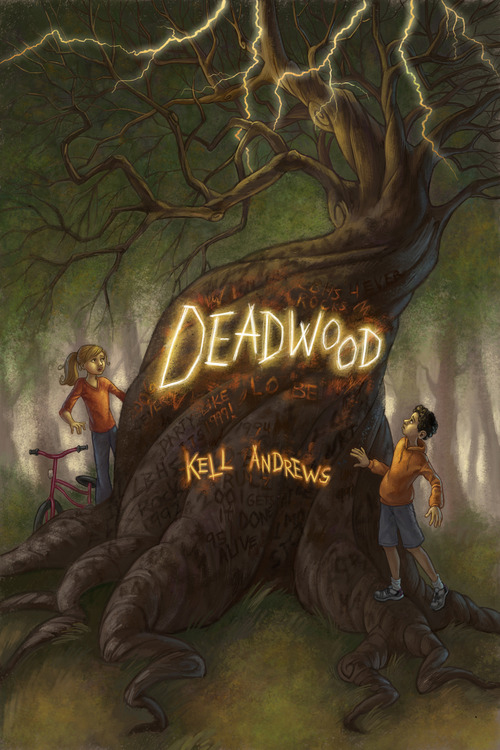
Kell Andrews made her debut with DEADWOOD from Spencer Hill Press. (Hooray, Kell!)


We sincerely wish our readers the best for 2015. May all your dreams come true. Drop us a line and tell us what you've accomplished this year--or what you hope to accomplish next year. Until then, may the Mayhem be with you!

Monday, December 22, 2014

Puzzles by Robert Lettrick

They don't call it world building for nothing.
I once read somewhere that before heading off to battle, the Greeks (I think it was the Greeks, Google failed me) would draw a picture or write a phrase on a stone tablet, smash the tablet on the ground, and then hand a single broken shard to every solider. When the battle was over, the soldiers would regroup and reassemble the tablet, and by this method they were able to identify comrade from spy. I don’t know if this was the first example of the jigsaw puzzle in history, but it’s certainly an old one, and it’s definitely my favorite.

But what do jigsaw puzzles have to do with writing books? In my experience the two are very similar. Reading a novel is a linear process, with a beginning, middle, and end. Unless it’s a Choose Your Own Adventure book (How awesome were they?), the payoff requires the reader to stay on the delineated path. But for many writers, the process of writing a book is not linear at all. Instead it's a lot like assembling a jigsaw puzzle. 

This is author Valerie Cole's cork board. The sticky notes are plot
pieces. It's a great way to map out a novel, because an author can 
move the pieces around as needed until they fit perfectly, just like
a jigsaw puzzle. 
Jigsaw fans are known as dissectologists, and maybe writers should be called that, too. Because in a very real sense, that’s what we do; we dissect our stories, arranging bits of information—characters, locations, motives, dialogue, etc—finding the various ways they connect until the larger picture takes shape. But unlike a jigsaw puzzle, stories aren’t pre-packaged with the finished image printed on the lid. They come in a generic grey box with three words of instruction: “All assembly required” and a warning, “Final image will certainly vary.”

When I write, I start with a situation, create a flexible outline, and then I dive into research. During this early phase, I gather most of my puzzle pieces, although some may come later. I think about the characters, their motives, the twists and turns, and all of the facts I've gathered from research that I hope will give my story authenticity.  I throw all of this information into a pile and eyeball it suspiciously.


Then I take the pieces and I begin to put the puzzle together. In the beginning, it can be overwhelming. There are so many disconnected pieces. This leads to a lot of sitting and staring and contemplating, which is fine (I also spend too much time on Facebook, watching reruns of The Office, and wondering if I picked the right story to invest a year of my life on).


There are instances where I have a hard time finding a piece that fits, and there’s a temptation to force the wrong one into the void, because nature and writers abhor a vacuum.


But I’m here to tell you, it’s okay to give yourself permission to move to another section of the puzzle and continue the work there until the missing piece turns up. Maybe that piece is already in one of your piles, or maybe you'll find it buried in the left field. Whatever the case, as you write more, you'll become more deft at recognizing that elusive piece and other gap-fillers when they present themselves.

Far and away, my favorite aspect of writing is that moment when I’m deep into the puzzle and almost out of nowhere the overall image—the one the puzzle company failed to print on the box—reveals itself. Suddenly, I see with clarity how all of the pieces (the ones I’ve used and the ones still on the sideline), link together into one beautiful, cohesive picture.

It’s the moment when the writer’s instincts (because instincts are all we have to go on in the early stages) are validated, and what follows is a mad dash to the finish. The writer plunks the remaining pieces into place with confidence. It's now clear what they are and where they fit. In his novel On Writing, Stephen King calls this flash of omniscience the overlogic. When the overlogic happens, all of the connections within the story that were previously in the writer’s blind spot come into focus. For me, there’s nothing quite so exhilarating. It’s the best part of my job.

I think of middle grade books with intricate, interweaving plots, like Louis Sachar’s Holes, for example. In Holes there are multiple character arcs running through the book—Stanley Yelnatz, Kissing Kate Barlow, Elya Yelnatz in 19th Century Latvia—and by the end, all of these arcs converge and the reader can see how cleverly and successfully Sachar managed to thread them together. At some point, the overlogic kicked in and Sachar figured out how it all worked. The result is a classic.

As we develop our craft, we’re able to take on more complex puzzles and see them through to completion. If you’re a budding writer, it’s important to understand that writing a book doesn’t have to be a restrictive process. Feel free to move around within your story, tinkering, dissecting, and constructing. Don’t be afraid to try something crazy just to see how it fits. You can always remove that crazy piece later if you need to. Search for connections, keep an eye on your piles and if you’re diligent and stick with it, you'll see the overlogic. 

Writing a novel is like a puzzle in one more way. You shouldn't let either sit for too long or you may have problems finishing it. Maybe you'll get tired of looking at it. Or you may feel the urge to start a new, prettier puzzle. Or maybe you'll lose some of the pieces and the project will never live up to its potential. Case in point, this is Jack Harris. Jack worked on this 5000-piece puzzle for eight years. When he was close to completion, he realized that a single piece was missing. Jack thinks his dog ate the piece. 

Don't be like Jack Harris. Finish your novel before your dog eats it. 

Thursday, December 18, 2014

Jumpstart Your Writing in 2015 by Caroline Starr Rose

I have nothing to share about writing that is earth-shattering. What you’ll read here you probably already know. But like it is with all important things in our lives, it doesn’t hurt to hear certain things more than once. Here goes:


Read widely
Often writers are told to be well-versed in their genre. This is excellent advice, but reading shouldn’t end there. Picking up books in genres other than your own brings freshness to your writing and strengthens what you ultimately create. This nourishes you as a reader, too.

Study craft
None of us ever arrives. Our writing will improve if we continue to read craft blogs and books and take advantage of classes, critique groups, or conferences. Here are a few books I’ve read recently, am working on now, or plan to pick up this next year:

The Art and Craft of Writing Historical Fiction -- James Alexander Thom
Writing the Breakout Novel -- Donald Mass
Reading Like a Writer: A Guide for People Who Love Books and for Those Who Want to Write Them -- Francine Prose
Writing Irresistible Kidlit -- Mary Kole

Take time away from writing
Make sure you are doing things outside of writing. Now that I write full-time, it’s very easy to stay detached from the rest of the world. Make an effort to engage your surroundings, whether that means tuning in to nature as you walk the dog or making a point to get involved in a new activity.

Play with words
I find first drafts terrifying. One way I ease in is to tell myself I’m simply experimenting with language. Give yourself permission to approach writing playfully, whether you’re working on a “real” piece or simply collecting words that pique your interest. Enjoy the rhythm of words, poke at meaning, stretch old metaphors into something new. Your writing will benefit from it.

Avoid the comparison game
This is probably one of the hardest bits of advice to follow but one of the most beneficial to your writerly well-being. There are so many ways to get sucked into comparing, from measuring the number of blog followers you have against a friend’s to tracking the amount of time it took others to secure agents. It’s easy to think once you’ve “arrived” with a book deal, these worries fall away, but they don’t: there will be friends with bigger deals, with more push from their publishers, or better reviews and general buzz. Envy finds us at every level.

Choose to see your writing journey as yours alone. It’s not something anyone can do for you; there’s no way your experience will mirror another’s. Just like we all have something unique to contribute to the literary world, we all will go through different struggles and triumphs.

The only thing you will get out of the comparison game is disappointment.

And to negate everything I’ve said earlier...give yourself permission
In a world where instant information is available at all times and opinions are everywhere, you’re bound to come across conflicting advice on how to draft, edit, revise, submit -- do anything in relation to writing. For some of us, this becomes paralyzing; even if your approach works, you might worry that you’re not doing things right.

Give yourself permission to write in a way that works for you, whether that means writing daily or just on the weekends, editing as you go or waiting until your first draft is done. Though some advice seems to dictate otherwise, there’s no right way to write. Give yourself permission to alter the way you write if what you’re doing now isn’t working. Your patterns, needs, and abilities could change from manuscript to manuscript. Or they might not. And that’s okay.

Want to write to the market? Go for it. Want to try a story that can’t be categorized? Give it a try. You have permission to do as you wish with your writing. While there is no promise of success with this approach, there’s tremendous liberation in letting go of the “rules” we’ve absorbed consciously and subconsciously.

You’ve got a new year ahead of you. How will this affect your writing?

Wednesday, December 17, 2014

Pup and Pokey: Seth Kantner’s newest book (by Paul Greci)


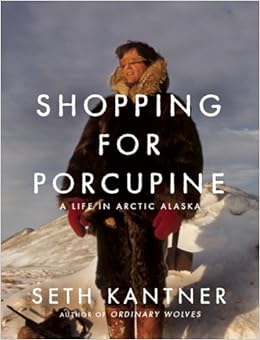
I read and totally enjoyed the first two of Alaskan author Seth Kanter’s books: Ordinary Wolves (2005 Milkweed Press), and Shopping for Porcupine (2008 Milkweed Press). So, when Seth came out with another book this year, I couldn’t resist; I bought it and read it, and loved it!

Pup and Pokey is Kantner's first book for young readers.

Cover copy:

A boisterous wolf pup and an awkward young porcupine are unlikely allies in this tale of friendship set on Alaska's tundra. The two grow up as neighbors, but only through helping each other escape from a trapper do they learn what it means truly to be friends.

Gently inspired by the fable of "The Lion and the Mouse," "Pup and Pokey” teaches young readers about living in the wilderness and the sometimes unexpected connections that arise in our lives. "Pup and Pokey" is the first children's book from acclaimed Alaska author Seth Kantner. With Kantner's storytelling and Beth Hill's original illustrations, "Pup and Pokey "is a touching outdoor adventure story.

ISBN-10: 1602232415
ISBN-13: 9781602232419
Published: University of Alaska Press, 09/01/2014
Pages: 48
Language: English

Recommended Reading Level Minimum Age: 4
Maximum Age: 8
Minimum Grade Level: P
Maximum Grade Level: 3rd Grade

Pup and Pokey would make a great read aloud book in both school and home settings as well as being good for independent reading. Even though the publisher-recommended reading- (ages 4 to 8) and grade-levels (up to 3rd) are on the young side I think this book would hold the interest and generate lively discussion with older readers as well.

A little bit more about Seth (taken from his website):

He's worked as a fisherman, trapper, gardener, mechanic, igloo builder and adjunct professor. His writings and photographs have appeared in Outside, Alaska Geographic, the New York Times, Prairie Schooner, and in other magazines, literary journals and anthologies. He's a former columnist for the Anchorage Daily News and presently writes a bi-monthly dispatch on climate change in the Arctic for Orion magazine. He was born and raised in northern Alaska and his art reflects his love for this land and the animals who live on it, and his belief in the importance of wildness left wild.

Personally, I heard Seth speak at a conference several years ago and then afterwards spoke to him for a few minutes about writing and publishing. He’s a genuine person with a great love for wild places, which totally shines through his fiction and nonfiction. I’ll probably read every book he comes out with in the years to come.

Thanks for stopping by.