Showing posts with label ADVICE. Show all posts

Thursday, April 19, 2018

Writers' Conferences!


Conference season is upon us! In fact, it already started. Last week I had the privilege of attending Kweli, The Color of Children’s Literature Conference in New York City. I was thrilled to attend a master class by THE Angela Johnson, and multiple workshops, panels, and presentations that renewed my creative energy.
I’m getting ready to attend three of my favorite author gatherings in the next few weeks and throughout the summer months (Storymakersin May,WIFYRin June, and the SCBWI National conferencein LA in August). I’ll be part of the faculty at two of them and a participant in the third one, and I wanted to share the things that have helped me in the past to make my time at conferences the most productive, enjoyable, and inspiring experience to keep me going through the rest of the year as I work by myself. 
I belong to vibrant writing communities, but there’s nothing like the energy of attending an event just for MY people. A bunch of people obsessed with reading, writing, and illustrating books for children that truly change the world. People that are usually (not always) a bunch of introverts who’ve only met online and try not to act awkwardly meeting in person for the first time (or after a long time of digital conversations). 
These are the things I can prepare ahead of time to help me cope with the amazingness of conferences:
·     Business cards or another form of sharing my info: Right before I left for Kweli, I dug out my author business cards that I’ve been using for a couple of years now. My contact information hasn’t changed, but my agent switched agencies, and to my horror of horrors, I realized that I’ve been giving out a card with the wrong email address for the last two years. Thankfully I had included several ways people could get in touch with me. Besides email, I included my website info, and my social media handles. For the rest of the summer, and because it’s the first time I’ll attend a conference after signing a book deal, I’ll have postcards with my book info so people can know it’s coming out soon (ish… 2019). Business cards aren’t a must, but they’re great ways to gather contact info of the people we click with when we sit together for lunch, at classes, or outside in a green area taking a break. I’ve met a lot of my friends at writerly events!
·     Getting submission materials ready on time. If I’m part of a workshop (either as faculty or attendee), I like to read my workshop materials ahead of time so that I may be the best help to my fellow workshop attendants. Talking about submissions, make sure you format your materials properly. By this I mean, make sure there’s identifying information such as name, title, page numbers on a cover letter, and every page. Also, when you save your piece, make sure you labeled it in an appropriate way. Remember every person will be able to see the file name and root. Go simple. Your last name and title will suffice (Name.Title.doc) instead of something generic or inappropriate like: firstchapter.doc, workshop.doc, thefreakinglastdraftb*tches.doc. 
·     Going over the schedule and giving myself time to recharge: I love planning my classes, and most times my plans change. Sometimes if I’m meeting friends, I’ll change my mind on what class I’m attending. Sometimes I take longer to arrive to my first choice and when I finally arrive I realize the class is full. Sometimes I need a break. But I like being prepared and knowing ahead of time what my options are. 
·     Remembering to be yourself and keeping in mind why you attend these kind of events: dress comfortably but professionally. Wear comfortable foot-ware. Enjoy the moment. Don’t compare yourself to others. Remember this time is for you to improve your craft, to make connections that will invigorate your writing and your personal life. If you have a pitch session with an agent or editor, remember that they’ve been looking forward to meeting a project to fall in love with, but most of all, they want to help you improve yourcraft. However, meeting and agent or editor shouldn’t be the main purpose of conference attendance. Save every moment, so when you’re at your desk, pounding words on your latest WIP or that tenth revision, you’ll be able to draw from the magical energy of being surrounded by wordsmiths and storytellers. 

What conferences or events will you be attending this year? What are your best tips for newbies and old-timers? Please share in the comments, and if you attend any of the same events I’ll be at, seek me out and say hi! 

Monday, January 29, 2018

Chris Eboch on Write a Book to Save the World – or At Least Yourself #amwriting

In the last year (and a few months), many writers have posted blogs or articles about how they are feeling discouraged, sometimes too discouraged to write. It can be hard to see the value in writing fiction when the world is burning. Other writers face crises in their personal lives, or struggle with depression. Sometimes it's easy to find reasons not to write, and hard to find reasons why you should.

At our January SCBWI Shop Talk meeting in New Mexico, we discussed this issue. How can you feel motivated to write when times are tough? How can you dedicate time to writing when there are so many other important things to do? How can you keep believing that your writing has value, when you're not getting published?

In the Writer Unboxed post Write a Book, Save the World, Bryn Greenwood quotes people describing the book that saved them. For one it was a book that showed someone surviving the Holocaust, letting the reader know she too might survive her dismal life. Another mentioned the first time he read a book where being sensitive was shown as a good thing. For others it was the first time they saw a representation of someone like themselves

When writing for young readers, you never know what effect your book might have. It may be the novel that helps a child fall in love with reading. It could be the book that inspires them to be better, stronger, kinder. My favorite fan letter came from a young reader who said of The Well of Sacrifice, "It inspired me to never give up, just like Eveningstar."

Our books can show kindness and courage. They can help young readers explore different ways of living. They can act as mirrors and windows.

And they can offer escape. Never underestimate the value of escape. Many readers have gotten through terrible times, such as medical treatments or the loss of a family member, by escaping into books.

Saving Yourself

What about unpublished books? If you've never sold a manuscript and are losing hope that you might, you might find it that much harder to keep writing. But the books you write can still benefit you. “If you only have to save one person to save humanity, then saving yourself counts,” Bryn says.

Anne Lamott notes that publication won't heal you – “But writing can.”

I am a full-time writer who needs to make an income, and I have deadlines, which means I have to sit down and write even when I don't feel like it. But most of that work is nonfiction educational publishing. I could give up on writing my own novels. Yet I know I feel better when I'm working on a personal project. It feeds my spirit in a way nothing else can.

If you can't write anything else, keep a journal. Not only will it give you a way to share your thoughts, but it will keep you in the habit of writing. When things improve, or when you're feeling stronger, that will make it easier to get back into writing stories.

So please, keep writing. For the world, for yourself. If you need more advice on how to survive the hard times, check out this article on “How to Stay Sane if Trump is Driving You Insane.”

Anne Lamott adds one more tip: “Almost everything will work again if you unplug it for a few minutes, including you.” It's okay to take a break once in a while.

For more thoughts on how to combine your writing and social justice, see my August post on Art and Activism.

Chris Eboch is the author of over 50 books for children, including nonfiction and fiction, early reader through teen. Her novels for ages nine and up include The Eyes of Pharaoh, a mystery in ancient Egypt; The Well of Sacrifice, a Mayan adventure; The Genie’s Gift, a middle eastern fantasy; and the Haunted series, about kids who travel with a ghost hunter TV show, which starts with The Ghost on the Stairs.

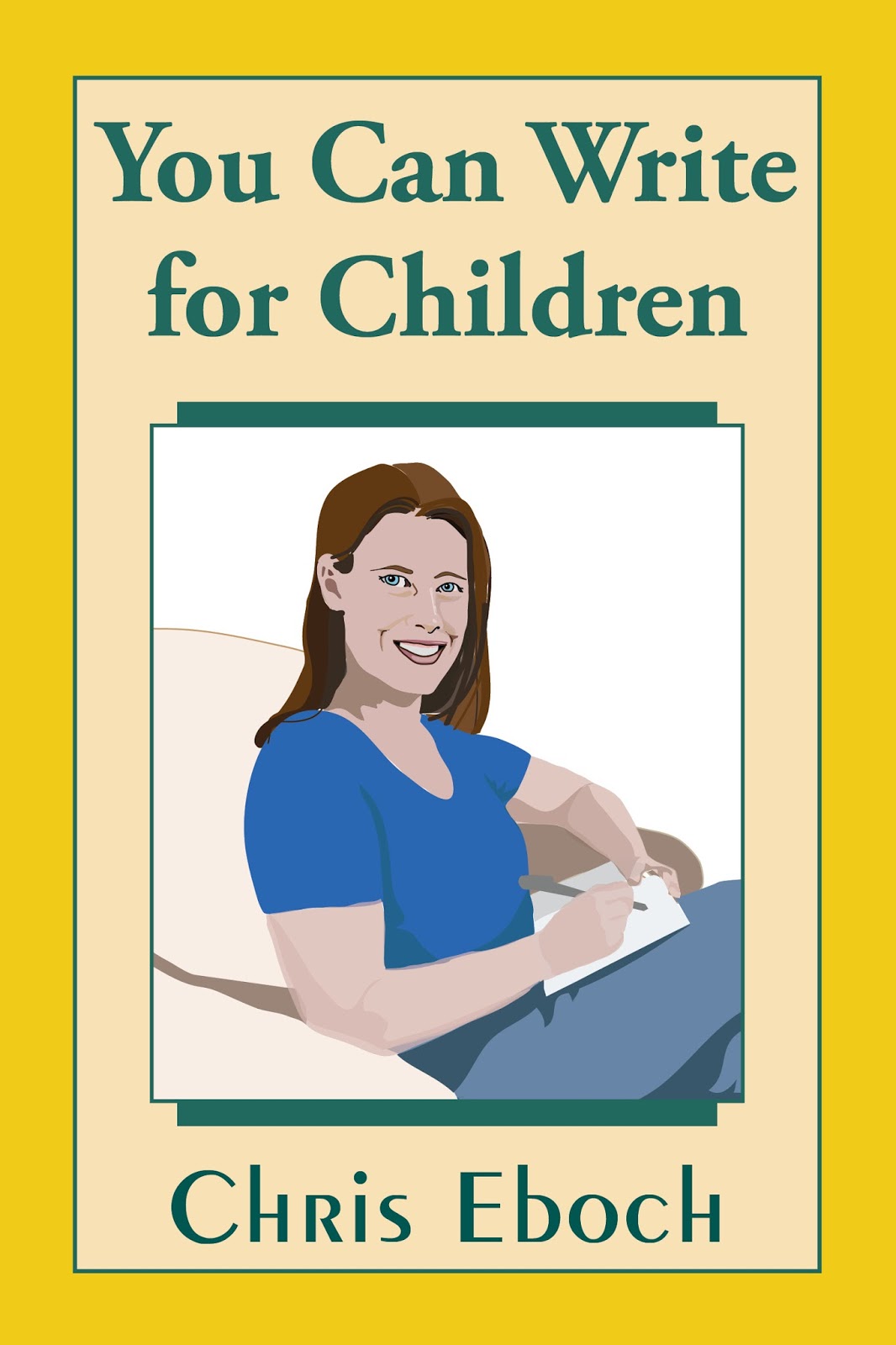
Chris’s writing craft books include Advanced Plotting and You Can Write for Children: How to Write Great Stories, Articles, and Books for Kids and Teenagers.

Learn more at https://chriseboch.com/ or her Amazon page, or check out her writing tips at her Write Like a Pro! blog.

Chris also writes for adults under the name Kris Bock. Kris Bock writes action-packed romantic suspense involving outdoor adventures amidst Southwestern landscapes. Read excerpts at www.krisbock.com or visit her Amazon page.

Thursday, November 3, 2016

When Your Agent Says "NO", by Hilary Wagner


You've battled through what may be the toughest step in your writing career to date. You landed an agent. You have representation, something to be very proud of. Next step: get published. Okay, an equally tough step...correction, even tougher. 

So what do you do when your own agent tells you "no"? In other words, your manuscript isn't clicking with him or her and they don't think your work is ready to send off to editors or maybe your latest manuscript is a complete bust and in their opinion shouldn't be sent at all.
It happens...and it hurts. 

Whether you've been published before or you're still trying to get published, a great agent is going to tell you when your work isn't up to par and should not be sent off to editors. If your agent truly respects you, they're going to tell you the truth no matter what. Agents only get paid when their writers get published, so a candid agent is truly looking after your best interests. The last thing you want is an agent throwing your work against editors' walls, just in the hopes something sticks, and here's why... many times, once and editor rejects a writer's work, they don't want to see work from that writer again. Of course there are exceptions, but why risk it? You've worked far too hard to land an agent, so listen to them, because once an editor from your favorite publishing house gives the dreaded "no", it could mean no forever. 


So, what do you do?

Talk it out with your agent. What were the major issues? Best case scenario your manuscript is salvageable. Perhaps your storyline went meandering in the middle or there's simply too many characters to keep track of. Some of the best books out there were completely rewritten several times over before they made it into print. Worst case, your agent thinks there not much worth saving and your manuscript will never see the light of day. If that's the situation, as much as it might sting, appreciate your agent's honesty, learn from your mistakes, pull yourself up by the proverbial bootstraps and get going on something new. Whether you spent months or even years on a manuscript you need to move on--as hard as that may be--and many times the best books come out of crushing disappoint and a new found fire.

Okay, but despite all of the above your heart is still dead set on getting this manuscript published, even after your agent says it's a no-go. Agents are agents for good reason, they know their craft, and an editor's thoughts will generally echo what your agent is thinking, but that's not always the case, so if you're still sure your manuscript is solid gold, at the very least compromise. Ask your agent if they'd be willing to share with one or two editors before completely letting it go. If feedback comes back similar to what your agent said, thank them profusely for helping you dodge a bullet! 

Bear in mind, even bestselling authors get told no by their agents or editors. It happens all the time. Nobody's perfect!


Long story short, we all want to succeed in this business and in order to do that we need to hear the good, the bad, and the very ugly when it comes to our work. Some of the most well published writers will tell you they've had some stinkers that have never and will never see the light of day, so don't despair. Once you get into your new story, you'll feel you have a new lease on life. 

A writer friend of mine, who is now a published mystery writer, has a wonderful mantra that we all need to follow. "Never give up! Never surrender!" 

Now get out there and write!

Monday, February 8, 2016

Plot-Driven or Character-Driven? Why Not Both! by Chris Eboch

Author Chris Eboch
This post is adapted from You Can Write for Children: How to Write Great Stories, Articles, and Books for Kids and Teenagers, from Chapter 5: Characters.

Some authors prefer to start with a plot idea, while others start with an interesting character. Either can work, but ultimately the plot and character must work together. Let’s start with a look at character development, as it intersects with plot.

A strong story needs conflict. Without conflict, you have one of those “slice of life” episodes that isn’t a real story. But conflict doesn’t just come from dramatic things happening. It comes from the character – what he or she needs and wants, and why he or she can’t get it easily. Conflict comes from a character with a problem or a goal.

Let’s start with a premise: a kid has a math test on Monday. Exciting? Hardly. But ask two simple questions, and you can add conflict.

·     Why is it important to the character? The stakes should be high. The longer the story or novel, the higher stakes you need to sustain it. A short story character might want to win a contest; a novel character might need to save the world.

·     Why is it difficult for the character? Difficulties can be divided into three general categories, traditionally called man versus man, man versus nature, and man versus himself. You can even have a combination of these. For example, someone may be trying to spy on some bank robbers (man versus man) during a dangerous storm (man versus nature) when he is afraid of lightning (man versus himself).

For our kid with the math test, here’s one example: It’s important because if he doesn’t pass, he’ll fail the class, have to go to summer school, and not get to go to football camp, when football is what he loves most. Assuming we create a character readers like, they’ll care about the outcome of this test and root for him to succeed.

Our football lover could have lots of challenges – he forgot his study book, he’s expected to baby-sit a sibling, a storm knocked out the power, he has ADHD, or he suffers test anxiety. But ideally we’ll relate the difficulty to the reason it’s important. So let’s say he has a game Sunday afternoon and is getting pressure from his coach and teammates to practice rather than study. Plus he’d rather play football anyway.

We now have a situation full of potential tension. Let the character struggle enough before he succeeds (or fails and learns a lesson), and you’ll have a story. And if these two questions can pump up a dull premise, just think what they can do with an exciting one!

Fears and Desires

As that example shows, conflict comes from the interaction between character and plot. You can create conflict by setting up situations that force a person to confront their fears. If someone is afraid of heights, make them go someplace high. If they’re afraid of taking responsibility, force them to be in charge.

For example, my middle grade fantasy The Genie’s Gift is set in the fifteenth-century Middle East and draws on the mythology of 1001 Arabian Nights. It could have been simply a magical adventure tale, but the main character gives the story depth. She is anything but the typical swashbuckling hero:

“Thirteen-year-old Anise, shy and timid, dreads marrying the man her father chooses for her. Her aunt tells her about the Genie Shakayak, the giver of the Gift of Sweet Speech, which allows one to charm everyone. Anise is determined to find the genie and ask for the gift, so she can control her own future. But the way is barred by a series of challenges, both ordinary and magical. How will Anise get past a vicious she-ghoul, a sorceress who turns people to stone, and mysterious sea monsters, when she can’t even speak in front of strangers?”

Because Anise is so desperate to reach her goal, she tackles challenges far beyond her comfort zone. This makes the dramatic action even more dramatic, while providing a sympathetic character and a theme about not letting your fears stop you from achieving your dreams.

You can also create conflict by setting up situations that oppose a person’s desires. Sometimes these desires are for practical things. In my middle grade mystery set in ancient Egypt, The Eyes of Pharaoh, the main character is a young temple dancer whose one goal is to win an upcoming contest. When her friend disappears, she has to decide if winning the contest is really more important than helping a friend.

Perhaps your character simply wants an ordinary life. In my Mayan historical novel, The Well of Sacrifice, Eveningstar never dreams of being a leader or a rebel. But when her family, the government, and even the gods fail to stop the evil high priest who is trying to take over the city, she’s forced to act. The reluctant hero is a staple of books and movies because it’s fun to watch someone forced into a heroic role when they don’t want it. (Think of Han Solo in Star Wars.)

To build conflict:

·     Start with the character’s goal. Create conflict by setting up situations which oppose a person’s needs and desires.
·     What does your main character want? What does he need? Make these things different, and you’ll add tension. It can be as simple as our football player who wants to practice football, but needs to study. Or it could be more subtle, like someone who wants to be protected but needs to learn independence. (Or the reverse, someone who wants independence but still needs to be protected. Those two characters could even be in the same story. Life is complex, with many shades of gray, and books can explore that.)
·     Even if your main problem is external (man versus man or man versus nature), consider giving the character an internal flaw (man versus himself) that contributes to the difficulty. Perhaps your character has a temper, is lazy, or refuses to ever admit she’s wrong. This helps set up your complications and as a bonus makes your character seem more real.
·     Your character may change or grow as a person during the story. This is called a character arc. A character who changes is usually more interesting than one who does not. However, growth does not always mean a reversal of attitude. The growth can come from reaffirming what the character already knew. For example, a child could know what is right but struggle to do it. In the end he does what is right, growing by following and reinforcing his beliefs.
·     A character’s growth can reflect your theme, by showing what the character learns.
·     Before you start, test the idea by considering different options. Change the character’s age, gender, or looks. Change the point of view. Change the setting. Change the internal conflict. What happens? Choose the combination that has the most dramatic potential.
·     The conflict must be important enough to sustain the story, and it must not be too easy to solve. This will vary by story length and readership age group.
·     It should take more than one attempt to solve the problem – three tries works well for shorter fiction. For longer fiction, add more attempts, or have each attempt made up of several parts.
·     To build original plots, brainstorm 10 possible things that could happen next. Pick the least likely, so long as it makes sense for the story.

Some writers start with plot ideas and then develop the character who’ll face those challenges, while others start with a great character and then figure out what he or she does. Regardless, remember to work back and forth between plot and character, tying them together with conflict.

You Can Write for Children: How to Write Great Stories, Articles, and Books for Kids and Teenagers offers an overview on writing for young people. Learn how to find ideas and develop those ideas into stories, articles, and books. Understand the basics of character development, plot, setting, and theme – and some advanced elements, along with how to use point of view, dialogue, and thoughts. Finally, learn about editing your work and getting critiques.

You Can Write for Children: How to Write Great Stories, Articles, and Books for Kids and Teenagers is available for the Kindle, in paperback, or in Large Print paperback.


Note: If you order the print or large print version from Amazon, you can get the Kindle version as a free add-on. You Can Write for Children includes many links to additional resources; in the Kindle version you can click to go directly to the websites or blogs listed. If you don't have a Kindle, download a free Kindle app for your computer.

Friday, July 17, 2015

Rules For Success As A Writer by Steve Bramucci


Every year, someone writes a think piece about how MFAs are a waste of time because writing can't be taught, or maybe it's that writing shouldn't be taught because there aren't enough book deals out there and we're all living a pipe dream, or maybe it's that...actually I don't know what these think piece writers say after the first two points. By then my eyes have glazed over and rolled into the back of my head.

Some writers still reside in the camp of people who think talent is "as natural as the pattern that was made by the dust on a butterfly's wings," as Hemingway once said of Fitzgerald.

To which I respond with another Hemingway line, the last words of The Sun Also Rises, "Isn't it pretty to think so?"

It is "pretty" to think that talent is innate. But it's definitely not logical. Everything can be taught, every skill can be improved, and practice can close any "natural talent" gap at a scary-quick rate. How precious we writers must be to think that brain surgery and ballet can be learned, but that our beloved art is inborn. I won't argue about this anymore because people who take time to string together words about who is and who isn't a writer bore me immensely. Lines in the sand that separate creative people from one another are the one thing that I scoff at unapologetically -- and I hate scoffing!

But enough of this rant! If it's success you seek, I have the rules to achieving it. There are others...but you already know them.


  1. Be an age. It doesn't really matter what age. I recommend somewhere in the 3-99 range. Anywhere in that 96-year span should be fine. The guy from The Stranger essay thinks you have to make it when you're young but that nonsense is counteracted by loads of examples. Including a little someone named Raymond Chandler who wrote some of the best detective novels in the history of the genre or Toni Morrison, who wrote her first book at 39. 
  2. Make marks on a document. Use a Mac or a PC or a pencil or a crayon. George R.R. Martin uses a computer that runs DOS -- so don't sweat it if your laptop is a year old. I remember being at big waterski tournament and telling my coach that I was thinking about buying a new ski. He looked at my old ski, lying in the grass, and said, "World records have been set on that ski. Have you set any of them?" I shook my head and the coach patted my shoulder. "When you do," he said, "you can think about a new ski."
  3. Work hard. This doesn't always mean you have to bang the keyboard 24-7. The ever-lovely Robin Benway once said to me at lunch, "We're writers, alive in the world, this is part of our work." If work always looks like sitting at a desk, you'll become the sort of writer who writes about writing or writes essays about who can and can't write -- neither of which are things that I personally like to read. I believe firmly in the following video, with the word "work" being something that we each have to define for ourselves. 
  4.   Be grateful. For God's sake be grateful. When good things happen say "thanks," be excited, and allow yourself room to smile. As a wise man once taught us, "gratitude reciprocates." 
  5.  Have fun. We've been told writing is thankless, that it'll leave us broke, that it's the hardest job on earth, and yet we have to compete with a million new writers every year who want to take the hardest job from us. We get told we can't make it by people writing think pieces who are also surely afraid that they won't make it. All of this makes writing pretty daunting. So if it's not fun, if there's no joy in it...then the juice might not be worth the squeeze.
Those are my rules, but what do I know? I went to grad school, my first book is being released when I'm 37, and I don't think I was born with any particular talent.

But here I am, still writing.


Steve Bramucci is a full time writer and the managing editor of Uproxx.com's Life section. His first book, Ronald Zupan and the Pirates of Borneo, will be released in January, 2017.