Showing posts with label novel writing. Show all posts

Thursday, October 13, 2016

5 Lessons I Learned from NaNoWriMo by Caroline Starr Rose

It was with a bit of reluctance I decided to join National Novel Writing Month in 2013. For those of you unfamiliar with NaNoWriMo, it's a month-long challenge to produce 50,000 words on a new piece of writing. (Chris Eboch ran an excellent post on NaNo earlier this week.) I'd tried NaNo in 2009 and failed miserably. I never, ever was going to do it again. But that fall things came together in such a way that joining in made sense:
  • My verse novel, Blue Birds, was off with my editor
  • I was at the point with my research for a new novel that I was itching to get started
  • I read this blog post by Darcy Pattison
  • My critique partner, Valerie Geary, promised me peanut butter cookies if I made it through
I didn't sign up officially. Instead I created a contest of one I called Fake-o NaNo*, where I aimed to write 1500 words a day six days a week. I missed one day, had a good number of sessions I didn't hit 1500 (and a couple I wrote more), and felt finished with the draft a few days before Thanksgiving -- the exact day Blue Birds "flew" back to me in a big padded envelope.


Here are five things I learned from the experience:
  1. Slow and steady is my typical writing mantra. But sometimes fast and furious is just as important. Typically, I write verse novels and picture books. It's a sloooow process, especially when I'm initially drafting. But this novel was in prose, something I hadn't tried for seven or eight years. Throwing words on a page was a very liberating, non-committal way to reintroduce myself to this form. With my first NaNo attempt, I got stuck during the first week and decided to stop. This time around was no different. I faced the same impossible rut one week in. But I kept moving, mainly by sticking to the next lesson I learned.
  2. Sometimes you just have to write about the writing. While I'd kept a journal for this book since the previous spring, I still had a lot of exploring to do. Many days I found myself writing about what was working in the story and what wasn't. Things I'd have to look further into, characters I needed to add, relationships I needed to develop. Really, the draft became a running commentary, an in-the-moment chance to reflect on my ideas (or lack of them).
  3. Practice holds the fear at bay. The creative process is a scary thing for me, and beginning (and finishing) a first draft is my biggest challenge. By holding myself to a daily goal, I was able to break through some of that fear by simply showing up and doing the work.
  4. Embrace the mess. The "draft" I finished with was most definitely the messiest, worst thing I've ever written. But it was such a great experiment in getting words down, feeling out characters, and sometimes learning exactly what I didn't want to write about (by first doing just that). Knowing I could toss it all took me in some directions I might never have discovered if my approach had been more careful.
  5. Did I mention the cookies? Committing out loud to a friend kept me honest. And the cookies were a great pay off!

In February this NaNo novel hits the shelves as Jasper and the Riddle of Riley's Mine. As I think back to that draft I created three Novembers ago, the finished book holds little in common with it. But it was the starting place my story -- and my character -- desperately needed. Without that month of steady work, Jasper wouldn't be the boy he's become. I'm sure of that.

What are your plans for National Novel Writing month?


* I hadn't heard of the so much fancier "Faux NaNo" at the time, which I don't think is an official thing, just another name for a make-your-own version of NaNoWriMo.

Thursday, September 29, 2016

Writing a First Draft by Paul Greci

Tomato Seedlings


Right now I’m about three quarters of the way through a first draft. I’ve been writing most mornings before I go to work, usually putting about 750 to 1000 words on the page. (I've also been harvesting our garden, but more on that later.)

For every manuscript I’ve written the drafting process has been somewhat different, but I do try to keep a few things in mind when I’m working on a first draft.

----Stay uninhibited, i.e., don’t let my brain get in the way of my heart.

----If I have an outline I use it as a guide—not a detailed map. Give the story room to grow.

----If I know the ending I’m writing toward, and hopefully I do, I want to stay open to different ways of getting there.

-----I give myself permission to do “some” research as I see needed to get information to move the story forward. I don’t want to get bogged down, but if I need to know something that’s going to influence the direction of the story, then I usually stop and do the research instead of just making a note.

-----I reread the chapter I’ve written the previous day and make changes that jump out at me before writing the next chapter.

Like the photo of our baby tomato plants above, writing a first draft is like tending seedlings. There will be plenty of time for weeding, thinning and pruning (and hopefully harvesting) later, but right now it just needs water, sunlight, soil, and room to grow.

Part of our tomato harvest.

 What are some of the things you do when writing a first draft?

Paul Greci is the author of Surviving Bear Island, a 2015 Junior Library Guild Selection and a 2016 Scholastic Reading Club Selection. 

Friday, January 24, 2014

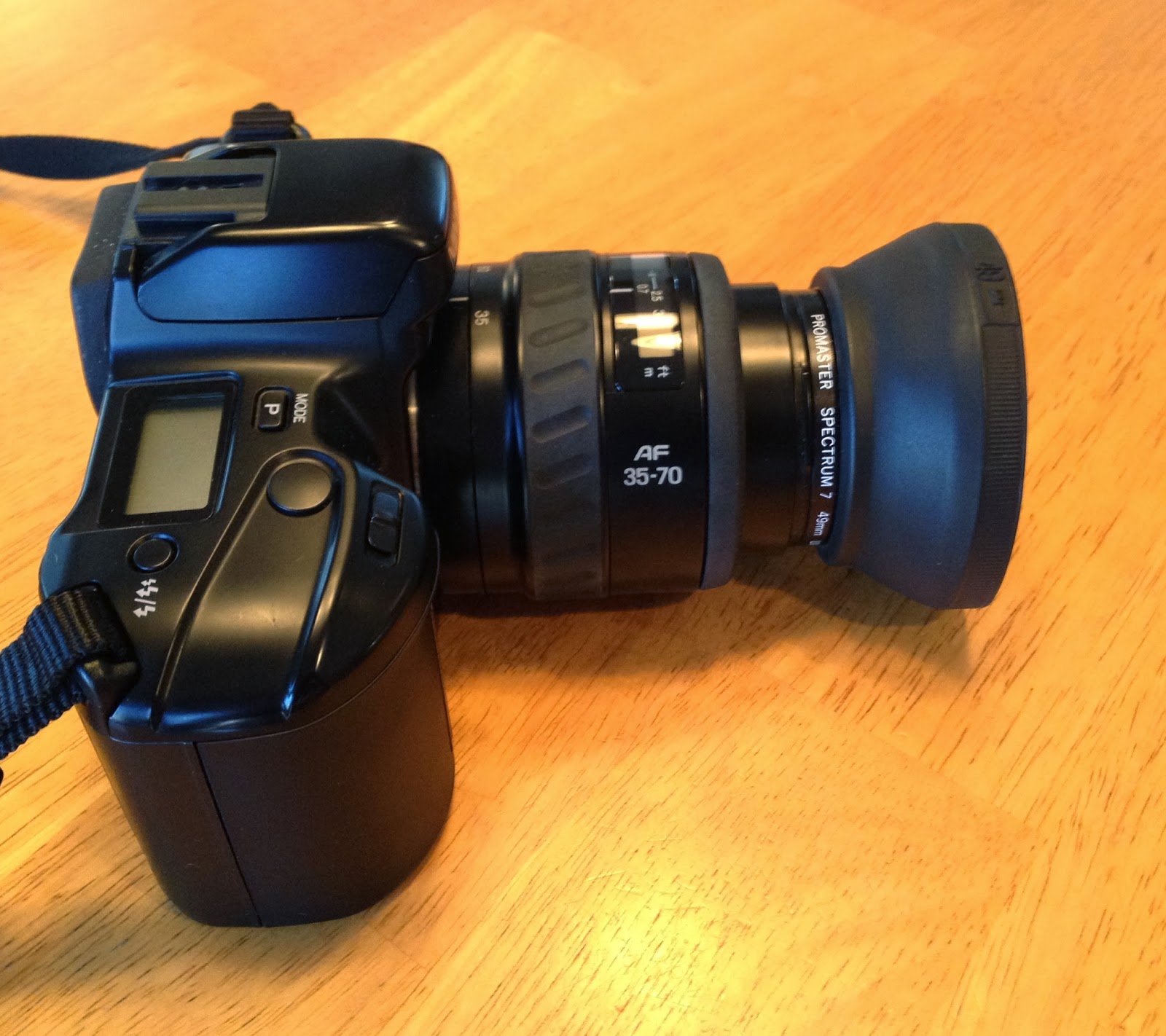
Looking Through the Lens: How to Craft Your Story One Snapshot at a Time

Writing a novel is a daunting task. Facing the enormity of what you are setting out to do can cause you, the writer, to lose yourself in the midst of your story, or to abandon it altogether. Let's face it, the blank page is a scary place, a snow-covered field with not a single footprint to disturb it. We take our first few steps, chin up, shoulders squared, eager to blaze our way across the expanse... but there are a LOT of blank pages between us and that final sentence of our novel.

I think that many writers get caught up in pre-determining their story acts, or plot points, or where chapter breaks are, or parts, or even if you are a scene writer, where those scenes fit into the mechanical construction of your novel as a whole. It's easy to slip into a macro view, where you have one foot in the scene and one foot ready to step into the next. Sure, it's important to know how scenes link, and to be aware of transitions and arcs, but I contend that the writer who recognizes and writes the quintessence of each scene will find his story does this naturally.

There's a moment in the new Ben Stiller movie, "The Secret Life of Walter Mitty," where elusive freelance photographer, Sean O'Connell (Sean Penn) is camped out on the side of the Himalayas. He's waiting to take a picture of a snow leopard, what he calls a "ghost cat" (due to its seemingly innate ability to avoid being seen or captured on film). Sean is sitting there, has been sitting there (for days maybe), watching, waiting, observing a particular spot through his telescopic camera lens. When the cat finally appears, Sean just watches it. He doesn't take the picture. He captures it in his mind's eye. When Walter asks him if he's going to take the picture, the conversation goes like this:

Walter Mitty: When are you going to take it?
Sean O'Connell: Sometimes I don't. If I like a moment, for me, personally, I don't like to have the distraction of the camera. I just want to stay in it.
Walter Mitty: Stay in it?
Sean O'Connell: Yeah. Right there. Right here.

(Dialogue courtesy of IMDB)

In this movie, Walter is trying to find one misplaced negative. Number 25. The quintessence of life. One shot that captures the perfect embodiment of Life Magazine. Ok, so what does this have to do with writing? It struck me that I could approach writing the same way. If I could approach each scene as a complete stand alone snapshot, a truly encapsulated moment, without the distraction of the rest of the moving parts, I could put together a novel that ensures every part of the story has been written with my absolute best approach. If you allow yourself to focus in on only that one scene, study it, appreciate it, find the quintessence in it, the beauty, the emotional resonance, then you can put together a novel. In order to write a good story, a story that will impact your readers, leave it lingering in their heads and hearts, you have to be emotionally attached in some way. You have to invest a piece of yourself in the story. Like Sean O'Connell, you have to write for you first, personally. Why are YOU writing THIS story. If you can write each scene, each glimpse through the lens for you, first, you'll give your readers something worth reading.

So, make yourself a list of potential shots. Camp out on the side of the mountain and watch your scene.
Spend time with it and truly understand the quintessence of what you are looking for, what you are looking at. Do this with each scene, each "shot." And then, at the risk of total mixed metaphors, you'll have a series of polished pearls that, together, will string into a complete necklace: your novel.

One snapshot at a time. One moment that leaves its mark on you. One scene, in a series of eventual scenes, that says, "I am Number 25."

To echo Sean O'Connell, find that moment, be in it, and "I trust you'll get it where it needs to go..."