Wednesday, September 26, 2012

Skypetastic

Well, it's official.  I've gotten my feet wet in the publishing process, and now, nearly six months out, I'm toweling them back off again and sorting through exactly which puddles I want to splash through from here on out.  Storybound launched in April 2012, and, true to the testimonies of those who have gone before, releasing the first book is quite the whirlwind of obsessive anxiety, innumerable bookmarks and other sundry self-promoting bits, and blog posts, interviews, and more blog posts.  I'm not complaining, mind.  It was quite the ride.  But now that things have slowed, I'm ready to re-evaluate the process and determine which components were truly helpful, which I actually enjoyed doing, and which sent my stress-meter through the roof.

Not to worry, this will not be an incredibly long post outlining all the "thou shalt nots" for the debut author.  Instead I want to focus on author visits.  In the year preceding my launch, I was fortunate enough to meet up with some other local debut authors, and that group (with the fittingly apocalyptic title of "The Harbingers of Doom") was a fabulous support as well as a great resource for cooperative events.  We did several local appearances together which not only maximized the numbers of attendees but cemented our friendships and the capacity for mutual angst-ing over the entire publishing process.

That being said, I'm not altogether sure the events were "successful".  While most drew on average ten to fifteen people (excepting the dreaded event where we had one - yes ONE - attendee.  Ugh.), it seemed that we primarily reached other local writers, friends of friends, and the occasional very welcome MG or YA reader.  That in itself was lovely, of course, because what author in her right mind doesn't enjoy chatting books and writing with other people who love to talk books and writing?  But the reality of being a midlist debut author is that you haven't yet build a readership.  In fact, word is just seeping out about your book, and the odds of someone who has actually read it coming to a local event in the first months after launch are very slim indeed.

So while author events are fun (there's nothing like being handed a fat stack of your own books to sign) and provide the fabulous opportunity to connect with booksellers and librarians (you wonderful bookish folk, you!), they were not opportunities where I connected with readers of Storybound.  Enter Skype, that heretofore mysterious term I had heard thrown around by my expat friends but had ignored until now.

A few weeks ago, I was invited to do a Skype author visit with the kids' book club at Changing Hands Bookstore in Arizona.  After accepting the invitation, I fumbled my way through the online Skype tutorial, and at just the right moment, had a lovely virtual chat with kids who love books, and, even more thrilling, had read Storybound.  Perhaps I'm several years too late, and those of you who don't dwell in the 1990s where I bide my time in a wifi free and Luddite existence are yawning and tabbing over to the next blog post in your reader.  But for the rest of us, for those who muddle their way through the latest online trends, this is one worth checking out.  The savvy folks over at skypeanauthor have even set up a virtual network to connect interested authors with teachers, librarians, booksellers, and, ultimately, readers.

I, for one, am sold.  Not only is the virtual author visit an easy way to connect with specific readers, but it provides a welcome informality that seems fitting for a middle-grade event.  While I may be stumbling my way through the Skype menu, my middle-grade readers are not.  This is old hat to a generation that keeps in touch with grandpa via a regular Skype date or checks in nightly with mom when she's on a business trip.  I found the energy and enthusiasm of the kids to be a welcome surprise, and the necessary brevity of a virtual event kept my presentation streamlined.  Without question, I'll be adding Skype visits to my newly-revised list of author "Must-dos" before Story's End launches next year.


What about you, Mayhemers?  Authors, what are your favorite ways to connect with readers?  And readers, have you ever participated in a Skype visit?

Monday, September 24, 2012

THE NEW ADVENTURES OF TRACY BARRETT


Tracy Barrett has fans everywhere. Some of her biggest might be in Cairo, speaking from experience. My youngest, Cyrus, has gobbled up her entire MG series, The Sherlock Files, and I have joined him. We've created our own little book club that has expanded to an embrace of the original Conan Doyle Sherlock Holmes stories. What more can any author ask? Inspiring the young and the not-so-young to love her books and those she touches in her writing. In addition to the Sherlock Files, Tracy has other books well-loved by her readers. Book lovers should check out her history and myth-inspired works, like King of Ithika and Dark of the Moon,as well as Anna of Byzantium. As an author and  professor and adventurer, Tracy Barrett is an inspiration. She is joining us today.

WELCOME, TRACY!

Thank you for inviting me to be a guest here, Eden!

In the fall of 1984, with my dissertation on a medieval Italian poet half-finished, I accepted a one-semester teaching job at Vanderbilt University, filling in for a professor of Italian who was going on leave. Just one semester.

In the spring of 2012, I finally said “good-bye” to that job. In the meantime, I finished my dissertation, and taught every Italian class at Vanderbilt from 101 through literature and civilization. I never sought tenure, preferring to spend my weekends and summers raising my children to writing academic articles. Later, I also discovered a love of writing books for young readers.
                          

I always worked hard, but during my last year at the university, it was non-stop. When I wasn’t teaching or prepping a class, I was writing. When I wasn’t doing either one, I was climbing the steep learning curve of my new volunteer position as U.S. Regional Advisor Coordinator for the Society of Children’s Book Writers and Illustrators, a post I accepted a year before I resigned from teaching. Seven days a week, all day long, I worked.

When the day job ended, at first it was hard for me to take time off. While I’ve never believed that you have to write every day—there have been many days, even weeks, when I didn’t write a word, and I managed to publish nineteen books in eighteen years—now I didn’t have an excuse not to. Classes started without me. The SCBWI learning curve smoothed out. I have no syllabi to put together, no book orders to place, no tests to create and then grade, no faculty meetings to go to (yay!), no kids at home, a husband who’s retired, a self-sufficient cat (is there any other kind?), and an elderly dog who sleeps most of the day.

So I had no excuses. If I wasn’t going to write more than I used to, why did I quit my day job? After all, in a list of best day jobs for writers, The Writer magazine (August, 2011) listed “college professor” as no. 1. Had I made a terrible mistake in quitting? To prove that I hadn’t, I kept my butt glued to my desk chair. I started four (!) new projects, hoping one of them would grab me. All summer I felt guilty every time I left my home office.

As the leaves turn and we’re finally getting some relief from the heat that has blistered Middle Tennessee for months, I’m discovering that I have to find a new pattern for this new season of my life as well. I’ve narrowed my four projects down to two. I turn off my computer before dinner. I’ve declared Tuesdays “no-work” days: I catch up on email, read my friends’ Facebook posts, knit, read for pleasure (what a concept), go to a matineĆ©—anything but write or revise. Research is permitted if it means reading a book that I would read for pleasure even if it weren’t useful for one of my works in progress. If I get a brilliant idea for something I’m working on, I’m allowed to write it down—as long as what I write fits on one standard Post-it. And usually, the next day it doesn’t seem so brilliant after all.


I’ve lost the social life that used to surround me at the university, so I don’t turn down any invitations. If a friend asks me to lunch, I go. I still organize monthly gatherings of non-tenure track faculty and attend weekly get-togethers at a local pub with another group of friends. I’m taking advantage of travel that I couldn’t do previously because of conflicts with the academic calendar.

Since I started this schedule, I find that I’m much more relaxed, and paradoxically, more productive. I finished and revised a manuscript that was a loooonnng time getting done, and revised another one. I’ve made nice headway on the two new projects.


I expect to fine-tune my new “season” as I go along, but for now, this is what works for me. If you’re afraid to take time off because “a writer writes every day,” give it a try. If the thought of not touching your computer in the evening gives you hives, grit your teeth and see if you can do it. You can always go back to your old schedule. But you might just find that leaving your work primes the pump, and maybe you, like me, will be a better writer and a happier person for doing it.

Bio:
Tracy Barrett has written nineteen books, both fiction and nonfiction, for readers in elementary school through high school. She loves history and mysteries, which are combined in her Sherlock Files series, which has been translated into three languages. The first book in the series, The 100-Year-Old Secret, has been nominated for nine state awards. She also loves Greek myths and has written two books that retell Greek myths in new ways, King of Ithaka and Dark of the Moon.  She lives in Nashville, Tennessee, where she blogs at Good-Bye, Day Job!

DEFINITELY VISIT:

Friday, September 21, 2012

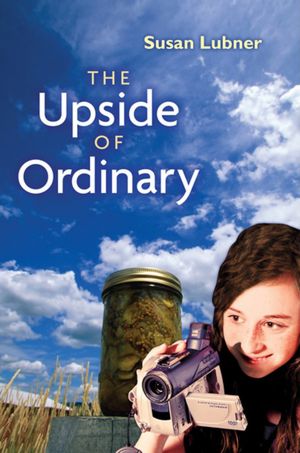
The Upside of Ordinary by Susan Lubner


The Upside of Ordinary by Susan Lubner (Holiday House; October 1, 2012) 
(Project Mayhem received an ARC from the author for review.)

Hi, Mayhemer Michael G. here. Thanks for joining me as I rave about this debut Middle Grade novel from writer Susan Lubner. (She's pubbed by Holiday House, who also publish Hilary and Dawn--so there's a lot of Mayhem love to go around.)

First, here's the story (from the Holiday House website): 


Jermaine Davidson wants to be famous: limo-riding, camera-flashing, crowd-cheering famous. She decides to become the first eleven-year-old producer and star of a reality TV show about her life. Her family quickly tires of her following their every move, filming them night and day. But life around the Davidson house is dull, so Jermaine starts staging events to elicit more drama, excitement, and humor. Her unbridled ambition leads her to alienate her best friend over a disastrous make-over episode, send her arachnophobic mother packing, turn an emotional family crisis into a tacky mystery segment, and ruin her mother's chances to win the annual pickle palooza. Filled with remorse, Jermaine turns her talents to making amends and in the process learns the upside of being part of a loving but ordinary family.

 My Five Favorite Things about the novel:

  1. A strong character arc. Jermaine is a completely believable preteen. She is so determined to win fame, that she stages some appalling stunts to make her reality show more exciting. But as events begin to snowball, she realizes the pain she's caused, and takes steps to make amends.
  2. A strong supporting cast. From Jermaine's older sister, Zelda--to her parents, aunt and uncle, and best friends--Susan Lubner has created a tremendous ensemble. I found myself nodding at the reactions of Jermaine's mom and dad to her escapades--and could totally believe the anger Ro (Jermaine's best friend) feels when she ends up with hacked-up hair.
  3. Believable use of modern technology. I know, I know. Writers struggle with all the modern gadgets and gizmos available, and how to incorporate them effectively in a narrative. Susan Lubner's decision to use a video camera to record all of Jermaine's stunts is skilfully done.
  4. Effective use of 1st Person, Present Tense. You hear a lot of grumbling from writers and publishing people about this narrative strategy. When done poorly, it can indeed fall flat. But it works wonderfully here, for a character who lives in the moment.
  5. A satisfying ending. I won't give it away, but let me know after you read the novel yourself if you thought the ending was as satisfying as I did. (Hint: the competition result.)
  6. Bonus Favorite Thing: Pickles. What more can I say? Crunch. Yum.
Susan Lubner
Now, I'm honored to be able to share the short interview I had with Susan Lubner, titled Fabulous Five questions:

1) You published several picture books before you wrote THE UPSIDE of ORDINARY. What made you try your hand at middle grade? Really it was just that I had this idea for the novel and it wasn’t something that was going to work for a picture book topic-wise. I was actually a bit nervous to attempt to write a whole novel, the process is so different, but I was excited by the new experience and challenge, and I enjoyed it!

2) Your main character's name is Jermaine--and she's 11. Where did you come up with that name? When I first started writing the story I was going to have the parents be big Jackson 5 fans. But I changed my mind about that as I went along …I wasn’t sure my readers would be that familiar with the group and it didn’t seem to be a necessary part of the storyline. But I love the name Jermaine (and okay, I love Jermaine Jackson too!) so I decided to keep that in the book.

3) Like Jermaine, are you a fan of reality TV? If so, what shows do you like? I do like reality TV. I like the “talent” shows (American Idol, Cupcake Wars, Iron Chef) and so do my daughters and we watch those together. I don’t want to throw myself under the bus by admitting to a few others I enjoy (ahem…housewives…). I generally record those shows and then “allow” myself to watch them when I am folding laundry or working out  on my treadmill.

4) Do you LOVE pickles and HATE spiders as much as Jermaine's mom does? YES and YES!!! I crunched my way through a lot of pickles while writing The Upside of Ordinary. and the habit seems to have stuck.  I used to reach for a stash of M&Ms when I worked and needed a break or had writer’s block. Now I go to the fridge for some pickles! As for spiders…just typing the word gives me the shivers.

5) We can't wait for another book from you. What is your next project? I finished a chapter book that I am about to revise (it may go from chapter book to middle grade novel…) and I am just polishing up a picture book manuscript that I will be sending off to my editor very soon.

Thanks so much, Susan! 

You can learn more about Susan Lubner and her writing on her appealing website. She's also newly on Twitter @Slubner, so go follow her there.

BIG BONUS: For every comment, you have the chance to win a copy of THE UPSIDE OF ORDINARY after its release on October 1st. Bonus entries will be given for tweeting (#PMGiveaway) and/or mentions on Facebook. International Entries welcome. Winner will be announced on PM on Thursday September 27th.

Wednesday, September 19, 2012

Books are like Blue Jeans


I had a pair of green jeans in high school. I thought I was pretty cool.

I think I've figured it out. When my first book first hit the shelves, I'd get very upset whenever I read a review that was, well, not so nice. It really used to hurt me that someone didn't like something I put my very heart and soul into. It's like calling your child ugly or something.

Mom jeans rocked 90210!
Since then, I've learned to let that stuff roll off my back. If it's bad, it's bad, and there's nothing you can do about it--or at least nothing you should do. You may have noticed over the last couple years, there have been several author online meltdowns, wherein an author gets a bad review on goodreads or someone's blog and takes out their anger on the reviewer and all sorts of mayhem follows. I don't need to tell you that's not a wise thing to do for several reasons, but I do get it. I understand how a writer can feel personally injured after reading a scathing review. It's never fun. 

All I can say is, wow, just wow.
So, for any of you out there who have books available to the public and have gotten bad reviews, even nasty ones, or any of you who've gotten a rejection letter or two or three or a hundred, maybe try to think of it in these terms: Books are like blue jeans. If ever there was one thing in a person's closet (male or female) that is hard to buy and open to wearer interpretation it's blue jeans. Never in my life have I tried on such similar articles of clothing and looked so bad or so good (or so ridiculous) from one pair to another. It's almost as if the jean gods are playing tricks with the mirrors. These jeans make you look hippy, these jeans make your butt look big, these jeans make you look like you have no butt, the list goes on and on. Well...books are like that too.

Yeah...never gonna happen--NEVER!
I've tried on jeans from top designers, willing to shell out the cash to get the look of jean awesomeness I'm hoping for. I've bought the exact same pair of jeans my friend looks great in, only to find out, on me, not so great. I've bought cheap jeans, vintage jeans, boys' jeans, still without much luck in the "you are rocking those jeans!" department. Okay, I'm sure by now you're starting to get my point. Books are very much like blue jeans. What I think is a top ten book, may be so utterly boring to you, you want to hurt yourself at the thought of reading it and what you think is the greatest achievement of literary genius ever written, I may think is about as exciting as forensic accounting. 

Does he know we can see his undies?
We don't all like the same things, we just don't. It's human nature. So the next time your partial manuscript gets rejected or you read a biting review about your latest middle-grade novel, don't sweat it! At least it doesn't make your butt look big! ;)

Create as though there are no Critics
Amen to that!


Thanks all!

Hilary

Monday, September 17, 2012

On Persistence and Plowing

I love to hear author's publication stories. Here's mine.

It was 2004. While driving to meet my writing group, I happened to catch an interview on NPR with Adrienne Young, a folksinger just starting out. She talked about her first album, inspired by some advice she’d gotten while struggling to make it as a musician:
If you want to do this with your life, stay focused and see this through. You’ve got to plow to the end of the row, girl.
That simple phrase – plow to the end of the row – was enough to push Adrienne to continue. It became the title of both her album and lead song.

I can’t quite explain what that interview meant to me, hearing an artist choose to create despite the struggle, to push against fear and sensibility and make it “to the end of the row.” I’ve carried this image with me for years, the plant metaphor standing in for artistic endeavor, the plow the unglamorous slog needed to dig deep and make it to the end.

Sometimes I find it funny I’d choose a profession so bent on forcing me to wait, so full of uncertainty and disappointment. An almost foolish optimism kept me working, trusting that the next editor or the next agent or the next story would be the one to launch my career. I’ve haunted mailboxes and inboxes, waiting for something positive to come through. I’ve ceremoniously sent off manuscripts, chanting, “Don’t come back!” (entertaining postal workers, for sure). I’ve journaled again and again “this next editor is a perfect match!”, managing somehow to keep on plowing in midst of little validation.

After twelve years of writing and hundreds of rejections, I sold my first book, May B., a historical verse novel about a girl with her own challenging row to hoe. May’s determination carried me through a rocky publication experience: losing my first editor; the closing of my Random House imprint, Tricycle Press; the weeks when my book was orphaned, with no publishing house to claim it and its future uncertain; the swooping in of Random House imprint, Schwartz and Wade; edit rounds six, seven, and eight with editor number two; and finally, May B.’s birth into the world this January, only three months behind its original release date.

Though each row’s length varies, they’re still mostly lonely, not very straight and loaded with stones. But the soil has gotten better as I’ve worked it, and each little sprout I’ve planted has been stronger than the last. And I keep at it -- plowing, planting, hoping, dreaming -- because I’m made for this. And knowing this is enough to continue, enough for my work to thrive.