Showing posts with label first lines. Show all posts

Monday, September 18, 2017

Absolutely Killer First Lines in Children's Lit...by Hilary Wagner


"If you are interested in stories with happy endings, you would be better off reading some other book."
The Bad Beginning by Lemony Snicket

The very first line of any story may not make or break your book, but let it be said, it should stick with the reader. It should make them come back to it in their minds, repeat it in their heads for no reason, and most of all, it should make them read on.

Below are some of the most famous openers from children's books. What are some of your favorites?  

“There was a boy called Eustace Clarence Scrubb, and he almost deserved it.”
The Voyage of the Dawn Treader by C.S. Lewis

"There was a hand in the darkness, and it held a knife."
The Graveyard Book by Neil Gaiman

"If you are interested in stories with happy endings, you would be better off reading some other book."
The Bad Beginning by Lemony Snicket

"The Herdmans were absolutely the worst kids in the history of the world."
The Best Christmas Pageant Ever by Barbara Robinson


"It was a dark and stormy night."
A Wrinkle in Time by Madeleine L’Engle

"Mr and Mrs Dursley, of number four Privet Drive, were proud to say that they were perfectly normal, thank you very much."
Harry Potter and the Philosopher’s Stone by JK Rowling


"Here is a small fact: You are going to die."
The Book Thief by Markus Zuzak

Do you dare to share your first line?? We would love to it! 

Thanks for reading! 

Hilary Wagner

Tuesday, February 11, 2014

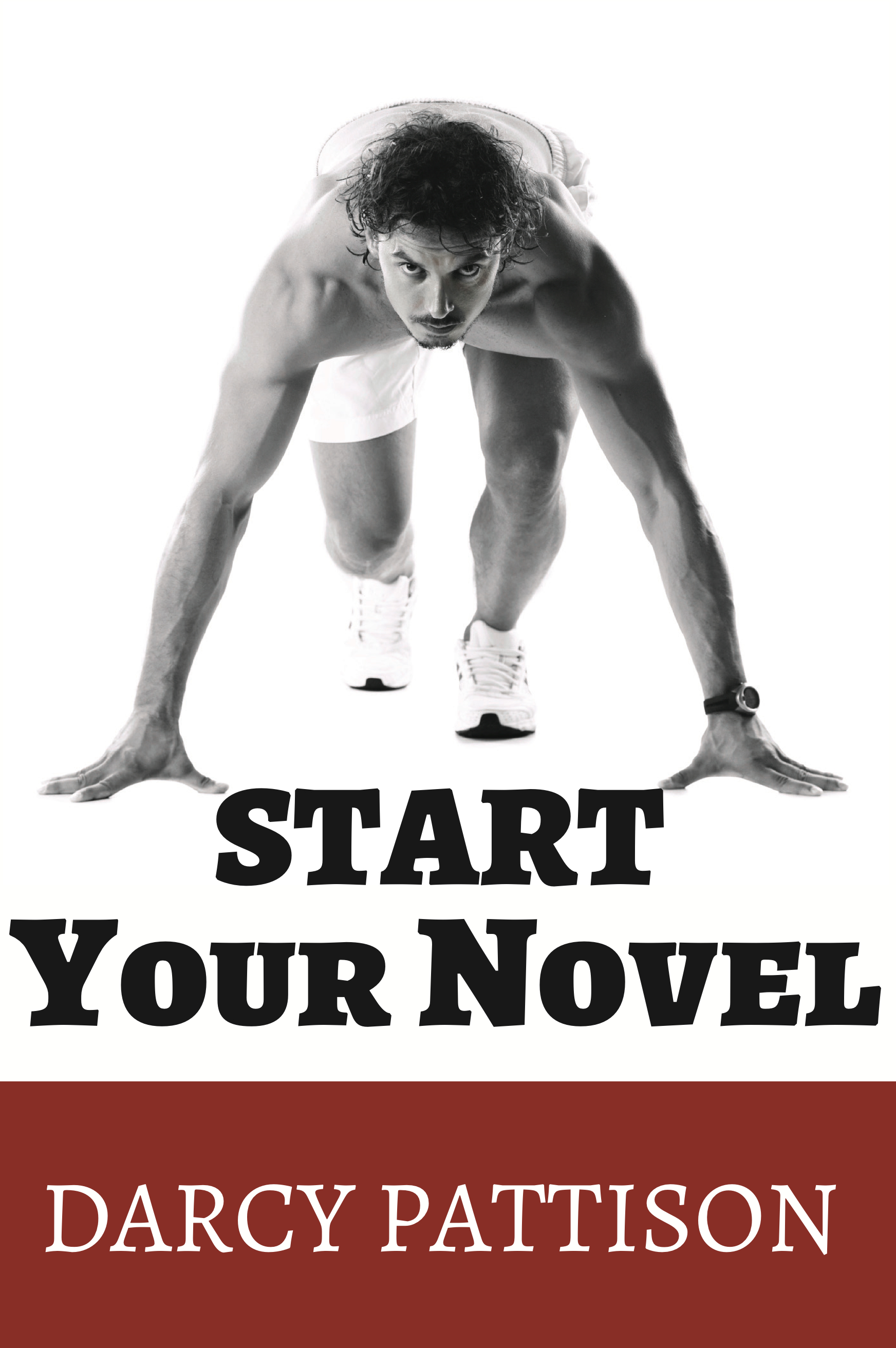
START YOUR NOVEL: SIX WINNING STEPS TOWARD A COMPELLING OPENING LINE, SCENE, AND CHAPTER by Darcy Pattison

The one thing I can count on when starting a new manuscript is the feeling I’ve never written a book before. Because each of my stories has to find its own way, and I can always use a refresher course on this thing called writing, I decided to use writing guru Darcy Pattison’s latest book, START YOUR NOVEL, as my guide when drafting a new book during National Novel Writing Month last November.

Darcy opens her book by stating everything a first chapter must accomplish:

  • grab your reader’s attention
  • ground your reader in the setting
  • intrigue the reader with a character
  • give the reader a puzzle to solve
  • set the pace

The first chapter sets the stage for the rest of the book. The first sentence builds on the first page builds on the first chapter. And to grab an editor’s attention, all three must shine.

I consider myself a “plotser” (or “planster”, as Darcy would say) -- someone who doesn’t fully plot a story but also doesn’t fly by the seat of her pants. Darcy says her approach might feel overly rigid to pantsters or too loosey-goosey to plotters. For me, her system feels like the perfect fit.

So you have an idea for a story? Now’s the time to brainstorm possible scenes. Next Darcy suggests studying the “29 Plot Templates” to decide which structure might best tell your story. Will your book be a quest? A story of escape? One about an underdog or forbidden love? “Each plot pattern would require a different set of scenes, emotions, motivations.” The approach you take will affect how you let your possible scenes play out.

Darcy then briefly discusses exploring your protagonist with one key element in mind: your character’s pain. “What is the character most afraid of; what could make the character hurt the most? Of course, you must make your character face this very thing.”

Now you’ve got some possible scenes and a structure for these scenes to unfold. With your character’s pain pinpointed (and the things you know she must face to bring about change), you have the beginnings of your character’s arc.

scene ideas + plot pattern + character arc = the beginnings of your book

Because you’ve not yet committed hours and hours to writing at this point, there is plenty of freedom to play with your ideas: adding scenes, deleting them, changing a character’s motivation or the type of story you’d like to tell. As someone who’s written a few books and many more “trunk manuscripts,” I appreciated this experimental phase. It’s something I need to do more of before my drafting begins.

“The function of a first draft is to find your story. The function of the next few drafts is to find the best way to tell that story.”

To that end, Darcy spends much of her book showing authors how to experiment with different approaches. For example, what type of sentence structure might you use to start your book? Darcy identifies twelve types of opening sentences*, gives examples of each, and then tries each type for her own novel-in-progress. In pushing herself to study her opening from different angles, she’s able to find the best way to tell the story.

As I planned and then drafted my NaNo novel, this book was an invaluable guide. And once I've given it a few months to breathe, I’ll pull Darcy’s revision book, NOVEL METAMORPHOSIS, off my shelf.

What books do you recommend for starting a new piece of writing?

*Here are a few to consider:
  • It was... It is... This is...
  • viewpoint on life
  • mid-action
  • dialogue
  • landscape
  • misleading lines

Monday, March 25, 2013

What the Kids Say ...

THE most important factor in book choice for MG readers:
the cover synopsis

A few weeks ago, Matt McNish posted about first lines. And he got me wondering: How important are first lines to MG readers?

Since I have a captive audience of MG readers every day, I decided to find out. I divided my class into discussion groups, gave them a stack of unfamiliar books, and asked what factors were most important in deciding whether or not to read any of them.

I specifically asked them to consider the first sentence, first paragraph, and first page. In spite of this, every group focused on the back cover or dust jacket. They had to be reminded to open the book and look inside before answering – even though that was part of their directions – because the cover blurb was the deciding factor for them.

A few students were more reflective. “You should really look inside,” Alexa said. “I wasn’t very interested in this one, from the back cover, but the first page is really interesting. I might read this.”

The Kiss of Death: no synopsis, only review blurbs.
Or worse -- nothing at all!
But in each group, the decision to start reading was almost always based on the blurb.  Not so much the front cover, which surprised me. “Covers don’t always show what the book’s about,” Grace said. “But the back of the book tells you the problem in the story, which is what I want to know.”

I asked how important the first page was in determining whether the students continued reading. If they weren’t hooked by the first page, did they keep going?  Some did not.

“I want some action on the first page,” Zoe admitted.

“I’ll give it till page two,” Grace said with a laugh. “And then I’m done.”

“If I don’t like the first chapter, I’ll skip to the next one,” Mike said.

Grace challenged him on that. “You mean, go back and read it later?”

“Nope,” said Mike with a grin. “Just skip it. I know I’m not supposed to.” He shrugged unapologetically.

But most students said they would not quit if the first page didn’t hook them; they’d keep reading further – a chapter or two at least. “Unless there are too many words I don’t know on the first page,” Chris clarified. “Then the book might be too hard for me.”

Josh added, “I always look to make sure there aren’t too many strange names and places and words in the beginning.”  I pointed out that Josh reads almost exclusively science fiction and fantasy. Aren’t they full of strange names and places and words? “Yeah, but too many in the beginning is just confusing,” Josh said. “I want to learn them a little at a time.”

Owen asked his group if they would read a book because of the author or because it won an award. The answer was yes for an author they liked – Andrew Clements and Gordon Korman were mentioned – but an award sticker was not as respected. “They give awards because the book is ‘heartwarming,’” said Zoe, using air quotes to make her point. “And then it’ll have no action in it.”

So – the message for writers? Make sure your opening pages are engaging and don’t dump too many strange things in the beginning. But you absolutely need a cover synopsis that’s a grabber. Even though the author doesn’t usually write that, (unless he or she is self-publishing), make sure the publisher is putting as much effort into that summary as they do on the front cover design.

Don’t worry if you don’t have an award sticker. Kids don’t care. And if you happen to be Andrew Clements or Gordon Korman, you’re golden.

Monday, February 11, 2013

Middle Grade First Lines


This image doesn't necessarily have that much to do with Middle Grade First Lines (it's a photo of a letter Gandhi wrote), but with so many copyright concerns with web images of late, it seems best to use only images that are in the public domain.

Anyway, today I want to share some first lines. As writers, first lines are something I think we all think about a lot. We certainly have to write them (at least one for each book). And whether they come easily to you, or whether you rewrite them hundreds of times, it can be interesting to think what they mean to readers, and whether they have more or less impact than we expect.

So, I went and grabbed 5 Middle Grade novels from my daughter's room. I read plenty of Middle Grade myself, of course, but she has a much nicer bookshelf than I do, so we keep them in there. At any rate, without further ado, I will share the opening lines from these five mystery books, and say a few things about each one:
  • A mango, thought Peter. The perfect weapon.
Okay, okay. Yes, this is technically two sentences, but I would argue that they are so inextricably linked, they ought to be separated by a semi-colon, not a period. Anyway, that's not the point. The point is: isn't this a great line? It give us character, voice, humor, setting, and a taste of conflict, all in six brief but luscious words. Well done, author, well done.
  • Goldie Roth hated the punishment chains.
Maybe I should have done opening paragraphs? Just kidding. Obviously this one line doesn't give us as much as the last pair of sentences, but it still ain't half bad. We've got the feeling of something sinister here, and we can at least infer a bit about setting - a school perhaps, or an orphanage? The key with this one, I think, is specificity. There are all kind of chains, after all, but punishment chains sound like a very specific type of chain, if you ask me.
  • Eva Nine was dying.
I'm not sure how much I like this one. It's succinct, sure, and it's rather shocking, too, but it doesn't feel earned, you know what I mean? It's all a matter of taste, of course, and I actually do happen to love this book and this author, but as first lines go, I guess I'm partial to lines that ground me in a scene, and clue me into multiple story aspects at once.
  • It all started with Aldwyn's whiskers beginning to tingle--the way they always did when he got hungry.
I'll admit, I'm somewhat partial to the old em-dash, and I love it in creative writing. I'm not sure it's used to full effect here, but it doesn't hurt, either. This opening line is all about character, and it pulls it off pretty well. Animal characters always have a little easier time with characterization, I think, because as readers we all already have some assumptions about certain types of animals.
  • Look, I didn't want to be a half-blood.
I suppose this one is probably pretty famous by now. I still haven't read this book, but my kids both love it. Anyway, this isn't the strongest of these five openings, but it isn't bad either. Half-blood is obviously an interesting detail, even if we don't know what it means at first, and in the long run it's probably the most important part of this sentence, but I would argue it's the "look," that really makes this opening line work, for me. It's the touch of irreverence to the voice of this narrator that would make me read on, but then maybe I just like angry kids.

Well that's it. What do you all think? Do you recognize any of these books (don't give it away if you do)? Which of these opening lines is your favorite?